
Jak vybrat správný plnicí stroj na kávové lusky pro vaše výrobní měřítko
Typy strojů: Manuální, Poloautomatické, Automatické Inline, Rotační
Rozsah rychlostí: 2 600+ kapslí za minutu (CPM)
Formáty pod: k-cup, nespresso Original, Dolce Gusto, Lavazza A Modo Mio
Přesnost plnění: 0,1 g až 0,3 g v závislosti na třídě stroje
Cenové rozpětí: $1,500 th$300,000+
Co dělá plnicí stroj na kávové lusky a proč na tom záleží pro výrobu na jednom místě
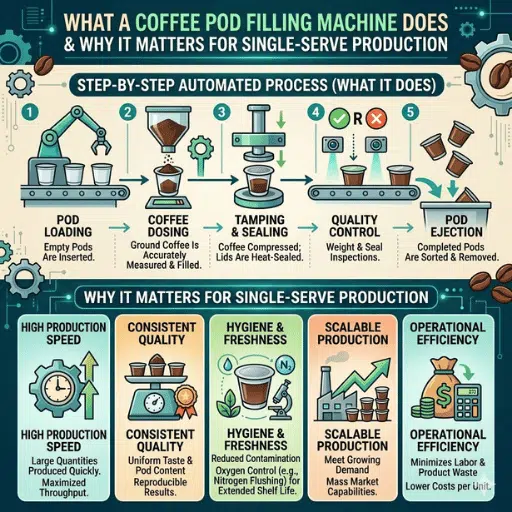
A kávový pod plnicí stroj je kus balicího zařízení, které dávkuje mletou kávu do kapslí na jedno podání, udusí nebo rozvibruje lože na cílovou hmotnost, propláchne horní prostor dusíkem a tepelně utěsní víko v jednom nepřetržitém cyklu. Výsledkem je skladovatelná, porcí řízená kapsle připravená pro maloobchodní nebo stravovací distribuci.
Na této definici dnes záleží více než před pěti lety. Podle Národní asociace kávy, 421 TP3T amerických domácností nyní vlastní sládek s jedním šálkem, což je číslo, které se od roku 2015 téměř zdvojnásobilo. Na straně nabídky Předpověď Mordor Intelligence 2026-2031 předpokládá, že trh kapslí a strojů na kapsle poroste do roku 2031 na 7,601 TP3T CAGR. A samotný širší kávový průmysl v roce 2025 dosahuje 1 TP4T249,34 miliardy Výzkum Grand View.
U pražíren, spolupracovníků a značek soukromých značek se tato čísla promítají do konkrétní provozní otázky: jak naplnit kapsle dostatečně rychle, dostatečně přesně a cenově dostatečně, abyste udrželi krok s poptávkou spotřebitelů? Plnicí stroj na kávové kapsle je páteří B2B za každým jednorázovým kávovým produktem na polici s potravinami. Ať už provozujete mikro-pražírnu, která plní 200 kapslí denně, nebo zařízení na společné balení, které tlačí 500 000 kapslí za směnu, plnění a těsnění fáze určuje vaše jednotkové náklady, trvanlivost a konzistenci kvality.
Tato příručka rozděluje každou třídu stroje podle rychlosti, kompatibility formátu pod, přesnosti plnění a ceny, takže můžete přizpůsobit správné vybavení vašemu výrobnímu měřítku bez nadměrných výdajů nebo nedostatečného budování.
Typy plnicích strojů na kávové lusky jsou manuální, poloautomatické a plně automatické
Ne všechna plnicí zařízení fungují stejně Čtyři hlavní kategorie oddělené podle rychlosti, úrovně automatizace a stopy Zde je srovnání vedle sebe s konkrétními čísly:
| Typ | Rychlost (CPM) | Přesnost výplně | Operátoři | Nejlepší Pro | Cenové rozpětí |
|---|---|---|---|---|---|
| Manuální / Stolní | 2–4 | ±0,3 g | 1 | Mikropražírny, výzkumné a vývojové laboratoře | $1,500 th$5,000 |
| Poloautomatický | 8–25 | ±0,2 g | 1–2 | Malé pražírny, 500 až 2 000 lusků/den | $5,000 th$15,000 |
| Automatické Inline | 40–200 | ±0,15 g | 1 | Střední měřítko, 5 000 až 50 000 lusků/den | $20,000 th$80,000 |
| Rotační | 200–600+ | ±0,1 g | 1 | Spolubalení, podnik, 50 000+ lusků/den | $80,000 th$300,000+ |
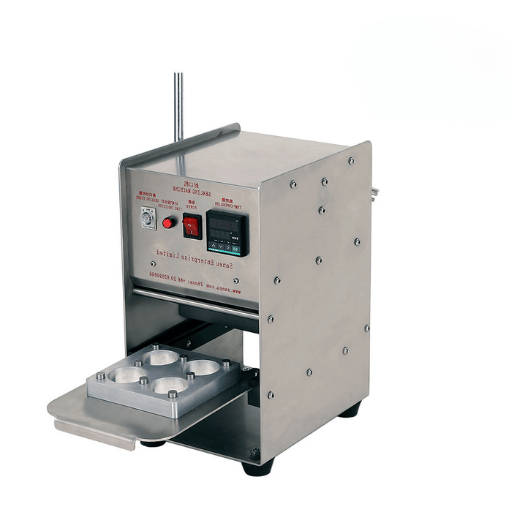
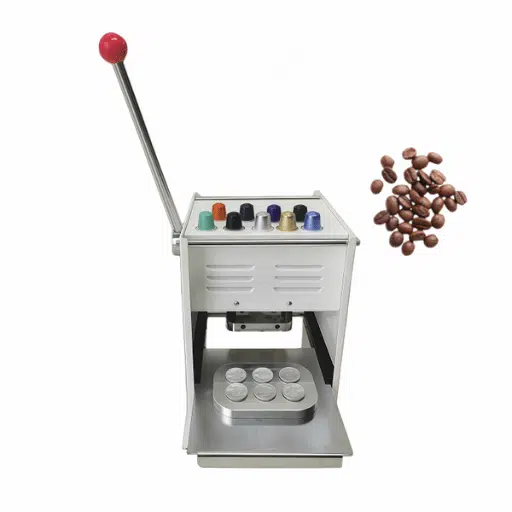
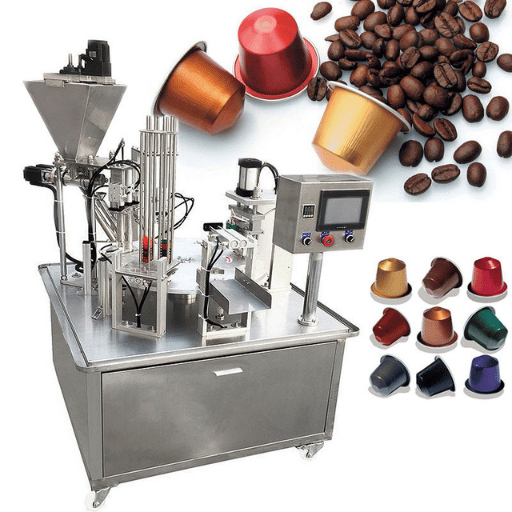
Ruční a stolní jednotky jsou vstupní možností. Operátor nakládá prázdné kapsle do podnosu, spouští objemovou dávku a ručně přesouvá kapsle do samostatné uzavírací stanice. Výstupní vrcholy kolem 4 kapslí za minutu. Tyto stroje jsou užitečné pro odběr vzorků výzkumu a vývoje nebo značky farmářských trhů, které potřebují několik stovek kapslí týdně, nikoli tisíce.
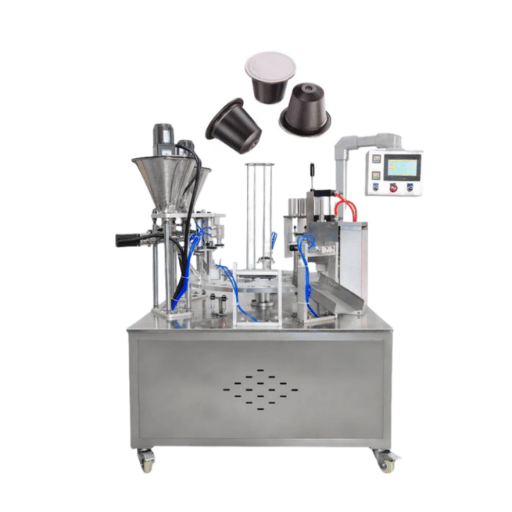
Poloautomatické stroje přidávají motorizované dávkování, pěchování a často integrovanou těsnicí stanici. Jeden nebo dva operátoři podávají prázdné kapsle a víčka; stroj zvládá zbytek. Při 8-25 CPM může poloautomatické nastavení vyrobit 500-2 000 lusků za jedinou 8hodinovou směnu, což z něj činí realistický výchozí bod pro malé pražírny vstupující na trh s jedním servisem.
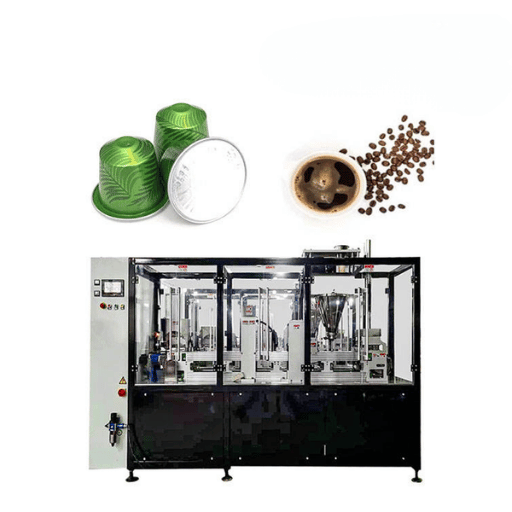
automatické inline stroje eliminují ruční nakládání kapslí Dopravník nese kapsle přes dávkovací, dusíkové proplachovací a těsnící stanice v pořadí Jednopruhové inline systémy běží 40-80 CPM; vícepruhové varianty tlačí přes 200 CPM. Jeden operátor monitoruje linku. Zde je většina produkce kávy ve středním měřítku, což je dostatečný výkon pro regionální distribuci bez kapitálového závazku rotačního stroje na balení kávy.
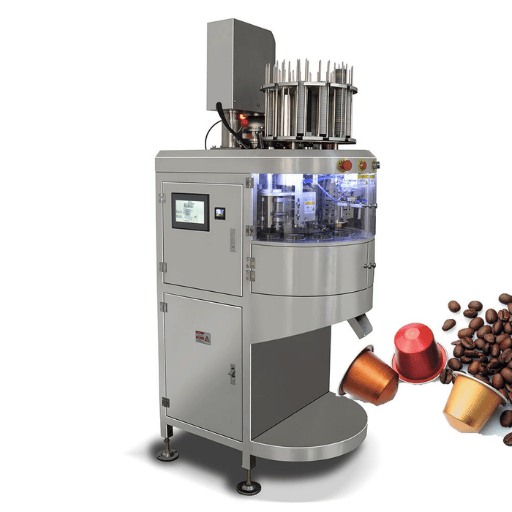
Rotační plnicí stroje běží 8, 12 nebo 16+ stanic v poli současně. Zatímco inline systém vyplňuje jeden pruh jednoho modulu s každým průchodem, jeden modul každých 15 sekund nebo 4 moduly za minutu rotační systém vyplní 12 nebo 16 najednou v jediném otočení. To dělá mnohem víc než jen urychlit věci: zvyšuje propustnost na více než 600 CPM. AFPAK‘balič například kombinuje rotační plnicí stroje s dobře vyvinutými modulárními ko-balovacími systémy schopnými manipulovat s mnoha formáty kávových kapslí K-Cup během 24hodinového cyklu.
Podlahový prostor může běžet opačným směrem. Inline systémy bývají dlouhé a in-line mezi 4 a 8 metry dopravníku mezi vstupem a výstupem. Rotační systémy jsou často kompaktnější, kruhová uspořádání, i když mohou potřebovat větší vertikální výšku věže. Oba systémy mohou být navrženy pro jakýkoli průchod; rozhodnutí může dopadnout na dostupnou podlahovou plochu.
Formáty pod Kompatibilita SEC K-Cup, Nespresso, Dolce Gusto a Lavazza
Formát pod určil nástroje, materiál víka a způsob těsnění Různé specifikace kapslí vyžadují různé rozměry, hmotnosti výplně a požadavky na těsnění Zde jsou čtyři běžné formáty:
| Formát | Průměr | Výška | Hmotnost výplně | Typ těsnění | Tržní pozice |
|---|---|---|---|---|---|
| K-Cup (Keurig) | 44 mm | 40 mm | 9,12 g | Tepelně svařitelná fólie | Největší v Severní Americe |
| Nespresso Originální | 37 mm | 30 mm | 5,7 g | Hliníková fólie | Největší globálně |
| Dolce Gusto | 54 mm | 36 mm | 8 až 16 g | Fólie nebo plastová fólie | Rostoucí segment |
| Lavazza A Modo Mio | 37 mm | 25 mm | 7,8 g | Samolepicí fólie | Silný v Evropě |
S nejširší kapslí nástroje (průměr 44 mm) a nejtěžší plnicí hmotnost-až 12 g na balení pod-k-pohár bere cenu, Tepelně-těsnit film víko se spojí proti plastové ráfku pohárku pomocí teploty a tlaku, poskytuje těsnění indikující porušení Speciální Plnicí stroje K-Cup adaptace vychází vstříc novějším, větším rozměrům kopule “K-Cup a úrovním tlaku těsnění potřebným pro podvěsy kompatibilní s Keurigem.
nespresso Originální kapsle jsou blíže Nespressu ve velikosti až 34 mm v průměru – s celým hliníkovým nebo hliníkovým tělem s designem fóliového víka. Fólie musí být propíchnuta nástrojem, když je varna vložena pro extrakci, což znamená, že kvalita těsnění je král. Příliš těsné a plyn nemůže volně unikat; příliš volné a ohrozíte trvanlivost. Protože podobná kapsle se suchým prachem-něco-IIOC-vyžaduje rychlejší dobu cyklu, Nespresso kompatibilní plnění kapslí běží lehčí – ale další rychlost-potřeba.
Dolce Gusto nesou největší lusky (54 mm průměr) a největší hmotnost náplně (až 16 g).Už obsahuje sušené mléko, některé Nescafe-jako Dolce Gusto kapsle konstrukce musí sladit kontakt mezi poháněné granule a zdroj těsnění, Lavazza A Modo Mio lusky samy jsou poměrně malé při průměru 25 mm, vybavené samolepicí fólie těsnění-tak jiný návrh-nebo tepelné těsnění potřebné pro ostatní.
Víceformátová všestrannost může znamenat hodně, zvláště pokud jste výrobcem soukromých značek nebo spolubalením s více prodejci. Přechod přes nástroje na výměnu mezi formáty může být jednoduchý s výměnnou sadou – výměna plnicích nálevek, pěchovacích hlav, vodítek kapslí a těsnících matric, aby byly připraveny na další formát. Na vhodně navrženém stroji od podporovaného výrobce je výměna bez nářadí 15-30 minut; u starších zařízení to může trvat 2-4 hodiny nebo déle.
Rychlost a propustnost 3500 podů za minutu až 600+ CPM
Úprava mezi rychlostí stroje a vaším skutečným výrobním cílem je nejdůležitější handou, kterou hrajete při výběru zařízení. Pokud je toto podstřelené, nebudete schopni splnit závazky zákazníků. Pokud dojde k přestřelení, budete vázat kapitál v nečinném zařízení 80% času. Zde je tabulka přirovnávající denní výstupní cíle k CPM a potřebné třídě stroje:
| Výrobní úroveň | Denní výstup | Požadované CPM | Typ stroje | Typické nastavení |
|---|---|---|---|---|
| Spuštění / Laboratoř | 100 500 lusků | 2–8 | Manuální nebo poloautomatické | Jednolůžkový stolní jednotka |
| Malá pražírna | 500 až 5 000 lusků | 8–40 | Poloautomaticky na inline | 1 operátor + sealer |
| Střední měřítko | 5 000 až 50 000 lusků | 40–200 | Automatické inline | Integrovaná linka s dopravníkem |
| Podnik / Spolubaťák | 50 000 500 000+ lusků | 200–600+ | Rotační | Plná výrobní linka + QC |
Prezentovaná CPM předpokládá 8hodinovou směnu s dobou provozu 851 TP3T (udrží 400 produktivních minut) 40 CPM inline vygeneruje 16 000 modulů za směnu; zdvojnásobení toho ve dvousměnném provozu znamená zdvojnásobení zařízení, nikoli zvýšení kapacity linky.
Jednoproudové inline systémy obvykle zpracovávají 40-80 CPM. Přidejte druhý jízdní pruh těsnění ke dvojnásobné propustnosti bez zvýšení stopy. Víceproudová, čtyřproudová nebo šestiproudová inline nastavení (jedna společná dopravní, jedna společná těsnicí stanice), posuňte inline systémy za 200 CPM. Aby tuto propustnost překonala, inženýrská ekonomika upřednostňuje rotační platformu s 8-16 těsnícími hlavami paralelně.
Tip pro profesionály: Nákup kapslového stroje s hodnocením 200 CPM, když následné kroky balení (kartonování, balení pouzder, paletizace) mohou udržet pouze 120 CPM, vyžaduje potíže. Vaše plnivo bude cyklovat/utěsňovat pouze čekáním na dopravníkové dráze, aby se uvolnilo. Kdykoli je to možné, specifikujte celou řadu kapslí jako systém, nejen jako plnivo.
Designové řady pro vysoce rostoucí značky, které mají v úmyslu utěsnit vysokorychlostní balení kapslí 2 včetně plnění, těsnění a následné dopravy jako jediného integrovaného systému (zajistit úplné odstranění problémů s úzkými hrdly mezi stanicemi).
Proplachování dusíkem, integrita těsnění a ochrana čerstvosti
Engineering Poznámka:
parametry proplachu dusíkem 2 a N potravinářské kvality při čistotě 99,91 TP3 T Cíl zbytkového O: <31 TP3 T pro standardní kapsle, <11 TP3 T pro prémiové kapsle s jedním původem. tlak při zkoušce prasknutí těsnění: 15 psi na všech formátech kapslí Konstrukce z nerezové oceli na všech kontaktních plochách.
Oxidace je primárním zabijákem mleté kávy. Mletá vystavená otevřenému vzduchu bezprostředně po mletí, upustí těkavé aromatické sloučeniny a vyvine se u nich chyby chuti, i když uvnitř uzavřeného lusku sedícího na skladové polici po dobu šesti měsíců. Oxidace je důvodem, proč utěsnění horního prostoru kapsle inertními plyny prodlužuje čerstvost 3-4 x.
Proplachování dusíkem se provádí uvnitř horního prostoru kapsle před uzavřením víka. Dusík je nejvyšší procentuální složkou naší přirozené atmosféry (78%).Inertní plyn, nebude chemicky reagovat s kávou ani měnit její chuť. CoffeeTec uvádí, že těsnění kapslí s proplachováním dusíkem zachovává čerstvost po dobu 6-12 měsíců oproti tomu bez po dobu 2-3 měsíců.
Rovema NA zdůrazňuje hladinu zbytkového kyslíku jako nejvýznamnější proměnnou v trvanlivosti balení kávy. Rozdíl jednoho procentního bodu ve zbytkovém O se promítá do rozdílu měsíců čerstvosti Prémiové řádky plnění kapslí umísťují inline analyzátory zbytkového O2, které odmítají uzavřené lusky, které nesplňují prahovou hodnotu.
Typ těsnění je stejně důležitý jako proplachování plynem. Tři běžné způsoby těsnění podávají kávové kapsle:
- Tepelně svařitelná fólie: Při 180-220 C zahřívá desky teplem a spojuje polymerem potaženou fólii s okrajem kapsle. (obecně není napájen kompresorem, k-pohár, mnoho formátů Dolce Gusto).Rychlá doba cyklu, dobrá bariéra pro prostupnost Široce používán v průmyslu.
- Lisování fólií: U speciálních spotřebičů, těsnění hliníkových kapslí, zvlněné nebo tepelně spojené s hliníkovým víčkem Běžné v hliníkových kapslích kompatibilních s Nespresso Ultimate kyslíková bariéra.
- Ultrazvuk: generovat teplo na tlačítku vytvarované do víka, a přitlačené na ráfku Není vyžadován žádný externí zdroj tepla. Lze použít s citlivým vzorcem, kompostovatelné fólie.
Všechny kontaktní komponenty (kontaktní komponenty), a to šneky & šnekové stanice, pěchovací hlavy, dávkovací & těsnicí stanice by měly být vyrobeny z nerezových materiálů schválených pro použití při styku s potravinami Pneumatika pohání pěchovací hlavy a těsnicí stanice, s regulátory tlaku pro řízení doby kontaktu Běžné materiály kapslí: plasty, hliník, biologicky odbouratelné PLA.
Jak vybrat správný plnicí stroj na kávové lusky a kontrolní seznam kupujícího
Prosévání desítek možností ke správnému stroji, který by mohl nejlépe sloužit vaší farmě, vyžaduje pečlivý a systematický přístup Naučte se, jak na to:
- Krok 1: Stanovte denní odhadovaný cíl objemu lusku (agregovaná současná poptávka a prognóza růstu na příštích 12 měsíců).Pokud plánujete růst z 2 000 na 8 000 lusků/den v průběhu roku, kupte 8 000.
- 2. Vyberte formáty pod, které potřebujete. Provoz pouze s monoformátem k-cupu by mohl využívat vyhrazené nástroje. Výrobci víceformátových K-Cup + nespresso + Dolce Gusto by vyžadovali vysoké, plně modulární sady přepínacích strojů.
- Krok 3: aby vaše CPM odpovídala vašemu objemu, pak přihoďte 201 TP3 T více pro špičkové zatížení, prostoje pro údržbu a sezónní špičky.
- Krok 4: Vyhodnoťte funkce nad rámec rychlosti proplachování dusíkem, plnění více jízdních pruhů, kontroly zraku na vady těsnění a automatických systémů vyřazování.
- Krok 5. Stanovte si celkový kapitálový rozpočet. Cena stroje zahrnuje 60-701 TP3T skutečných nákladů. Účet pro instalaci, školení operátorů, inventář náhradních dílů a roční smlouvu o preventivní údržbě.
Rotační výhody
- Nejvyšší propustnost: 200 600+ CPM
- Nejlepší přesnost plnění: ±0,1 g
- Kompaktní stopa vzhledem k výstupu
- Nepřetržitý pohyb = méně mechanických zastavení
Rotační omezení
- Kapitálové náklady: $80 000,$300 000+
- Delší dodací lhůta pro vlastní nástroje
- Vyžaduje vyškoleného technika údržby
- Přehnaná vražda pro operace pod 50 000 lusků/den
Inline výhody
- Nižší vstupní náklady: $20 000 až $80 000
- Škálovatelné prostřednictvím víceproudého rozšíření
- Snazší údržba a odstraňování problémů
- Dobré pro 5 000 až 50 000 lusků/den
Inline omezení
- Delší fyzická stopa (4,8 m)
- Strop rychlosti kolem 200 CPM
- Start-stop pohyb přidává mechanické opotřebení
- Víceproudý přidává na složitosti
Poznámka: Pokud spouštíte více formátů modulů, nezapomeňte ve svých výrobních výpočtech nepřehlédnout dobu přechodu na euro. Stroj, který má rychlost plnění 100 CPM, ale přechod z nástrojů k-cup na nástroje nespresso trvá 3 hodiny, může chrlit méně celkových modulů/týden než stroj s 60 CPM s 20minutovým přechodem bez použití nástroje.
AFPAK strávil více než 14 let stavbou strojů na balení kávových kapslí pro každou výrobní stupnici, malých pražíren, středně velkých značek a podnikových spolubalíren napříč více než 300 značkami. Ať už potřebujete běžně dostupný balicí stroj K-Cup nebo vlastní řešení přizpůsobené vašemu objemu a formátu, jejich tým může přizpůsobit jedinou kávovou řadu tak, aby se vešla.
Často kladené otázky
Kolik stojí plnící stroj kávových kapslí?
Zobrazit odpověď
Ceny se budou také lišit podle úrovně automatizace, rychlosti, formátu lusku a funkcí. Ruční stolní plniva mohou být až $1 500-$5 000 pro zkušební dávkování a mikropražírny. Poloautomatické stroje mohou být založeny na $5 000-$15 000 a velikosti šarží 500-2 000 lusků/den.
Automatické inline systémy stojí 1 TP4T20 000-$80 000 pro provoz ve středním měřítku až 50 000 lusků/den. Rozsah rotačních plnicích strojů od $80 000 do $300 000 nebo více pro velkoobjemové společné balení více než 50 000 lusků/směnu. Přidejte 15-25% pro moduly proplachování dusíkem, kontrolu zraku a instalaci.
Který stroj se používá pro plnění kapslí?
Zobrazit odpověď
Plnění kávových kapslí se obvykle provádí pomocí šnekových dávkovacích systémů s objemovými nebo gravimetrickými měřeními. Poloautomaty jsou vhodné pro skromnou dávkovou výrobu (pod 2000 lusků/den), se strojním zařízením s rotační plošinou používaným ve velkém podnikovém měřítku (200-600+ kapslí/min).
Mohou plniva K-Cup zvládnout různé typy lusků?
Zobrazit odpověď
Víceformátové stroje na plnění kapslí vyžadují výměnné díly přizpůsobené vybrané kapsli Požádejte dodavatele, aby potvrdil, které formáty K-Cup, Nespresso, Dolce Gusto nebo Lavazza citovaný model podporuje, a aby specifikoval požadované díly pro plnění, držení kapslí a těsnění Potvrďte postup přechodu na euro, požadavky obsluhy a prokázanou dobu přechodu na euro pro tuto konfiguraci; neexistuje jediný čas, který by se vztahoval na každý stroj.
Nízkonákladové strojní zařízení může vyžadovat 2-4 hodiny a specialistu.
Jak stroje na plnění podů chrání čerstvost kávy?
Zobrazit odpověď
Nejlepším způsobem je proplachování dusíkem, kdy je do prostoru hlavy kapsle zatlačen potravinářský N, který nahradí kyslík na zbytkový (nebo zbytkový méně než 11 TP3 T u kávy speciální kvality).To by poskytlo trvanlivost 6-12 měsíců na rozdíl od 2-3 měsíců u lusku, který nebyl spláchnut. Kapsle se poté utěsní pomocí tepelně lisovaného filmu nebo hliníkové fólie, aby se vlhkost a kyslík nedostaly ven.
Všechny kontaktní plochy používají nerezovou ocel, aby se zabránilo kontaminaci.
Jsou stroje na plnění kávových kapslí vhodné pro malé pražírny?
Zobrazit odpověď
Jistě, Startování poloautomatů na $5 000 $15 000 stojí 500-2000 modulů denně, s 1 operátorem a poloautomatickým. Toto dávkování je užitečné pro testování trhu, splnění smluv DTC a zásobování místních maloobchodních účtů před nákupem velkého inline stroje.
Jakou údržbu vyžadují plnicí a těsnící stroje?
Zobrazit odpověď
Úkoly denní údržby: vyčistěte plnicí šnek, vyčistěte těsnicí stanici, abyste vyčistili kávovou sedlinu Týdenní úkoly:. zkontrolujte opotřebení těsnicích hlav a vyměňte je každý týden podle potřeby, kalibrujte hmotnost dávky pomocí vzorku kontrolního vážení, kontrolujte průtoky dusíku Měsíčně: vyměňte válečky těsnicí fólie, vyčistěte pneumatické ventily, zkontrolujte průtokoměry dusíku, zda nedochází k žádnému posunu Ročně: Zajistěte úplnou preventivní údržbu všech pneumatických systémů, vyměňte všechna opotřebovaná těsnění, zkontrolujte a znovu uveďte do provozu všechny senzory Udržujte náhradní sadu na místě, abyste zabránili zbytečným prostojům
AFPAK má více než 14 let zkušeností s návrhem a výrobou zařízení pro plnění a uzavírání kávových kapslí ze své základny v Šanghaji.Jeho zařízení splňuje přesnost plnění 0,1 g na formátech k-cup, nespresso, Dolce Gusto a Lavazza 4 a v současné době dodává více než 300 značek kávy po celém světě.
O této analýze
Informace o rychlosti, přesnosti a nákladech pocházejí z benchmarked specifikací stroje publikovaných ve čtyřech formátech pod (pod) (k-cup), nespresso, Dolce Gusto a Lavazza A Modo Mio. Informace o trhu pokrývající trhy Japonska, USA a Evropy jsou odkazovány od National Coffee Association, Grand View Research a Mordor Intelligence. Informace o čerstvosti jsou odkazovány z technických publikací CoffeeTec a Rovema NA.
Reference a zdroje
- Národní asociace kávy 6 Národní trendy v datech kávy 2025 incausa.org
- Výzkum Grand View zpráva o trhu s kávou kávovou 2025 (Bacre Coffee Market Report 2025) (v anglickém jazyce) (v anglickém jazyce grandviewresearch.com)
- Mordorská inteligence (prognóza trhu kávovarů na kávovary 2026 2031 1 mordorintelligence.com
- CoffeeTec ezodusíkové splachování: zabíjení kyslíku, vytváření čerstvé kávy, káva coffeetec.com
- Rovema NA ó Význam balení kávy: Udržování nízké hladiny zbytkového kyslíku (Revidual Oxygen Level Low) (Report rovema-na.com)


