
Comment fonctionnent les machines de remplissage et de scellement du café et comment choisir la bonne
Le marché mondial des capsules de café (Coffee Filling Sealing Machine) était de 29,6 b en 2024, rapporte Mordor Intelligence et développe un TCAC de 6,26% sans aucun signe de ralentissement Derrière chaque dosette de café nespresso, le café k-cup et la capsule gusto dolce sur les étagères des magasins se trouve une machine à sceller le remplissage de café qui a dosé le marc, a vidé l'espace libre avec de l'azote et a scellé le couvercle en une seconde Si vous démarrez une marque de capsule de marque privée ou développez un torréfacteur établi, comprendre comment ces machines fonctionnent et quelles spécifications comptent réellement (c') ce qui est ce qui devient un emballage coûteux.
Cet article parcourt le remplissage et le scellement étape par étape, compare les formats de capsules avec des dimensions exactes et partage les spécifications que vous devez évaluer avant de passer une commande.
Spécifications rapides : machines de remplissage et de scellage du café
- Précision de remplissage : ±0,1 g à ±0,2 g
- Plage de vitesse : 200 capsules par minute (CPM)
- Formats compatibles : Nespresso, K-Cup, Dolce Gusto, Lavazza, dosettes ESE
- Méthode d'étanchéité : Calcul thermique (couvercles en aluminium/feuille plastique)
- rinçage à l'azote : O résiduel < 3% (objectif < 1% pour la prime)
- Construction: Acier inoxydable 304, surfaces de contact de qualité alimentaire
Que fait réellement une machine de remplissage et de scellage de café
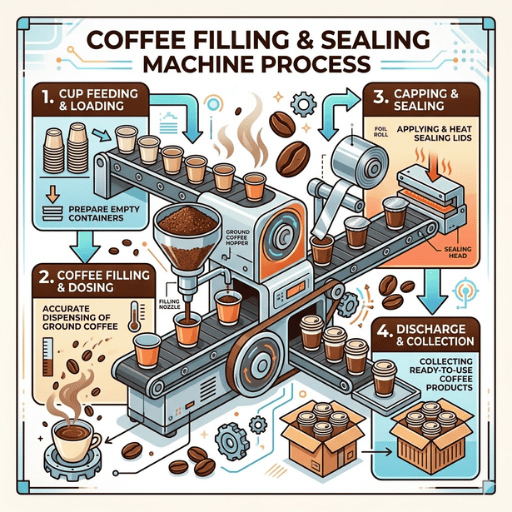
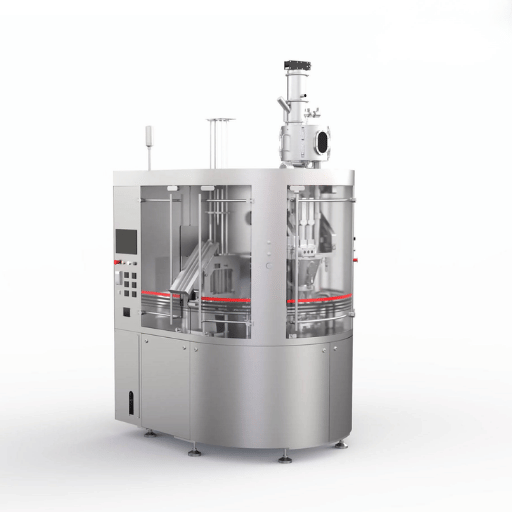
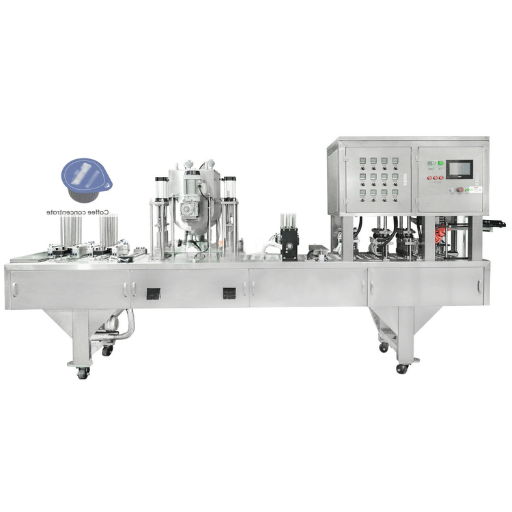
Une machine de remplissage et de scellement de café est une machine de remplissage automatique de capsules de café qui mesure et remplit un poids précis de café moulu dans des capsules préformées, rince l'espace libre de chacune avec de l'azote gazeux pour éliminer l'oxygène, laisse tomber un couvercle en aluminium sur chaque capsule et le scelle à chaud pour former une barrière qui maintient le produit frais entre 12 et 18 mois.
À la base, cette machine est conçue pour un travail : le dosage, le remplissage, et le scellement des capsules à un poids et une vitesse précis avec une répétabilité extrême La clé du moderne machines de remplissage et de scellage de capsules de café est la répétabilité sur des milliers de cycles Une machine de remplissage rotative alimentée à 400 CPM distribue avec précision chaque dose à 0,1 g suffisamment serré pour que les consommateurs obtiennent la même quantité de caractéristique d'extraction de la capsule à la capsule.
Ces machines peuvent traiter diverses capsules Par exemple, une chaîne de production peut emballer des coques en aluminium de capsules de café nespresso sur une machine, des dosettes d'emballage de k-cup sur une autre et des capsules de remplissage de dolce gusto sur un troisième. Différents formats ont des moules, des volumes de dosage et des conditions d'étanchéité différents mais l'essence du processus de remplissage est la même.
La machine de remplissage de capsules de café charge le vide, dose le marc, chasse l'azote et scelle à des vitesses comprises entre 20 CPM sur les machines linéaires d'entrée de gamme et plus de 600 CPM sur les unités rotatives haut de gamme.
Pourquoi un emballage approprié est-il périssable Le café, lorsqu'il est moulu, commence à perdre ses propriétés aromatiques volatiles au cours des premières minutes lorsqu'il est exposé à l'oxygène Une machine de remplissage et de scellement verrouille ces propriétés à l'intérieur de la capsule avant qu'elles ne s'échappent autrement.
Étape par étape : Comment fonctionne le processus de remplissage et d'étanchéité
Chaque capsule de café passe par six stations de la coque vide au pack scellé et prêt à l'étagère Vous trouverez ci-dessous le processus de remplissage et de scellement pour chaque station sur des lignes distinctes.
- Chargement de la capsule
Les capsules vides sont introduites dans les machines semi-automatiques à trémie, elles peuvent être introduites manuellement dans la trémie - ou introduites à partir d'une ligne de vrac au moyen d'un alimentateur à bol vibrant - sur les lignes entièrement automatiques Chaque alimentateur oriente les capsules de manière à ce qu'elles soient bien montées, et les dépose ensuite dans un support (plaque de moule).Sur les machines rotatives la plaque de moule s'indexe autour d'une tourelle au milieu de la machine, (voyageant en ligne droite le long du convoyeur), les capsules sont alimentées en ligne avec les trous du convoyeur Le capteur détecte les capsules endommagées ou à contresens vers le haut, et les rejette. - Dosage du café
Une charge de vis sans fin entraînée par un servomoteur qui alimente en café moulu un mélange de capsules Sa vis sans fin tourne un nombre de tours spécifique pour délivrer un poids souhaité (généralement entre 5 et 14 grammes selon le format du cas).Les systèmes de remplissage avancés utilisent une combinaison de retour de poids et de comptage des tours de vis sans fin pour des cibles de poids très serrées de 0,1 g. La taille de la mouture, la teneur en humidité et la densité du café moulu ont un effet direct sur la précision du dosage afin que les opérateurs calibrent le système lors de chaque changement. - Tamponnage et compactage
Après l'étape de remplissage du café, un piston de bourrage compacte le café avec une basse pression ‘ ne remplissant pas le panier ’ de compression standard Bien que la pression ‘ expresso ’ - ce que nous voulons est une pénétration uniforme de la surface et de l'eau pendant le brassage, pas une rondelle infranchissable et déviée La profondeur de bourrage et la force de bourrage peuvent être ajustées par l'opérateur. Sous compression, l'eau trouve des ‘ canaux ’ à travers le café et produit une infusion inégale. Surcompression, force le mouvement de l'eau et produit des tirs amers et surextraits. - Rinçage à l'azote
Une buse d'azote injecte de la qualité alimentaire N dans l'espace libre du café Cela souffle O et est le principal facteur déterminant la durée de conservation O résiduel minimum de moins de 3%. Les cibles du producteur de capsules haut en dessous de 1%. Le rinçage à l'azote prend des millisecondes-suffisamment rapides pour éliminer tout l'oxygène mais suffisamment courts pour garder une vitesse de ligne en avance. - Placement du couvercle
Les couvercles en feuille prédécoupée/en film composite sont extraits d'un magasin et placés sur la capsule ouverte (généralement via une ventouse ou une pince mécanique).L'enregistrement du couvercle doit être précis pour la capsule, s'il est décalé de 0,5 mm, le produit ne sera pas scellé lorsque l'azote est rincé. D'autres systèmes prennent le film en rouleau et le coupent en ligne. - Scellement thermique
Une matrice chauffée est descendue sur le couvercle formant un contact de pression du couvercle sur le bord de la capsule La pression d'étanchéité et la chaleur sont appliquées simultanément (environ 180-230 C selon le stock de couvercle) et la pression pour faire adhérer la feuille à la bride de la capsule Cela produit un joint hermétique empêchant la pénétration d'oxygène. Le temps de séjour typique de la matrice est de 0,3-0,8 sec. Après le scellement, la capsule terminée quitte la machine et est transportée vers un convoyeur de décharge pour le cartonage/emballage du boîtier en aval.
📐 Note d'ingénierie Paramètres de rinçage à l'azote
La pureté de l'azote de qualité alimentaire doit être de ≥99% (ISO 8573-1 Classe 1 pour les particules).La pression de rinçage doit être de 0,4-0,6 MPa. Retirer l'oxygène résiduel avec un analyseur de gaz de l'espace libre (par exemple Dansensor CheckPoint 3).Les conduites destinées aux résidus d'oxygène <1% subissent souvent un rinçage en deux étapes : pré-rinçage avant dosage et rinçage final après bourrage.
Formats de capsules : Nespresso, K-Cup, Dolce Gusto et plus encore
Les capsules de café ne sont pas d'une forme ou d'une taille ou fabriquées à partir d'un matériau particulier Chaque format particulier guide la machine quant aux moules et couvercles et matrices de scellement qui seront nécessaires Vous trouverez ci-dessous un tableau comparant chaque dimension par dimension pour les formats de capsules les plus répandus qui sont échangés sur le marché.
| Format | Diamètre | Hauteur | Matériel | Couvercle | Remplir le poids |
|---|---|---|---|---|---|
| Nespresso Original | 37 mm | 30 mm | Aluminium | Feuille d'aluminium | 5g |
| Nespresso Vertuo | 56 mm | 31 mm | Aluminium | Feuille d'aluminium | 71g |
| K-Cup | 45 mm | 40 mm | Plastique (PP) | Feuille d'aluminium | 91g |
| Dolce Gusto | 54 mm | 36 mm | Plastique | Couvercle en plastique | 61g |
| Lavazza A Modo Mio | 48 mm | 27 mm | Plastique | Feuille d'aluminium | 78g |
| ESE Pod | 44 mm (plat) | — | Papier filtre | — | 7g |
les capsules de remplissage Nespresso et les dosettes de k tasse règnent sur le gazon de café à portion unique, mais les formats Dolce Gusto et Lavazza font leur chemin en Europe et en Asie Les dosettes ESE sont les plus simples : café moulu comprimé couches de papier filtre deux couches et nécessitent un type différent de machine de remplissage de dosettes de café qu'un système à base de capsules.
Sur une machine de remplissage et de scellement multiformat, le changement de format de capsule peut nécessiter différentes plaques de moule, supports et matrices de scellement Confirmez la procédure de changement et le temps prévu pour les deux formats de capsules réels Les capsules compatibles Nespresso et K-Cup ont des dimensions et des exigences de couvercle différentes ; ne présumez pas qu'elles peuvent fonctionner sur la même configuration sans changer de pièces et de réglages.
Xxx. L'utilisation du matériau incorrect du couvercle sur les capsules en aluminium, comme mettre un film filtrant A/C de capsule en polypropylène sur une coque en aluminium nespresso, nécessite l'utilisation d'un autre côté pour sceller afin de découpler les deux matériaux lors de l'identification. Les scellants conçus pour l'aluminium en aluminium utilisent un profil de température et de pression différent de ceux conçus pour le plastique en aluminium Consultez votre fournisseur de couvercles si vous envisagez d'utiliser une machine de préparation d'échantillons.
Manuel, semi-automatique et entièrement automatique Quel type correspond à votre échelle de production ?
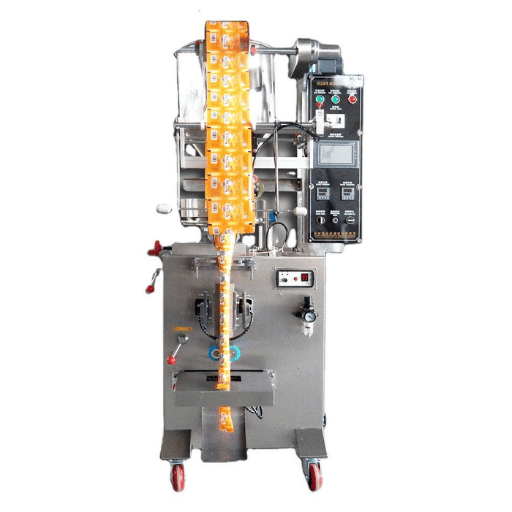
les modèles de machines d'emballage de café, familièrement identifiés comme machines d'emballage de café dans les annuaires de négociation, sont disponibles en 4 niveaux différents, conçus pour une gamme de production quotidienne attendue Comparez les spécifications qui comptent le plus : vitesse, précision, main-d'œuvre, espace et prix ci-dessous La sélection du bon niveau est un élément important de la création de votre production de café Peut-être passez-vous d'une petite échelle pilote pour entrer sur le marché complet, ou devez mettre à niveau vos systèmes d'emballage actuels Cette vitrine présente les vraies différences.
| Type | Vitesse (CPM) | Remplissage Précision | Opérateurs | Espace Sol | Gamme de prix |
|---|---|---|---|---|---|
| Manuel | 2–5 | ±0,5g | 1–2 | 1 m² | $1 000$3,00 |
| Semi-automatique | 10–30 | ±0,2g | 1 | 3 m² | $5 000$15 000 |
| Entièrement automatique (linéaire) | 40–120 | ±0,15g | 0–1 | 60 m² | $30,0000$80,000 |
| Entièrement automatique (Rotaire) | 100–600 | ±0,1g | 0–1 | 81 m² | $80,0000$300,000+ |
La capsule de café la plus courante équivalent à la Moka Pot (en anglais seulement) fabrique des capsules manuelles en utilisant de la force manuelle du café de haute qualité à la main dans le filtre des tasses à café et en le tassant avant d'appuyer sur un levier pour sceller Les micro torréfacteurs testant de nouveaux profils de saveur peuvent grandir avec eux Les semi-automatiques font l'effort de se désamorcer de l'image en ajoutant de la puissance motorisée aux postes de dosage et de scellement Ils peuvent compléter 10-30 capsule/minute ; approprié pour ouvrir les lots.
Les lignes de production de capsules de café entièrement automatiques modifient entièrement l'économie. Les machines linéaires fonctionnent à 40 capsules 10 par minute avec un minimum de travail. Machines rotatives de remplissage de capsules de café poussez cela à 100600 capsules par minute, construites pour des opérations exécutant plusieurs équipes Oui, l'écart de prix est réel, mais le coût par capsule au volume l'est aussi : une machine rotative exécutant 400 CPM pendant 16 heures produit 384 000 capsules par jour.
Conseil expert Le débit quotidien de Buns devrait déterminer le choix de votre équipement de fabrication de capsules
- Moins de 500 capsules/jour → machine manuelle
- 500 000 capsules/jour → semi-automatique
- 5 000 gélules 50 000/jour → automatique linéaire
- 50 000+ capsules/jour → automatique rotatif
Ces seuils sont pour le fonctionnement en une seule équipe (8 heures).Courant sur trois équipes, les points d'arrêt avec semi-automatique et automobile linéaire peuvent être les mêmes.
Spécifications clés à évaluer avant d'acheter
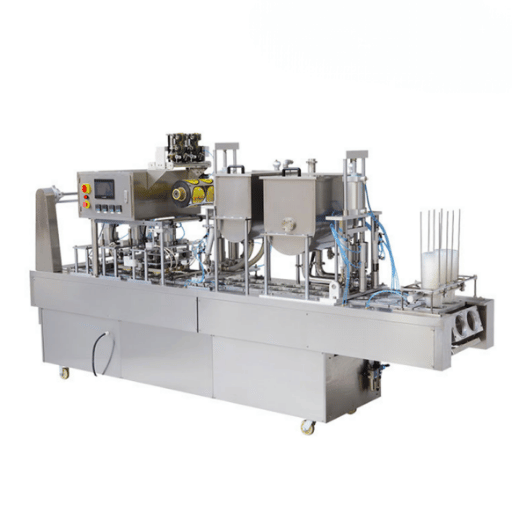
Le prix et le rythme sont habituellement les deux seuls chiffres auxquels les acheteurs prêtent attention lorsqu'ils choisissent la bonne machine à capsules de café Ils ne devraient pas l'être Envisagez de regarder les 8 domaines de spécifications clés suivants lorsque vous comparez équipement d'emballage de capsules de différents fournisseurs.
- ✔ Précision de remplissage ±0,1 g est la référence pour les machines d'étanchéité de capsules de qualité supérieure. ±0,2 g est acceptable pour la production commerciale standard Tout ce qui dépasse ±0,3 g produira une variation de goût notable entre les capsules et des problèmes de conformité de poids.
- Indice de vitesse par rapport au débit réel : les acheteurs indiqueront le CPM du pic côté alimentaire, mais le rendement réel sera toujours inférieur. Prévoir le temps de changement, les cycles de lavage (30 à 60 minutes par quart de travail), les rejets (0,5 à 2 % sont typiques). Par un chiffre de 120 CPM peut entraîner une moyenne de 90 lignes en fonction du cycle de lavage, etc. pour ce calcul de marge.
- Compatibilité format capsule (Capsule format compatibility) Les machines monobloc sont plus rapides et ont de meilleures tolérances Les machines multilignes ont une flexibilité de format qui pourrait être importante selon votre gamme de produits : type capsule, ou plusieurs.
- Temps de changement entre les formats-15-45 min Certaines machines de scellement plus récentes ont ramené cela à 10 min avec des plaques de moule à changement rapide Si vous exécutez trois formats par jour alors ce décalage peut coûter à votre opération une heure 30 par changement.
- Système de chasse d'azote-Les générateurs d'azote intégrés (type PSA) sont faciles à utiliser mais augmentent $8 000-$25 000. l'alimentation externe par cylindre ou réservoir en vrac est moins coûteuse au départ mais nécessite des contrats de livraison de gaz continus Assurez-vous que la ligne peut atteindre <3% O résiduel à la vitesse de ligne requise.
- Matériau de construction- Toutes les pièces en contact avec les aliments doivent être en acier inoxydable 304 pour des performances de haute qualité Vérifiez la trémie, la tarière, le piston de bourrage et la bague d'étanchéité par rapport aux modèles économiques qui utilisent de l'acier au carbone avec un revêtement inoxydable qui écaille avec le temps contaminant votre produit.
- Système de contrôle- Nécessité d'un automate (contrôleur logique programmable) avec une IHM à écran tactile (interface homme-machine) avec stockage de recettes Cette fonctionnalité permet de changer rapidement entre les mélanges de café et les formats de capsules sans calculer de nouveaux paramètres à chaque fois Les automates Siemens et Mitsubishi sont les plus populaires dans les équipements d'emballage de café.
- Support après-vente et pièces de rechange - Recherchez des informations sur le délai de livraison des pièces de rechange, la capacité de diagnostic à distance et si le fabricant emploie des ingénieurs de service sur le terrain dans votre région. Une machine inactive pendant 2 semaines en attendant une matrice de scellement de remplacement coûte plus cher que la matrice.
Les évaluateurs d'erreurs courants savent comparer en fonction du CPM évalué, mais négligent le temps de changement Si votre entreprise remplit trois formats de capsules, une machine de 120 CPM avec un changement de 45 minutes pourrait générer moins de capsules en un quart de travail qu'une machine de 90 CPM avec un changement de 10 minutes. Utilisez l'équation suivante pour déterminer votre débit effectif pour votre gamme de produits.
Comment le rinçage et l'étanchéité à l'azote protègent la fraîcheur du café
Les grains de café torréfiés contiennent plus de 800 composés organiques volatils qui sont responsables de l'arôme et de la saveur Ces composés commencent à interagir avec l'oxygène une fois le café moulu L'oxydation détruit les arômes complexes brillants transformant un bon profil en une saveur de carton rassis La capsule de café avec de l'air ambiant dans l'espace de tête perdra sa qualité perceptible après des semaines.
La chasse d'azote est capable de résoudre ce problème en remplaçant l'oxygène qui entoure le café par de l'azote inerte. L'azote ne réagira pas avec les composés du café. Gardez l'oxygène résiduel en dessous de <3%-<1% si vous utilisez un processus de remplissage et de scellement en réduisant l'air résiduel en dessous de 3%. La durée de conservation passe de quelques mois à 12-18 mois. Les capsules sans rinçage perdent la qualité perceptible du café après 3 à 6 mois maximum, même si le couvercle est scellé car l'air emprisonné est toujours ~21% oxygène.
📐 Note d'ingénierie : emballage atmosphérique modifié (MAP) pour le café
L'azote utilisé dans le rinçage des capsules doit être de qualité Food-Grade, GRAS (Food and Drug Administration 21 CFR 184.1540), et la pureté de 99%. La pression de rinçage varie entre 0,4-0,6 MPa-une trop légère conséquence que l'oxygène n'est pas expulsé, des résultats trop lourds dans le soufflage de marc de café hors de la capsule Utilisez la Chromatographie de gaz ou des capteurs électrochimiques pour l'analyse de l'espace libre dans votre régime de contrôle de qualité.
Le scellant représente la seconde moitié de l'équation, Cependant idéal une chasse d'azote, il peut être annulé par un scellement hermétique compromis Si un couvercle ne se lie pas complètement au bord de la capsule, l'oxygène peut se frayer un chemin à travers des piqûres d'épingle.
Les tests d'intégrité des joints, soit les tests de désintégration sous vide, soit les tests d'éclatement, doivent être effectués sur des échantillons aléatoires de capsules au cours de chaque lot de production Un seul joint défaillant pour 100 capsules peut conduire à une trace écrite d'insatisfaction des clients concernant le café aigre.
Démarrage d'une entreprise de capsules de café Équipement au-delà de la charge
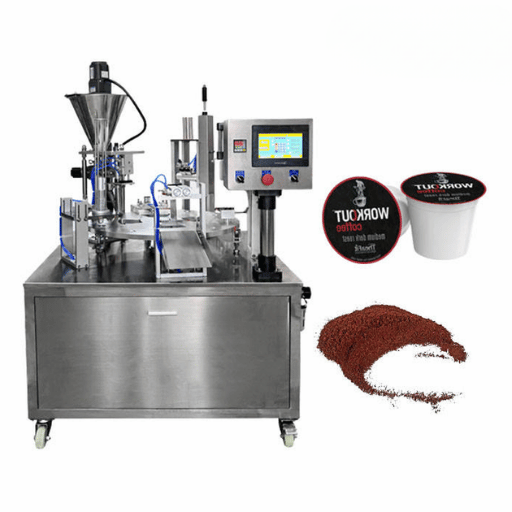
La machine de remplissage et de scellement n'est qu'une pièce d'équipement dont le fabricant de capsules de café a besoin Si vous démarrez une entreprise de capsules, vous aurez besoin d'une chaîne complète de haricot vert au produit emballé Ce qui suit représente un plein ligne de production de capsules de café.
- Rôtissoire à café $15 000-$150 000 selon la capacité des lots (de 5 kg de torréfacteurs de laboratoire à 120 kg de torréfacteurs de production).Peu d'entreprises de capsules ne le possèdent pas, et achètent du café pré-rôti à partir de torréfacteurs spéciaux.
- Grinder (meilleur mouton) Ce broyeur à bavures industriel, calibré pour la taille de mouture de la capsule (plus fin que le café goutte-à-goutte, moins turc).Pensez $5,000-$30,000, pour broyeur qui peut correspondre à une ligne de remplissage automatique.
- machine de remplissage et de scellement de capsules de café-Le son primaire Voir le tableau de comparaison des prix en haut de la page selon le type de machine Budget $5,000-$300,000+ selon l'échelle de production.
- Générateur d'azote ou alimentation en gazSite PSA (Pressure Swing Adsorption) générateur d'azote puissance $8,000-$25,000 est une autre option Le réservoir de cylindre ou de vrac alimenté par un fournisseur de gaz industriels est une autre option, mais entraîne un coût initial inférieur et un coût continu plus élevé.
- Étiqueteuse et encartonneuse – 10 000 $ à 40 000 $ pour l'étiquetage, le formage de caisses et la mise en carton automatisés. Les petits ateliers peuvent étiqueter et encartonner à la main, mais cela devient un goulot d'étranglement au-delà de 5 000 capsules par jour.
- Outils de contrôle qualité — humidimètre (500 $-2 000 $), testeur d'intégrité de scellage (3 000 $-8 000 $), balance de précision pour la vérification du poids (300 $-1 000 $) et analyseur de gaz de ciel (5 000 $-12 000 $) pour mesurer les taux d'oxygène résiduel.
L'environnement du marché est idéalLa demande pour les emballages de produits de café en portion individuelle est en expansion sur le marché mondial, évaluée à $29,6 milliards en 2024, avec un TCAC de 6,26% (Mordor Intelligence).En plus des capsules, les sacs de café et les emballages de sachets pourraient représenter un segment important de la production de café emballage en particulier en raison des nouvelles marques privées-capsules entrant sur le marché.
Le remplissage sous contrat est une autre opportunité ; dans certains cas, les entreprises évitent complètement d'investir dans le concept de co-emballage et proposent des services de remplissage à plusieurs torréfacteurs à café qui ne disposent pas de leur propre équipement de machine d'emballage de café.
Perspective AFPAK : L'AFPAK produit des machines de remplissage et de scellement de capsules de café depuis plus de quatorze ans avec de nombreuses unités expédiées aujourd'hui à plus de trois cents marques dans le monde Les recommandations d'équipement présentées dans cet article sont basées sur l'expérience de l'AFPAK avec la mise en place d'équipements en Asie, en Europe, et en Amérique du Nord Toujours solliciter plusieurs propositions et organiser des démonstrations sur place pour comparer les équipements avant l'achat.
Foire aux questions
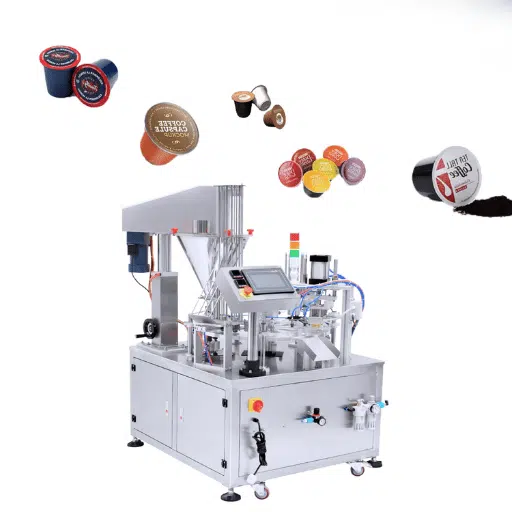
Votre ligne de production de capsules de café est-elle prête pour un nouveau projet de construction ou une mise à niveau d'agrandissement ?
Obtenez un devis personnalisé pour votre gamme de capsules de café →
À propos de cette analyse
L'AFPAK produit des machines de remplissage et de scellement de capsules de café depuis plus de quatorze ans avec de nombreuses unités expédiées aujourd'hui à plus de trois cents marques dans le monde Les paramètres de rinçage à l'azote, les références de production et les données de dimension de capsules présentés dans ce guide sont basés sur les spécifications compilées à partir de la gamme de produits et des données de terrain de l'AFPAK collectées via les installations d'équipement. Il est conseillé aux utilisateurs de vérifier toutes les spécifications techniques par rapport aux exigences de production spécifiques et de solliciter l'apport de plusieurs fournisseurs d'équipement avant un achat.
Références et sources
- Rapport sur le marché des gousses et capsules de café Mordor Intelligence (2024)
- CoffeeTec : Comment il maintient le café frais
- Rovema NA L'importance de l'emballage du café : maintenir les niveaux d'oxygène résiduels à un faible niveau
- Metropolis Coffee Workshop Pourquoi nous avons des capsules d'azote et de chasse d'eau notre marque privée
- Emballage sous atmosphère modifiée, rinçage à l'essence pour le café
- Wikipédia Dolce Gusto (référence de dimensions de la capsule)