
Quanto dura il caffè macinato si riferisce a più di un orologio. Dopo l’apertura, una regola pratica conservativa è di circa una o due settimane quando il sapore è la priorità. Questa è una guida pratica per il consumatore, non una scadenza di sicurezza universale o un’indicazione convalidata per ogni prodotto. Un prodotto non aperto può rimanere accettabile per mesi, ma il periodo difendibile dipende dalle condizioni di partenza del caffè, dal ritardo da tostatura a tenuta, dalla macinazione, dall’ossigeno residuo, dalla barriera della confezione, dall’integrità della tenuta, dalla temperatura di conservazione e dal limite sensoriale scelto dal tuo marchio.
Per un marchio di caffè che prepara un lancio al dettaglio, questa distinzione conta. Copiare una data da un’altra torrefazione, il reclamo massimo di un fornitore di film o un elenco di opzioni di macchine per l’imballaggio non crea prove di durata di conservazione per la tua SKU. La domanda utile non è semplicemente “quanto dura il caffè macinato?” È: per quanto tempo questo caffè macinato rimane accettabile in questa confezione finita, attraverso questo percorso di distribuzione, se giudicato rispetto a uno standard di rilascio scritto?
Trattare la familiare risposta di una o due settimane come guida per il consumatore dopo l’apertura Costruire la data stampata non aperta da un registro delle prove che unisce il prodotto esatto, la confezione, il processo di sigillatura, le condizioni di conservazione e l’endpoint sensoriale.
Inizia con il modello di durata di conservazione a 4 blocchi
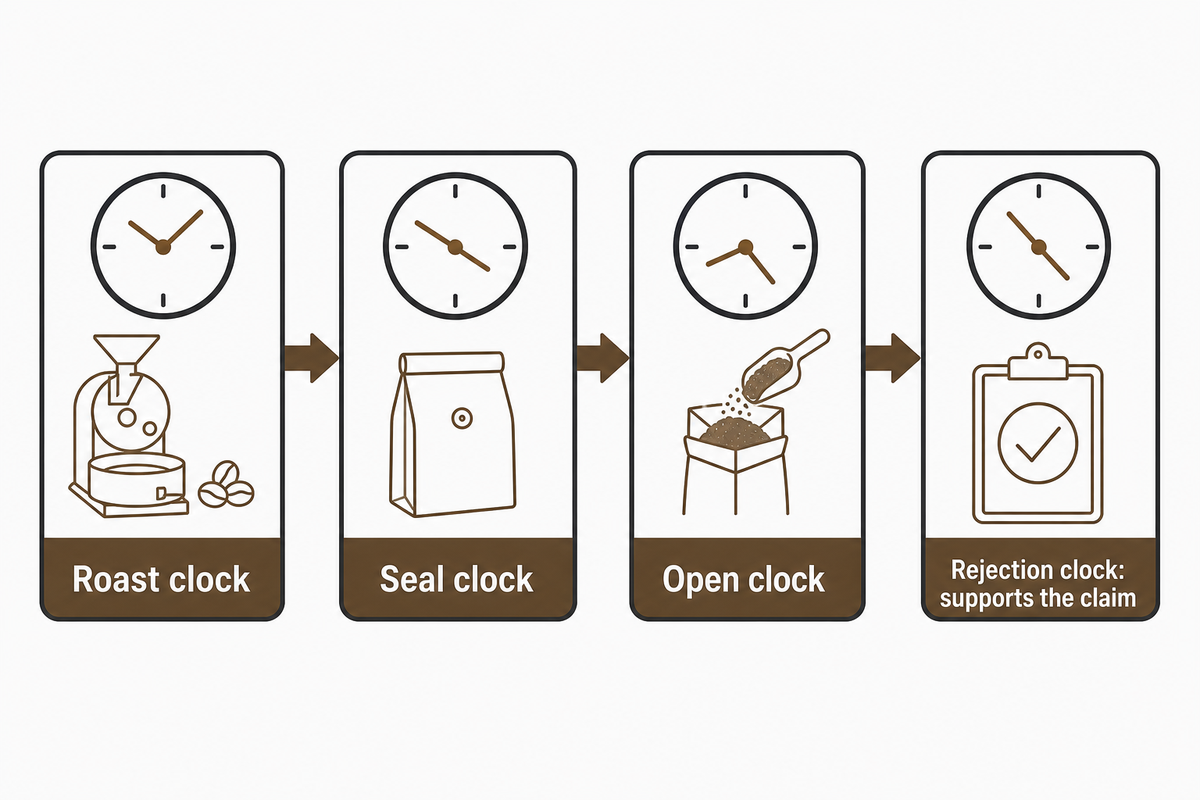
Quel registro delle prove inizia con quattro orologi separati Una data non può spiegare ogni fase della vita del caffè macinato Il Modello a scaffalatura a quattro blocchi impedisce a una squadra di lancio di combinare misurazioni diverse:
Inizia quando termina la tostatura Degasaggio e cambiamento volatile iniziano prima che il prodotto raggiunga la confezione.
Inizia quando viene effettuata la tenuta finale Il ritardo da arrosto a tenuta e l’atmosfera residua dello spazio di testa diventano parte della linea di base.
Inizia con la prima apertura del consumatore Il ricambio d’aria ripetuto può sopraffare il vantaggio dell’atmosfera originale.
Si ferma quando il prodotto supera un limite sensoriale o analitico definito Questo è l’orologio che supporta il claim.
Questi orologi spiegano perché i numeri di durata di conservazione apparentemente contrastanti possono essere tutti onesti Le linee guida per la produzione di birra fatta in casa possono descrivere il miglior sapore dopo l’apertura Uno studio può misurare il rifiuto del consumatore in una confezione controllata Il marchio può stampare una data di qualità su una busta non aperta Questi sono diversi endpoint Anche un risultato riportato a 25 °C o un obiettivo di spazio di testa dichiarato come percentuale appartiene alle sue condizioni di prova documentate, non a ogni confezione al dettaglio.
L’endpoint deve essere scritto prima dell’inizio del test Uno studio pubblicato sulla durata di conservazione del caffè tostato, ad esempio, ha definito l’endpoint come il punto in cui la metà dei consumatori ha rifiutato il prodotto. È più riproducibile di quanto “ abbia ancora un buon sapore,” ma non corrisponde automaticamente al cliente target, al metodo di produzione della birra o allo standard del marchio. Registrare il pannello, la ricetta della birra, l’acqua, le condizioni di servizio, la scala di punteggio e la soglia di rifiuto.
Quanto dura il caffè macinato in ogni stato della confezione?
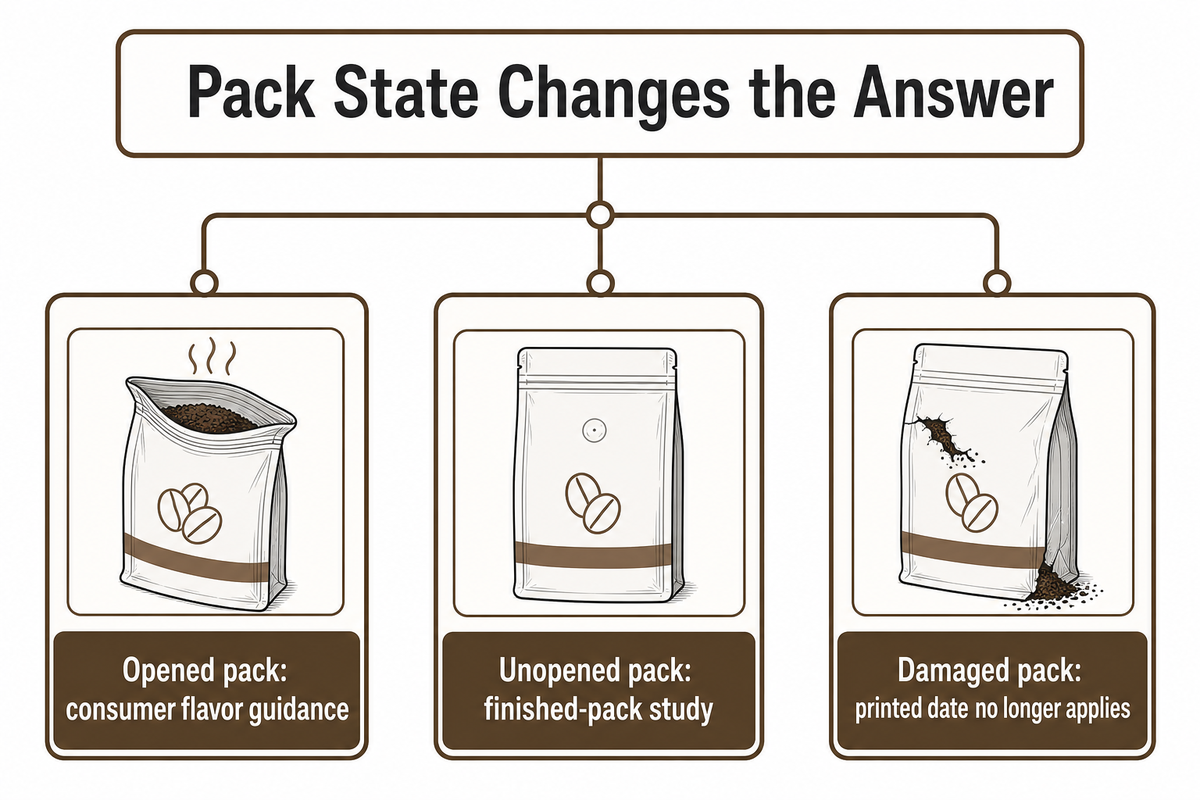
La tabella seguente è una mappa di pianificazione, non una tabella di rivendicazione delle etichette Solo la gamma open-pack è presentata come un target conservatore per i consumatori Le righe non aperte mostrano cosa cambia la risposta e cosa deve essere dimostrato Questo separa la guida domestica dalle prove necessarie per un rivendicazione della data commerciale.
| Tipo e stato del pacchetto | Risposta utile alla pianificazione | Incertezza principale | Sono necessarie prove di lancio |
|---|---|---|---|
| Sacchetto originale aperto | Mira a utilizzare entro 12 settimane per il miglior sapore | Frequenza di apertura e qualità di chiusura | Istruzioni per il test e la conservazione per uso del consumatore |
| Aperto, spostato in contenitore opaco ermetico | Può preservare la qualità meglio di una busta scarsamente richiusa | Spazio di testa del contenitore e accesso giornaliero | Simulazione ad uso definito |
| Inaugurato, aria ambiente imballata | Nessun periodo universale | Ossigeno, pellicola e guarnizione dello spazio di testa | Studio di stabilità del pacchetto finito |
| Non aperto, azoto lavato | Può sopravvivere a un controllo equivalente pieno d’aria | Raggiunto la ritenzione residua di ossigeno e gas | Registrazioni dell’ossigeno residuo più studio di stabilità |
| Non aperto, confezionato sottovuoto | Può ridurre l’ossigeno disponibile | Compattazione del prodotto, degasaggio e sollecitazione della tenuta | Qualificazione pacchetto/processo |
| Baccello o capsula monodose | Non trasferire i risultati a terra libera | Geometria e sistema di chiusura diversi | Test specifico per il formato |
| Porzione non aperta congelata | Il freddo può rallentare la perdita di qualità | Condensa durante la manipolazione | Protocollo di congelamento/scongelamento convalidato |
| Calda via di distribuzione | Aspettatevi una finestra di qualità più breve rispetto a un’archiviazione fresca | Profilo tempo-temperatura effettivo | Dati di percorso e correlazione accelerata/in tempo reale |
| Confezione danneggiata o che perde | La data stampata non è più applicabile | Ingresso sconosciuto di ossigeno e umidità | Criteri di rifiuto del sigillo e procedura di reclamo |
La revisione della letteratura della Specialty Coffee Association riassume uno studio in cui il caffè scaricato con azoto ha raggiunto una durata di conservazione sensoriale di sei mesi mentre un confronto non lavato ha raggiunto i tre mesi. Questa è una preziosa prova che l’atmosfera è importante. Non è il permesso di stampare sei mesi su un caffè, una pellicola, un peso di riempimento o una linea di sigillatura diversi. I risultati specifici dello studio sono la prova del meccanismo e un’ipotesi di partenza per il protocollo.
Perché il caffè macinato perde qualità più velocemente dei chicchi interi
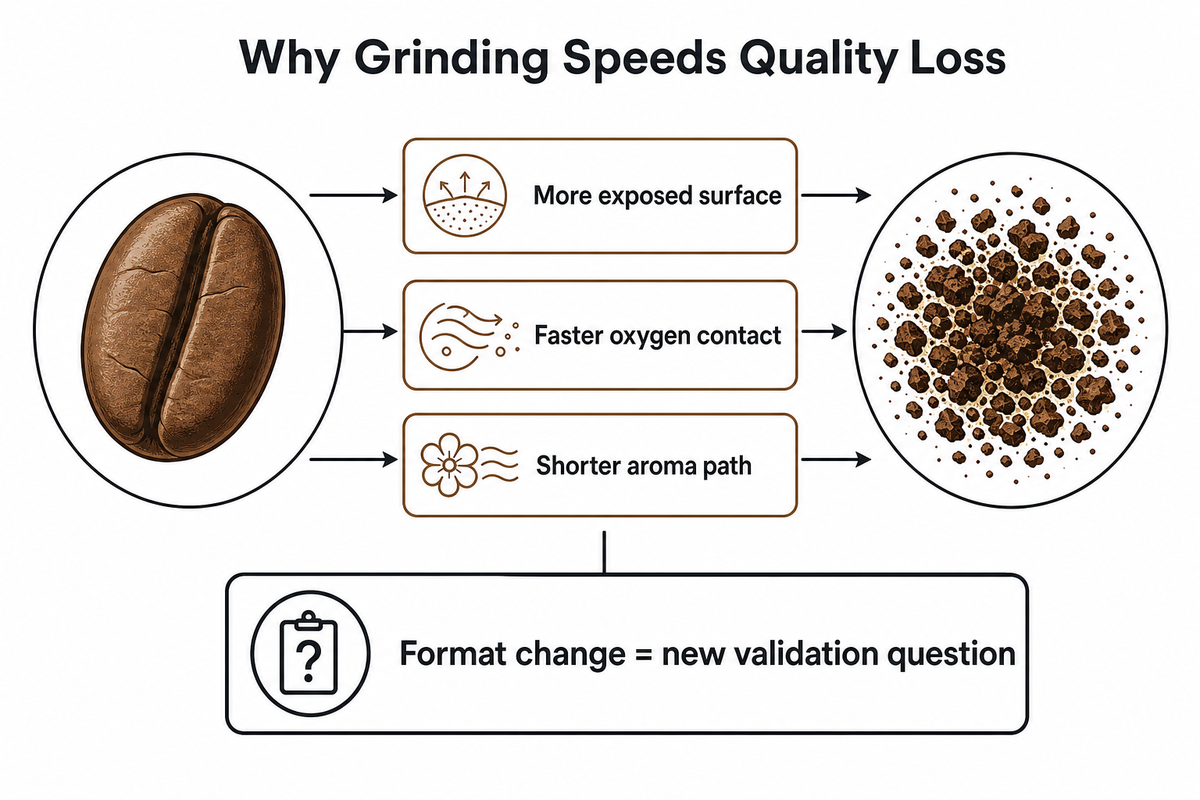
La macinazione espone molto di più del caffè al suo ambiente L’ossigeno può raggiungere più superficie, i composti aromatici hanno percorsi più brevi fuori dalle particelle e lo scambio di umidità diventa più consequenziale. Lavoro sottoposto a revisione paritaria sulle sostanze volatili del caffè tostato dimostra che la lavorazione e lo stoccaggio alterano i composti responsabili dell’aroma Il prodotto ha già una storia prima del confezionamento: lo sviluppo della tostatura, il raffreddamento, le condizioni di macinazione e il tempo di attesa influenzano tutti il punto di partenza.
Questo è il motivo per cui un prodotto sfuso non può prendere in prestito un’affermazione di durata di conservazione dei fagioli interi. Inoltre, non dovrebbe prendere in prestito il risultato di un baccello. I chicchi interi, il caffè macinato e le capsule hanno diverse aree superficiali esposte, geometrie dello spazio di testa, sistemi di chiusura e modelli di utilizzo da parte del consumatore. La modifica del formato crea una nuova domanda di convalida. Un marchio che valuta i baccelli dovrebbe trattare un macchina riempitrice per capsule di caffè come formato di imballaggio separato con un proprio piano di convalida.
Usa il caffè macinato aperto entro una o due settimane per la migliore tazza Tienilo ermetico, opaco, fresco e asciutto.
Utilizzare la data supportata dallo studio esatto del pacchetto finito, dai controlli di produzione e dall’endpoint di accettazione documentato.
Per gli acquirenti che confrontano i formati, la nostra guida separata su quanto durano i chicchi di caffè copre la questione dello stoccaggio dei fagioli interi. La presente guida rimane con il caffè pre-macinato e la convalida del lancio in modo che le due decisioni non vengano mescolate.
Integrità di ossigeno, umidità e tenuta: il triangolo del fallimento del pacchetto
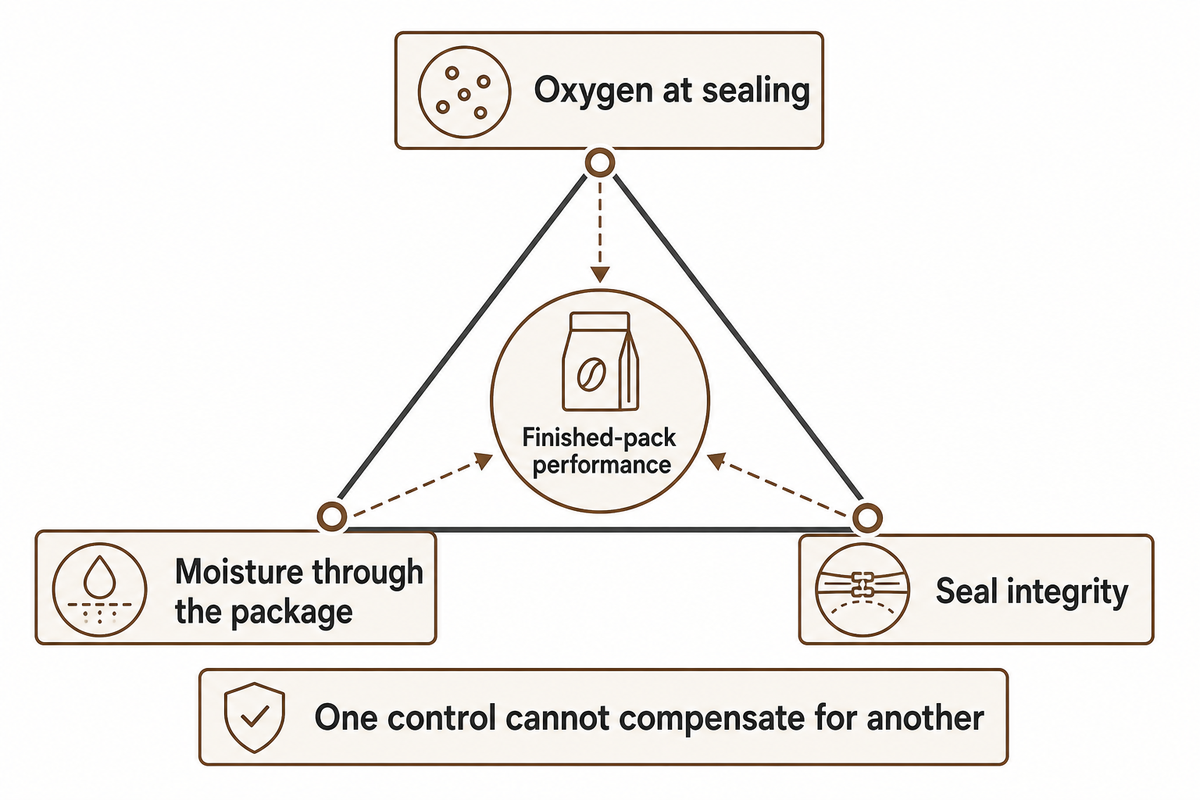
La convalida del caffè macinato ora passa ai controlli della confezione Anche un laminato resistente non può salvare un canale aperto nella guarnizione Allo stesso modo, una tenuta perfetta non può compensare l’eccessivo ossigeno residuo. Il basso ossigeno iniziale non aiuta indefinitamente se la confezione ammette ossigeno o vapore acqueo troppo rapidamente. Queste tre dipendenze formano il Triangolo di fallimento del pacchetto.
1. Ossigeno all’inizio
Misurare ciò che il processo effettivamente raggiunge, non ciò che offre il menu dell’apparecchiatura Il lavaggio con azoto può spostare l’aria, mentre il vuoto può rimuoverla, ma le impostazioni, il flusso del prodotto, l’altezza di riempimento e la velocità della linea influenzano il risultato Stabilire un piano di campionamento per l’ossigeno residuo dopo la sigillatura e definire un limite di azione; il pubblicato lo studio sensoriale sulla durata di conservazione illustra perché l’atmosfera e l’endpoint appartengono insieme Installare una funzione gas conferisce alla linea una capacità; le prestazioni misurate forniscono le prove.
2. umidità e gas attraverso la confezione
La selezione della pellicola è una decisione del sistema La trasmissione dell’ossigeno e la trasmissione acqua-vapore sono testate in condizioni specificate; i valori dei fornitori devono pertanto essere letti con la temperatura di prova, l’umidità, la struttura e le unità collegate Le interfacce inchiostro, cerniera, valvola, fazzoletto e tenuta possono modificare il comportamento del pacchetto finito Confrontare le strutture candidate nelle condizioni di distribuzione che contano per il prodotto.
3. Il sigillo così come prodotto
La contaminazione nell’area della tenuta, le rughe, la deriva della temperatura, la pressione, il tempo di permanenza e il disallineamento possono creare guasti intermittenti Un protocollo di durata di conservazione deve essere abbinato ai controlli di linea: ispezione visiva, resistenza alla tenuta o test di scoppio ove appropriato, rilevamento delle perdite e campioni conservati Se un sigillo è visibilmente danneggiato o la confezione ha perso integrità, la data stampata non descrive più la cronologia dell’esposizione del prodotto.
- Misurare l’ossigeno residuo sulle confezioni di produzione effettive.
- Testare insieme la geometria finale della pellicola, della valvola, della cerniera e della guarnizione.
- Conservare i ritardi da tostare a macinare e da macinare a sigillare nel registro dei lotti.
- Usa campioni in tempo reale per confermare le proiezioni accelerate.
- Convertire un’opzione di lavaggio con azoto in un’indicazione di durata di conservazione.
- Copiare il miglior risultato di un fornitore senza abbinare le condizioni di prova.
- Trattare una scheda tecnica della pellicola di passaggio come un pacchetto finito di passaggio.
- Risultati del trasferimento tra fagiolo intero, terreno sciolto e capsule.
Data di qualità, sicurezza alimentare e rischi a monte sono decisioni diverse
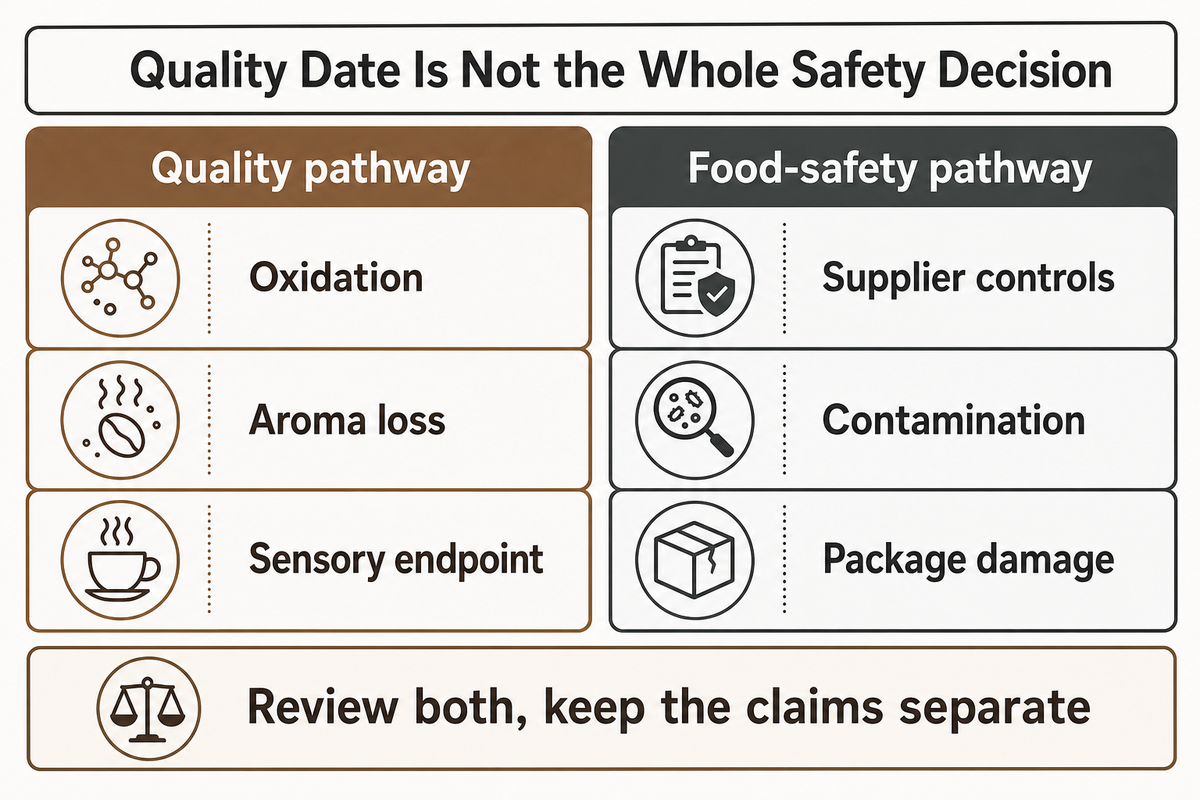
Quei controlli sui pacchetti rispondono a domande sulla qualità, non a tutte le domande sulla sicurezza alimentare. Negli Stati Uniti, guida federale sugli appuntamenti con prodotti alimentari generalmente descrive “Best se usato By” come una data basata sulla qualità piuttosto che un limite di sicurezza universale. Ciò aiuta a spiegare perché il caffè vecchio e secco è spesso stantio prima che non sia sicuro. Non elimina l’obbligo del produttore di controllare i rischi alimentari, rispettare le norme applicabili e indagare sui segni di contaminazione.
Mantenere separati due confini L’ossidazione e la perdita di aroma sono meccanismi di qualità del prodotto finito Il controllo delle micotossine è principalmente un problema di materia prima e di lavorazione a monte. Ricerca peer-reviewed sull’ocratossina A nel caffè traccia il rischio lungo tutta la catena di fornitura; una busta ad alta barriera non corregge il caffè in entrata contaminato. L’approvazione del fornitore, le specifiche, il campionamento e un piano di sicurezza alimentare appartengono all’indicazione della durata di conservazione sensoriale, ma non all’interno.
I consumatori dovrebbero scartare il caffè se la confezione presenta danni causati dall’acqua, muffe visibili, contaminazione da parassiti, un odore anomalo o un altro segno che il prodotto non è più valido Per una confezione secca intatta che ha semplicemente superato la data di qualità, il probabile problema potrebbe essere il sapore piuttosto che una brusca transizione alla sicurezza. I marchi dovrebbero chiedere agli specialisti della regolamentazione e della sicurezza alimentare di rivedere il linguaggio finale dell’etichetta per i mercati in cui verrà venduto il caffè.
Il nostro spiegante correlato su se il caffè scade affronta la differenza che il consumatore deve affrontare tra perdita di qualità e deterioramento in modo più dettagliato.
Costruisci un registro delle prove di lancio prima di scegliere la data
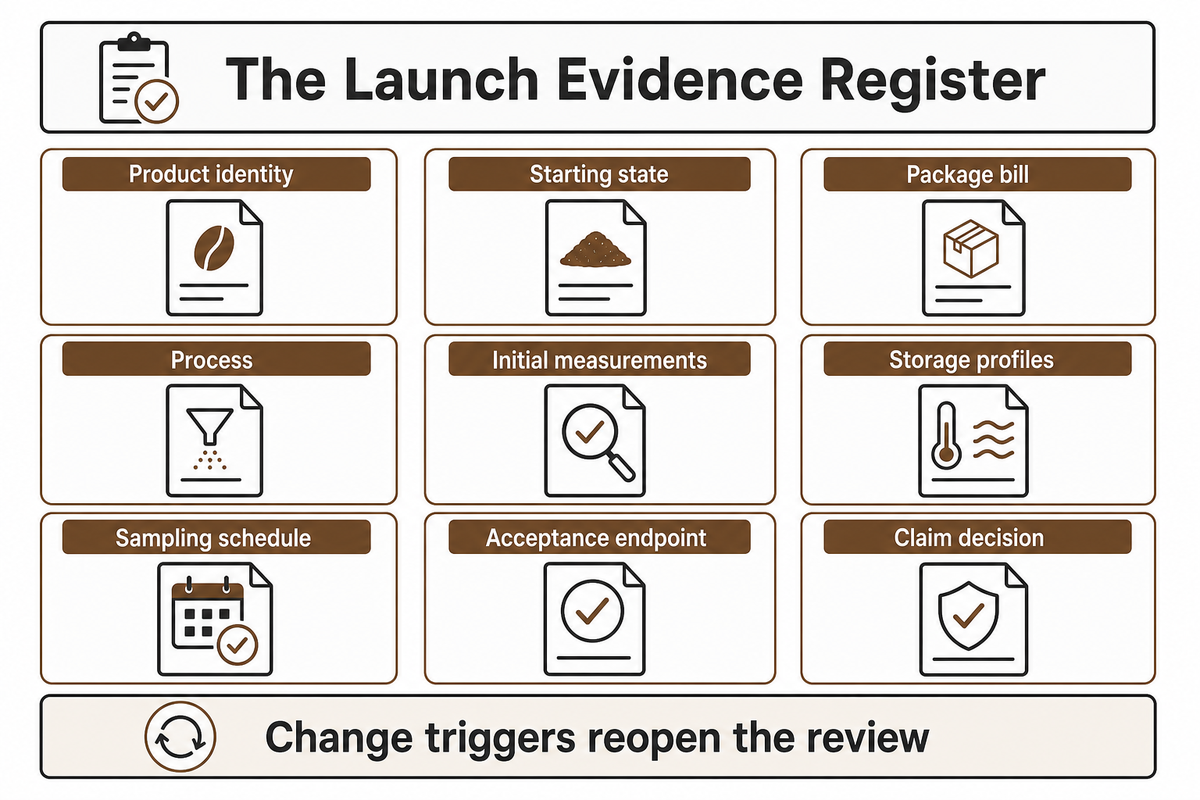
Il Avvia registro prove è un record compatto che collega ciascuna richiesta di durata di conservazione alle variabili che possono invalidarla. Trasforma “un test è stato completato” in qualcosa che i team di qualità, operazioni e marketing possono verificare, incluso il endpoint di rifiuto sensoriale dietro la data scelta.
| Registra campo | Cosa catturare | Perché può modificare il reclamo |
|---|---|---|
| Identità del prodotto | Origine/miscela, arrosto, distribuzione della macinazione e umidità | Definisce il caffè testato |
| Stato d’inizio | Data/ora di arrosto, raffreddamento, macinazione e ritardo da arrosto a sigillatura | L’imballaggio non può invertire la perdita di qualità del preconfezionamento |
| Pacchetto bolletta | Struttura del film, spessore, valvola, cerniera e lotto del fornitore | Rende riproducibile la barriera testata |
| Processo | Peso di riempimento, spazio di testa, impostazioni di scarico/vuoto e finestra del sigillante | Mostra che l’atmosfera e la tenuta erano controllate |
| Misure iniziali | Ossigeno residuo, risultato della tenuta e dati sensoriali/analitici di base | Imposta il tempo zero |
| Profili di archiviazione | Condizioni accelerate in tempo reale e giustificate | Collega il test alla distribuzione |
| Programma di campionamento | Lotti, repliche, intervalli e piano di mantenimento | Impedisce l’interpretazione selettiva |
| Endpoint accettazione | Pannello, protocollo di infusione, attributi e soglia di rifiuto | Definisce cosa significa “lasts” |
| Decisione di reclamo | Data supportata, margine di sicurezza, approvatore e trigger di modifica | Collega le prove all’etichetta stampata |
I trigger di modifica sono importanti quanto la prima approvazione Una nuova pellicola, una valvola diversa, un altro co-packer, una linea più veloce, una molatura rivista, una busta più grande, un ritardo da tostatura a tenuta più lungo o un percorso di distribuzione più caldo possono giustificare una revisione documentata e, a seconda del rischio, uno studio ponte o una riconvalida completa.
Come l’attrezzatura di imballaggio si adatta al piano di convalida
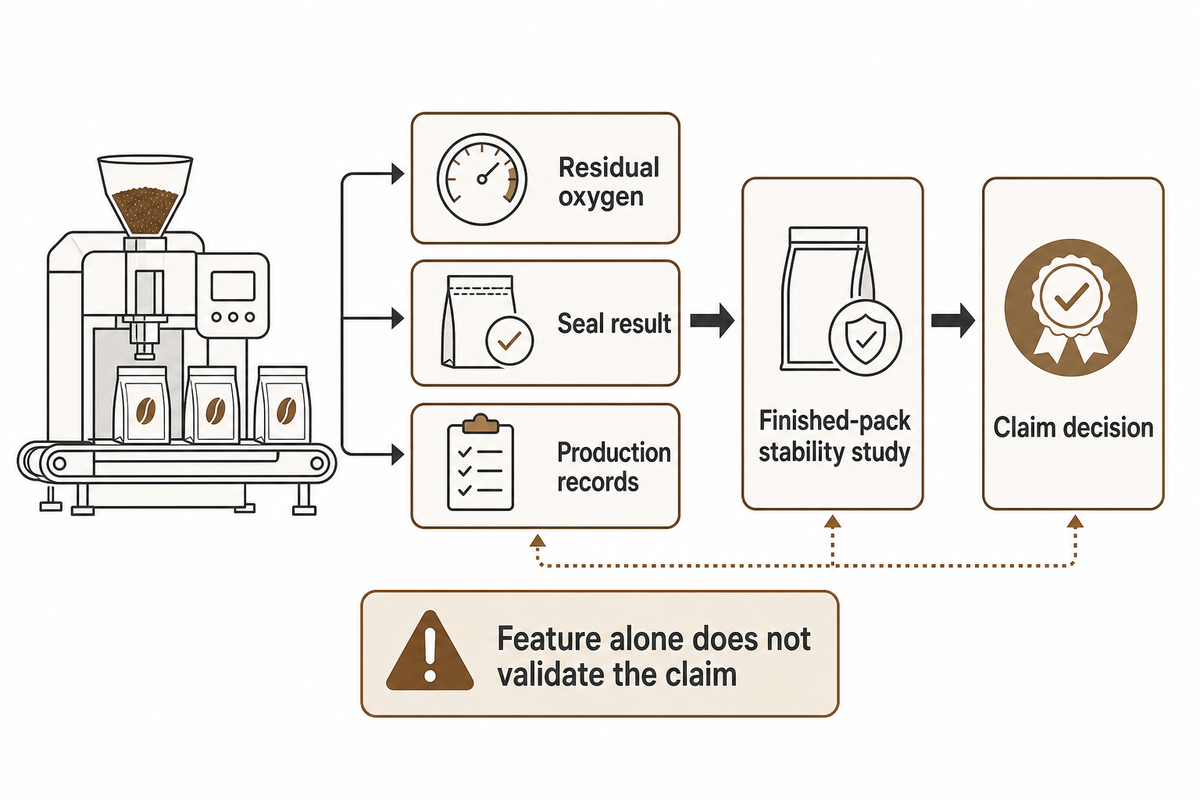
Il registro delle prove di lancio trasforma questi fattori scatenanti in requisiti per le prove sulle apparecchiature di imballaggio. UN macchina imballatrice della borsa del caffè determina quali variabili di processo possono essere controllate e registrate. AFPAK Sistema di confezionamento di caffè in grani e caffè macinato 2-in-1, ad esempio, presenta funzioni selezionabili tra cui vuoto, lavaggio con azoto e configurazioni relative alle valvole. Queste opzioni possono aiutare un team di progetto a definire le prove. Non stabiliscono da soli una durata di conservazione universale.
Utilizzare le discussioni sulle apparecchiature per porre domande verificabili: quale intervallo di ossigeno residuo è ottenibile alla velocità target e al peso di riempimento? Come viene stabilita e monitorata la finestra di tenuta? La linea può gestire la pellicola, la cerniera e la valvola scelte senza rughe o contaminazione? Quali dati possono essere conservati a sorte? Quali cambi richiedono nuove impostazioni o verifiche?
Un’utile prova di accettazione utilizza materiali e caffè di intensità di produzione Corri attraverso la finestra operativa prevista, non solo il punto centrale più semplice Campiona la produzione anticipata, media e tardiva; sfida i normali cambiamenti di velocità e il rotolo di pellicola; ispezionare le guarnizioni; misurare lo spazio di testa; e posizionare confezioni finite rappresentative in un studio di stabilità sensoriale. Tale sequenza rende la linea di confezionamento parte della catena di prova piuttosto che una scorciatoia di marketing.
“La funzione di imballaggio”A identifica una variabile da convalidare; non convalida la richiesta di durata di conservazione.”
Principio di revisione del lancio AFPAK
Revisione pre-lancio: una sequenza decisionale pratica
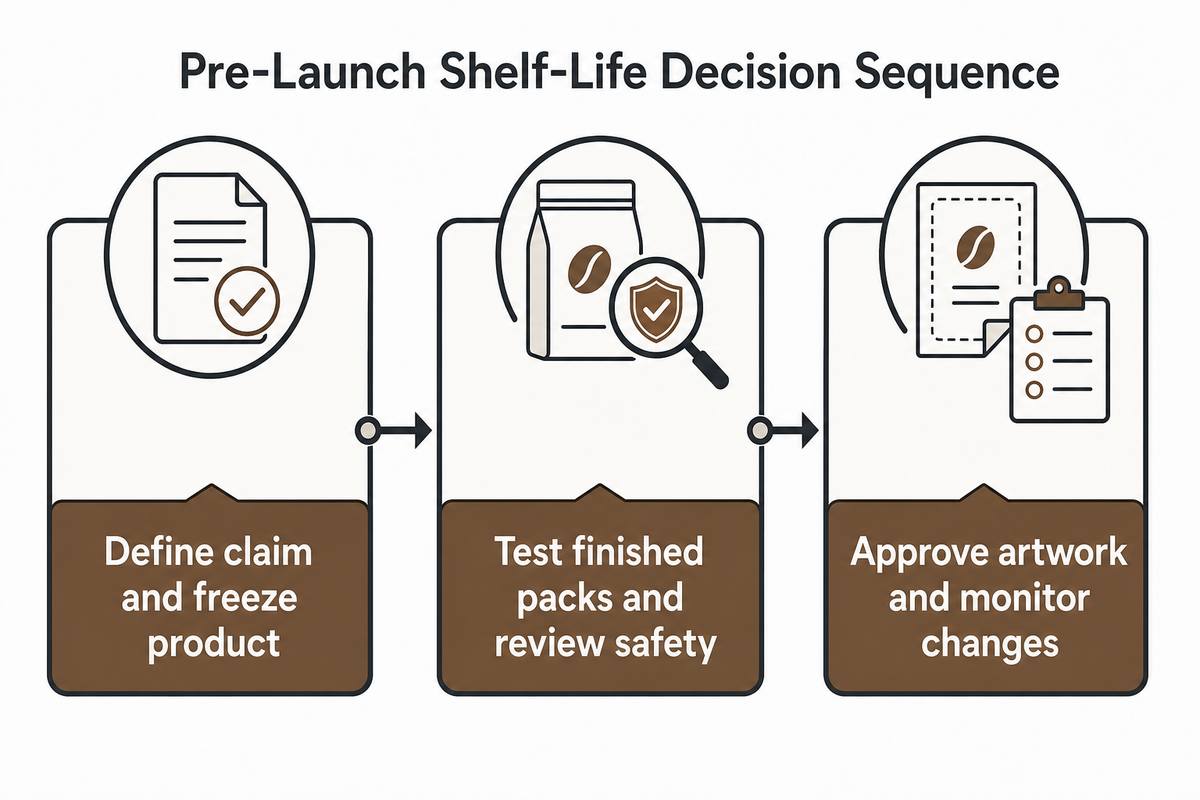
- Definire il reclamo e il mercato Indicare se la data riguarda la qualità non aperta, l’uso aperto o un altro endpoint Identificare i mercati e il applicabile revisione dell’etichettatura.
- Congelare la linea di base del prodotto Registrare le specifiche del caffè, arrostire, macinare e cronometrare prima della sigillatura.
- Congelare il pacchetto e il processo Identificare la struttura completa del pacchetto e le impostazioni della macchina convalidate.
- Scegli il metodo di accettazione Scrivi il protocollo di infusione, il design del pannello, gli attributi di qualità e la regola di rifiuto prima che i campioni vengano valutati.
- Eseguire il test del pacchetto finito Includere più di un lotto di produzione, lo stoccaggio in tempo reale e qualsiasi lavoro accelerato scientificamente giustificato.
- Rivedere separatamente la sicurezza Confermare i controlli dei fornitori, il piano di sicurezza alimentare, i criteri di contaminazione e la gestione dei reclami.
- Imposta il reclamo con margine Il marketing dovrebbe ricevere la data supportata e le condizioni esatte e le esclusioni ad essa allegate.
- Monitorare dopo il lancio Traccia conserva, sigilla record, reclami e modifiche che potrebbero innescare la riconvalida.
Per il sapore, da una a due settimane dopo l’apertura è una regola pratica conservativa per il consumatore Una durata di conservazione commerciale non aperta non è un numero generico: è il risultato di un prodotto, una confezione, un processo, un percorso di conservazione e un test di accettazione definiti.
Domande Frequenti
Le persone che chiedono se il caffè può durare spesso cercano di decidere se i vecchi fondi di caffè andranno male o semplicemente fare una tazza di caffè opaca Il caffè fresco ha più aroma, mentre il caffè raffermo può produrre caffè preparato che ha un sapore piatto anche quando rimane asciutto e intatto Per mantenere il caffè a casa, conservare il caffè in un contenitore ermetico lontano dal calore e dall’umidità; mantenere il caffè coperto tra gli usi Il caffè intero in grani generalmente protegge la freschezza più a lungo perché ha una superficie meno esposta Il caffè istantaneo è un formato di prodotto diverso e dovrebbe essere giudicato dalle sue stesse indicazioni sulla confezione In breve, il caffè può diventare stantio gradualmente; “coffee go badde”, una domanda di sicurezza richiede controlli per umidità, muffa, imballaggio danneggiato e odore insolito La confezione protegge la freschezza solo mentre la sua barriera e la chiusura rimangono intatte, e la promessa di freschezza del marchio dovrebbe corrispondere all’endpoint testato.
La ricerca comune “quanto dura il caffè macinato nello stoccaggio ermetico del contenitore?” non ha ancora un conteggio mensile universale Un contenitore ermetico può ridurre il ricambio d’aria dopo l’apertura, ma il caffè iniziale, lo spazio di testa, la frequenza di accesso, la temperatura e l’esposizione all’umidità continuano a modellare il risultato.
Perché le risposte sulla durata di conservazione del caffè sono in conflitto?
Le pagine di ricerca spesso combinano domande che utilizzano orologi diversi. “Quanto tempo il caffè rimane fresco?” chiede informazioni sul sapore, mentre la durata di conservazione del caffè può riferirsi a una data stampata non aperta. “Quanto tempo dura il caffè” è incompleto fino a quando non vengono nominati il formato del prodotto e l’endpoint. Il caffè fresco da una torrefazione e il caffè al suo apice sono idee di qualità, non limiti di sicurezza automatici. Questa distinzione è essenziale prima che un marchio selezioni un metodo di prova o stampi una data o un reclamo.
Il linguaggio del formato provoca un altro errore I chicchi di caffè interi espongono meno superficie delle particelle macinate, quindi i chicchi di caffè interi durano più a lungo del caffè macinato con una manipolazione comparabile In parole povere, i chicchi durano più a lungo del macinato e i chicchi di caffè tostati non dovrebbero prestare la data a un sacchetto di caffè macinato Il confronto tra chicchi o caffè macinato cambia una volta macinati i chicchi; il passaggio dai chicchi interi al caffè macinato crea una nuova condizione di partenza. “Ultimo più lungo del caffè macinato,” e “rispetto al caffè macinato e ”più veloce del caffè integrale descrivono tutti quel meccanismo relativo, non un conteggio mensile universale tra diversi tipi di caffè.
Anche le ricerche di stoccaggio si sovrappongono Se vuoi imparare a conservare il caffè, conservare il caffè macinato in un contenitore opaco ben chiuso e mantenerlo fresco e asciutto, Gli stessi consigli appaiono come conservare il caffè macinato, mantenere il caffè fresco, mantenere il caffè fresco o il caffè dovrebbe essere conservato lontano dai nemici della freschezza del caffè: il ricambio d’aria ripetuto, l’umidità e il calore L’acquisto di chicchi di caffè e la macinazione di piccole quantità possono aiutare un’esperienza di caffè incentrata sull’aroma, ma un sacchetto di chicchi di caffè e un sacchetto di fondi di caffè hanno ancora bisogno della loro manipolazione Dividere un grande sacchetto di caffè in porzioni più piccole se si desidera caffè in piccoli lotti, e trattare il caffè non aperto separatamente da un sacchetto aperto Il caffè nel congelatore ha bisogno di un piano di controllo dell’umidità se l’obiettivo è il caffè da conservare il più a lungo possibile Gli oli nel caffè e altri composti contenenti aromi possono ancora cambiare durante la conservazione.
Altri frammenti rispondono a prodotti diversi. “Dì se il caffè è andato male” e il caffè è andato male“ può riferirsi a umidità, muffa o danni alla confezione, mentre il caffè macinato diventa stantio descrive il declino sensoriale Il caffè non scade in un giorno di qualità universale e il caffè oltre la sua data di scadenza non è automaticamente pericoloso; il caffè secco è generalmente considerato sicuro solo quando rimane sano e incontaminato Una tazza di caffè mattutino, caffè caldo appena preparato o caffè nero ha un orologio post-birrificato ricco di acqua che questa guida al prodotto secco non convalida. Affermazioni come il caffè preparato nero ” durano da 3 a 4 giorni, il“ da 3 a 3 a 4 giorni o il caffè nero ” può durare solo per quanto riguarda la conservazione preparata della bevanda, non per i fondi secchi. Il caffè istantaneo può durare in un’altra sequenza temporale perché il caffè istantaneo è prodotto con un processo diverso. Allo stesso modo, un’affermazione di “last up a due anni” necessita di prove per quel prodotto e confezione esatti non guadagna una durata di conservazione più lunga semplicemente perché un prodotto di ricerca lascia cadere le condizioni.
Quanto dura il caffè macinato una volta aperto?
Per il sapore, una o due settimane sono una regola pratica conservativa dopo l’apertura Mantenere la chiusura stretta e conservare la confezione in un luogo fresco, buio e asciutto Questa non è una scadenza fissa per la sicurezza o un’indicazione universale sul prodotto L’apertura giornaliera, una debole richiusura, calore e umidità possono rendere il declino sensoriale più veloce.
Quanto dura il caffè macinato non aperto?
Non esiste un unico numero difendibile per ogni caffè macinato non aperto. La risposta dipende dallo stato iniziale del prodotto, dall’ossigeno residuo, dalla struttura della barriera, dall’integrità della tenuta, dalla temperatura di conservazione e dall’endpoint sensoriale utilizzato. I marchi commerciali dovrebbero supportare la data stampata con test della confezione finita sul prodotto esatto e sul pacchetto di intenti di produzione.
Il lavaggio con azoto fa durare più a lungo il caffè macinato?
Il lavaggio con azoto può ridurre l’ossigeno nello spazio di testa e può prolungare la durata di conservazione sensoriale rispetto a una confezione equivalente riempita d’aria. Il vantaggio dipende dall’ossigeno residuo raggiunto, dalla barriera ai gas della confezione e dall’integrità della tenuta. Una funzione di azoto installata è quindi una capacità di processo, non una prova di un particolare numero di mesi.
Il caffè macinato può essere utilizzato dopo la data di scadenza?
La data di qualità non segna necessariamente un brusco cambiamento di sicurezza Non utilizzare caffè con danni causati dall’acqua, muffe, contaminazione da parassiti, sigillo rotto o odore anomalo Seguire le istruzioni del produttore e i consigli locali applicabili sulla sicurezza alimentare con un imballaggio intatto.
Quanto dura il caffè macinato in frigorifero o in congelatore?
Per l’uso quotidiano, scegli un contenitore opaco ermetico in un armadio fresco e asciutto I frigoriferi possono introdurre umidità e odori; il congelamento richiede porzioni sigillate e un attento scongelamento per prevenire la condensa Il ciclo ripetuto della temperatura può accelerare la perdita di qualità, quindi il protocollo di manipolazione è importante.
Cosa dovrebbe convalidare un tostapane prima di stampare un reclamo sulla durata di conservazione?
Convalidare il prodotto finito e imballare insieme: specifiche del caffè, ritardo da tostatura a tenuta, macinazione, costruzione della confezione, ossigeno residuo, processo di sigillatura, profilo di conservazione ed endpoint sensoriale Utilizzare più lotti rappresentativi, predefinire la regola di accettazione, conservare i registri di produzione e identificare i cambiamenti di materiale o processo che innescano la revisione Includere il peso di riempimento target e la velocità della linea, esaminare i campioni dalla produzione normale e conservare abbastanza unità per il programma completo Documentare il protocollo prima che i campioni entrino in deposito in modo che ogni lotto sia giudicato rispetto alla stessa base predefinita.
Se una pellicola, una valvola, una cerniera, le specifiche del caffè, un co-packer o un percorso di distribuzione cambiano, documenta se le prove esistenti sono ancora valide. Marketing, qualità e operazioni dovrebbero approvare la stessa definizione di reclamo in modo che la data stampata non superi le condizioni testate.
Riferimenti e fonti
- Registro federale: richiesta FDA e USDA di informazioni sull’etichettatura della data degli alimenti
- Servizio di ispezione e sicurezza alimentare dell’USDA: incontri sui prodotti alimentari
- Specialty Coffee Association: rassegna della letteratura sullo staling del caffè tostato
- National Coffee Association: guida alla conservazione del caffè
- Revisione peer-reviewed degli aromi e dei composti volatili nel caffè tostato
- Pubblicato lo studio sensoriale sulla durata di conservazione utilizzando il rifiuto del consumatore come endpoint
- Pubblicata ricerca sugli effetti di lavorazione e sugli indici di freschezza del caffè
- Revisione peer-reviewed: ocratossina Una presenza e controllo attraverso la catena del caffè
Questo articolo fornisce informazioni sull’imballaggio e sulla pianificazione della qualità, non sostitutive di una valutazione della sicurezza alimentare, normativa o della durata di conservazione specifica del prodotto.


