
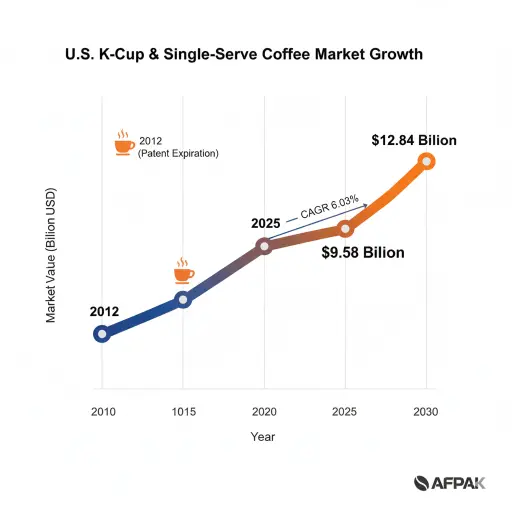
K-Cup packaging represents a strategic growth opportunity for small coffee brands in the United States. The U.S. single-serve coffee market continues to expand, creating meaningful opportunities for small roasters, private-label brands, and regional producers. According to Mordor Intelligence, the U.S. coffee pods and capsules market is valued at approximately $9.58 billion in 2025 and is projected to reach $12.84 billion by 2030, growing at a CAGR of 6.03%.
For small coffee brands, entering the K-Cup segment is no longer a high-risk decision reserved for large corporations. With today’s automated K-Cup filling and sealing machines, even small teams can launch professional-grade single-serve coffee products efficiently, control costs, and scale production at their own pace.
Who Should Read This Guide?
This article is specifically for U.S.-based small coffee roasters, private-label coffee brand owners, regional coffee shops expanding into pods, and startup coffee subscription services considering K-Cup production for the first time.
You’ll get clear answers to the three most important questions:
- Is K-Cup packaging a strategic fit for your current scale and goals? (Short answer: Yes, if your monthly target is 50K+ pods.)
- What realistic investment is needed to start? (Entry-level: $15K–$30K total setup.)
- How do you choose between co-packing, entry-level machines, or scaling later? (We’ll cover all three paths.)
If you’re evaluating single-serve coffee production options like K-Cup filling machines or coffee pod packaging solutions, this guide will help you make an informed decision without guesswork.
How the Keurig Patent Expiration Opened Doors for Small Brands
When Keurig’s core K-Cup patents expired in 2012, the structure of the single-serve coffee market changed permanently. Before that point, producing K-Cups required licensing agreements, proprietary materials, and large-scale manufacturing capabilities—barriers that effectively excluded small and mid-sized roasters.
After the patent expiration, several structural shifts occurred:
1. Compatibility Replaced Exclusivity
Small coffee brands could produce K-Cups compatible with existing Keurig brewing systems without legal or technical restrictions. This instantly gave them access to millions of machines already installed in U.S. homes, offices, and hospitality environments.
2. Equipment Technology Matured Rapidly
Manufacturers began offering standardized, automated coffee pod filling machines designed specifically for third-party producers. These machines brought consistent dosing, reliable sealing, and repeatable output to smaller operations—capabilities that were once limited to industrial-scale plants.
3. Private-Label and Regional Branding Became Viable
Small roasters could now create K-Cup products for offices, corporate gifting, subscription services, and local retailers without needing massive volume commitments. Instead of competing on price with national brands, they could compete on freshness, flavor, and brand story—creating what industry analysts call specialty coffee experiences.
In practical terms, the patent expiration didn’t just open the market—it lowered the technical and financial threshold for entry, making K-Cup packaging a realistic production format for small U.S. coffee brands.
Bottom Line: Patent Expiration Made K-Cups Accessible
The patent expiration didn’t just open the market—it created a complete ecosystem of compatible materials, automated K-Cup filling and sealing machines, and packaging options that any serious small roaster can access today.
Small brands now have three clear entry paths: co-packing for ultra-low volume testing, entry-level automated machines for 50–200 CPM production, or hybrid models that scale over time. Explore specific K-Cup machine options here.
The Shift in Home Brewing: Why Demand Is Here to Stay
Even before COVID-19, home coffee consumption was growing steadily. The pandemic accelerated this trend, and the behavioral shift appears permanent. According to the National Coffee Association, at-home coffee consumption has remained elevated even as workplaces reopened.
Convenience Rules Modern Coffee Culture
Single-serve pods are quick, easy, and fit modern lifestyles perfectly. Even small-scale production can reach a wide audience without relying solely on cafés or commercial clients. The AFPAK H1 K-Cup filling machine, for example, enables small roasters to produce 40-60 capsules per minute—ideal for businesses just starting their single-serve journey.
Consistency Drives Consumer Loyalty
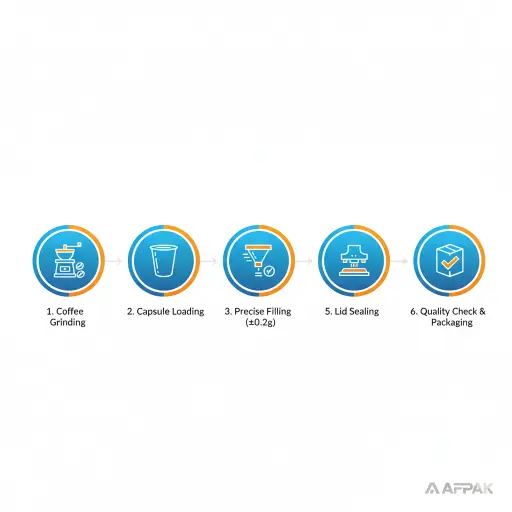
Home brewers expect the same great flavor every time. Automated coffee capsule filling equipment ensures precise dosing (typically ±0.2g accuracy), even tamping, and airtight sealing. This level of precision means every cup at home tastes like it was brewed at a specialty café.
Multiple Sales Channels Create Revenue Diversity
Home brewing supports direct-to-consumer subscriptions, local retail partnerships, and office delivery programs. Small brands can leverage K-Cup packaging solutions to offer premium or regional blends that resonate with consumers seeking authentic coffee experiences.
This long-term shift in home consumption makes K-Cups a strategic production choice for small U.S. coffee brands seeking sustainable growth.
Practical Scenarios Where K-Cups Excel for Small Brands
K-Cup packaging shines in these five high-demand scenarios where small U.S. coffee brands have natural advantages:
- Coffee Subscription Boxes: Offer 12–24ct boxes of single-origin or seasonal blends. Subscribers love the convenience and freshness of small-batch pods.
- Office Coffee Programs: Supply offices/hotels with 96ct bulk boxes. Recurring B2B orders provide stable revenue without retail distribution headaches.
- Private-Label Partnerships: Produce custom K-Cups for regional retailers or corporate gifting. Low MOQs (5,000–10,000 pods) make this accessible.
- Local Retail Expansion: Stock 12ct boxes in grocery stores, coffee shops, or farm stands. Regional branding creates loyalty big brands can’t match.
- Seasonal/Limited Editions: Test small runs (10K–50K pods) of holiday flavors or collaborations. Perfect for agile small roasters.
These channels let small brands capture premium pricing while leveraging the convenience factor that drives K-Cup demand.
Why Small Coffee Brands Are Well-Positioned in the K-Cup Market
Small U.S. coffee brands have several competitive advantages that make K-Cup packaging particularly attractive:
-
Agility: Small roasters can test new blends, seasonal flavors, or limited editions quickly. They can pivot production or marketing strategies almost in real-time, something large national brands cannot do as easily.
-
Local Loyalty: Many consumers actively prefer locally-sourced products. Small brands can tap into regional pride by offering K-Cups that big brands can’t match in personal touch, sourcing transparency, and community connection.
-
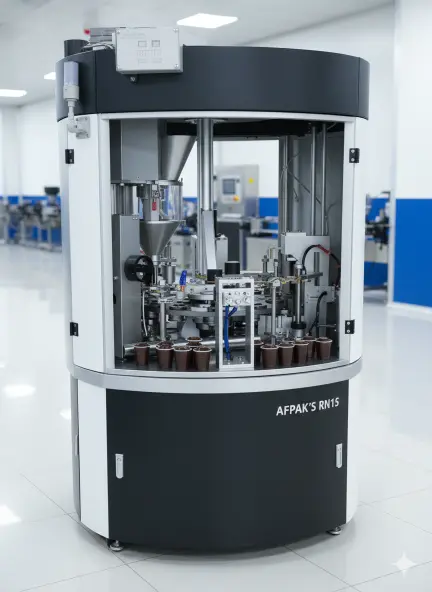
Affordable Entry: Entry-level automated K-Cup filling machines like the AFPAK RN1S start around $25,000-$35,000. This accessible price point allows small producers to begin production without massive capital investment, then scale at their own pace.
-
High-Quality Output Through Automation: Modern coffee capsule packaging systems deliver precise dosing, even tamping, and airtight sealing, keeping coffee flavor, aroma, and freshness consistent. Automation handles critical factors like humidity control, nitrogen flushing, and sealing pressure, ensuring pods taste great every time.
-
Efficient Operations: Small teams can run multiple production shifts without proportionally increasing labor costs. Automation frees staff to focus on marketing, product development, and customer engagement—activities that directly drive brand growth.
-
Brand Differentiation: Small brands can create single-origin blends, unique roast profiles, or seasonal flavors. Coupled with automated production quality, these high-quality pods compete effectively with larger brands while maintaining a boutique identity.
-
Flexible Distribution: Small brands can supply subscription services, local retailers, and office programs without building massive distribution networks, creating multiple revenue streams with manageable logistics.
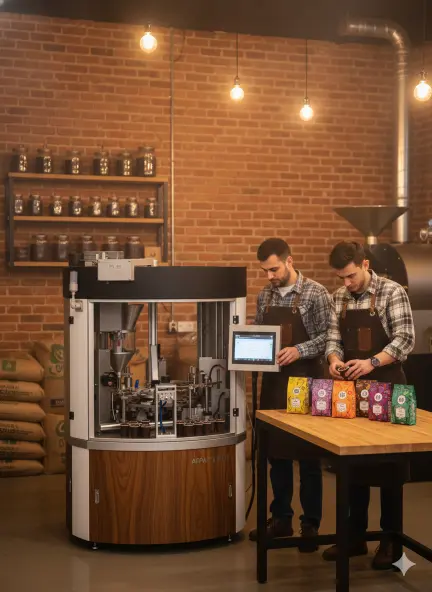
In short, small coffee brands can enter the K-Cup market strategically, achieving profitability, consistency, and consumer loyalty without large-scale overhead or infrastructure investments.
Three Main Paths Into K-Cup Production: Choose Your Fit
Small brands have three practical paths into K-Cup production. Here’s how they compare:
| Production Path | Best For | Startup Investment | Monthly Minimum | Control Level | Scalability |
|---|---|---|---|---|---|
| Co-Packing | Volume testing, no equipment | $5K–$15K (materials + MOQ) | 10K–50K pods | Low | Limited |
| Entry-Level Machine (40–70 CPM) | Steady small production | $15K–$30K (machine + setup) | 50K–200K pods | High | Good |
| Hybrid (Co-pack → Own Machine) | Risk minimization | $10K first year, $20K Year 2 | Flexible | Medium → High | Excellent |
Quick Decision Guide: Choose co-packing if you’re under 50K pods/month. Go entry-level machine if 50K–300K. Hybrid works best for most growing brands. See machine comparison.
Cost-Effective Entry: Production Planning Reference
Even entry-level machines make production planning straightforward. The following table provides practical reference figures for small roasters evaluating equipment investment and shift scheduling:
Note: These are reference figures based on typical operating conditions. Actual results vary depending on machine model, operator experience, maintenance schedules, and production efficiency.
| Machine Model | Capacity (CPM) | Daily Output (8hrs) | Weekly (5 days) | Best For |
|---|---|---|---|---|
| H1 Entry Level | 40-60 | 19,200-28,800 | 96K-144K | Startups |
| RN1S Rotary | 50-70 | 24,000-33,600 | 120K-168K | Small Brands |
| RN120 Rotary | 100-120 | 48,000-57,600 | 240K-288K | Growing Brands |
| H-Series Linear (2-lane) | 200-240 | 96,000-115,200 | 480K-576K | Mid-size |
| H-Series Linear (4-lane) | 400-480 | 192,000-230,400 | 960K-1.15M | Large Scale |
This table gives small roasters a clear understanding of production potential across different equipment tiers, helping them plan equipment investment and shift schedules without overextending resources. For detailed specifications and customized production planning, visit our K-Cup filling machines page.
How to Use These Numbers for Real Planning
Monthly Target → Machine Match:
- 10K–50K pods/month: H1 entry-level (run 1–2 shifts/week).
- 50K–200K pods/month: RN1S rotary (1 daily shift).
- 200K+ pods/month: RN120 or H-Series (full production).
Pro Tip: Always plan 20–30% extra capacity for maintenance, seasonal peaks, or new flavor testing. Not sure about your numbers? Share your target monthly pod volume and lead time—we’ll run the exact production math for your operation.
Key Advantages for Small U.S. Coffee Brands
-
Growing Market: Strong market projections through 2030 (CAGR 6.03%) make this a prime time to enter the single-serve coffee segment.
-
Accessible Technology: Automated coffee pod production equipment is now affordable, energy-efficient, and designed for easy integration into existing roasting operations.
-
Operational Flexibility: Start small with entry-level equipment and scale production capacity as customer demand grows, minimizing financial risk.
-
Quality-Driven Brand Differentiation: Superior flavor, aroma preservation, freshness, and packaging quality drive consumer loyalty in the specialty coffee market.
-
Multiple Revenue Channels: K-Cups work perfectly for subscription services, local retail partnerships, and corporate office programs, creating diversified income streams.
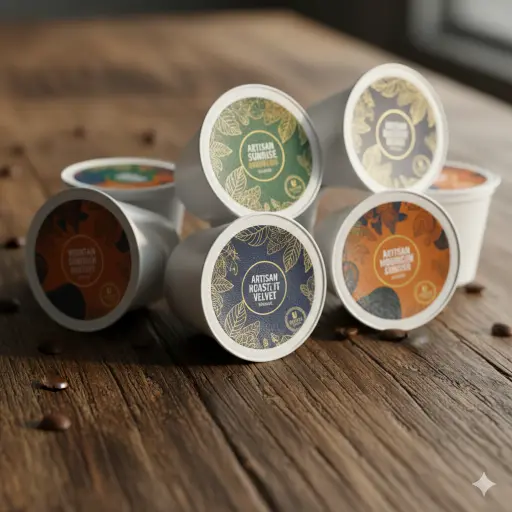
K cup coffee for pravite label service
Together, these factors make K-Cup production a strategic format for small coffee brands seeking sustainable growth in the competitive U.S. coffee market.
Step-by-Step Roadmap: Launch Your First K-Cup Line in 90 Days
Follow these 5 steps to go from idea to first production run:
- Define Target & Channels (Week 1–2): Who buys? (Subscriptions, offices, retail?) Estimate first 6 months’ monthly pod volume.
- Choose Entry Path (Week 3): Co-pack (quickest), entry machine ($15K–$30K), or hybrid. Match to your budget and volume.
- Select Specs (Week 4–6): Capsule material, nitrogen flush needs, box count (12/24/96ct), basic artwork. Get supplier quotes.
- Pilot Production (Week 7–10): Run 5K–10K test batch. Brew-test flavor consistency, get customer feedback.
- Scale & Optimize (Week 11+): Ramp to target volume, refine packaging/branding based on sales data.
Most small brands hit profitability within 6 months following this roadmap. Need help with Step 2? Request a free production planning session.
Conclusion: Your Strategic Path Forward
The U.S. K-Cup market offers small coffee producers a low-risk, high-reward path into single-serve coffee production. With the right automated K-Cup filling and sealing machines and careful production planning, small brands can launch profitable K-Cup lines, differentiate themselves through quality and authenticity, and secure a loyal consumer base—all without massive overhead or infrastructure investments.
Ready to explore K-Cup production for your coffee brand? Contact AFPAK today for a free consultation on the right equipment for your production goals. With over 15 years of experience and 500+ installations worldwide, we help small coffee brands turn their single-serve vision into reality.
5 Common Mistakes Small Brands Make (And How to Avoid Them)
Don’t let these trip you up when launching K-Cups:
- Overbuying Capacity: Starting with 400CPM machines when 50CPM is plenty. Fix: Match machine to your first 12 months’ realistic volume.
- Ignoring Packaging Lead Times: Custom boxes/labels take 4–8 weeks. Fix: Order 3 months ahead, start with stock designs.
- Skipping Oxygen Control: Poor sealing kills flavor in 2–3 months. Fix: Insist on nitrogen flushing and <1% residual oxygen.
- No Pilot Testing: Launching full production without brew-testing. Fix: Always run 5K–10K pilot batch first.
- Treating It as One-Off: K-Cups need ongoing optimization like any core product. Fix: Plan for seasonal refreshes and data tracking.
Avoiding these puts you ahead of 80% of new entrants.
Frequently Asked Questions About K-Cup Production
Is K-Cup production too capital-intensive for small roasters?
No, entry-level automated K-Cup machines start at $10K–$15K.
How important is production volume when starting K-Cup packaging?
Volume matters, but flexibility and quality matter more. Small brands do not need massive output at launch. The ability to produce consistently, control costs per unit, and respond quickly to market demand is often more valuable than high initial capacity. Starting with 40-70 cups per minute allows you to test the market, refine your product, and build customer loyalty before scaling up.
Are automated K-Cup machines difficult to operate?
Most entry-level machines are designed for straightforward operation with minimal staffing requirements. Modern systems like the AFPAK H1 feature intuitive touchscreen controls, automated error detection, and PLC-based systems that guide operators through setup and troubleshooting. In many cases, a single trained operator can manage production, making them suitable for small teams and owner-operated businesses.
Does K-Cup packaging affect coffee freshness or flavor?
When properly filled and sealed with adequate nitrogen flushing, K-Cups preserve flavor very effectively. The key factors are consistent dosing, high-quality sealing (preventing oxygen ingress), and controlled packaging conditions. Professional coffee capsule filling equipment achieves residual oxygen levels below 1%, which keeps coffee fresh for 12-18 months when stored properly. Quality and freshness depend more on production standards than on production scale.
Is K-Cup production suitable for private label or office coffee programs?
Absolutely. K-Cups are widely used in offices, hospitality, and corporate settings. For small brands, private-label and office programs often provide stable, predictable order volumes without the complexity of consumer retail distribution. These B2B channels can be excellent starting points for new K-Cup producers, offering steady revenue while you build brand recognition in retail markets.
What is a realistic minimum budget to start K-Cup production?
Typical startup range: $15K–$35K for equipment + materials + first run.**
This covers an entry-level machine ($10K–$15K), initial cups/lids/boxes ($3K–$5K), basic artwork/setup ($2K), and 10K–20K pod pilot run. Co-packing path drops equipment to $0 but raises per-pod costs 20–30%. Exact budget depends on your volume target and whether you own or lease equipment.
Related Articles and Resources
- Complete Guide to Rotary K-Cup Machines for Small Businesses
- Nespresso vs K-Cup: Choosing the Right Capsule Format
- Coffee Pod Filling Solutions: Equipment Comparison Guide
- Building Your Coffee Brand with Capsule Packaging
About the Author
Jess Wang | Sales Engineer at AFPAK
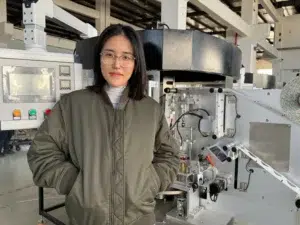
Jess Wang joined the AFPAK team in 2025, bringing exceptional English proficiency (TEM-8 certified) and a passion for helping coffee brands succeed in the single-serve market. With her enthusiastic and open-minded approach, Jess combines strong learning capabilities with a unique understanding of packaging machinery. Her expertise lies in matching small coffee roasters with the right K-Cup production solutions to achieve their business goals.
Connect with Jess for personalized equipment consultations at www.afpakmachine.com
About AFPAK
AFPAK is a leading manufacturer of coffee capsule filling and sealing equipment, serving over 500 customers worldwide with 15+ years of industry experience. We specialize in helping small and mid-sized coffee brands enter the single-serve market with affordable, high-quality production solutions.
Article Written by: Jess Wang, Sales Engineer
Published: January 2026
Company: AFPAK Packaging Machinery
Website: www.afpakmachine.com
For equipment inquiries or technical consultations, contact Jess Wang at AFPAK.


