
Brazil coffee brands include everyday labels such as 3 Corações, Pilão and Melitta, specialty roasters such as Lucca and Coffee Lab, and instant options including Iguaçu, Pelé and Maratá. For a first purchase, choose the format your brewer needs: ground coffee for a filter, whole beans for a grinder, soluble coffee for convenience, or capsules for one named machine system.
For a daily filter brew, begin with a stocked 3 Corações, Pilão or Melitta product; for a named specialty lot, explore Lucca, Coffee Lab or Um. A familiar name can cover several roasts, blends and formats. This guide separates those choices and explains the differences that matter before you order.
How we selected these Brazil coffee brands
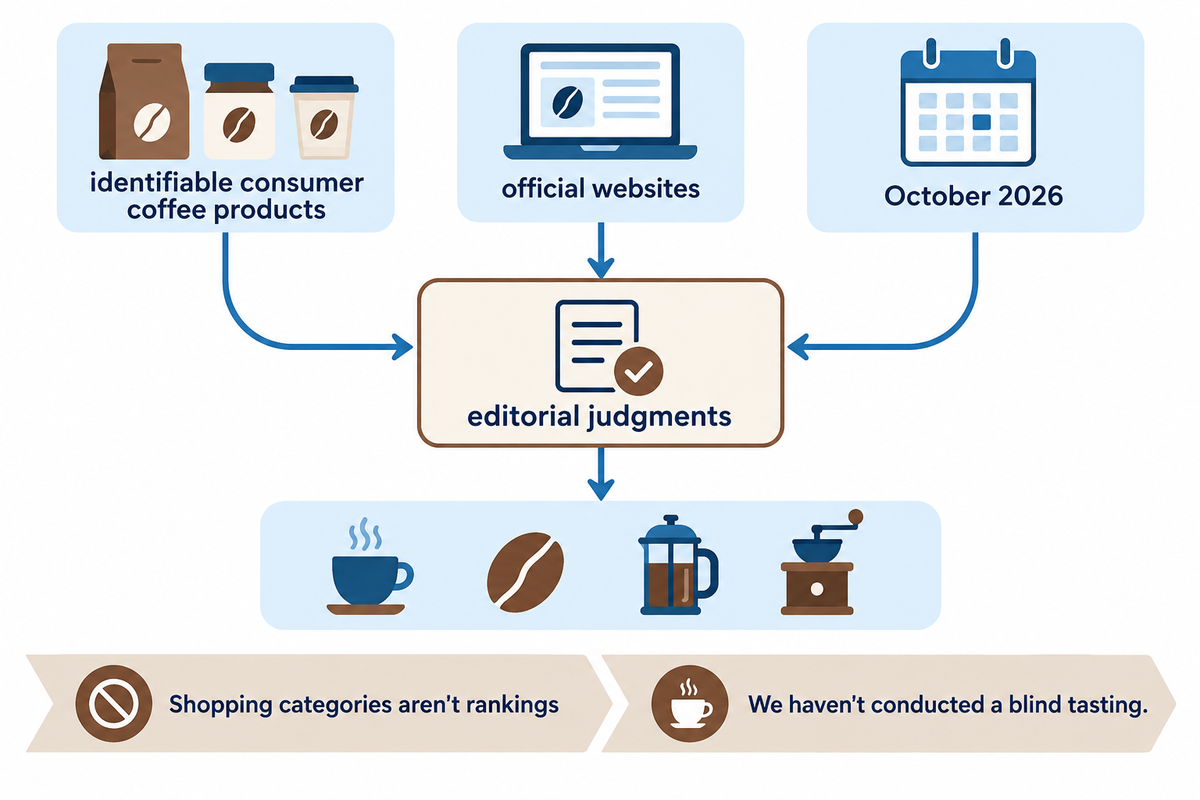
We selected twenty brands with identifiable consumer coffee products and verified their product ranges and histories against official websites and selected industry publications in October 2026 . Equipment suppliers, directories, pure green coffee exporters and foreign roasters selling only Brazil origin beans were excluded from the numbered shortlist. Brands within the same parent group are treated as separate product brands, as they’re perceived as such in the market.
Shopping categories aren’t rankings based on sensory evaluation or national sales. Some everyday brands sell specialty-style products, while some specialty roasters offer convenient capsules. Flavor notes below come from the producer’s descriptions, and recommendations are editorial judgments about the published offer. We haven’t conducted a blind tasting of these 20 brands. AFPAK publishes this guide and supplies coffee capsule filling and sealing equipment.
The comparison focuses on coffee buyers, with a short production note for brands considering their own capsule line. Historical dates are labelled carefully: a family’s coffee heritage, a group’s founding and a retail brand’s launch can be different events.
Brazil coffee brands at a glance
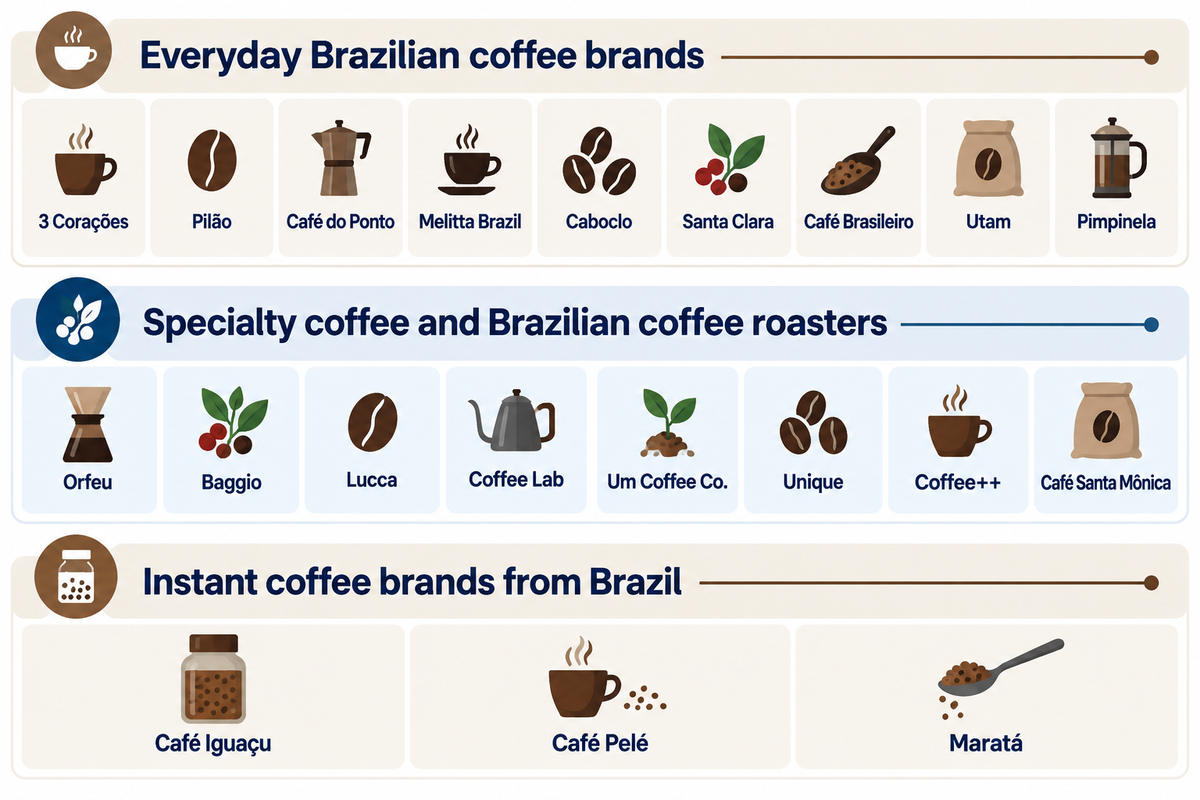
Start with the table row that matches your preparation method. The table summarizes the role of the brand, while the profile describes the products, history, and drawbacks. “Base” may mean the stated operating location or historical origin of the brand, not a separate legal headquarters of the brand. The websites of the brands are included so the consumer can access the local product range.
| No. | Brand | Base / owner context | Best for | Formats to explore | Buying limitation | Official website |
|---|---|---|---|---|---|---|
| 1 | 3 Corações | Grupo 3corações | Daily coffee across formats | Ground, instant, beans, capsules | TRES and Original are separate lines | https://www.3coracoes.com.br/ |
| 2 | Pilão | JDE Peet’s portfolio | Strong-style daily ground coffee | Ground, beans, instant, capsules | Brand name does not specify bean origin | https://www.pilao.com.br/ |
| 3 | Café do Ponto | São Paulo roastery origins | Filter coffee or bean espresso | Ground; Espresso beans | Espresso: 1 kg whole beans | https://www.cafedoponto.com.br/ |
| 4 | Melitta Brazil | São Paulo branch; German roots | Filter and regional selections | Ground; Spresso beans | Spresso: 1 kg whole beans | https://www.melitta.com.br/ |
| 5 | Caboclo | Brazilian household label | Simple packaged ground coffee | Roasted ground | 500 g roasted ground coffee | https://www.cafecaboclo.com.br/ |
| 6 | Santa Clara | Grupo 3corações; northeastern roots | A regional daily-coffee option | Packaged coffee | Clássico: 250 g roasted ground coffee | https://www.3coracoes.com.br/ |
| 7 | Café Brasileiro | Dracena origins; Grupo 3corações | An established everyday label | Roasted ground | Choose a bean listing separately if needed | https://www.3coracoes.com.br/ |
| 8 | Utam | Alta Mogiana roaster origins | Ground coffee and cappuccino | Ground; related Uno capsules | Capsule offer belongs to its named line | https://grupoutam.com.br/ |
| 9 | Pimpinela | Nova Iguaçu; Grupo 3corações | Rio-associated daily coffee | Ground and instant | Golden, Tradicional and soluble differ | https://www.pimpinela.com.br/ |
| 10 | Orfeu | Brazilian farm-linked brand | Several specialty-coffee formats | Beans, ground, drip, capsules | Nespresso and Dolce Gusto packs differ | https://cafeorfeu.com.br/ |
| 11 | Baggio | São Paulo and Minas Gerais farm roots | Flavored coffee or espresso | Espresso, flavored coffee, capsules | Choose flavored or unflavored deliberately | https://baggiocafe.com.br/ |
| 12 | Lucca | Curitiba, Paraná | Named lots and roaster education | Specialty retail coffees | Lot prices and availability vary | https://luccacafesespeciais.com.br/ |
| 13 | Coffee Lab | São Paulo | Brew-specific grind selection | Beans; several ground options | Select the grind for your own brewer | https://www.coffeelab.com.br/ |
| 14 | Um Coffee Co. | São Paulo; family farm links | Rotating lots and subscriptions | Beans, ground, nanolots | Limited lots are not permanent blends | https://umcoffeeco.com.br/ |
| 15 | Unique | São Lourenço, Minas Gerais | Flavor-led specialty choices | Beans, ground, drip, decaf | Compare small-pack weights | https://uniquecafes.com.br/ |
| 16 | Coffee++ | Minas Gerais business | Producer stories and familiar flavors | Beans, ground, drip, capsules | Producer lots differ from the Clássico blend | https://coffeemais.com/ |
| 17 | Café Santa Mônica | São Paulo contact; Machado farm | Farm-linked coffee across formats | Beans, ground, capsules, drip | Whole beans require grinding; ground and drip coffee formats | https://www.cafesantamonica.com.br/ |
| 18 | Café Iguaçu | Cornélio Procópio origins; retail brand in 3corações | Freeze-dried instant coffee | Instant, ground, mixed drinks | Gourmet directions apply to Gourmet soluble coffee | https://www.cafeiguacu.com.br/ |
| 19 | Café Pelé | Brazilian brand acquired by JDE | Instant jars or individual sticks | Instant, ground, cappuccino | Cappuccino is a separate mixed product | https://www.cafepele.com.br/ |
| 20 | Maratá | Brazilian coffee business in JDE | A decaf instant option | Instant, ground, cappuccino | Choose the soluble product explicitly | https://www.cafemarata.com.br/ |
What coffees are from Brazil?
3 Corações, Pilão and Melitta are examples of brands sold in Brazil; Brazilian coffee can also mean coffee grown in Brazil. A bag roasted overseas may contain Brazilian coffee beans, while a Brazilian-market brand can sell products with other origins. When origin matters, the bag’s country, region, farm or producer description tells you more than the brand’s mailing address.
Everyday Brazilian coffee brands
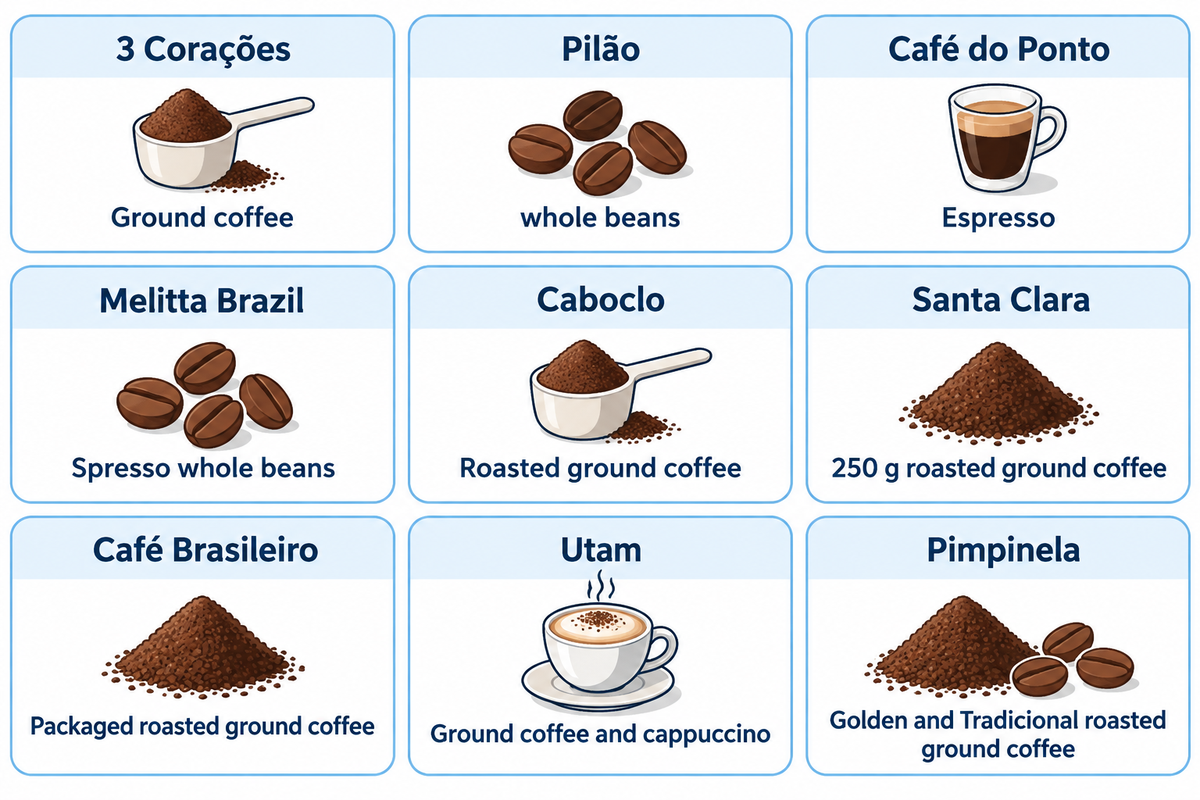
For a regular filter brew or a small coffee after a meal, start with the exact ground-coffee product and its pack size. The nine brands in this section can help the reader understand the popular side of coffee in Brazil. Their portfolios cover other segments, so the quality and range of their coffee products aren’t limited by their placement in this section.
Which coffee brand is most popular in Brazil?
A current single-brand sales leader couldn’t be established from the sources reviewed for this guide. For familiar everyday choices, start with 3 Corações or Pilão. Grupo 3corações includes several retail labels, so the group’s historical leadership is a different claim from one brand’s current share. Compare the specific product your local seller stocks.
1. 3 Corações: Best for daily coffee across several formats
Base and history: Southern Minas Gerais brand origins in the 1970s; incorporated into the group’s joint venture in 2005. Type: consumer brand within Grupo 3corações.
Official website: https://www.3coracoes.com.br/
Main products: Ground coffee, instant coffee, espresso, cappuccino and capsules. Notable range: Separate TRES and Nespresso Original-compatible capsule lines, according to the official catalog.
A household changing from a filter brewer to a capsule machine can find both formats under this name, without assuming the coffee inside is the same blend. The broad product line makes 3 Corações a sensible starting point for someone who wants an authentic Brazilian daily-coffee label and a choice of preparation methods. The important limitation is capsule selection: TRES capsules and Nespresso Original-compatible capsules are separate products, so the familiar logo isn’t enough to choose a box.
2. Pilão: Best for traditional strong-style ground coffee
History: The brand dates to 1978, according to a Revista Cafeicultura profile. Type: Brazilian-market coffee brand in the JDE Peet’s portfolio.
Official website: https://www.pilao.com.br/
Main products: Ground coffee, whole beans, instant coffee, cappuccino and capsules. Notable range: Several intensity-labelled capsule selections alongside its familiar daily ground coffee.
Pilão’s strong-coffee positioning gives a buyer a clear place to start when a dark roast or forceful cup is the desired style, although the selected pack still determines the actual roast and blend. Being able to choose whole beans or ground coffee is useful when different people in a household use different brewers. Don’t read the Brazilian brand identity as a promise about every bean: the official range also includes an India-origin capsule, and intensity labels don’t state a caffeine dose.
3. Café do Ponto: Best for filter coffee and whole-bean espresso
Base and history: São Paulo roastery origins, founded in 1950. Type: packaged-coffee brand with a café presence.
Official website: https://www.cafedoponto.com.br/
Main products: Tradicional, Extraforte, Exportação and Espresso. Notable range: The catalog lists medium-roast Espresso whole beans in a 1 kg pack and ground selections in 500 g packs.
Café do Ponto is useful to compare when you want one familiar name for espresso and filter coffee, because its catalog clearly separates the bean product from the ground range. The listed Espresso option is a 1 kg whole-bean pack, so it requires grinding before brewing; the listed ground selections come in 500 g packs. Exportação is a product name in that range; it shouldn’t be treated as a guarantee that a seller exports to your country. The limitation is how you interpret intensity: the numbers help distinguish this brand’s products, but they aren’t a universal scale for judging Pilão, Orfeu or another roaster.
4. Melitta Brazil: Best for filter coffee and regional introductions
Base and history: São Paulo branch opened in 1968; German global roots date to 1908. Type: Brazilian operation of the international Melitta business.
Official website: https://www.melitta.com.br/
Main products: Tradicional, Extraforte, Regiões Brasileiras and Spresso whole beans. Notable range: Mogiana, Cerrado and Sul de Minas regional selections; Spresso is described as 100% arabica in a 1 kg bean pack.
The Regiões Brasileiras range gives coffee lovers a manageable way to compare names from the regions of Brazil without immediately moving to a changing microlot menu. According to Melitta’s history, its Brazilian vacuum-packed coffee appeared in 1980, later than the opening of the branch. The listed Spresso option is a 1 kg whole-bean pack and requires grinding before brewing. Its ownership context matters: Melitta is an established participant in Brazil’s coffee market, but the company’s global origins are German, so “Brazilian-market brand” is the accurate description here.
5. Caboclo: Best for straightforward household filter coffee
History: Created in 1930, according to Revista Cafeicultura’s historical brand profile. Type: Brazilian household packaged-coffee label.
Official website: https://www.cafecaboclo.com.br/
Main products: Roasted ground coffee. Published description: The trade profile describes a mild roast and medium grind; this is its description, rather than our tasting assessment.
Caboclo belongs on a shortlist for someone seeking a simple bag of ground coffee rather than a menu of rotating farm lots and equipment choices. A reviewed US retailer specifies a 500 g pack, which makes it easy to compare the displayed price with another bag of the same weight. This pre-ground offer does not give you whole beans to grind for a different brewing method. Availability is the practical limitation: that particular US listing was in stock when checked, but its price is a reference point and not a promise that you can order it today.
6. Santa Clara: Best for a northeastern Brazilian daily-coffee choice
Base and history: The predecessor began in São Miguel, Rio Grande do Norte, in 1959; the Santa Clara name was adopted in 1985. Type: regional consumer brand within Grupo 3corações.
Official website: https://www.3coracoes.com.br/
Main products: Packaged coffee and related everyday beverages. Notable position: The parent describes a strong connection with northern and northeastern Brazil and records its Ceará operations in the group history.
Santa Clara gives someone exploring Brazilian coffee brands a regional counterpoint to choosing only labels most visible in imported-coffee stores. Its Clássico offer includes a 250 g vacuum pack of roasted ground coffee; this format needs brewing and filtering, rather than simply dissolving in hot water. Its history also shows why a company timeline needs careful reading: the business began before it took the Santa Clara name. For comparisons of ownership, it isn’t an independent alternative to Grupo 3corações: Santa Clara and the 3 Corações retail label are different shopping choices within the same group.
7. Café Brasileiro: Best for another established everyday label
Base and history: Yoshioka predecessor business in Dracena, São Paulo, began in 1959; the published timeline describes brand expansion in the 1970 Mitsui-Yoshioka period. Type: consumer brand now in Grupo 3corações.
Official website: https://www.3coracoes.com.br/
Main products: Packaged roasted ground coffee. Notable history: The parent’s account follows the business through the Mitsui era to its incorporation into 3corações operations in 2020.
Café Brasileiro is worth considering when your local shop carries it and you want to compare another daily-coffee label with a familiar option at home. Buying the same preparation format makes that comparison more useful than comparing its ground coffee with a different brand’s soluble drink. This profile covers the roasted-ground offer: if you need beans for a grinder, select a product explicitly labelled em grãos instead of ordering this format by brand name alone.
Base and history: Alta Mogiana roaster origins; formed in 1969 by 26 roasters. Type: coffee roasting group and retail brand.
Official website: https://grupoutam.com.br/
Main products: Ground coffee and cappuccino in the main Utam line. Notable history: Its name comes from União dos Torrefadores da Alta Mogiana; the wider group also markets Utam Uno capsules and food-service products.
That collective-roaster background distinguishes Utam’s story from a recently launched online coffee label, while the current range still gives shoppers a straightforward ground-coffee starting point. Someone already familiar with the main line can explore another format through the wider group rather than assuming every Utam product has the same preparation instructions. The limitation is the line name: the Utam Uno capsule offer must be selected on its own terms, including its stated machine compatibility.
9. Pimpinela: Best for Rio-associated ground coffee and instant options
Base and history: Nova Iguaçu, Rio de Janeiro, with an origin dated to 1955 in Grupo 3corações’s portfolio. Type: consumer coffee brand within that group.
Official website: https://www.pimpinela.com.br/
Main products: Golden and Tradicional roasted ground coffee, plus soluble coffee. Notable range: The current website separates those choices into named product families.
Pimpinela offers another route into Brazilian daily coffee for a buyer interested in a Rio-associated name rather than choosing only by international recognition. Its ground and instant formats can serve different routines, from brewing at home to making a cup where only hot water is available. Choose the product rather than the regional story: Golden, Tradicional and soluble coffee are distinct purchases, and a familiar brand name doesn’t turn ground beans into an instant drink.
Specialty coffee and Brazilian coffee roasters
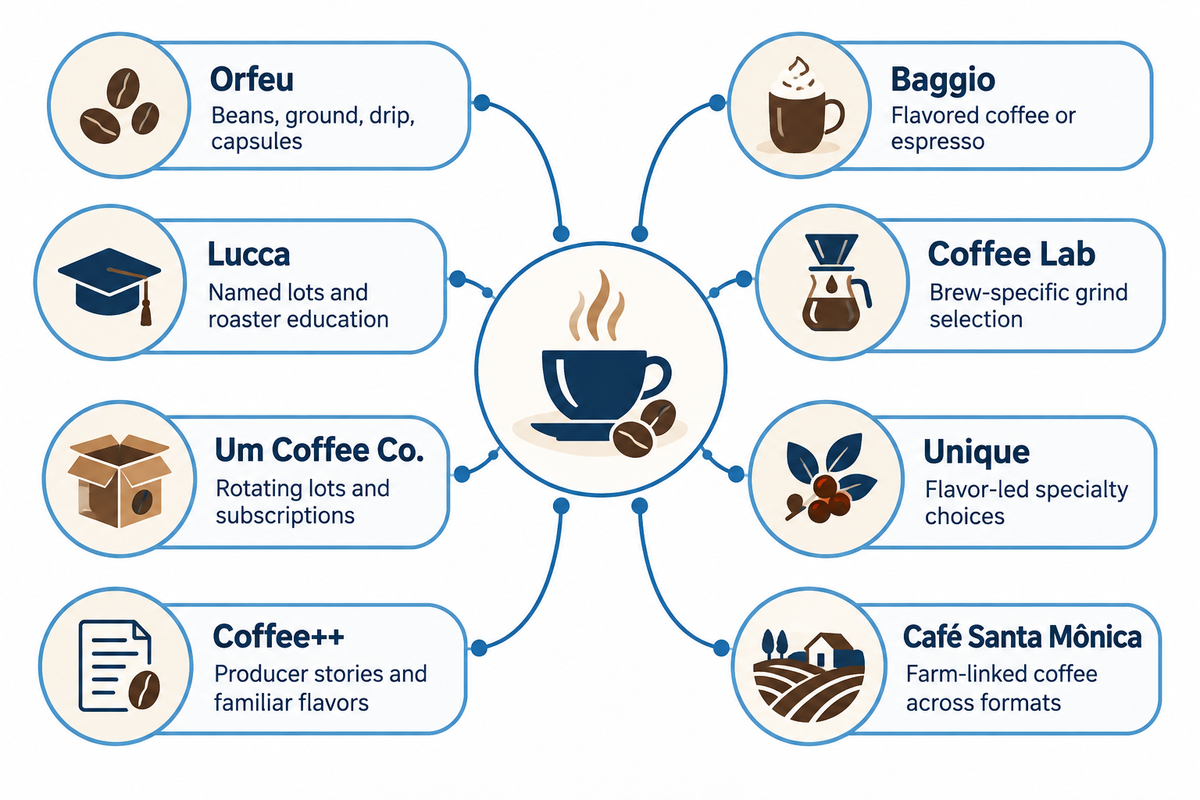
These roasters provide more details about a coffee farm, named producer, flavor profile or brewing option. The eight entries below give other routes to specialty coffee, from a blend to small, changing lots.
10. Orfeu: Best for exploring specialty coffee in several formats
Base and history: Brazilian farm-linked brand launched in 2005; its published farm history is older. Type: specialty retail coffee brand.
Official website: https://cafeorfeu.com.br/
Main products: Whole beans, ground coffee, drip bags and capsules. Published product detail: Orfeu describes its Clássico capsule as 100% arabica, medium roast, with caramel and chocolate notes; the listing gives a 10-capsule pack and a 40 ml espresso recommendation.
Orfeu suits someone who wants to explore a specialty-oriented range without making whole beans and a grinder the only route to a cup. Its named coffees and several formats let you start with the preparation you already use, then compare another product if the described flavor profile appeals. Capsule buyers face one specific choice: the brand sells Nespresso-compatible and Dolce Gusto-compatible families, so a box from the wrong family won’t become suitable just because it says Orfeu.
11. Baggio: Best for flavored coffee alongside an espresso blend
Base and history: Farm roots in São Paulo and Minas Gerais, including Alta Mogiana; Liana Baggio Ometto created the retail brand in 2005. Type: family-origin grower and roasted-coffee brand.
Official website: https://baggiocafe.com.br/
Main products: Especial Espresso, flavored coffees and capsules. Notable history: The family’s Brazilian story begins in 1886, while the brand’s Especial Espresso blend dates to 2007, according to its own history.
Baggio gives a buyer two distinct directions: a conventional espresso selection or coffee chosen for an added flavor experience. That distinction is more useful than treating every package as one uniform Baggio taste, especially if you usually drink your coffee without milk or sweeteners. The purchasing limitation is the flavor choice: select an unflavored product deliberately when you want to compare the coffee itself, rather than assuming a flavored selection represents the whole range.
12. Lucca: Best for named lots and a roaster-café experience
Base and history: Curitiba, Paraná; established in 2002 according to its coffee-shop award-directory profile. Type: specialty roaster, café and coffee educator.
Official website: https://luccacafesespeciais.com.br/
Main products: Named specialty coffees, including catalog selections such as Santa Terezinha and Eldorado. Notable services: Subscriptions, education and custom-label roasting; its physical café provides a local connection to the online offer.
Lucca is a useful choice for someone who enjoys learning why one roasted coffee differs from another, because individual lots give the comparison a name and a product to return to. The combination of retail coffee and a Curitiba café is also appealing if you can visit locally and then buy a bag for home. The limitation is lot-level variation: a price or availability attached to Eldorado isn’t a standing promise for every coffee on the menu.
13. Coffee Lab: Best for choosing a grind for your brewer
Base and history: São Paulo; Coffee Lab in its present form began in 2009, according to founder Isabela Raposeiras’s Sprudge interview. Type: specialty café, roaster and school.
Official website: https://www.coffeelab.com.br/
Main products: Named-producer coffees sold as whole beans or ground for different methods. Notable process: Its roastery describes weekly roasting and individual profiles for microlots; the shop offers grind choices for filter, Moka, French press, espresso and other brewers.
Coffee Lab is especially practical if you want freshly roasted coffee but don’t own a grinder, because its product choices go beyond a single generic ground option. A buyer using a French press can select that preparation rather than taking the espresso grind simply because both are coffee. The limitation is personal to the order: the detailed menu helps only when the grind selected matches the brewer you’ll actually use at home.
14. Um Coffee Co.: Best for rotating lots and a measured subscription
Base and history: São Paulo café operations; the first café opened in 2016, after the family’s farm purchase and move into specialty production. Type: family farm-linked roaster and café business.
Official website: https://umcoffeeco.com.br/
Main products: Rotating specialty coffees, named nanolots and subscriptions. Notable offer: The website describes weekly roasting and a monthly subscription containing two 250 g coffees, available as whole beans or ground.
Um Coffee Co. fits a drinker who enjoys tasting coffee from different lots rather than repeating one blend indefinitely, and the stated subscription weight makes the commitment easy to understand. Named producer and farm stories offer another way to choose a bag. The practical limitation is continuity: a limited nanolot is a changing offer, not a permanent replacement for a supermarket blend you expect to buy every month.
15. Unique: Best for flavor-led specialty choices and flexible formats
Base and history: São Lourenço, Minas Gerais; founded in 2008, as documented in Sprudge’s roastery profile. Type: specialty roaster and consumer retailer.
Official website: https://uniquecafes.com.br/
Main products: Whole beans, ground coffee, drip bags, decaf and subscriptions. Published product detail: Frutado is described as 100% arabica from small producers in Minas Gerais and São Paulo; the catalog also includes Bourbon Amarelo and a smaller 150 g Geisha offer.
Unique’s flavor-led selections give someone looking for the best Brazilian coffee for their own palate a more useful starting point than a vague “premium” label. A familiar daily format can sit alongside a more unusual lot, so trying something new need not mean changing your entire coffee routine. Compare package weights carefully: a 150 g rare-coffee purchase and a larger routine bag are different commitments, even when their headline prices appear close.
16. Coffee++: Best for producer-linked coffees with familiar flavor descriptions
Base and history: Minas Gerais business launched as an e-commerce brand in October 2020, according to NeoFeed. Type: specialty retail brand founded by Leo Montesanto, Rafael Terra and Pedro Brás.
Official website: https://coffeemais.com/
Main products: Whole beans, ground coffee, drip bags and Nespresso-compatible capsules. Published product detail: The brand describes 100% arabica without additives; Clássico carries chocolate, caramel and dried-fruit notes, while regional selections name producers including Ricardo Tavares and Gabriel Nunes.
The Clássico description is an approachable starting point for coffee lovers who prefer familiar flavors, while Chapada de Minas and other producer-linked coffees offer a route into a more specific origin story. Ricardo Tavares’s Chapada de Minas coffee, for example, is described with red-fruit notes rather than Clássico’s chocolate-and-caramel profile. Keep the named selection when reordering: a flavor you enjoyed in Clássico shouldn’t be assumed to apply to every producer-linked coffee in the range.
17. Café Santa Mônica: Best for farm-linked coffee across everyday formats
Base and history: São Paulo contact address and a farm in Machado, southern Minas Gerais; founded in 1985 by Arthur Moscofian Jr. Type: Brazilian farm-linked coffee brand.
Official website: https://www.cafesantamonica.com.br/
Main products: Whole beans, ground coffee, capsules and drip coffee. Published farm detail: The company describes the Machado farm at an average altitude of about 1,100 m.
Santa Mônica offers a useful connection between a named coffee-growing location and formats that fit several daily routines, including single-serve options. The whole-bean option requires grinding; choose ground or drip coffee if you want to prepare it without grinding it yourself. Its history identifies both the founder and the farm, giving a buyer more context than a bag described only as high-quality coffee. The geographic limitation is easy to resolve: the São Paulo contact address isn’t the same as the Machado growing location, so use the farm or lot description when comparing where the coffee comes from.
Instant coffee brands from Brazil
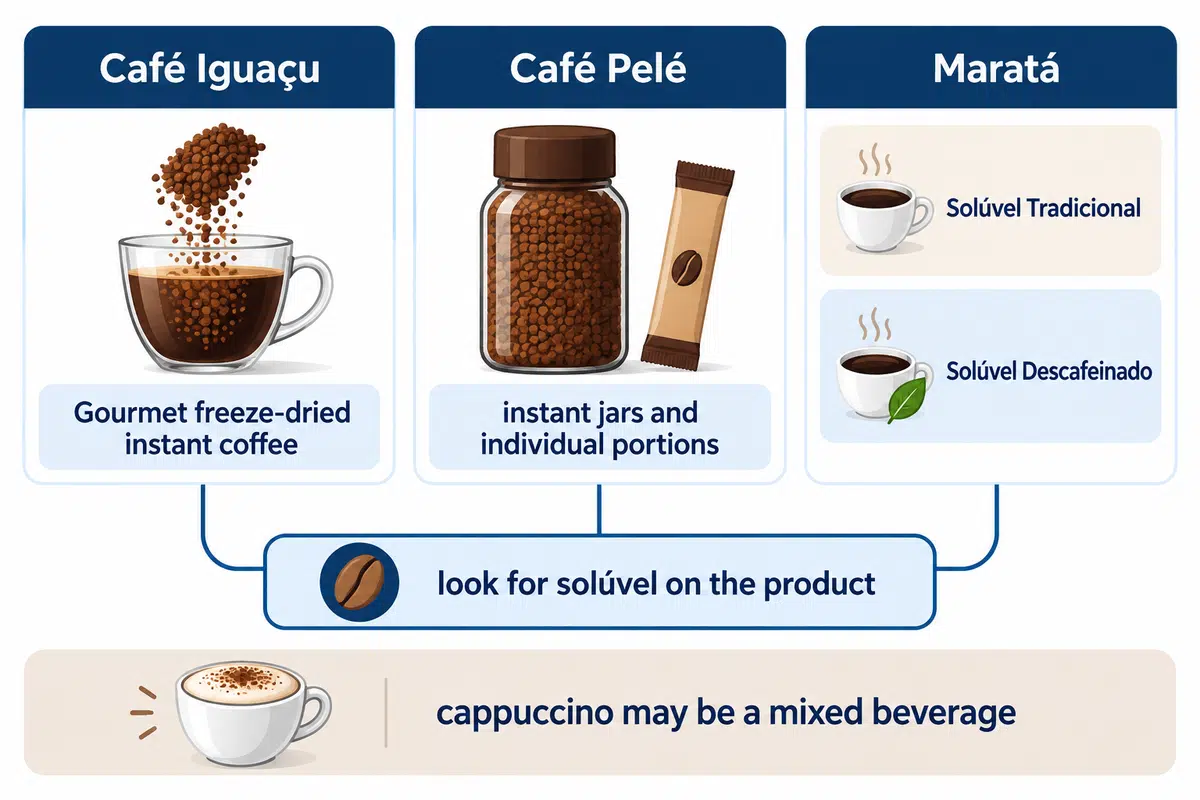
For coffee that dissolves directly in hot water, look for solúvel on the product. Iguaçu, Pelé and Maratá all have verified soluble offers, but their catalogs also contain other drinks. Ground coffee needs a brewing and separation method; cappuccino may be a mixed beverage. Choose the exact product before comparing jar sizes or serving convenience.
18. Café Iguaçu: Best for freeze-dried instant with clear preparation directions
Base and history: Cornélio Procópio, Paraná, with origins in 1967; the retail brand joined Grupo 3corações in 2016. Type: consumer coffee brand.
Official website: https://www.cafeiguacu.com.br/
Main products: Gourmet freeze-dried instant coffee and Extraforte instant coffee, alongside ground coffee and mixed beverages. Product directions: The Gourmet page lists soluble coffee as the ingredient and recommends 1 g for 50 ml of water or 150 ml of milk.
That published starting dose makes Iguaçu Gourmet a practical first instant coffee to try, because you can begin with the producer’s directions and then adjust for your own cup. Jars and refill options let you choose the packaging that suits a kitchen or office. Use the stated Gourmet directions for that soluble product; the brand’s ground coffee and mixed drinks are different purchases. The ownership limitation matters mainly to business buyers: acquisition of the retail brand doesn’t mean that the entire industrial Iguaçu soluble-coffee manufacturing business became part of the same group.
19. Café Pelé: Best for instant jars and individual portions
History: Launched in 1970 in ground and instant formats; the brand records its acquisition by JDE in 2017. Type: Brazilian consumer coffee brand.
Official website: https://www.cafepele.com.br/
Main products: Ground coffee, granular instant and cappuccino. Notable packaging: The current instant range includes a 100 g jar, sachets and a pack of 20 individual 1.3 g sticks.
Pelé is useful for a buyer who wants the convenience of instant coffee but prefers a choice between a shared jar and individual portions. The sticks are a straightforward option for a desk drawer or a travel bag when you don’t want to measure coffee out of a larger container. Keep the product category clear: pure instant coffee and cappuccino are separate purchases, so the Pelé name alone doesn’t tell you what ingredients are in the serving.
20. Maratá: Best for a shortlist that includes decaf instant
History and market: The brand dates its origins to 1962; JDE completed its coffee-and-tea-business acquisition in 2024 and described a strong northern Brazilian presence. Type: consumer coffee brand.
Official website: https://www.cafemarata.com.br/
Main products: Ground coffee, traditional and decaffeinated instant coffee, and cappuccino. Notable option: The official catalog separately lists Solúvel Tradicional and Solúvel Descafeinado.
Maratá adds a useful choice for someone who wants a decaffeinated instant product without moving to a completely different preparation method. That’s a concrete reason to include it alongside Iguaçu and Pelé, rather than selecting three names with no product-level distinction. The limitation is format selection: the same catalog also sells ground coffee and cappuccino, so choose the soluble listing explicitly; “decaffeinated” is a product description here, not a claim of zero caffeine.
Pilão, 3 Corações and Orfeu: compare the product, not just the brand
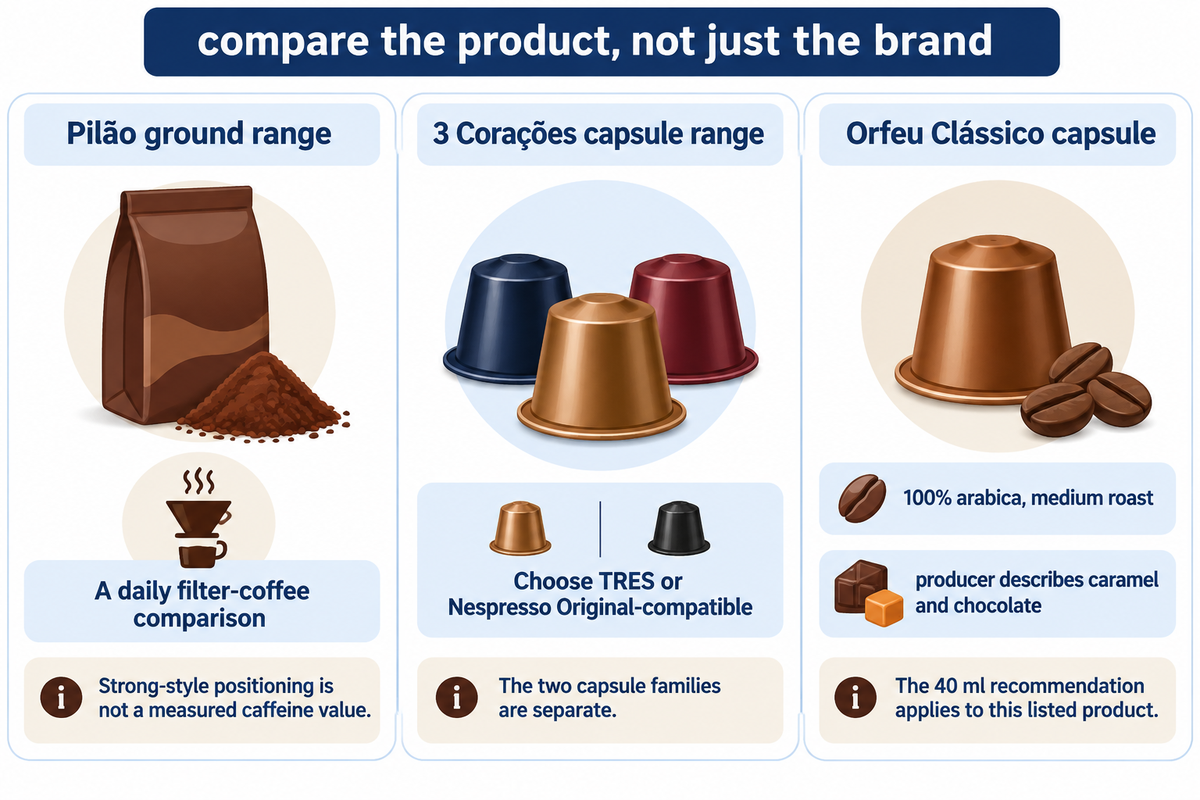
Choose a specific Pilão ground coffee for a familiar strong-style daily brew, a named 3 Corações product for the preparation format you need, or Orfeu Clássico capsules when their medium-roast, arabica description suits your taste and machine.
| Choice | What the product information helps you decide | Best use | Boundary |
|---|---|---|---|
| Pilão ground range | Pick the named blend and roast description | A daily filter-coffee comparison | Strong-style positioning is not a measured caffeine value |
| 3 Corações capsule range | Choose TRES or Nespresso Original-compatible | Buying for a machine you already own | The two capsule families are separate |
| Orfeu Clássico capsule | 100% arabica, medium roast; producer describes caramel and chocolate | A specified espresso-style product | The 40 ml recommendation applies to this listed product |
For a fair tasting at home, change one thing at a time. Comparing two ground coffees with the same brewer and your usual recipe is more informative than comparing a large filter mug with a small capsule espresso. A fuller-bodied or more aromatic result may be your preference, but it isn’t a universal definition of the best beans.
Note the aroma, perceived acidity and body in each cup. A fruity producer description may appeal to one drinker while another prefers chocolate notes; neither preference makes the other person’s choice wrong. Compare your first bag with coffee from another roaster using the same method, and keep the description that best matches what you enjoyed.
Record the exact product name when you find a coffee you enjoy. “I liked the Orfeu” is less helpful for a repeat purchase than the name, format and roast on the package. Consistent quality in your routine also depends on repeating the preparation, rather than asking a brand name to compensate for a different grind or brew size.
Is Brazilian coffee good for espresso?
Yes. Brazilian-market ranges include products intended for espresso, such as Café do Ponto Espresso beans and Melitta Spresso. For a home espresso machine, these are practical Brazilian coffee choices to explore. Start with beans for your grinder-equipped setup, or the correct capsule for a capsule machine.
Brazilian coffee capsules: TRES, Nespresso and Dolce Gusto
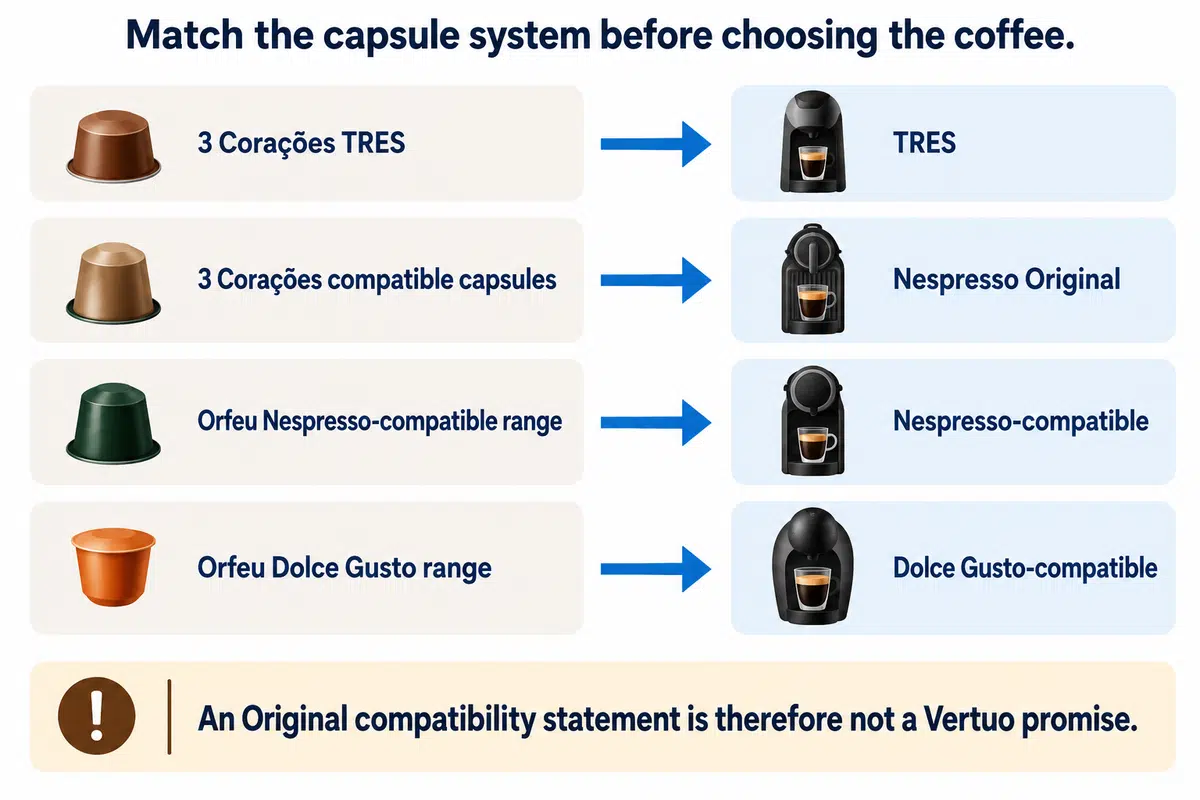
Match the capsule system before choosing the coffee. 3 Corações explicitly separates capsules for TRES machines from its Nespresso Original-compatible line. Orfeu lists both Nespresso-compatible and Dolce Gusto-compatible products. A Brazil-origin coffee, an intensity number or a familiar roaster name doesn’t make capsules interchangeable.
| Brand / product family | System stated by the brand | Buying decision |
|---|---|---|
| 3 Corações TRES | TRES | Choose the TRES family for a TRES machine |
| 3 Corações compatible capsules | Nespresso Original | Use the Original-labelled offer |
| Orfeu Nespresso-compatible range | Nespresso-compatible | Follow the exact product’s machine-compatibility statement |
| Orfeu Dolce Gusto range | Dolce Gusto-compatible | Choose the distinct Dolce Gusto family |
Nespresso’s system comparison distinguishes Original from Vertuo: Original uses high-pressure extraction, while Vertuo uses a capsule barcode to set its brewing parameters. An Original compatibility statement is therefore not a Vertuo promise. Coffee++ and Baggio also offer capsule products, but a general brand description is less useful than the compatibility wording on the particular box you intend to buy.
This is also where taste and convenience meet. A capsule buyer can compare the producer’s roast description, coffee amount and recommended cup size after the machine system is settled. For example, Orfeu’s listed 40 ml Clássico recommendation gives a concrete starting point; it shouldn’t be copied automatically to a different brand’s capsule or to a large mug.
How to choose Brazilian coffee beans for your brew
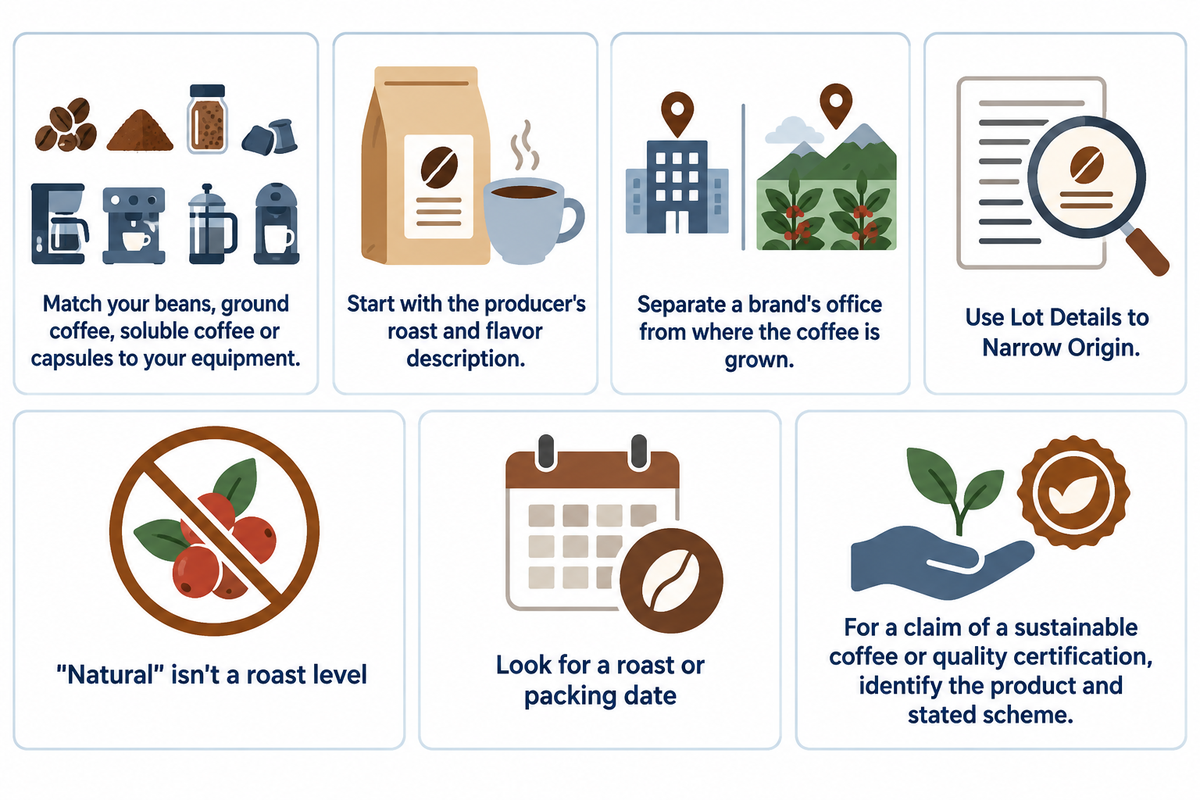
Choose the preparation format first, then use roast, producer descriptions, origin and package size to narrow the shortlist. For beans, a grinder gives you control over preparation; without one, a roaster such as Coffee Lab offers useful brew-specific ground options. Buying a smaller first pack also makes it easier to try a new coffee without committing to a large bag.
What are the different types of Brazilian coffee beans?
In summary, Arabica, or Coffea arabica, and canephora are the two commonly commercialized coffee species identified in Embrapa’s research summary. Brazilian coffee includes arabica coffee made from different arabica varieties, as well as conilon and robusta coffees mentioned by the Brazilian Specialty Coffee Association. Coffee varieties, growing regions and roast describe different things: a “100% arabica” label identifies the arabica beans, but does not by itself settle their sensory quality.
In August 2026, the Association announced a contest for specialty Conilon and robusta coffees and mentioned coffees which are enjoyed without arabica blending. That is a useful correction to the idea that every coffee outside arabica is merely a filler. The most important thing to consider is the way the specific coffee was manufactured, processed, roasted and prepared.
How do you choose the best coffee beans in Brazil for your kitchen?
Choose Brazilian beans that match your brewer, your preferred flavor and a realistic pack size. An excellent coffee for your espresso routine can still be an unsuitable purchase if it arrives ground for a filter. For a single-origin offer, read the named origin and producer; single origin and finest coffee, on their own, don’t explain the roast or how to prepare it.
Use these checks when selecting coffee beans in Brazil or browsing an importer:
- Match your beans, ground coffee, soluble coffee or capsules to your equipment. Torrado e moído means roasted and ground; it isn’t instant.
- Start with the producer’s roast and flavor description. Floral or fruity notes suggest a general direction for your sensory experience, as opposed to an assurance that everyone will experience the same thing.
- Separate a brand’s office from where the coffee is grown. Conab documents production in states like Minas Gerais, São Paulo, Espírito Santo, Bahia and Rondônia; a specific region or farm gives a finer description than “Brazil”.
- Use Lot Details to Narrow Origin. A municipality such as Carmo de Minas, a coffee plantation name, a producer and a variety can each add useful detail. Bourbon coffee, for example, is a variety-led description and isn’t a synonym for every Brazilian blend.
- Read a label such as Brazil natural coffee along with the producer’s actual process description. “Natural” isn’t a roast level and a coffee processing term shouldn’t be treated as evidence of a certification.
- Look for a roast or packing date and purchase an amount that works with your routine. When comparing prices, make sure you’re comparing an equal weight. Our guides to keeping a whole-bean purchase fresh and managing an opened bag of ground coffee cover the storage side of that choice.
- For a claim of a sustainable coffee or quality certification, identify the product and stated scheme. Confirm current stock, your destination and the total delivered price before paying.
ABIC’s certification program provides context for checking quality certification claims. It describes laboratory product assessments and ABIC’s evaluation of coffee manufacturing practices. Certification seals should be read for the specific products and practices they cover. Likewise, a statement about conditions on one coffee farm does not automatically describe every product sold by its parent brand.
- Choose the format your brewer needs.
- Compare named products at equal package weights.
- Keep the exact product name for repeat purchases.
- Use the brand’s address as bean-origin proof.
- Treat intensity as a universal caffeine scale.
- Assume one capsule logo fits every machine.
Where to buy Brazilian coffee in the United States
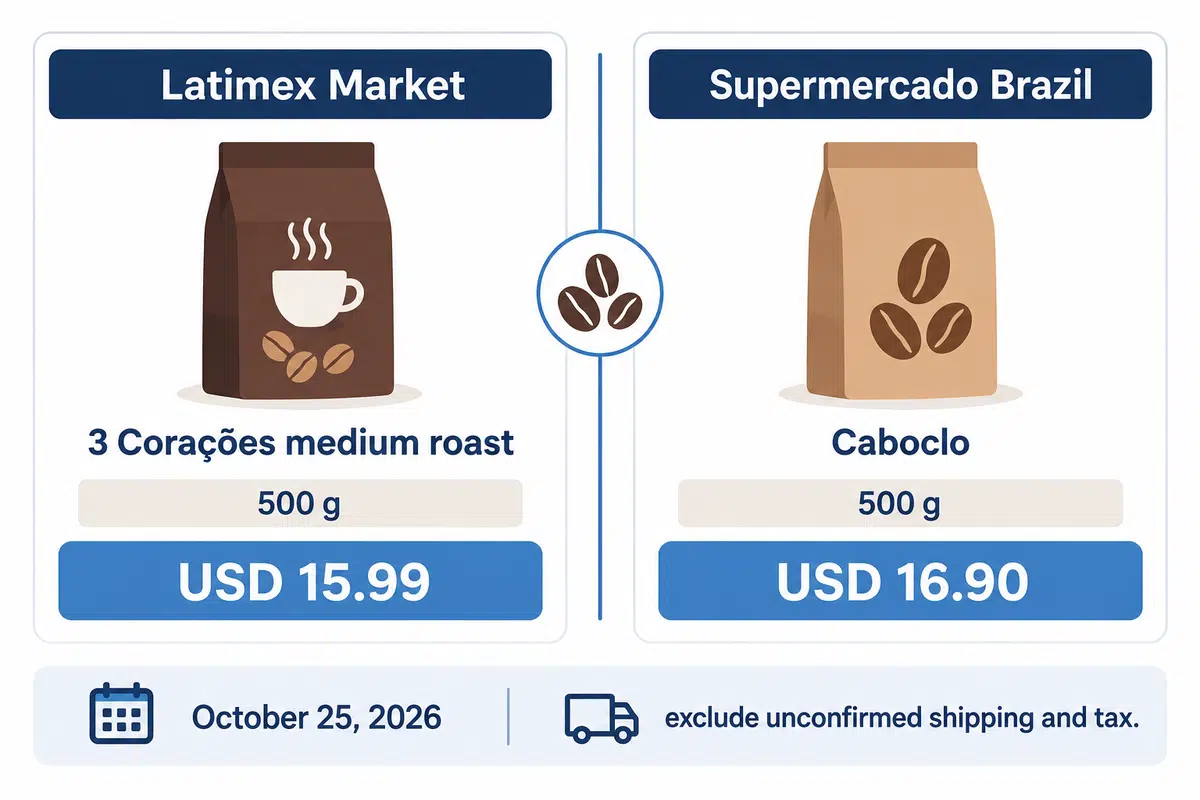
Two reviewed US listings give useful starting prices: 3 Corações medium-roast coffee, 500 g, at USD 15.99 from Latimex Market, and Caboclo, 500 g, at USD 16.90 from Supermercado Brazil. The Caboclo listing was in stock. These observations were checked on October 25, 2026, and exclude unconfirmed shipping and tax.
| Seller and product | Pack | Listed price | Observed status |
|---|---|---|---|
| Latimex Market: 3 Corações medium roast | 500 g | USD 15.99 | Add-to-cart available on the research date |
| Supermercado Brazil: Caboclo | 500 g | USD 16.90 | In stock on the research date |
The twenty-brand directory is broader than these two US examples. An online shop in Brazil may serve its local market without a suitable means of delivery to your location, and an importer may stock only a few products from a large range. That is why a brand recommendation should become an order only after you find the right format at a seller that can fulfil it.
For a first US purchase, a stocked 500 g ground-coffee listing is a more concrete choice than a premium Brazilian product available only on a Brazilian storefront. If your preferred specialty roaster is unavailable locally, a US roaster selling clearly identified Brazil coffee beans is another route to the origin, although it is a different category from a Brazilian retail brand. It’s important to keep these two shopping objectives separate.
Imported packages may also present dates differently from the bags you usually buy. For assistance in interpreting the difference between a package date and how long a product is fresh, see our Guide to coffee dates and freshness.
Brand ownership and the coffee supply chain
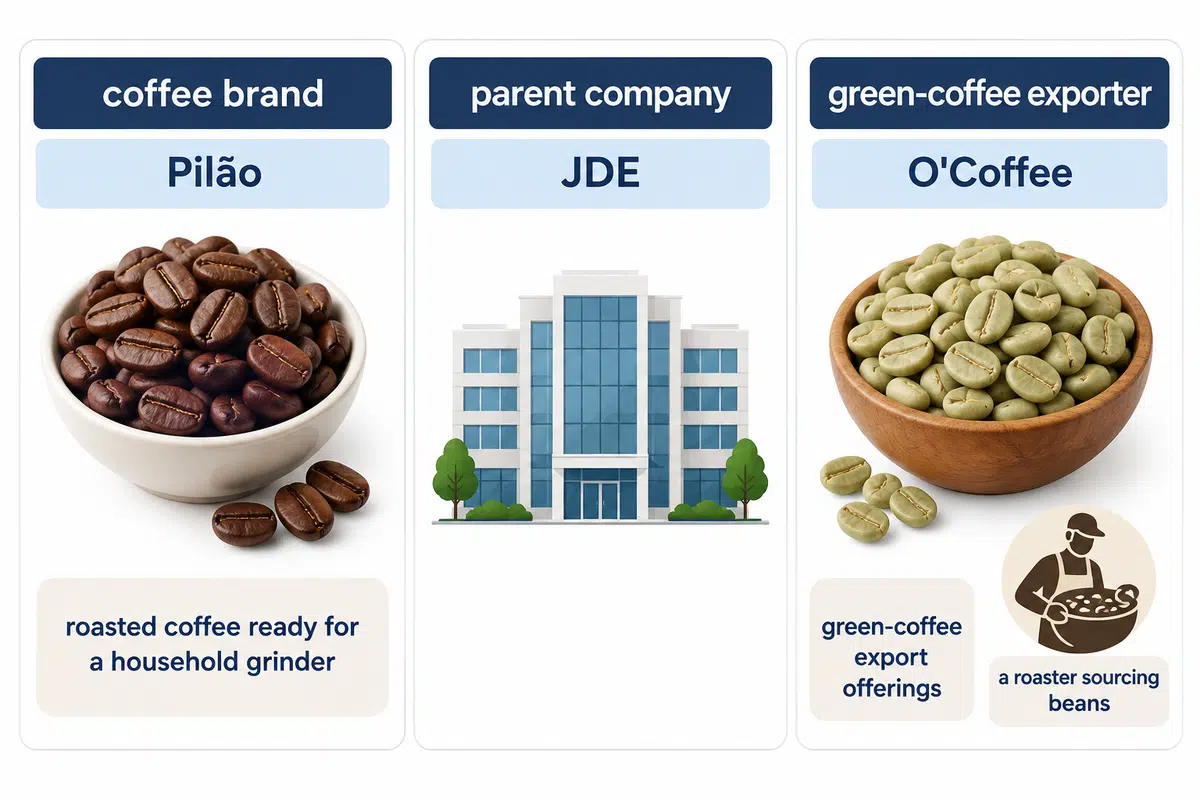
A coffee brand, its parent company and a green-coffee exporter play different roles. Grupo 3corações’s portfolio includes several names in this guide; JDE’s Brazilian business includes Pilão and acquired the Maratá coffee-and-tea business. Counting each retail label as a separate company would exaggerate the number of independent businesses represented.
In another part of the coffee industry, companies like O’Coffee describe farms and green-coffee export offerings. Brazilian green coffee beans are a different purchase from roasted coffee ready for a household grinder. A green-coffee supplier can be relevant to a roaster sourcing beans, while a consumer is usually choosing a finished bag, jar or capsule.
The distinction changes what “best” means. A coffee producer may be chosen for a lot’s origin and processing, a roaster for roast and retail service, and a supermarket brand for an easy to purchase, familiar product. Coffee production history can explain a business, but it does not replace the details of the product you will drink.
Before deciding on production equipment, understand the consumer system. At AFPAK, we provide equipment for a Nespresso-compatible capsule line and K-Cup filling and sealing machines. Those are production choices for a brand’s product; they don’t mean that the coffees listed here are available in either format.
Frequently asked questions
What coffee is Brazil known for?
Brazil is known for canephora and arabica production as well as green-coffee production across a range of everyday and specialty coffees.
For the drinker, options mean more than one flavor style. The producer descriptions in this guide cover options like chocolate and caramel flavors, fruit forward selections, and named regional coffees. Brazil produces coffee across several states, so choose a specific product when you want a particular coffee experience. A national origin alone doesn’t determine roast, grind, processing, or the flavor of your finished coffee cup.
What are the top three Brazilian coffee brands to try first?
Try 3 Corações for a familiar daily range, Pilão for strong-style ground coffee, and Orfeu for a specialty-oriented selection in several formats.
Pick one product that fits your brewer and budget, then use the same preparation when you compare another. If you prefer instant coffee, Iguaçu, Pelé or Maratá is a more useful starting shortlist than buying whole beans just because a brand is widely discussed. A format you can prepare easily is the best place to begin.
Is Pilão good coffee?
Pilão is a reasonable choice for someone seeking a familiar, strong-style Brazilian daily coffee, particularly in a ground format.
The named product and how you brew it will determine if it becomes your favorite. Its portfolio includes more than one format, so an opinion about one bag shouldn’t be applied to all other products. Compare the actual roast description and use your normal recipe; a high intensity label isn’t a proxy for experiencing the coffee yourself.
Is Melitta originally a Brazilian brand?
Melitta has German global origins and a longstanding Brazilian operation, with its São Paulo branch opened in 1968.
It belongs in a Brazilian-market coffee guide, but its presence in Brazil should not be confused with a Brazilian founding story.
Is Santos coffee a brand or a growing region?
Santos is historically related to the port and coffee export trade of Brazil, rather than identifying one retail coffee brand.
Cecafé’s export history mentions transporting inland coffee to the Port of Santos, and notes the older Santos-type designation. It gives a reason for naming coffee, but doesn’t single out a farm, roaster, or bag. If the listing is “Brazil Santos”, consider the rest of the product description to determine what’s being sold: green coffee (for roasting), roasted beans, or ground coffee. Use information regarding the named producer, region, roast and packaging to assist in making a decision. A port-related trade name is contextual information, not a full description of the coffee’s flavor or preparation. Vendors can use the same broad, general terminology to describe the origin of the finished product and offer something different.
Which Brazilian coffee should you try first?
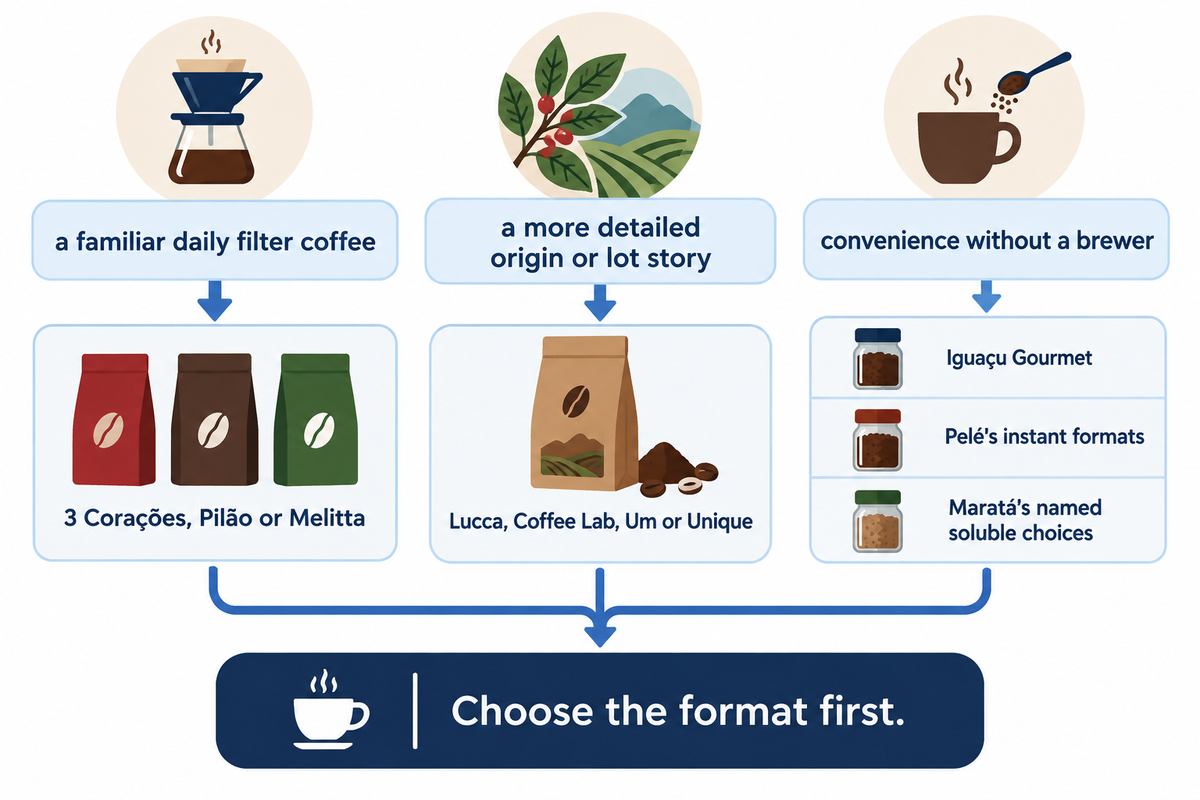
Start with a stocked 3 Corações, Pilão or Melitta selection for a familiar daily filter coffee. For a more detailed origin or lot story, consider Lucca, Coffee Lab, Um or Unique. For convenience without a brewer, compare Iguaçu Gourmet, Pelé’s instant formats or Maratá’s named soluble choices. Each route begins with a product you can prepare correctly and buy reliably.
The best Brazilian coffee purchase is a named product that matches your brewer, preferred flavor and actual delivery options. Choose the format first; use the brand and origin to refine the choice.
Keep the first purchase manageable, note the exact product you enjoyed and change one variable when you purchase the next bag. That approach makes the twenty-brand list useful at the kitchen counter, rather than leaving you with twenty names and no decision.
References and sources
Brand profiles reference the official websites and historical sources listed on the cards. These additional sources explain the wider distinctions and dated buying examples:
- Embrapa: origin, genetic diversity and cultivars of Coffea canephora, public research abstract.
- Conab: September 2026 Brazilian coffee crop report, context of regional production.
- ABIC: coffee certification program, product and manufacturing-process scope.
- BSCA: specialty canephora competition announcement, August 2026.
- The Santos context of Cecafé: history of Brazilian coffee exports.
- Sprudge: interview with Isabela Raposeiras, Coffee Lab history.
- Sprudge: Unique Cafés Especiais profile, founding and São Lourenço context.
- Latimex Market: 3 Corações 500 g listing, price observed October 25, 2026.
- Supermercado Brazil: Caboclo 500 g listing, price and in-stock status observed October 25, 2026.


