
Guía del comprador de máquinas envasadoras de café con goteo OVNI (2026)
El café goteante OVNI es un formato premium de café de una sola porción diseñado para la preparación manual directamente sobre una taza. El término “OVNI” se refiere a su estructura redonda estilo taza, normalmente con un diámetro de unos 95 mm, que durante la preparación se asienta de forma segura en el borde de una taza.
En comparación con las bolsas de café por goteo tradicionales, el café por goteo OVNI permite una dosis de café mayor (generalmente 15-19 g), una extracción más estable y una experiencia de elaboración de cerveza más limpia, lo que lo hace cada vez más popular entre las marcas de café especial, los mercados de exportación y los canales minoristas premium de todo el mundo.
Elegir una máquina envasadora de café por goteo OVNI no es una decisión “solo de velocidad”.
Se trata repetibilidad, tiempo de actividad y costo por unidad buena«especialmente una vez que superas las pruebas.
El café goteante OVNI parece premium en el estante, pero agrega complejidad en la fábrica:
- más partes
- tolerancia más estricta
- más sistemas de alimentación
- mayores expectativas en presentación y calidad de sellado
Esta guía está escrita para marcas de café, fábricas OEM/ODM e inversores que desean un camino limpio desde la producción piloto hasta la producción total.
1) Estructura del producto de café por goteo OVNI (su máquina debe coincidir con la lista de materiales)
Una taza de café con goteo OVNI es una estructura de varias piezas. Normalmente incluye:
- anillo de papel inferior
- vaso de papel de filtro (cortado + formado)
- anillo de papel superior
- tapa de tarjeta (tapa de logotipo)
- Tapa de PET (tapa transparente)
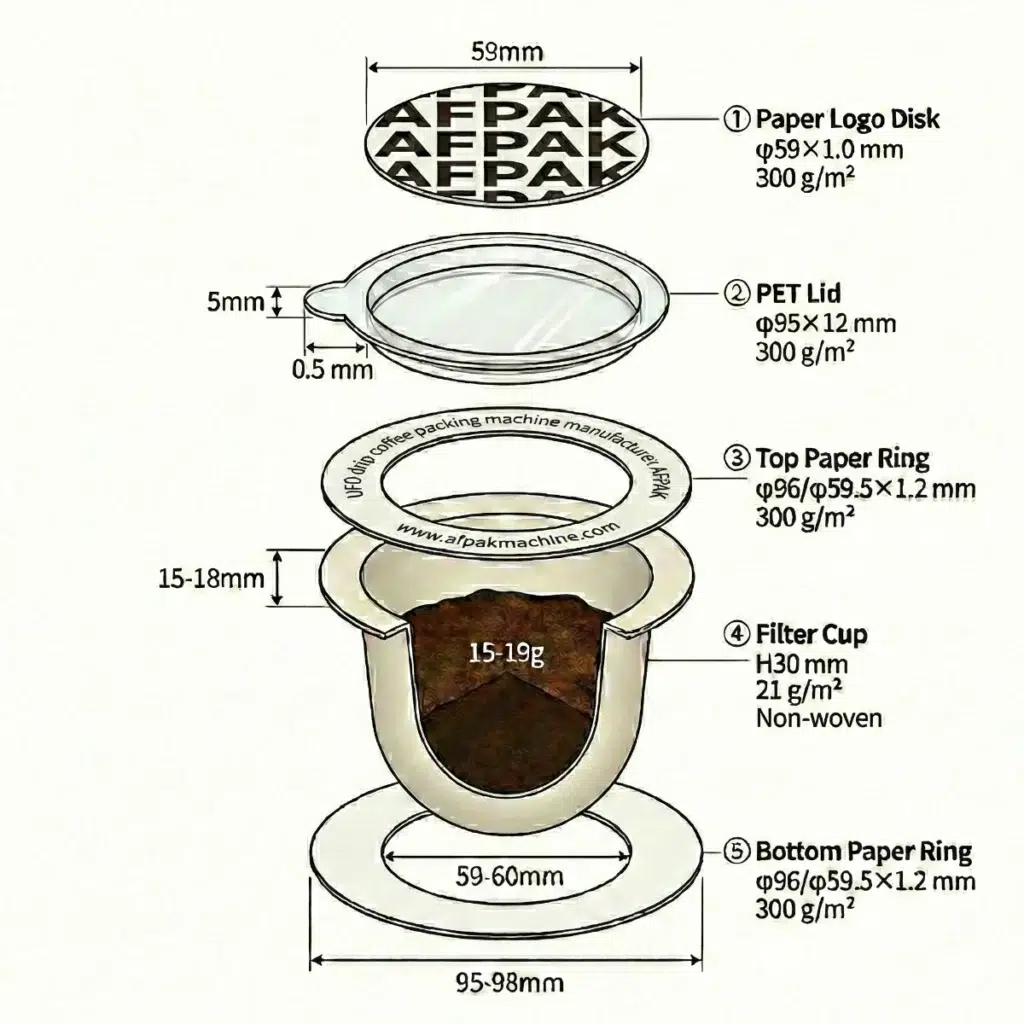
Esta “lógica de montaje” es exactamente la razón por la que el equipo de embalaje OVNI es diferente de una máquina de bolsas de goteo estándar. Si el control de la estructura es inestable, el producto no se sentirá premium, por muy bueno que sea el café.
2) Defina su objetivo de producción: la producción es “buenas unidades por hora”, no CPM en papel
La mayoría de las fábricas no pierden dinero porque su máquina es lenta.
Pierden dinero porque el rendimiento del sellado se desplaza, el polvo contamina las áreas de sellado, el cambio se come el turno y el tiempo de inactividad aparece en el peor momento.
Antes de seleccionar equipo, defina:
- objetivo de producción diaria
- número de turnos
- tasa de defectos aceptable
- con qué frecuencia cambias los SKU
Punto de referencia operativo (referencia AFPAK): nuestras máquinas envasadoras OVNI están diseñadas para soportar funcionamiento continuo las 24 horas con >99% tasa calificada bajo materiales estables y condiciones operativas estándar.
3) Dos rutas principales de producción de ovnis: llenado de tazas ya preparado versus conformado + llenado + sellado
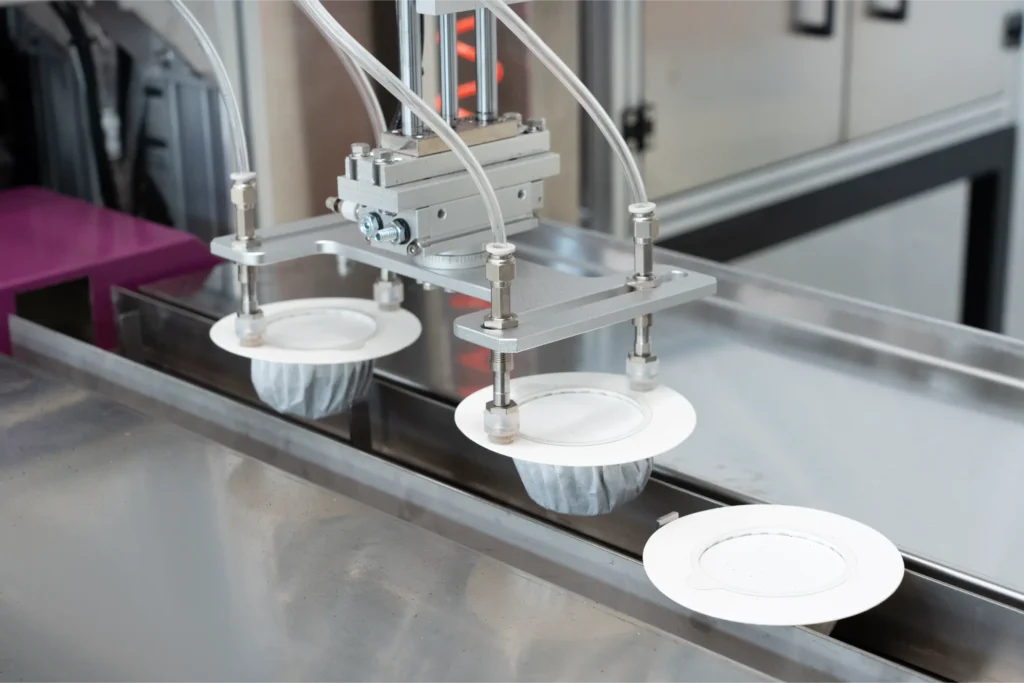
Hay dos rutas probadas para el empaquetado de ovnis:
Ruta A « Relleno de tazas ovni ya preparado (lanzamiento más rápido)
Esta ruta se llena vasos OVNI vacíos prefabricados.
El flujo de trabajo típico incluye:
- alimentación en vaina ya preparada
- llenado de sinfín servo
- limpieza por succión de polvo
- clasificación y alimentación de tapas de plástico
- carga de la tapa superior
Ideal para:
- marcas que lanzan líneas UFO premium
- fábricas que quieren una menor complejidad de ingeniería
- equipos que no quieren gestionar la formación de componentes temprano
Ruta B « Formación de ovnis + Relleno + Sellado (Mejor costo unitario a largo plazo)
Esta ruta forma la estructura OVNI a partir de componentes y llena el café en una secuencia, que incluye:
- carga de anillo inferior
- corte y sellado de papel de filtro
- colocación del anillo superior
- sellado ultrasónico
- llenado de sinfín servo
- succión de polvo
- clasificación y alimentación de tapas de plástico
- carga de tapa
Ideal para:
- Fábricas OEM/ODM
- proyectos de gran volumen
- compradores que desean control de BOM y apalancamiento de costos unitarios a escala
4) Selección de recuento de carriles: 1 carril frente a 2 carriles frente a 4 carriles (cómo funciona realmente la escala)
La ampliación de la producción de ovnis tiene que ver principalmente con la paralelización:
- Salida de 2 carriles ¦ 2× monol carril
- Salida de 4 carriles ¦ 4× monol carril
| Recuento de carriles | Lógica de salida | Mejor para |
|---|---|---|
| 1 carril | línea base | mercado de pruebas, nuevas marcas, turnos limitados |
| 2 carriles | ~2× | etapa de crecimiento, órdenes estables |
| 4 carriles | ~4× | Fábricas OEM, suministro de exportación, producción multiturno |
5) Referencia de precio: Máquinas OVNI por número de carriles (rangos de compradores prácticos)
A continuación, los precios están estructurados para la toma de decisiones. El precio exacto depende de las opciones, los materiales, el diseño del sistema de alimentación y los requisitos de inspección.
A) [Máquina llenadora de vasos OVNI ya preparada] (vasos OVNI prefabricados)
| Recuento de carriles | Salida | Referencia de precio (USD) |
|---|---|---|
| 1 carril | 1× | $30,000+ |
| 2 carriles | 2× | $45,000+ |
| 4 carriles | 4× | $65,000+ |
B) Máquina formadora + llenadora + selladora de ovnis (Construye tazas internamente)
| Recuento de carriles | Salida | Referencia de precio (USD) |
|---|---|---|
| 1 carril | 1× | $39,000+ |
| 2 carriles | 2× | $54,000+ |
| 4 carriles | 4× | $74,000+ |
C) Máquina envasadora de bolsas exteriores (opción de lavado de nitrógeno)
Para una vida útil superior y preparación para la exportación, agregue un sistema de bolsa exterior:
- bolsa formadora a partir de carrete
- alimentación de vainas
- lavado de nitrógeno
- sellado
Referencia de precio: $22,000+ :
Una especificación de referencia muestra:
- velocidad del paquete: 40-70 bolsas/min
- voltaje: 1fásico AC 220V
- poder: 2,0 kW
6) UFO frente a bolsa de goteo estándar: lo que los compradores deben comprender antes de elegir el equipo
Los productos estándar de bolsas de goteo son más simples:
- menos piezas estructurales
- formación más fácil
- menos estaciones de alimentación
- normalmente, el coste de la máquina es más bajo para la misma clase de velocidad
Si su mercado es “valor y consumo diario”, la bolsa de goteo estándar suele ser el primer paso.
Si su mercado es “regalo premium, café boutique, dosis más altas”, UFO suele ser la ruta de actualización.
7) Máquina envasadora de café con bolsa de goteo estándar
Si planeas ofrecer café tradicional en bolsa además, esta categoría es ampliamente utilizada.
Lo que puede producir
- sólo bolsa interior
- o embalaje interior + bolsa exterior
Salida y dosificación
- 30-50 bolsas/min
- capacidad 30-40 bolsas/min
- rango de peso de llenado 5-12g
- precisión ±0,2 g
Tamaño y sellado de la bolsa
- tamaño de la bolsa interior: W 90 mm × L 90 mm
- tamaño de la bolsa exterior: W 100 mm × L 120 mm
- tipo de sellado: sellado de tres lados
Utilidades
- fuente de alimentación: 220V / 50Hz / 3,7kW
- consumo de aire: 0,6 m³/min, 0,8 MPa
Referencia de precio
USD $18.000+ / set
8) UFO vs bolsa de goteo estándar: tabla comparativa lado a lado
| Categoría | Café con goteo OVNI (estilo taza) | Bolsa de goteo estándar de café |
|---|---|---|
| Posicionamiento central | Servicio único premium | Mercado masivo/goteo diario |
| Complejidad de la estructura | Superior (montaje multipieza) | Inferior (formación de película + sellado) |
| Dosis típica de café | 15-19g (dosis premium) | 5-12 g de rango común |
| Enfoque de salida típico | Carriles (1/2/4) | Plataforma única, variantes de velocidad |
| Kpi clave | tasa calificada + estabilidad del ensamblaje | estabilidad del sellado + precisión de la dosificación |
| Punto de referencia operativo | 24h continuo, >99% calificado (referencia AFPAK) | varía según las especificaciones y el formato |
| Inversión típica en equipos | ~$31k-$74k+ (por carriles) | ~$18k referencia de entrada |
9) Realidad del mercado: por qué las máquinas de bolsas de goteo estándar japonesas suelen costar más de $80.000
Para las máquinas tradicionales de bolsas de goteo, los equipos japoneses se citan comúnmente en USD $80.000+ (referință de piață).
El precio suele estar impulsado por:
- estabilidad a largo plazo para la producción en varios turnos
- estándares de acabado más altos
- mayor nivel de automatización
- mayores expectativas de repetibilidad de procesos
Mientras tanto, muchas máquinas fabricadas en China comienzan a bajar, pero el precio puede aumentar rápidamente dependiendo de:
- formatos de bolso admitidos (solo interior, interior + exterior, formas especiales)
- clase de velocidad y nivel de automatización
- sistema de dosificación (sistemas de afeitado versus pesaje)
- requisitos de inspección
- materiales y especificaciones de sellado
10) ¿Qué máquina OVNI deberías comprar? (Borrar recomendaciones)
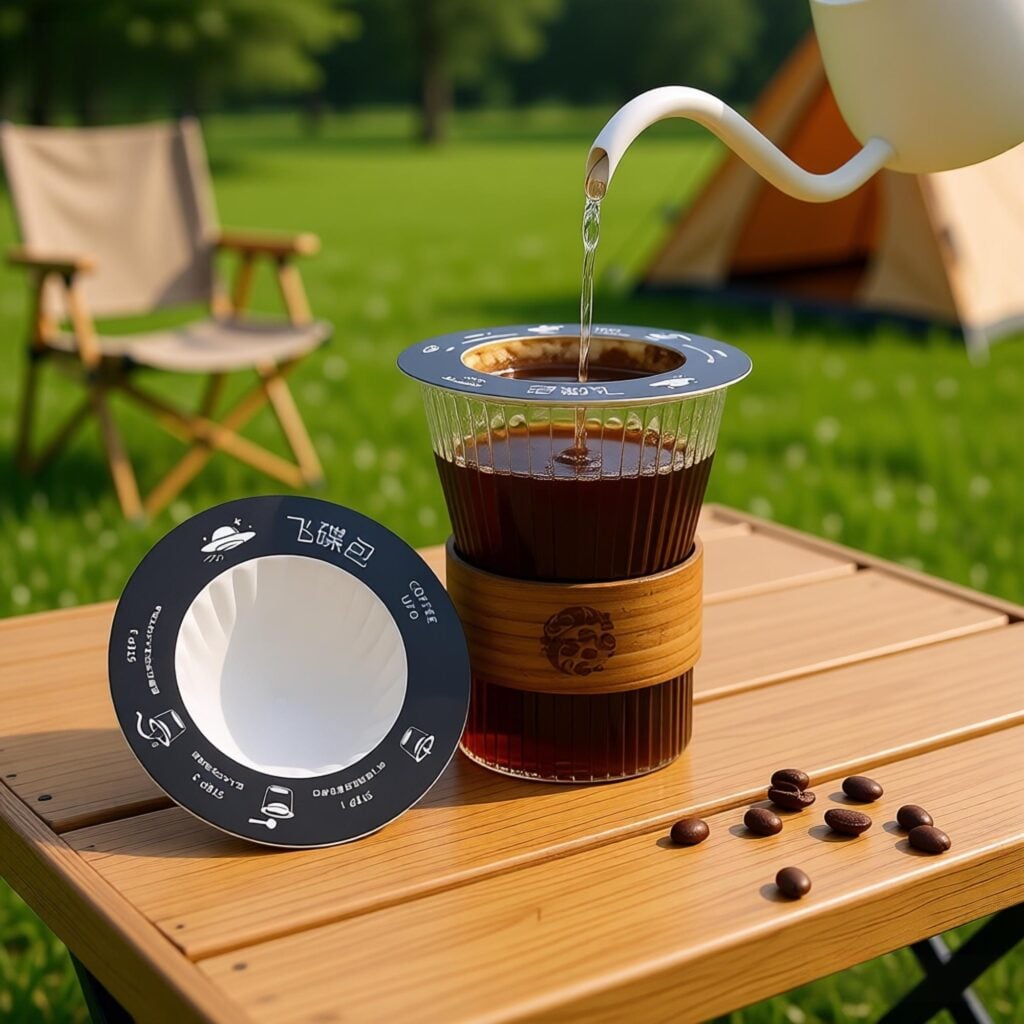
Recomendación #1 (la mayoría de las marcas): Relleno de ovnis listo para usar « Actualización de 1 carril → 2 carriles
Elige esto si:
- tu objetivo #1 es la velocidad de lanzamiento
- primero estás generando demanda
- te sientes cómodo comprando vasos OVNI vacíos ya preparados
Comience con 1 carril, expanda a 2 carriles una vez que el volumen mensual sea estable.
Recomendación #2 (OEM/Escala): Formado + Relleno + Sellado « 2 Carriles o 4 Carriles
Elige esto si:
- desea control BOM y menor costo unitario
- realizas la producción diaria
- quiere menos dependencia de los proveedores de tazas
Recomendación #3 (enfoque de vida útil): agregue bolsa exterior + nitrógeno desde el primer día
Elige esto si:
- exportas
- te diriges al comercio minorista premium
- se vende en climas cálidos
11) Lista de verificación del comprador (qué confirman los compradores serios antes de pagar un depósito)
Especificaciones del producto y del café
- carga objetivo de café (15-19g)
- perfil de molienda (el fino % afecta la estabilidad)
- vida útil requerida y temperatura de almacenamiento
- requerimiento de nitrógeno para bolsa exterior
Condiciones de fábrica
- preparación de energía (monofásica versus trifásica)
- capacidad de aire comprimido
- plan de formación de operadores
- limpieza SOP (café en polvo es implacable)
Estándares de aceptación (ponlos por escrito)
- tolerancia de peso
- requisitos de resistencia del sello
- objetivos de tasa de defectos
- duración de la prueba de funcionamiento continuo
- definición de tarifa calificada (lo que cuenta como “calificada”)
12) Factores que afectan el costo de las máquinas de embalaje OVNI
Un solo número no define el precio de una máquina envasadora de café por goteo OVNI.
En proyectos reales, el coste de la máquina es el resultado de diseño de productos, requisitos funcionales, planificación de capacidad y selección de componentes trabajando juntos.
A continuación se detallan los cuatro factores principales que afectan directamente el precio final de la máquina y el cronograma de entrega.
1) Tamaño y dimensiones de la copa OVNI
Mientras que el copa OVNI de 95 mm de diámetro se ha convertido en un estándar de la industria ampliamente aceptado; las máquinas envasadoras de ovnis suelen estar diseñadas para soportar tamaños de taza personalizados basado en requisitos de marca o mercado.
Personalizar una máquina para un tamaño de taza no estándar normalmente implica:
- ajuste mecánico de la estructura
- rediseño de herramientas
- optimización de alimentación y posicionamiento
- pruebas y validación adicionales
Como resultado:
- el plazo de entrega del diseño y la fabricación de la máquina suele ampliarse entre 3 y 5 semanas
- aumenta la carga de trabajo de ingeniería
- en consecuencia, el coste total de la máquina puede aumentar
Nota del comprador:
Si su producto puede seguir el formato UFO estándar de 95 mm, tanto el costo como el tiempo de entrega son más fáciles de controlar. Las dimensiones personalizadas deben justificarse por necesidades claras de mercado o marca.
2) Requisitos funcionales y configuraciones opcionales
El costo de la máquina aumenta significativamente con la funcionalidad adicional. Las opciones de configuración típicas incluyen:
- Relleno de taza OVNI ya preparado vs conformado de tazas en línea + relleno + sellado
- dosificación de aroma opcional o inyección de sabor
- sistemas de inspección o control de peso en línea
- codificación de fechas/impresión por lotes
- diferentes tamaños de bolsas y requisitos de diseño de bolsas
- integración con equipos posteriores como cajas de cartón o envasadoras de cajas
Cada función afecta:
- complejidad mecánica
- lógica de control
- sincronización entre estaciones
- tiempo de puesta en servicio
Nota del comprador:
Estos requisitos deben discutirse en detalle con el proveedor durante la etapa de cotización. La comunicación temprana incompleta es una de las razones más comunes de cambios inesperados de precios posteriores.
3) Capacidad de producción requerida (configuración de carril)
Las máquinas envasadoras de ovnis suelen estar disponibles en Configuraciones de 1 carril, 2 carriles y 4 carriles.
Como regla general:
- 2 carriles ¦ 2× salida de 1 carril
- 4 carriles ¦ 4× salida de 1 carril
Sin embargo, los recuentos de carriles más altos significan:
- estaciones de formación y llenado más paralelas
- sincronización más compleja
- mayor demanda de consistencia material
- aumento de la carga del sistema mecánico y eléctrico
A medida que aumenta la capacidad, el precio de la máquina aumenta en consecuencia, no sólo por la velocidad, sino también por la velocidad requisitos de estabilidad y complejidad del sistema.
Nota del comprador:
A menudo es más rentable elegir el número de carriles correcto con anticipación que reducir el tamaño y actualizar demasiado pronto.
4) Configuración eléctrica y selección de componentes
Los componentes eléctricos desempeñan un papel fundamental en la fiabilidad de la máquina a largo plazo. Los elementos clave incluyen:
- sistema PLC
- pantalla táctil (HMI)
- servomotores y accionamientos
- sensores y componentes de seguridad
Para lograr estabilidad a largo plazo y soporte de servicio global, muchos compradores prefieren marcas establecidas como:
- Schneider
- OMRÓN
- Siemens
Elegir componentes eléctricos de mayor calidad normalmente:
- aumenta el costo inicial de la máquina
- reduce el riesgo de tiempo de inactividad
- mejora la disponibilidad de repuestos
- reduce el coste total de propiedad durante el ciclo de vida de la máquina
Nota del comprador:
Un precio inicial más bajo logrado al reducir la calidad de la configuración eléctrica a menudo conduce a mayores costos de mantenimiento e inestabilidad de la producción en el futuro.
Resumen
El coste real de una máquina envasadora de ovnis está determinado por:
- estandarización del tamaño de la copa versus personalización
- alcance funcional de la línea
- capacidad de producción requerida
- nivel de configuración eléctrica
Comprender estos factores desde el principio permite a los compradores alinear la inversión en máquinas con los objetivos de producción reales, en lugar de reaccionar a los cambios de costos una vez que el proyecto ya ha comenzado.
13) Lista de verificación del generador de costos (qué confirmar antes de solicitar una cotización)
Antes de solicitar una cotización para una máquina envasadora de café por goteo OVNI, los compradores deben definir claramente los puntos siguientes.
La mayoría de las brechas de precios y retrasos en los proyectos provienen de información faltante o poco clara en esta etapa.
A. Copa OVNI y especificaciones del producto
- Diámetro objetivo de la copa OVNI (estándar de 95 mm o tamaño personalizado)
- Altura de la copa y detalles de la estructura (grosor del anillo, tipo tapa)
- Rango de dosis de café (p. ej., 15-19 g)
- Especificación y proveedor de papel de filtro (gsm, permeabilidad)
- Si se requieren varios tamaños de tazas en una máquina
B. Ruta del Proceso de Producción
- Relleno de taza OVNI ya preparado
o - Conformación en línea + llenado + sellado
- Flexibilidad esperada para futuros cambios de productos
C. Requisitos funcionales
- Dosificación de aromas o sabor (sí/no)
- Control de peso en línea (muestreo o 100%)
- Codificación de fechas o impresión por lotes
- Inspección de visión o detección de defectos
- Requisitos de aspiración y limpieza de polvos
D. Formato de embalaje e integración posterior
- Solo copa interior o bolsa interior + exterior
- Rango de tamaño de la bolsa exterior y cambios de diseño
- Requisito de lavado de nitrógeno
- Conexión a equipos de estuchado o embalaje de cajas (ahora o en el futuro)
E. Planificación de Capacidades
- Salida objetivo por hora/por turno
- Configuración de carril (1 / 2 / 4 carriles)
- Número de turnos por día
- Tiempo de funcionamiento continuo esperado (por ejemplo, producción de 24 horas)
F. Preferencias eléctricas y de servicios públicos
- Marcas preferidas de PLC/HMI/servo
- Condiciones de alimentación (monofásica o trifásica)
- Disponibilidad y capacidad de aire comprimido
- Restricciones de diseño y espacio de fábrica
Tipul comprador:
Proporcionar esta información por adelantado permite a los proveedores cotizar con precisión y diseñar una máquina que se ajuste a las necesidades reales de producción, en lugar de revisar los precios después de que comience la ingeniería.
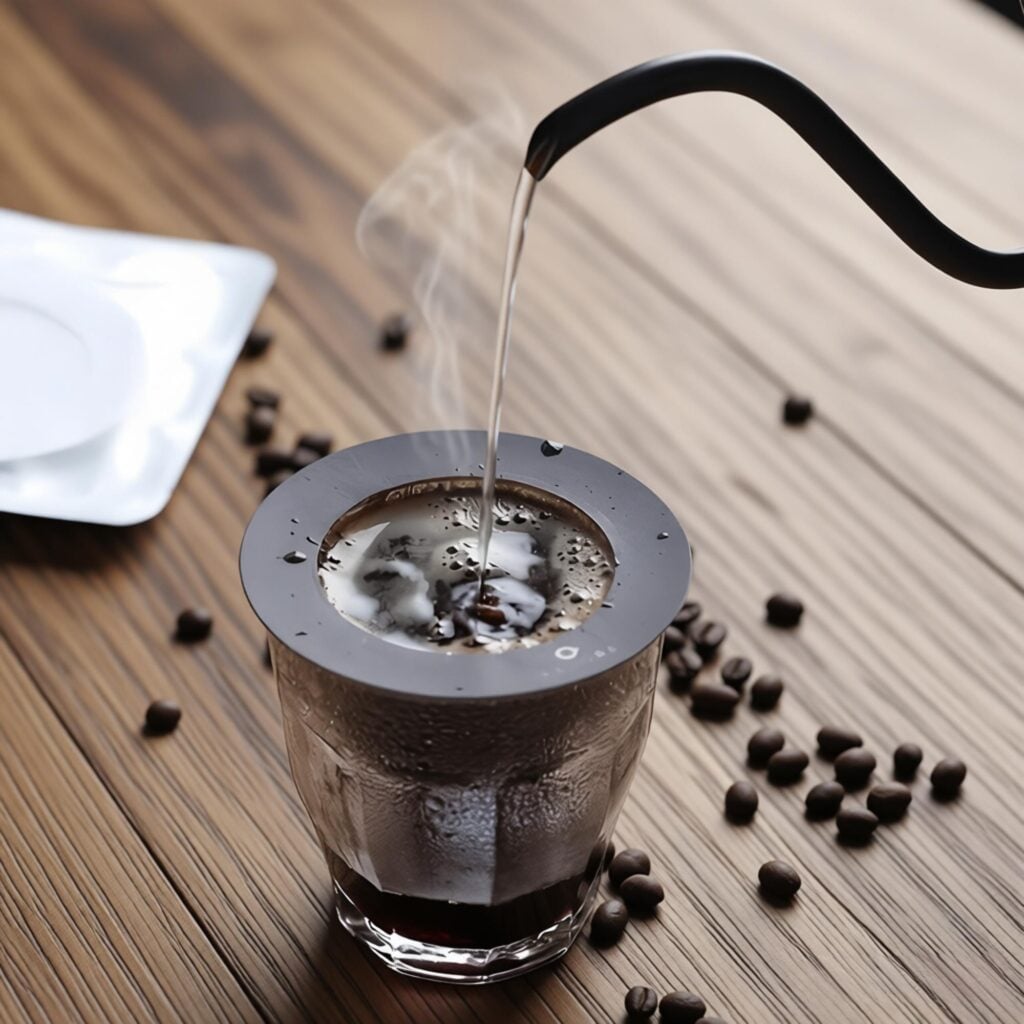
14) Cómo se asignan los factores de costo a configuraciones de 1 carril / 2 carriles / 4 carriles
Los cuatro principales factores de coste:tamaño de copa, alcance de función, capacidad y configuración eléctrica«afecta la configuración de cada carril de manera diferente.
A continuación se muestra una referencia práctica para ayudar a los compradores a alinear la selección de máquinas con la realidad de producción.
Configuración de 1 carril (entrada/producción piloto)
Ideal para:
- se lanza nuevo producto
- pruebas de mercado
- producción diaria limitada
- cambios mínimos de SKU
Controladores de costos típicos:
- se prefiere la copa OVNI estándar de 95 mm
- relleno de taza confeccionado o conformado básico
- funciones opcionales limitadas
- configuración eléctrica estándar
Ventaja clave:
Inversión más baja y entrega más rápida.
Risc si se utiliza indebidamente:
Puede convertirse en un cuello de botella una vez que los pedidos se estabilicen.
Configuración de 2 carriles (etapa de crecimiento/órdenes estables)
Ideal para:
- marcas con demanda mensual constante
- Los OEM pasan del piloto a la escala
- fábricas que funcionan en turnos diarios
Controladores de costos típicos:
- dimensiones de copa estándar o semipersonalizadas
- se agregaron más funciones opcionales (inspección, impresión)
- mayores requisitos de sincronización
- mayor demanda de estabilidad eléctrica
Ventaja clave:
Inversión equilibrada versus producción, buena flexibilidad a largo plazo.
Perspectiva del comprador:
Muchos proyectos consideran que el carril 2 es el “punto óptimo” para el control de costos y la escalabilidad.
Configuración de 4 carriles (escala OEM/producción multiturno)
Ideal para:
- Fábricas OEM/ODM
- producción orientada a la exportación
- funcionamiento continuo en turnos múltiples o 24 horas
Controladores de costos típicos:
- estricta consistencia dimensional de la copa
- ruta de conformado completo + llenado + sellado
- inspección y seguimiento avanzados
- selección de componentes eléctricos premium
Ventaja clave:
Costo más bajo por buena unidad a escala.
Adverție ale compradorului:
La coherencia de los materiales, la formación de los operadores y la disciplina de mantenimiento se vuelven fundamentales.
Los sistemas de 4 carriles amplifican tanto las fortalezas como las debilidades de una fábrica.
Regla de decisión práctica
- Si el volumen es incierto → comience con 1 carril
- Si la demanda es estable → 2 carriles suele ser óptimo
- Si la producción es continua y predecible → 4 carriles ofrece la mejor economía unitaria
La selección correcta de carriles con anticipación reduce el rediseño, evita actualizaciones apresuradas y protege la inversión total.
15) Escenarios de cotización de muestra (referencia práctica para compradores)
Para ayudar a los compradores a comprender mejor cómo se traducen los diferentes requisitos en la configuración y el presupuesto de la máquina, se basan los siguientes ejemplos proyectos típicos de café por goteo ovni del mundo real.
Estos escenarios no son cotizaciones vinculantes, pero reflejan cómo interactúan los factores de costo en la selección real de equipos.
Escenario 1: Lanzamiento del mercado estándar (la opción más común)
Antecedentes del proyecto
- Nuevo producto de café por goteo OVNI
- Centrarse en la rápida entrada al mercado
- Calidad estable, cambios limitados en SKU
- Sin personalización estructural especial
Supuestos de productos y procesos
- Diámetro estándar de la copa OVNI: 95 mm
- Dosis de café: 15-18g
- Tazas OVNI vacías ya preparadas
- Vaso interior + embalaje exterior de la bolsa
- Se requiere lavado de nitrógeno
- No hay verificador de peso en línea
- Sin dosificación de aroma
- Codificación de fecha incluida
Configuración recomendada
- Máquina llenadora de vasos OVNI de 2 carriles ya preparada
- Máquina envasadora de bolsas exteriores con lavado de nitrógeno
Referencia presupuestaria
- Máquina llenadora de ovnis (2 carriles): USD 45.000+
- Máquina envasadora de bolsas exteriores: 22.000 USD
- Inversión estimada en línea: ~67.000 USD+
Por qué funciona esta configuración
- Puesta en marcha rápida
- Menor riesgo de ingeniería
- Adecuado para escalar desde el lanzamiento de la marca hasta una producción mensual estable
- Costo equilibrado versus capacidad de producción
Escenario 2: Producción OEM controlada por costos (enfoque de volumen a largo plazo)
Antecedentes del proyecto
- Fábrica OEM/ODM
- Pedidos estables y producción diaria
- Fuerte enfoque en el costo por unidad
- Equipo técnico interno disponible
Supuestos de productos y procesos
- Diámetro estándar de la copa OVNI: 95 mm
- Dosis de café: 16-19g
- Conformación en línea + llenado + sellado
- Vaso interior + embalaje exterior de la bolsa
- Se requiere lavado de nitrógeno
- Codificación de fecha opcional
- Sin dosificación de aroma
- Inspección de peso basada en muestreo
Configuración recomendada
- Máquina OVNI formadora + llenadora + selladora de 2 carriles
- Máquina envasadora de bolsas exteriores con lavado de nitrógeno
Referencia presupuestaria
- Máquina formadora + llenadora + selladora (2 carriles): USD 54.000+
- Máquina envasadora de bolsas exteriores: 22.000 USD
- Inversión estimada en línea: ~76.000 USD+
Por qué funciona esta configuración
- Menor costo unitario a largo plazo
- Control total sobre la estructura OVNI BOM
- Mejor escalabilidad para contratos OEM
- Adecuado para funcionamiento diario continuo
Escenario 3: Producción de exportación a gran escala (operación 24 horas al día, 7 días a la semana)
Antecedentes del proyecto
- Producción orientada a la exportación
- Funcionamiento multiturno o continuo las 24 horas
- Alta consistencia y baja tolerancia a defectos
- Contratos de suministro a largo plazo
Supuestos de productos y procesos
- Diámetro estándar de la copa OVNI: 95 mm
- Dosis de café: 18-19g
- Conformación en línea + llenado + sellado
- Vaso interior + embalaje exterior de la bolsa
- Se requiere lavado de nitrógeno
- Monitoreo de peso en línea
- Impresión de fecha de producción
- Preparación para el estuchado posterior
Configuración recomendada
- Máquina OVNI de conformado + llenado + sellado de 4 carriles
- Máquina envasadora de bolsas exteriores con lavado de nitrógeno
Referencia presupuestaria
- Máquina formadora + llenadora + selladora (4 carriles): USD 74.000+
- Máquina envasadora de bolsas exteriores: 22.000 USD
- Inversión estimada en línea: ~96.000 USD+
Por qué funciona esta configuración
- Costo más bajo por unidad buena a escala
- Admite funcionamiento continuo las 24 horas
- Diseñado para una alta tasa calificada (>99%) en condiciones estables
- Listo para el futuro para actualizaciones de automatización
Escenario 4: Tamaño de copa personalizado y funciones avanzadas (proyectos especiales)
Antecedentes del proyecto
- Diseño de producto diferenciado
- Dimensiones de copa OVNI no estándar
- Personalización estructural impulsada por la marca
- Se acepta una mayor participación en ingeniería
Supuestos de productos y procesos
- Tamaño de copa OVNI personalizado (que no sea de 95 mm)
- Dosis de café personalizada
- Conformación en línea + llenado + sellado
- Múltiples funciones opcionales (inspección, impresión)
- Embalaje interior + bolsa exterior
- Se requiere lavado de nitrógeno
Impacto clave en el proyecto
- El plazo de entrega del diseño de la máquina se extendió aproximadamente 1 mes
- Aumento de costos de ingeniería y herramientas
- El precio final depende en gran medida del alcance de la personalización
Nota del comprador
Los proyectos personalizados siempre deben discutirse en detalle antes de citarlos.
La confirmación temprana de dimensiones y funciones es fundamental para controlar los costos y el tiempo de entrega.
Perspectiva final del comprador
El precio de las máquinas sólo tiene sentido cuando se ven junto con:
- estructura del producto
- alcance funcional
- configuración de carril
- plan de producción a largo plazo
Los proyectos más exitosos no son los de menor precio inicial, sino aquellos donde la capacidad de la máquina coincide con la realidad de producción desde el primer día.
Preguntas frecuentes (preguntas del comprador que realmente importan)
1) ¿Puede la máquina funcionar realmente las 24 horas seguidas?
Sí, cuando los materiales son estables y se siguen los procedimientos operativos estándar.
Las máquinas AFPAK están diseñadas para funcionamiento continuo las 24 horas, y en condiciones de producción estables el la tasa calificada puede exceder 99% (referencia AFPAK).
2) ¿Debo comprar 1 carril, 2 carriles o 4 carriles?
Si estás iniciando: 1 carril.
Si ya tienes pedidos estables: 2 carriles.
Si realiza varios cambios a escala OEM: 4 carriles.
3) ¿Cuál es la diferencia entre relleno confeccionado y conformado + relleno + sellado?
El llenado ya preparado minimiza las variables del proceso y acelera la entrada al mercado.
Formar + llenar + sellar ofrece un control BOM más profundo y una economía unitaria más sólida a largo plazo en volumen.
4) ¿Necesito una bolsa exterior?
¡esto es necesario! Si se apunta a una vida útil superior, distribución de exportación o climas cálidos, se recomienda encarecidamente el embalaje exterior de la bolsa, a menudo con lavado con nitrógeno.
5) ¿Por qué el precio de las máquinas de bolsas de goteo varía tanto?
Porque “máquina de bolsas de goteo” puede significar diferentes formatos de bolsas, diferentes velocidades, diferentes sistemas de dosificación y diferentes niveles de inspección. El formato de la bolsa y la velocidad del embalaje por sí solos pueden hacer que los precios aumenten significativamente.
Preguntas frecuentes: ¿Es necesario lavar el nitrógeno?
¡sí! Lavado de nitrógeno se utiliza ampliamente en envases de alimentos para desplazar el oxígeno y mejorar la estabilidad en almacenamiento.
Autor

Jeffree
Especialista en Maquinaria de Embalaje | 15 años de experiencia | AFPAK
Jeffree ha pasado 15 años construyendo y apoyando líneas de producción de envases de café, desde bolsas de goteo y sistemas de bolsas exteriores hasta formatos premium de una sola porción. Su enfoque es práctico: producción estable, sellado limpio y un sistema de producción que escala sin deriva de calidad.
Para una recomendación rápida, envíe:
1) volumen mensual objetivo
2) dosis de café (15-19g)
3) vasos confeccionados versus conformados internamente
4) si necesita bolsas exteriores lavadas con nitrógeno


