
Làm thế nào K-Cup Filling Machines Work (Máy chiết rót cốc K) (Tựa tiếng Anh) (Tựa tiếng Anh) Và làm thế nào để chọn đúng loại cho doanh nghiệp cà phê của bạn
Thông số kỹ thuật nhanh: Máy chiết rót cốc K
| Các Loại Máy | Hướng dẫn sử dụng, Bán tự động, Tự động nội tuyến, Quay |
| Phạm vi tốc độ | 1–600 cốc mỗi phút tùy thuộc vào mức độ tự động hóa |
| Độ chính xác điền | ± 0,1g (máy khoan servo) đến ± 0,5g (định lượng thủ công) |
| Xả Nitơ | Yêu cầu ing mục tiêu dư O2 dưới 3% mỗi ASTM D3985 |
| Xây dựng Khung | Thép không gỉ 304, bề mặt tiếp xúc cấp thực phẩm |
| Khoảng Giá | $700–$200.000+ tùy theo dung lượng và tự động hóa |
Tiêu thụ của thị trường vỏ cà phê phục vụ một lần của Hoa Kỳ đứng ở mức 9,58 tỷ đô la Mỹ vào năm 2025, theo tình báo Mordor. thị trường đang tăng trưởng với tốc độ 5,95% hàng năm.Là một nhà rang xay cà phê hoặc doanh nhân đang tìm cách thực hiện bước đầu tiên của bạn vào thị trường này, quyết định thiết bị quan trọng nhất bạn sẽ thực hiện là sử dụng máy chiết rót cốc k nào.
Bài viết này giúp bạn hiểu cách thức hoạt động của máy chiết rót và niêm phong cốc k, điểm khác biệt giữa máy hàn kín $700 thủ công với hệ thống quay $200.000 và cách chọn máy đóng gói phản ánh đúng nhu cầu của bạn.
Máy chiết rót K-Cup là gì?
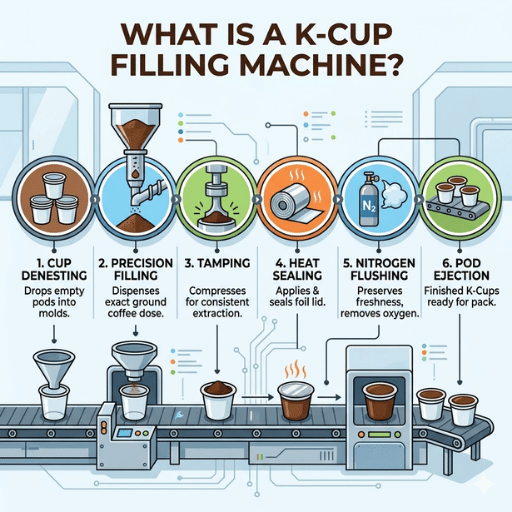
Máy chiết rót k-cup là một loại thiết bị đóng gói tự động định lượng cà phê xay vào K-Cups phục vụ một lần, xả đầu bằng khí nitơ và hàn nhiệt nắp giấy bạc để tạo thành viên nang kín khí. Những máy này bao gồm từ các chất bịt kín thủ công đơn giản xử lý từng cốc một, đến tốc độ cao Máy chiết rót và niêm phong cốc K có khả năng sản xuất 600 cốc mỗi phút trên bệ quay.
Tất cả các máy rót cốc k đều trải qua cùng một chu trình bốn bước ở bất kỳ tốc độ hoặc giá nào:
- Tải cốc – Vỏ cốc k rỗng được nạp vào một số trạm nạp bằng tay hoặc bằng bộ nạp cốc và bộ phận khử cốc tự động.
- Liều lượng cà phê – Một mũi khoan hoặc cốc thể tích được sử dụng để cân và phân phối cà phê xay vào mỗi vỏ. Phạm vi trọng lượng lấp đầy thương mại tiêu chuẩn là 9,5-12g/mỗi k-cup tùy thuộc vào rang tối/sáng và sức mạnh được tìm kiếm.
- xả nitơ – Khí nitơ được đẩy vào thay thế không khí bên trong cốc đầy. kéo dài thời hạn sử dụng từ vài tuần lên 9-12 tháng thông qua quá trình oxy hóa giảm thiểu phá hủy hợp chất hương vị và duy trì mùi đậu rang tươi.
- Niêm phong nhiệt nắp V A Nắp laminate lá được đặt trên cốc và liên kết bằng cách sử dụng nhiệt và áp suất. nhiệt độ niêm phong thường dao động từ 180 °C đến 220 °C, tùy thuộc vào sự kết hợp vật liệu nắp và cốc.
📐 Ghi chú Kỹ thuật
Mục tiêu oxy dư dưới 3% bên trong K-Cups kín, được đo trên ASTM D3985. hệ thống đóng gói khí quyển sửa đổi cao cấp đạt được mức thấp như 0.08%, kéo dài đáng kể thời hạn sử dụng của vỏ cà phê.
Các loại máy chiết rót cốc K: Từ thủ công đến quay
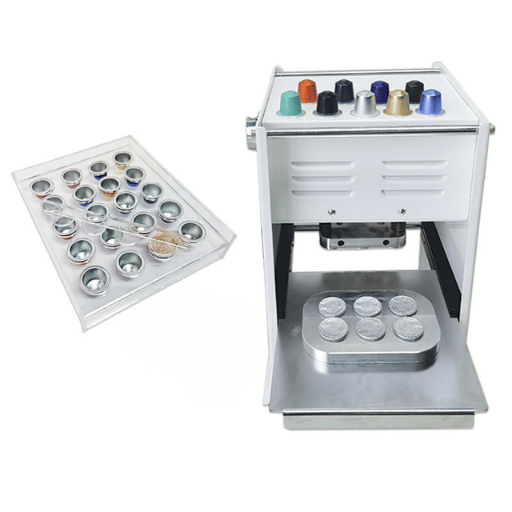
Máy chiết rót và niêm phong cốc K rơi vào bốn tầng riêng biệt, mỗi được thiết kế cho một quy mô sản xuất khác nhau. khoảng cách giữa các tầng không phải là tuyến tính inh một máy đóng gói mà chi phí năm lần thường xuyên hơn cung cấp sáu đến mười lần thông lượng, làm cho chi phí-mỗi-cup số liệu so sánh thực sự chứ không phải là giá nhãn dán.
| Tính năng | Hướng dẫn sử dụng Sealer | Bán tự động | Tự động nội tuyến | Quay |
|---|---|---|---|---|
| Tốc độ | 1 -5 cốc mỗi phút | 10 -30 cốc mỗi phút | 60–120 cốc mỗi phút | 200–600 cốc mỗi phút |
| Độ chính xác điền | ±0,5g | ±0,3g | ±0,1g (servo) | ±0,1g (servo) |
| Xả Nitơ | Hướng dẫn sử dụng / Không có | Add-on tùy chọn | Tích hợp | Tích hợp |
| Người vận hành | 1 | 1–2 | 1 | 1–2 |
| Khoảng Giá | $700–$2.000 | $2.000–$7.000 | $20,000–$50,000 | $80,000–$200,000+ |
| Tốt nhất cho | Lấy mẫu, R & D | Máy rang nhỏ (<500 cốc/ngày) | Mid-volume (500–5,000/ngày) | Khối lượng lớn (>5.000/ngày) |
Máy rang cà phê thường xuyên đánh giá thấp khoảng cách thông lượng giữa máy chiết rót và niêm phong bán tự động và nội tuyến.Trong một tính toán mà không có thời gian chết, một máy chạy ở 20 cốc mỗi phút tạo ra 9.600 K-Cup trong ca làm việc 8 giờ.Một hệ thống nội tuyến ở 80 cốc mỗi phút inh trong khi chi phí có lẽ nhiều hơn 5 lần inh sản xuất 38.400 viên nang trong cùng một ca. chi phí cho mỗi cốc giảm đáng kể một khi bạn vượt qua ngưỡng tự động hóa.
📐 Ghi chú Kỹ thuật
Hệ thống định lượng mũi khoan điều khiển bằng servo duy trì độ chính xác làm đầy ± 0,1g trên toàn bộ quá trình sản xuất. Định lượng cốc thể tích, phổ biến trong các máy làm đầy vỏ cấp thấp, thường trôi ± 0,3– 0,5g do mật độ cà phê thay đổi giữa các lô. Đối với máy chiết rót K-cup quay, hệ thống khoan servo với bộ điều khiển Schneider Electric là tiêu chuẩn.
Thông số kỹ thuật quan trọng để đánh giá trước khi mua
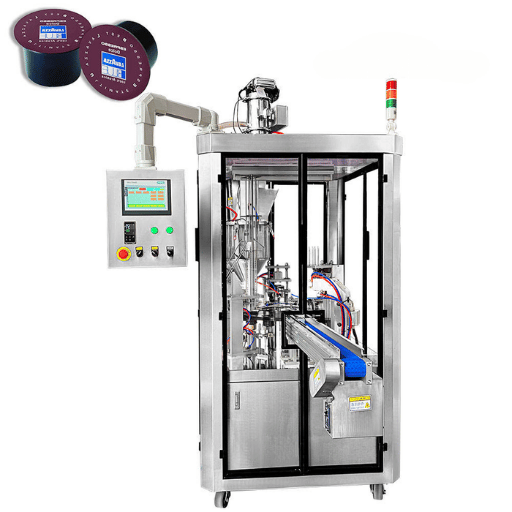
Tài liệu quảng cáo chào hàng số liệu thông lượng tối đa. nhưng một số thông số kỹ thuật có liên quan nhiều hơn đến chất lượng sản phẩm cuối cùng của viên nang cà phê hàng ngày và lợi nhuận lâu dài hơn số liệu thông lượng tiêu đ.
Độ chính xác điền và tính nhất quán của trọng lượng điền
Đạt được độ chính xác ± 0,1g với điền khoan điều khiển servo cho bất kỳ máy làm đầy viên nang hoàn toàn tự động nào. tính nhất quán trong ca sản xuất 8 giờ được đánh giá cao hơn nhiều so với độ chính xác tối đa. yêu cầu các nhà sản xuất điền dữ liệu trọng lượng trên các lần chạy mở rộng, ổn định, không phải số hiệu chuẩn máy khởi động. mỗi gram bổ sung của quá đầy, nhân với hàng ngàn cốc phục vụ đơn mỗi ngày, thêm vào chất thải nguyên liệu đáng k.
Tốc độ: Cups Per Hour so với thông lượng hiệu qu
Một máy làm đầy cốc K được đánh giá ở mức 120 cốc mỗi phút hiếm khi duy trì tốc độ đó cho một ca làm việc đầy đủ. thay đổi pha trộn, làm sạch máy và điều chỉnh nhỏ giảm thông lượng thực tế từ 20-30% đã nêu. cho công suất lập kế hoạch, sử dụng 75% của các cốc đã nêu mỗi gi.
Xả Nitơ và Oxy dư
Xả nitơ ổ đĩa ra oxy và mở rộng độ tươi của mỗi k-cup cho người dùng cuối. tiêu chuẩn công nghiệp cho oxy dư ít hơn 3%; các nhà khai thác làm đầy viên nang cà phê cao cấp nhằm mục đích ít hơn 1%. bao gồm một máy phân tích oxy trong thông số kỹ thuật thiết bị của bạn, nếu không bạn sẽ không biết nếu hệ thống xả nitơ của bạn thực sự hoạt động. hỏi ASTM F1307 đối với dữ liệu thử nghiệm OTR từ nhà cung cấp cốc của bạn; tiến gần hơn đến 0 với OTR dưới 0,05 cm³/viên/ngày.
Hệ thống niêm phong và nhiệt độ niêm phong
Đầu con dấu làm bằng đồng rắn phân phối nhiệt đều hơn nhôm rẻ hơn, giảm mạnh số lượng con dấu xấu. đặt nhiệt độ con dấu của bạn 180C-220C với nắp và hỗn hợp cốc của bạn; phụ thuộc vào nơi ở và áp suất nhất quán trên mọi trạm niêm phong. đó là sự khác biệt giữa một cốc K được niêm phong đáng tin cậy và một rò r.
Xây dựng và Tuân th
Khung thép không gỉ và vật liệu cấp thực phẩm đáp ứng FDA 21 CFR Phần 117 Tiêu chuẩn CGMP.Schneider Electric PLC và động cơ servo đảm bảo độ bền của hệ thống điều khiển cho thiết bị chiết rót viên nang cà phê.
Điện tích tĩnh trong hầu hết cà phê xay số lượng lớn không bao giờ được đề cập trong các tờ đặc điểm kỹ thuật. tĩnh làm cho các căn cứ để bám vào việc mở cốc và ngăn chặn sự hình thành con dấu. gõ ra tĩnh bằng cách để cho cà phê mới xay của bạn degas 24-48 giờ giữa nghiền và làm đầy.
Máy chiết rót K-Cup có giá bao nhiêu?
Chi phí là một đầu vào trong việc mua thiết bị đóng gói K-cup.Dưới đây là giá niêm yết cấp thị trường tính đến năm 2025.Báo giá mua thiết bị của bạn trực tiếp từ nhà sản xuất vì giá thực tế có thể thay đổi tùy theo ứng dụng.
| Máy Tier | Chi phí thiết bị | Tính năng tiêu biểu |
|---|---|---|
| Hướng dẫn sử dụng Sealer | $700–$2.000 | Niêm phong nhiệt cơ bản, làm đầy vỏ cà phê bằng tay |
| Bán tự động | $2.000–$7.000 | Tự động điền, đặt nắp bằng tay |
| Tự động nội tuyến | $20,000–$50,000 | Hoàn toàn tự động, xả nitơ, điều khiển PLC |
| Quay | $80,000–$200,000+ | Hệ thống QC tích hợp, đa làn tốc độ cao |
Cài đặt, đào tạo nhân viên và sửa đổi trang web khác chiếm 10-15% của giá mua máy đóng gói k-cup. ngân sách chi phí theo kế hoạch này trước khi mua hàng.
Ngoài máy rót k-cup, vật tư tiêu hao định kỳ tích lũy khi thu nhỏ: vỏ k-cup (trống) có giá $0.05-$0.12 mỗi, nắp lá là $0.02-$0.04 mỗi, và nguồn khí nitơ có phân phối bể hoặc máy phát điện trong nhà. một chi phí sản xuất tất cả trong thực tế với công suất hợp lý dao động từ $0.08-$0.15 mỗi cốc, so với các dịch vụ đồng đóng gói thuê ngoài ở mức $0.15-$0.30 mỗi cốc. đối với sản xuất viên nang cà phê vượt quá 1.000 cốc mỗi ngày, sản xuất đơn phục vụ trong nhà thường có thể đạt ROI trong 6-12 tháng.
Hãy nhớ cơ sở hạ tầng nguồn nitơ của bạn. máy k-cup nội tuyến và quay ăn một lượng lớn khí nitơ. tài khoản cho một trong hai cho thuê bình nitơ lỏng số lượng lớn (~ $150-$300/mo.) hoặc một máy phát điện nitơ ($3,000-$8,000 đầu tư trả trước) trong tổng chi phí sở hữu của bạn.
Làm thế nào để Chọn đúng K-Cup Máy đóng gói cho doanh nghiệp của bạn
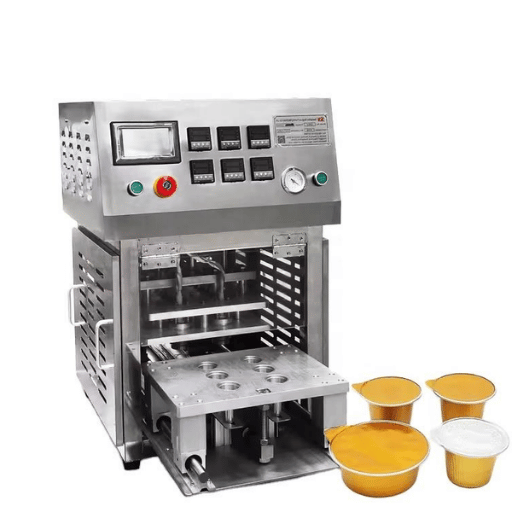
Mua cho khối lượng khát vọng chứ không phải nhu cầu hiện tại là sai lầm máy đóng gói K-cup tốn kém nhất.Một máy chiết rót nội tuyến $60,000 chạy ở công suất 20% là một máy lãng phí vốn và không gian sàn so với một đơn đặt hàng hàng ngày phù hợp bán tự động $5,000.
- ✔
Mục tiêu sản xuất hàng ngày: Bạn cần sản xuất bao nhiêu cốc K ngay bây giờ 0 trong ba năm? - ✔
Mã sản phẩm: Chạy một hỗn hợp đơn giản hơn năm 5 mỗi lần chuyển đổi sẽ tốn thời gian sản xuất trên máy chiết rót viên nang của bạn. - ✔
Dòng thời gian tăng trưởng: Khối lượng phục vụ một lần của bạn sẽ tăng gấp đôi trong 12 tháng, hay đây là một hoạt động ở trạng thái ổn định? - ✔
Không gian sàn và tiện ích: Máy nội tuyến và quay cần khí nén, cung cấp nitơ và nguồn điện ba pha. đơn vị bán tự động chạy trên một ổ cắm tiêu chuẩn. - ✔
Tổng ngân sách: Bao gồm cài đặt và đào tạo, cổ phiếu tiêu thụ, và 3 tháng cung cấp nitơ ine không chỉ là giá máy.
Quy tắc quyết định chung của bạn: dưới 100 cốc mỗi ngày hướng dẫn sử dụng hoặc bán tự động; 100-1000 cốc mỗi/ngày bán tự động để nội tuyến; 1000-5K cốc mỗi/ngày tự động nội tuyến; và trên 5K K-cup mỗi/ngày nền tảng quay. Coffeemakers khám phá vỏ k-cup có thể phân hủy hoặc phân hủy sinh học nên biết: thay đổi giao thức niêm phong có thể xảy ra vỏ không thể phân hủy cần xử lý nhiệt độ và chất kết dính nắp khác với cốc polypropylen tiêu chuẩn.
Nhận một thử nghiệm với pha trộn cà phê thực sự của bạn trước khi mua. bề mặt đoạn đường nối, mật độ đậu, dầu, và độ ẩm ảnh hưởng đến sự hoàn hảo điền. một máy làm đầy sẽ thực hiện khác nhau giữa Colombia nướng trung bình và Sumatra nướng tối dầuneither của mà bạn’d học từ thông số kỹ thuật in. đạt ra để một máy chiết rót viên nang nhà sản xuất điều đó cung cấp thử nghiệm mẫu tại chỗ.
Viên nang K-Cup vs Nespresso: Bạn nên sản xuất định dạng nào?
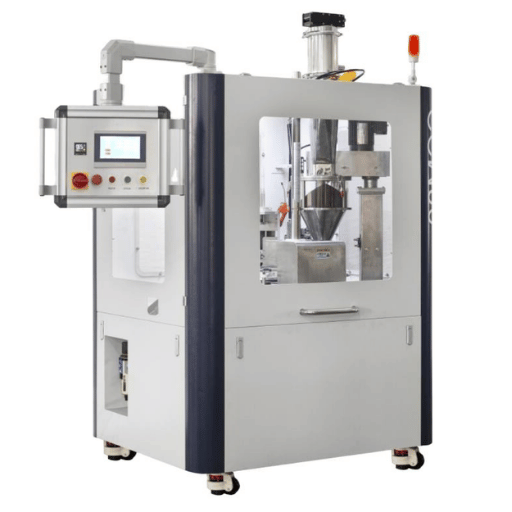
Trước khi mua một máy chiết rót viên nang phục vụ một lần cho cà phê của bạn, hãy biết hệ thống viên nang nào hoạt động tốt nhất cho ai: người tiêu dùng được nhắm mục tiêu và địa lý.
| Yếu tố | Cốc K | Nespresso |
|---|---|---|
| Hình dạng Pod | Xi lanh phẳng | Mái vòm thon (Bản gốc) /phẳng (Vertuo) |
| Điền Trọng lượng | 9,5 -12g | 5 -7g |
| Thị phần Hoa Kỳ (2023) | 53.1% (Keurig) | 14.4% (phát triển nhanh) |
| Thị trường sơ cấp | Bắc Mỹ | Châu Âu, mở rộng sang Mỹ |
| Giá bán lẻ mỗi Pod | $0.30–$0.70 | $0.60–$1.10 |
| Vật liệu nắp | Lá mỏng | Nhôm lá mỏng |
Keurig vẫn sở hữu 53.1% của Bắc Mỹ đơn phục vụ, nhưng mất đất. CNBC đưa tin rằng Nespresso Lừa Mỹ cổ phiếu nhảy từ 11% đến 14.4% trong một năm duy nhất (2022 đến 2023), một 30% năm qua năm tăng. tùy thuộc vào đó hốc thị trường bạn hy vọng sẽ có được, gói k-cup điền vẫn là một cơ hội bán lớn hơn nhưng cốc nespresso có lợi nhuận lớn hơn đáng kể trên mỗi đơn v.
Máy định dạng kép xử lý cả K-Cup và Nespresso viên nang điền tồn tại, nhưng họ luôn luôn chạy 15-20% chậm hơn so với các dòng đơn định dạng chuyên dụng do thời gian chuyển đổi. nếu bạn có kế hoạch sản xuất cả hai định dạng viên nang ở khối lượng, hai máy chuyên dụng sẽ vượt trội hơn một hệ thống định dạng kép.
Thị trường vỏ và viên nang cà phê thế giới được định giá $43,71 tỷ năm 2025; cả hai định dạng k-cup và nespresso đều được mở rộng. vì vậy, câu hỏi thực sự không phải là về cơ hội thị trường, mà là về định dạng nào củng cố định vị thương hiệu và địa lý mục tiêu nào.
Câu hỏi thường gặp
Bao nhiêu cà phê đi vào một K-Cup?
Xem Câu Trả Lời
K-Cups có chứa đầy nitơ không?
Xem Câu Trả Lời
Tôi nên mong đợi độ chính xác làm đầy nào từ máy làm đầy K-Cup?
Xem Câu Trả Lời
Máy chiết rót K-Cup có thể xử lý các vỏ có thể phân hủy không?
Xem Câu Trả Lời
Hầu hết các máy chiết rót và niêm phong hiện đại đều sẵn sàng chấp nhận vỏ viên nang k-cup có thể phân hủy và phân hủy sinh học mà không cần thay đổi cơ học. thông số niêm phong có thể phải được sửa đổi. vật liệu có thể phân hủy và phân hủy sinh học có thể yêu cầu nhiệt độ niêm phong thấp hơn và chất kết dính nắp khác với cốc polypropylen tiêu chuẩn. Như mọi khi, hãy chạy thử trên sự kết hợp cốc/nắp có thể phân hủy cụ thể của bạn trước khi tiến hành sản xuất. Một số nhà sản xuất báo cáo rằng vỏ có thể phân hủy cần nhiệt độ niêm phong thấp hơn 15-25% và thời gian dừng lâu hơn polypropylen, vì vậy hãy lên kế hoạch điều chỉnh trong quá trình thiết lập ban đầu của bạn. Thị trường vỏ có thể phân hủy sinh học đang phát triển nhanh chóng và một số nhà bán lẻ lớn hiện bắt buộc phải đóng gói có thể phân hủy cho các sản phẩm K-Cup nhãn hiệu riêng.
Máy chiết rót K-Cup có khó lắp đặt và vận hành không?
Xem Câu Trả Lời
Phạm vi giá điển hình cho máy chiết rót K-Cup là gì?
Xem Câu Trả Lời
Giá cả khác nhau từ khoảng $700 cho máy hàn kín vận hành bằng tay đến hơn $200.000 cho hệ thống quay tốc độ cao. bán tự động cho máy rang cà phê nhỏ có khả năng xử lý trong phạm vi $2.000-$7.000. máy đóng gói k-cup tự động nội tuyến được sản xuất cho viên nang cà phê khối lượng trung bình với chi phí $20.000-$50.000. ngân sách thêm 10-15% giá máy để lắp đặt, đào tạo và cổ phiếu tiêu thụ ban đầu.
Sẵn sàng để bắt đầu dây chuyền sản xuất K-Cup của bạn?
AFPAK đã giao máy chiết rót và niêm phong cốc k cho các nhà sản xuất cà phê ở hơn 40 quốc gia trong hơn 14 năm. từ một bán tự động cơ bản cho rang của bạn đến một dây chuyền quay tốc độ cực cao để sản xuất theo hợp đồng, đội ngũ kỹ sư của họ có thể thiết kế thiết bị phù hợp với mức sản xuất mong muốn của bạn.
Về Hướng dẫn này
Hướng dẫn này được sản xuất với sự cộng tác của AFPAK, một nhà sản xuất máy chiết rót và niêm phong cốc K có trụ sở tại Thượng Hải với 14 năm trong ngành công nghiệp đóng gói viên nang cà phê.Các dữ liệu kỹ thuật, giá cả, và số thị trường hiển thị ở đây được rút ra từ các báo cáo công nghiệp công cộng, tiêu chuẩn thử nghiệm ASTM, và tài liệu quy định của FDA 2000000000000000000000000000000000000000000000000000000000000000000000000000000000000000000000000000000.
Tài liệu tham khảo & Nguồn
- ASTM D3985 · Phương pháp thử nghiệm tiêu chuẩn cho tốc độ truyền khí oxy & ASTM quốc tế
- ASTM F1307 · Phương pháp thử nghiệm tiêu chuẩn cho tốc độ truyền oxy qua các gói khô & ASTM quốc tế
- FDA 21 CFR Phần 117 · Thực hành sản xuất tốt hiện tại cục Quản lý Thực phẩm và Dược phẩm Hoa Kỳ
- Báo cáo thị trường viên nang và vỏ cà phê Hoa Kỳ 1. Tình báo Mordor
- Quy mô và dự báo thị trường vỏ cà phê toàn cầu ady Fortune Thông tin chi tiết về doanh nghiệp
- Nespresso đã đạt được lợi nhuận như thế nào tại thị trường Hoa Kỳ do Keurig thống trị & CNBC
- Tầm quan trọng của bao bì cà phê: Giữ mức oxy dư ở mức thấp 10 Rovema Bắc Mỹ


