
Comment fonctionnent les machines de remplissage KCup et comment choisir la bonne pour votre entreprise de café
Spécifications rapides : machines de remplissage K-Cup
| Types de machines | Manuel, semi-automatique, automatique en ligne, rotatif |
| Plage de vitesse | 100 tasses par minute selon le niveau d’automatisation |
| Remplissage Précision | ±0,1 g (servo tarière) à ±0,5 g (dose manuelle) |
| Rinçage à l’azote | Obligatoire — O₂ résiduel visé sous 3 % selon ASTM D3985 |
| Construction de cadres | Acier inoxydable 304, surfaces de contact de qualité alimentaire |
| Gamme de prix | $700+$200,000 selon la capacité et l’automatisation |
La consommation du marché américain des dosettes de café en portion individuelle s’élevait à 9,58 milliards de dollars américains en 2025, selon Mordor Intelligence Le marché connaît une croissance annuelle de 5,95%. En tant que torréfacteur ou entrepreneur cherchant à faire votre premier pas sur ce marché, la décision la plus importante que vous prendrez en matière d’équipement est la machine de remplissage de k-cup à utiliser.
Cet article vous aide à comprendre comment fonctionnent les machines de remplissage et de scellement de k-cup, ce qui distingue un scellant manuel $700 d’un système rotatif $200 000 et comment sélectionner une machine d’emballage qui reflète véritablement vos besoins.
Qu’est-ce qu’une machine de remplissage K-Cup ?
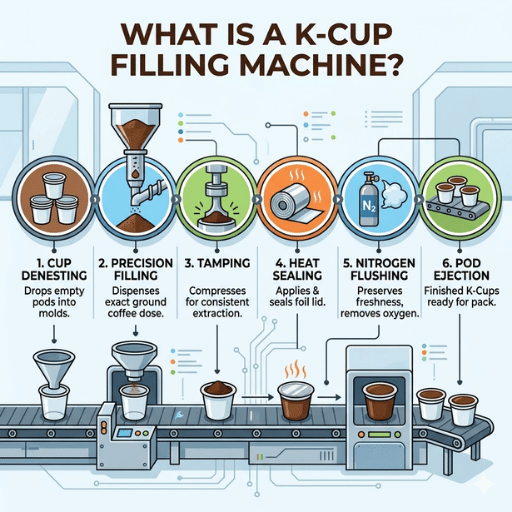
La machine de remplissage de k-cup est un type d’équipement d’emballage qui dose automatiquement le café moulu dans les K-Cups en portion individuelle, chasse la tête avec de l’azote gazeux et thermoscelle un couvercle en aluminium pour former une capsule hermétique. Ces machines vont des simples scellants manuels qui traitent une tasse à la fois à la vitesse élevée Machines de remplissage et de scellage de K-cup capable de produire 600 tasses par minute sur les plates-formes rotatives.
Toutes les machines de remplissage de k-cup passent par le même cycle en quatre étapes à n’importe quelle vitesse ou prix :
- Chargement de la tasse Les coques de la K-Cup vides sont chargées dans un certain nombre de stations de remplissage à la main ou au moyen d’un alimentateur automatique de la tasse et d’une unité de dénestation.
- Dosage de café Une tasse à tarière ou volumétrique est utilisée pour peser et distribuer du café moulu dans chaque dosette. La plage de poids de remplissage commercial standard est de 9,5 à 12 g/par k-cup en fonction des torréfactions sombres/légères et de la force recherchée.
- rinçage à l’azote : arôme d’azote poussé pour remplacer l’air à l’intérieur de la tasse remplie. Prolonge la durée de conservation de quelques semaines à 9 à 12 mois grâce à une oxydation minimisée qui détruit le composé et maintient l’odeur des haricots frais torréfiés.
- Calcul thermoscellage du couvercle 10 Le couvercle stratifié en feuille est placé sur la tasse et collé à lʼaide de chaleur et de pression Les températures dʼétanchéité varient généralement de 180 °C à 220 °C, selon la combinaison de matériau du couvercle et de la tasse.
📐 Note d’ingénierie
Ciblez l’oxygène résiduel en dessous de 3% à l’intérieur des K-Cups scellés, mesuré par ASTM D3985. Systèmes d’emballage sous atmosphère modifiée haut de gamme atteindre des niveaux aussi bas que 0.08%, 1, allongeant considérablement la durée de conservation des dosettes de café.
Types de machines de remplissage K-Cup : du manuel au rotatif
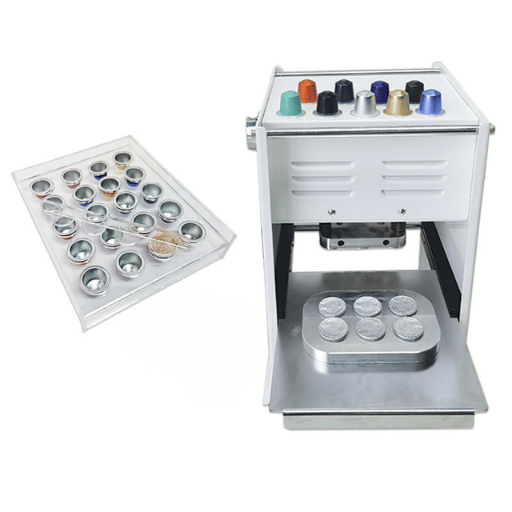
Machines de remplissage et de scellage de K-cup se répartissent en quatre niveaux distincts, chacun conçu pour une échelle de production différente. L’écart entre les niveaux n’est pas linéaire. Une machine d’emballage qui coûte cinq fois plus cher fournit souvent six à dix fois le débit, ce qui fait du coût par tasse la mesure de comparaison réelle plutôt que le prix de la vignette.
| Caractéristique | Scellant manuel | Semi-automatique | En ligne Automatique | Rotary |
|---|---|---|---|---|
| Vitesse | 1 tasse par minute | 10 000 tasses par minute | 60 tasses 20 par minute | 200 600 tasses par minute |
| Remplissage Précision | ±0,5g | ±0,3g | ±0,1g (servo) | ±0,1g (servo) |
| Rinçage à l’azote | Manuel /Nul | Module complémentaire facultatif | Intégré | Intégré |
| Opérateurs | 1 | 1–2 | 1 | 1–2 |
| Gamme de prix | $700–$2,000 | $2,000–$7,000 | $20,000–$50,000 | $80,000–$200,000+ |
| Meilleur Pour | Échantillonnage, R & D | Petits torréfacteurs (<500 tasses/jour) | Volume moyen (500 000/jour) | Volume élevé (>5 000/jour) |
Les torréfacteurs sous-estiment fréquemment l’écart de débit entre les machines de remplissage et de scellage semi-automatiques et en ligne Dans un calcul sans temps d’arrêt, une machine fonctionnant à 20 tasses par minute produit 9 600 K-Cups en un décalage de 8 heures Un système en ligne à 80 tasses par minute alors que le coût peut-être 5 x plus produit 38,0 capsules dans le même décalage Le coût par dramatiquement une fois que vous franchissez le seuil d’automatisation.
📐 Note d’ingénierie
Les systèmes de dosage à vis sans servo maintiennent une précision de remplissage de ± 0,1 g sur l’ensemble des séries de production Dosage en coupelle volumétrique, courant dans les machines de remplissage de dosettes d’entrée de gamme, dérive généralement de ± 0,5 g car la densité du café varie entre les lots Pour machines rotatives de remplissage de K-cup, Les systèmes de vis sans fin servo avec contrôleurs Schneider Electric sont standard.
Spécifications critiques à évaluer avant d’acheter
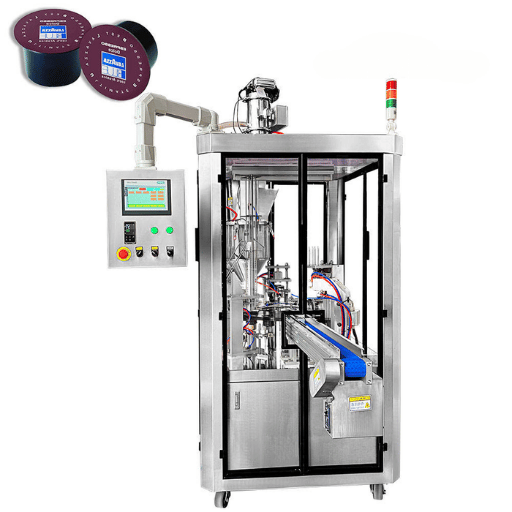
Les brochures vantent les chiffres de débit maximum Mais plusieurs spécifications sont plus pertinentes pour la qualité quotidienne du produit final de la capsule de café et la rentabilité à long terme que les chiffres de débit global.
Précision de remplissage et cohérence du poids de remplissage
Atteindre une précision de ±0,1 g avec un remplissage de tarière asservi pour toute machine de remplissage de capsules entièrement automatique La cohérence sur une équipe de fabrication de 8 heures est évaluée bien plus fortement que la précision maximale Demandez aux fabricants des données de poids de remplissage sur les séries prolongées et stables, et non des numéros d’étalonnage de la machine de démarrage Chaque gramme supplémentaire de surremplissage, multiplié par des milliers de tasses à service unique par jour, s’ajoute à un gaspillage important de matières premières.
Vitesse : Coupes par heure par rapport au débit effectif
Une machine de remplissage de K-cup évaluée à 120 tasses par minute maintient rarement ce rythme pendant un quart de travail complet Les changements de mélange, le nettoyage de la machine et les ajustements mineurs font chuter le débit réel de indiqué par 20-30%. Pour la capacité de planification, utilisez 75% des tasses indiquées par heure.
Rinçage à l’azote et oxygène résiduel
Le rinçage à l’azote chasse l’oxygène et étend la fraîcheur de chaque k-cup à l’utilisateur final Les normes de l’industrie pour l’oxygène résiduel sont inférieures à 3% ; les opérateurs de remplissage de capsules de café haut de gamme visent moins de 1%. Incluez un analyseur d’oxygène dans les spécifications de votre équipement, sinon vous ne saurez pas si votre système de rinçage à l’azote fonctionne réellement Demandez ASTM F1307 pour les données de test OTR de votre fournisseur de gobelets ; rapprochez-vous de zéro avec un OTR inférieur à 0,05 cm³/capsule/jour.
Système d’étanchéité et température d’étanchéité
Les têtes d’étanchéité en cuivre massif distribuent la chaleur plus uniformément que l’aluminium moins cher, réduisant considérablement le nombre de mauvais joints Réglez votre température d’étanchéité entre 180 °C et 220 °C avec votre couvercle et votre mélange de gobelets ; dépendez d’un maintien et d’une pression constants dans chaque station d’étanchéité. C’est la différence entre une K-cup scellée de manière fiable et une fuite.
Construction et conformité
Le cadre en acier inoxydable et les matériaux de qualité alimentaire se rencontrent FDA 21 CFR Partie 117 Normes CGMP. Schneider Electric PLC et les servomoteurs garantissent la durabilité du système de contrôle équipement de remplissage de capsules de café.
La charge statique dans la plupart des cafés moulus en vrac n’est jamais mentionnée dans les feuilles de spécifications Static provoque l’accrochage du marc à l’ouverture de la tasse et empêche la formation de joint Knock out static en laissant vos dégazages de café fraîchement moulus 24-48 heures entre le broyage et le remplissage.
Combien coûte une machine de remplissage K-Cup ?
Le coût est un intrant dans l’acquisition d’équipement d’emballage K-cup Vous trouverez ci-dessous les prix catalogue au niveau du marché à partir de 2025. Citez vos achats d’équipement directement auprès du fabricant car les prix réels peuvent varier selon l’application.
| Niveau machine | Coût d’équipement | Caractéristiques typiques |
|---|---|---|
| Scellant manuel | $700–$2,000 | Calcul thermique de base, remplissage manuel de dosettes de café |
| Semi-automatique | $2,000–$7,000 | Remplissage automatisé, placement manuel du couvercle |
| En ligne Automatique | $20,000–$50,000 | Entièrement automatique, chasse d’azote, contrôle PLC |
| Rotary | $80,000–$200,000+ | Systèmes de contrôle qualité intégrés à plusieurs voies à grande vitesse |
L’installation, la formation des employés et d’autres modifications du site représentent 10-15% de prix d’achat des machines d’emballage k-cup. Évaluez ce coût prévu avant de procéder à l’achat.
Au-delà de la machine de remplissage de k-cup elle-même, les consommables récurrents cumulent à l’échelle : les coques de k-cup (vides) coûtent $0.05-$0.12 chacune, les couvercles de feuilles sont $0.02-$0.04 chacun, et la source d’azote gazeux a une livraison en réservoir ou un générateur interne Un coût de production tout compris réaliste à une capacité raisonnable varie de $0.08-$0.15 par tasse, contre des services de co-emballage externalisés à $0.30 par tasse.
Rappelez-vous votre infrastructure de source d’azote Les machines k-cup en ligne et rotatives mangent d’énormes quantités d’azote gazeux Comptez soit pour la location de réservoirs d’azote liquide en vrac (~$150-$300/mo.) ou un générateur d’azote ($3,000-$8,000 up-front investissement) dans votre coût total de possession.
Comment choisir la bonne machine d’emballage K-Cup pour votre entreprise
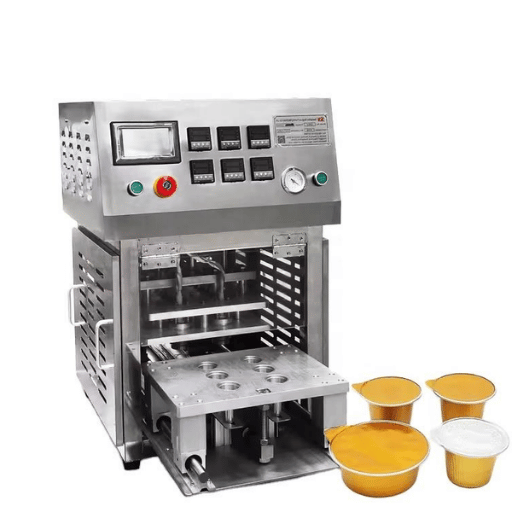
Acheter pour le volume ambitieux plutôt que la demande actuelle est l’erreur la plus coûteuse de la machine d’emballage K-cup. Une machine de remplissage en ligne $60,000 fonctionnant à la capacité 20% est un gaspillage de capital et de surface au sol par rapport à un $5,000 semi-auto correspondant aux commandes quotidiennes.
- ✔
Objectif de production quotidien : Combien de K-cups devez-vous produire en ce moment ? - ✔
SKU de produits : L’exécution d’un mélange est plus simple que cinq. Chaque changement coûte du temps de production sur votre machine de remplissage de capsules. - ✔
Chronologie de la croissance : Votre volume en portion individuelle doublera-t-il en 12 mois, ou s’agit-il d’une opération en régime permanent ? - ✔
Surface au sol et utilitaires : Les machines en ligne et rotatives ont besoin d’air comprimé, d’alimentation en azote et d’alimentation triphasée Les unités semi-automatiques fonctionnent sur une prise standard. - ✔
Budget total: Incluez l’installation et la formation, le stock de consommables et 3 mois d’approvisionnement en azote, pas seulement le prix de la machine.
Vos règles de décision générale : sous 100 tasses par/jour manuelle ou semi-Auto ; 100-1000 tasses par/jour semi-auto à inline ; 1000-5 K tasses par/jour auto en ligne ; et au-dessus de 5 K K-cups par/jour plate-forme rotative Les cafetières explorant les coques compostables ou biodégradables k-cup devraient savoir : des changements de protocole de scellement peuvent se produire les coques compostables ont besoin d’un adhésif de traitement et de couvercle différent de celui des tasses standard en polypropylène.
Obtenez un test avec votre vrai mélange de café avant l’achat La surface de la rampe, la densité des haricots, l’huile et les niveaux d’humidité affectent la perfection du remplissage Une machine de remplissage fonctionnera différemment entre le colombien à rôti moyen et le sumatran à rôti huileux foncé, dont vous apprendrez à partir des spécifications imprimées. Atteignez-vous à un fabricant de machines de remplissage de capsules cela offre des tests sur site.
Gélules K-Cup vs Nespresso : quel format devriez-vous produire ?
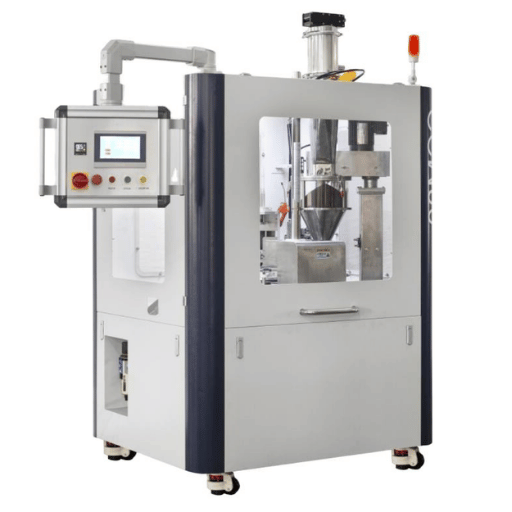
Avant d’acheter une machine de remplissage de capsules en portion individuelle pour votre café, sachez quel système de capsules fonctionne le mieux pour qui : les consommateurs ciblés et la géographie.
| Facteur | K-Cup | Nespresso |
|---|---|---|
| Forme de pod | Cylindre plat | Dôme conique (Original) /plat (Vertuo) |
| Remplir le poids | 9.512g | 57g |
| Part de marché américaine (2023) | 53.1% (Keurig) | 14,4% (croissance rapide) |
| Marché primaire | Amérique du Nord | L’Europe, s’étendant aux États-Unis |
| Prix de détail par pod | $0.30$0.70 | $0.60$1.10 |
| Matériel de couvercle | Stratifié de feuille | Feuille d’aluminium |
Keurig possède toujours 53,1% de service unique nord-américain, mais perd du terrain. CNBC a rapporté que la part américaine de Nespresso a bondi de 11% à 14.4% en une seule année (2022 à 2023), soit une augmentation de 30% d’une année sur l’autre Selon les niches de marché que vous espérez acquérir, le remplissage des packs de k-cup reste une opportunité de vente plus importante mais les tasses nespresso ont des marges par unité nettement plus importantes.
Machines biformat qui gèrent à la fois la K-Cup et Remplissage de la capsule Nespresso existez, mais ils fonctionnent toujours 15-20% plus lentement que les lignes dédiées à un seul format en raison du temps de changement Si vous prévoyez de produire les deux formats de capsules au volume, deux machines dédiées surpasseront un système à double format.
Le marché mondial des dosettes et capsules de café était évalué à $43,71 milliards en 2025; les formats k-cup et nespresso se sont développés. La vraie question ne concerne donc pas les opportunités de marché, mais le format qui renforce le positionnement de la marque et la géographie cible.
Foire aux questions
Quelle quantité de café va dans une K-Cup ?
Voir la réponse
Les K-Cups sont-ils remplis d’azote
Voir la réponse
Quelle précision de remplissage dois-je attendre d’une machine de remplissage K-Cup ?
Voir la réponse
Les machines de remplissage K-Cup peuvent-elles manipuler des dosettes compostables ?
Voir la réponse
La plupart des machines modernes de remplissage et de scellement acceptent facilement les coques de capsules k-cup compostables et biodégradables sans changement mécanique requis Les paramètres de scellement peuvent devoir être modifiés Les matériaux compostables et biodégradables peuvent nécessiter des températures de scellement plus basses et un adhésif de couvercle différent des gobelets standard en polypropylène Comme toujours, faites un essai sur votre combinaison tasse/couvercle compostable spécifique avant de passer à la production Certains fabricants signalent que les coques compostables nécessitent des températures de scellement inférieures de 15-25% et des temps de séjour plus longs que le polypropylène, alors prévoyez des cycles de réglage pendant votre configuration initiale Le marché des dosettes biodégradables est en croissance rapide plusieurs grands détaillants imposent désormais l’emballage compostable pour les produits K-Cup de marque privée.
Une machine de remplissage K-Cup est-elle difficile à installer et à utiliser ?
Voir la réponse
Quelle est la gamme de prix typique pour les machines de remplissage K-Cup ?
Voir la réponse
Les prix varient d’environ $700 pour les scellants à commande manuelle à plus de $200 000 pour les systèmes rotatifs à grande vitesse Semi-automatique pour les petits torréfacteurs à café capables de manipuler dans la gamme $2 000-$7 000 Les machines automatiques d’emballage en ligne à K-Cup sont produites pour la capsule à café à volume moyen au coût de $20 000-$50 000. budgétiser 10-15% supplémentaires du prix de la machine pour l’installation, la formation et le stock consommable initial.
Prêt à démarrer votre ligne de production K-Cup ?
AFPAK a livré les machines de remplissage et de scellage de k-cup aux producteurs de café dans plus de 40 pays depuis plus de 14 ans D’un semi-automatique de base pour votre torréfaction à une ligne rotative ultra haute vitesse pour la fabrication sous contrat, leur équipe d’ingénieurs peut concevoir le bon équipement pour votre niveau de production souhaité.
À propos de ce guide
Ce guide a été produit en collaboration avec AFPAK, un fabricant de machines de remplissage et de scellage de K-cup basé à Shanghai avec 14 ans dans l’industrie de l’emballage de capsules de café Les données techniques, les prix et les numéros de marché présentés ici sont tirés de rapports publics de l’industrie, des normes de test ASTM et de la documentation réglementaire de la FDA (nt) à partir d’allégations marketing d’un seul fabricant. Lorsque des chiffres spécifiques ne peuvent pas être validés indépendamment, nous avons noté la limitation plutôt que de présenter les estimations comme des faits établis.
Références et sources
- ASTM D3985 Méthode d’essai standard pour le taux de transmission de l’oxygène gazeux ASTM International
- ASTM F1307 Méthode de test standard pour la transmission de l’oxygène à travers des colis secs ASTM International
- FDA 21 CFR Partie 117 Bonnes pratiques de fabrication actuelles L’administration des aliments et des médicaments
- Rapport sur le marché des gousses et capsules de café des États-Unis ‘mordor’ Intelligence’
- Taille et prévisions du marché mondial des gousses de café les perspectives commerciales de Fortune
- Comment Nespresso a réalisé des gains sur le marché américain dominé par Keurig ‘CNBC’
- L’importance de l’emballage du café : maintenir les niveaux d’oxygène résiduels à un faible niveau ‘Rovema’ Amérique du Nord’
Articles connexes
- Machines de remplissage et d’étanchéité K-Cup : modèles à grande vitesse de 40 à 600 tasses par minute
- Qu’est-ce qu’une machine de remplissage K-Cup ? Un aperçu rapide
- À propos de l’AFPAK, plus de 14 ans d’expertise en emballage de capsules de café
- Machine de remplissage et d’étanchéité de capsules de café pour petits torréfacteurs


