
クイック スペック
| オリジナルラインの小売価格 | ポッドあたり $0.70 ~ $1.10 |
| Vertuo 小売価格 | ポッドあたり $1.00 ~ $1.50 |
| 原料床(オリジナルライン) | ≈ポッドあたり $0.05 ~ $0.06 (シェル+蓋+生コーヒー、変換/焙煎/労働前) |
| コーヒー用量 | 5 ″6g (オリジナル) ・ 7 ″12.5g (Vertuo、カップサイズ別) |
| AFPAK ネスプレッソ形式のマシン範囲 | 7 つのモデルにわたる 30 ~ 600+ カプセル/分 |
ネスプレッソ ポッドのコストは 2 つの部分からなる質問です。チェックアウト時に支払う小売ステッカーの価格と、その背後にある製造コストとマージンがはるかに目立たないことです。ネスプレッソ ポッドのコスト ポッドあたり $0.70 ~ $1.10 オリジナルラインの場合と $1.00~$1.50 ネスプレッソ自身の注文ページと複数の独立した購入ガイドにわたる調整された2026年の価格設定によると、2026年の小売業におけるvertuoの場合、ほとんどの記事はそこで止まります。それらのほぼすべてから欠けているのは台帳の反対側であり、ブランドオーナーにとってと同じくらい自宅でコーヒーを淹れる人にとって重要な部分です。ネスプレッソカプセルの製造コスト、ネスプレッソマシンが最終的にカウンターに載るコストに充填機が追加するコスト、そして小売マークアップがコンポーネントレベルの経済性に戻ると残ったコスト。.
ネスプレッソを日常的に使用する場合でも、AFPAK はネスプレッソ互換カプセルを充填して密封する機械を構築するため、この内訳は製造側から、実際の商品投入価格、実際の機械のスループット層、およびマージン計算に対して実行できます。他人のマーケティングコピーではなく、自分の数字に基づいて計算します。.
- ポッドの小売価格は原材料の床の 10-20 倍です。その差は、変換、機械償却、労働、そして (Vertuo の場合) ブランドベースの追加料金だけでなく、実際の特許取得済みの閉鎖システムです。.
- Vertuo と Original Line の価格差は、強制的な非互換性と抱き合わせ商品の経済に関する広範な法的歴史の産物であり、優れた豆の選択の産物ではありません。.
- 米国の堆肥化施設へのアクセスと、アルミニウム本来の優れた長期リサイクル性を考慮すると、堆肥化可能なカプセルは必ずしも安価で持続可能であるとは限りません。.
ネスプレッソ ポッドが実際に店頭で負担するもの (2026)
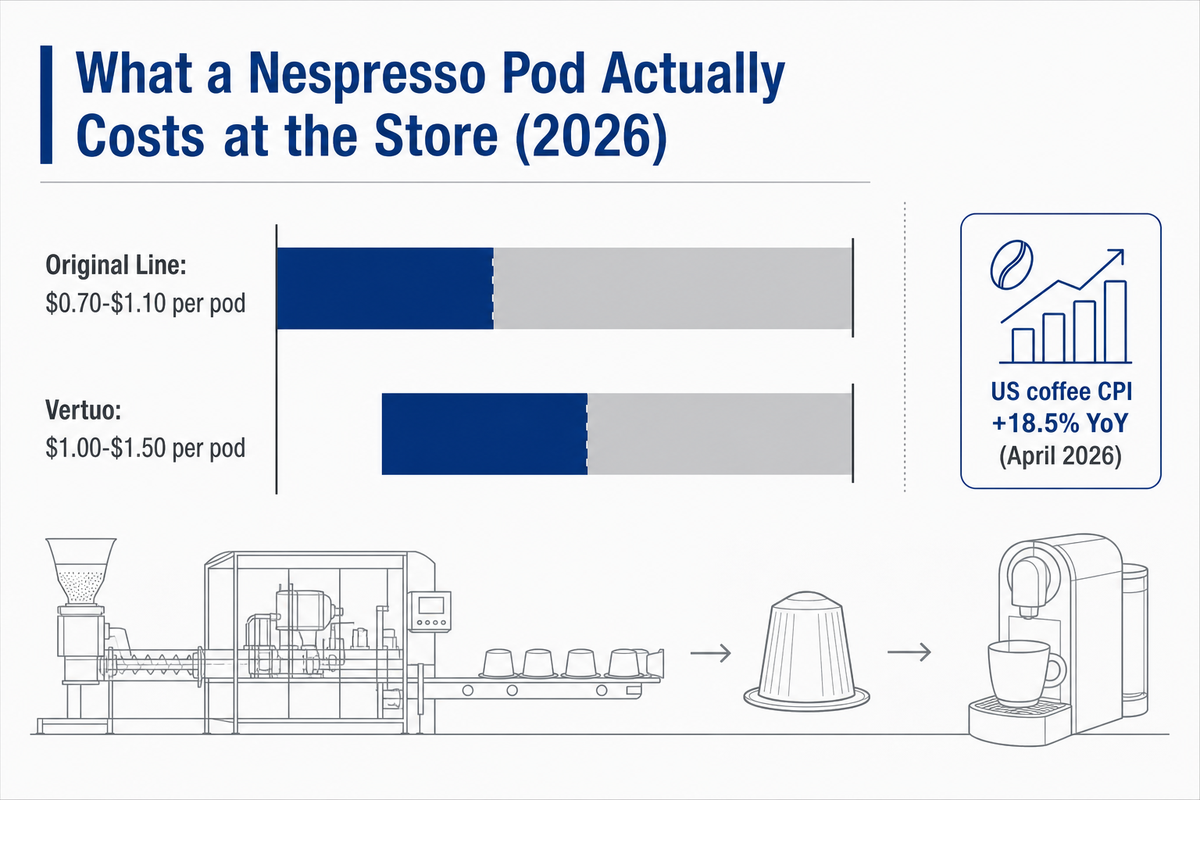
2026 年、オリジナル ライン ポッド – エスプレッソ、リストレット、またはルンゴのいずれであっても、$0.70 から $1.10 までの小売が行われ、10 個入りのパックが $7 から $11 までの小売が行われます。 Vertuo の同じサイズのカプセルは $1.00 から $1.50 まで稼働します。これらは難しい数字ではありません。ネスプレッソは 2025 年に 2 回米国価格を引き上げ、1 月にはポッドあたり 2 ~ 15 セント、6 月には未発表の金額を引き上げましたが、いずれもコーヒー代と送料が高いことを挙げています。.
これらの要因はいずれもネスプレッソに特有のものではありません。たとえば、小売店での挽いたローストコーヒーは、4 月に米国で1 ポンドあたり$9.72 に達し、さらには政府自身のものにも達しました 消費者物価指数 コーヒーの場合、同じ期間に前年比で 18.5% 上昇しました。価格パススルーに関する米国農務省の 2007 年の研究で広く引用されているところによると、生コーヒー豆 1 ポンドのコストの 10 セント上昇は、同じ四半期の小売業と製造業者レベルでのわずか 2 セントの上昇に相当します。これは、商品の変動が常にレジで 1 ドル対 1 ドルに換算されるわけではない理由です。.
ポッドは、代替よりも高価ですか? 大量によって、はい: 平均ネスプレッソ習慣は、合計すると、1 ポンド当量あたり$50と$80 の間になります, 各ポッドが約5-6 グラムのコーヒーを含んでいるので、, 小売全体豆のポンドのための平均$9 から$22 のコストと比較して, ドリップコーヒー, または自宅でフィルターコーヒーとして醸造プレグラウンドコーヒーのポンドのためのトレードオフ, そして、ポッドが新鮮なスペシャルティコーヒーのように芳香族を味わうことができるかどうか, ホームバリスタ.comのようなコーヒー愛好家のフォーラムで頻繁に議論されています, そしてそれは、次のセクションの正確な主題であります ⁄ これは、エスプレッソカプセル上の単なる利便性プレミアムではありません。.
Vertuo が元のラインよりも高価である理由 (本当の理由)
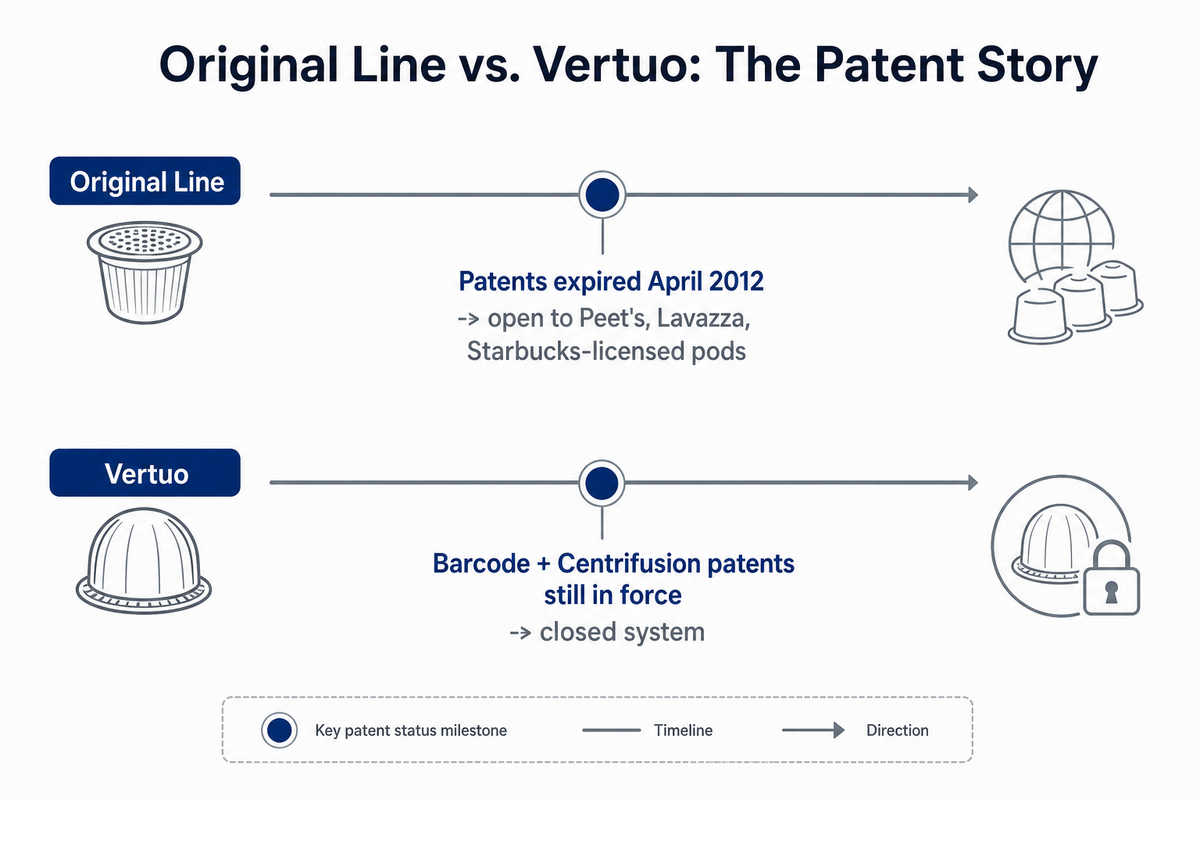
Vertuo がオリジナル ラインよりもプレミアムを高めた理由は、豆の品質ではなく、特許保護と関連訴訟の問題です。 Vertuo の各カプセルには、リムに 5 回繰り返されるバーコードが印刷されており、光学センサーがこれを読み取り、カプセルの回転速度 (ネスプレッソの特許取得済みの遠心抽出で最大 7,000 rpm)、抽出温度、体積を調整します。.
オリジナル ライン カプセルにはバーコードが付いておらず、1990 年代のオリジナル特許は 2012 年 4 月に期限切れになりました。この日は、オリジナル ラインのオリジナル マシン用のライセンスされたスターバックスのポッド、ラバッツァ、ピート、およびその他の互換性のあるポッドの水門が開かれた日です。 Vertuo コーヒー カプセル (VertuoLine として長年販売されている) には、独自の個別のバーコードおよびカプセル特許が記載されており、現在も有効です。.
和解した、異議の余地のない堀ではありません: K-fee System GmbHは、実際にVertuoのバーコードが3 つの自社特許を侵害したとしてネスレを2021 年に訴えました Vertuoのコードが「バーコード」ではなく技術的な「ビットコード」であるという理由で2022年6 月に米国の訴訟が棄却されましたが、並行するスイス連邦特許裁判所は実際には技術的には反対の結論に達しました (Vertuoのポッドはバーコードを搭載しています) 一方、先行技術に関する特許を個別に無効にします これらの特許は現実の訴訟であり、マーケティング劇場ではなく、完璧ではありませんでした。.
“「プライベートラベルカプセル注文の完全な製造-充填-パッケージサイクルは、端から端まで30日から60日間続きます。」 ――超微粉砕および窒素フラッシュ感受性のカプセルコーヒーが他のフォーマットと比較して必要とする技術的障壁を反映しています。.
Novocapsule CEO、Yuval Weinshtock 氏が Perfect Daily Grind で引用しました
このすべてをサポートする古い、よりハードコアなデータポイントがあります: フランスの競争当局は、2014 でNespressoが変更していたことを発見しました オリジナルライン 機械の位置を変更したシール、リブを追加し、抽出ケージを微調整しました ー 他のブランドのカプセルを物理的に互換性のないものにし、また保証をNespressoブランドのカプセルのみに制限するために 行動の変化に7 年間のコミットメントをNespressoは取ることになりました ネスプレッソは、より広いシングルサーブスペースを研究した学者 ()インシード 4 つの主要ブランドの市場シェアの 93% をカバーする 2005-2013 年のポルトガル市場を調査したところ、一般的なメカニズムが特定されました。マシンは原価以下で販売され、カプセルは 20-30% のマージン、古典的なカミソリと刃のダイナミクスを構成します。ここポルトガルでは、1% ポッドの価格上昇により、マシンの販売が 5% 以上減少しました。.
プレミアムVertuo価格設定は、ほとんどの場合、 “あなたがマーケティングのために支払っている” に起因します。 実際、根底にあるメカニズムはその逆であるようです; 真のクローズド、訴訟、特許保護されたシステム 根底にあるかみそりと刃の経済性の上に構築されたすべてのシングルサーブカテゴリー = 唯一の違いは、元の製品ラインで特許が枯渇したことです。.
ネスプレッソ コスト スタックの内部: ポッドのコストを実際に構成する 4 つのコンポーネント
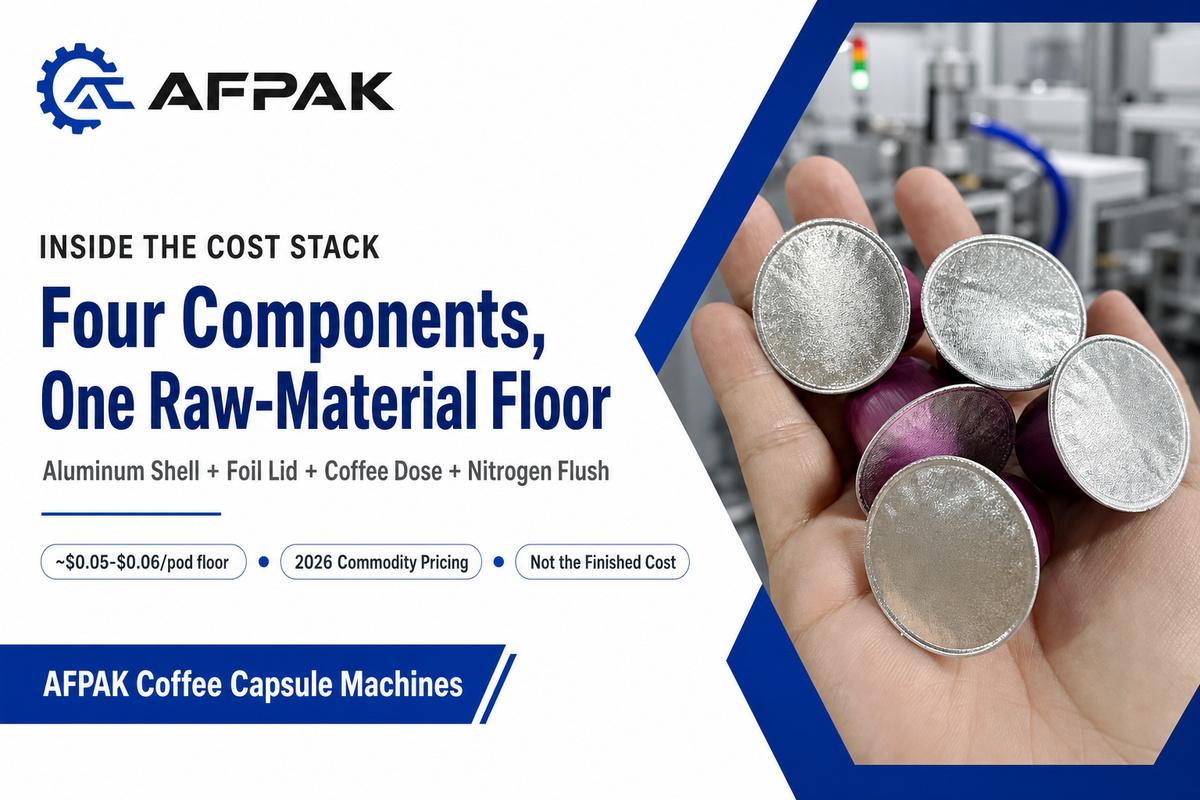
コーヒーポッドとカプセルまたはポッドに一般的に使用する用語のいずれであっても、アルミニウムカプセルは4 つのコンポーネントから作られ、オリジナルラインカプセルは、完成したポッドが穏やかなブロンドエスプレッソローストであるか、より大胆なオリジナルコーヒーブレンドであるかにかかわらず、範囲全体で同じ基本構造を含んでいます: アルミニウムシェル、ホイルの蓋、コーヒーの用量、および保護窒素フラッシュの4 つすべてが、それらの背後にある実際のソース可能な2026 商品価格を持っていますコンバーターの実際の完成品価格なしで材料投入コストの感覚を提供するために (コンバーターはそのような数字を開示していません) 、 これらの数字が材料の床を表すという組み込みの警告で、コンポーネントごとに数字を粉砕しましょう、成形、コーティング、焙煎、労働、および設備への設備投資の償却の前に:
ストリップされたカプセルは、空の場合は約3 グラムのアルミニウムです。 LME一次アルミニウムは、4 月-5 月の2026 ″のためにメートルトン当たり$3,600-$3,666 を取引しました ″ 世界銀行のピンクシート商品データによると、2024 年の平均よりも51%の増加その価格で、シェルの生のアルミニウムだけが約$0.011 カプセルでバレルの底をこすります 米国のアルミニウムは、中西部プレミアム ″ 配送追加料金 ″ が投入されるとより高価になります; セクション232 の関税 (2026年3 月の25%から6 月までに50%に上昇しました) とサプライチェーンの混乱について、2026年1 月に初めて1 ポンドあたり$1.00 を一時的に超えました、によると USGS 鉱物商品概要 2026.
蓋から 1 ~ 2 グラムのアルミ箔を使用すると、カプセルあたり約 $0.001 ~ $0.002 ずつ再び押し上げられます。蓋の正確な重量を公開しているコンバーターはチェックしませんでした。.
| コンポーネント | 入力ウェイト | 2026 年の商品価格 | 原材料の床 | 制限事項 / 完成したコストではありません |
|---|---|---|---|---|
| アルミニウム貝 | ~3g Al | $3.60 ~ $3.67/kg (LME) | ~$0.011 | スタンピング、コーティング (21 CFR 175.300 ラッカー)、工具は除きます |
| ホイル蓋 | ~0.3 ~ 0.5g Al (工学的推定) | 同じ商品飼料です | ~$0.001~$0.002 | 公開されている蓋重量の情報源は見つかりませんでした;方向として扱います |
| コーヒーの量(オリジナル) | 5~6g | $7.30/kg グリーン アラビカ (世界銀行、2026 年 5 月) | ~$0.037~$0.044 | 緑豆の床のみ;焙煎/粉砕/物流がさらに追加されます |
| 窒素フラッシュ | ポッドあたりの量が少なく、ユニットあたりのソースは見つかりません | $0.11 ~ $0.14/kg 工業用 N2 (2026) | ほんの一分の一 | コストドライバーはフラッシュステーションの設備投資とサイクルタイムであり、ガスそのものではありません ――次のセクションを参照してください |
各カプセルを満たすグリーンアラビカコーヒーは、完成したポッドがミディアムローストになった場合でも、ダークローストになった場合でも同じ価格設定になっています、なぜなら、ローストレベルはこの原材料段階の後に適用されるからです、それをすべて集計すると、オリジナルラインの原材料床はポッドあたりおよそ$0.05-$0.06 に当たります ー棚で見つける$0.70-$1.10 の価格とは大きく異なります そしてそれは単なる材料の床です ーポッドを実際に形成するためのコスト、食品グレードのコーティングを適用し、それらを密閉し、それを行うための労働力、品質管理、機械の減価償却費、およびそれを出荷して棚に置くためのコストを含まない比較のために: で k-cup コストを分析した以前の記事, 、ちょうど$0.09 から$0.17 の総材料費(カップ、ふた、フィルター、コーヒー)を分解しました(注文サイズによる); ネスプレッソのアルミニウム(シングル蓋)シングルカップフォームファクターは、プラスチックを少なく使用しますが、そのアルミニウム上のグラムあたりの価格がより重い場合は、おそらくすべてが終わった後、同じ範囲に入るでしょう。.
包装の形状にコストがかかる場合の 2 番目の規制のひねりは、EU の新しい包装および包装廃棄物規制により、重量で 5% を超えるプラスチックを含む包装のみに焦点を当てているため、第 7 条のリサイクル内容要件から全アルミニウム包装が免除されることです。ただし、プラスチックボディのカプセルには、義務を回避するために 2030 年 1 月までに 10% PCR のコストがかかります (2040 年までに 25% に上昇)。; アルミニウムには、2030 年末まで追加の PCR コストは発生しません。具体的な、日付付きの、形状固有のコストの非対称性があります。.
機械の減価償却費: 充填ラインがすべてのポッドに追加するもの
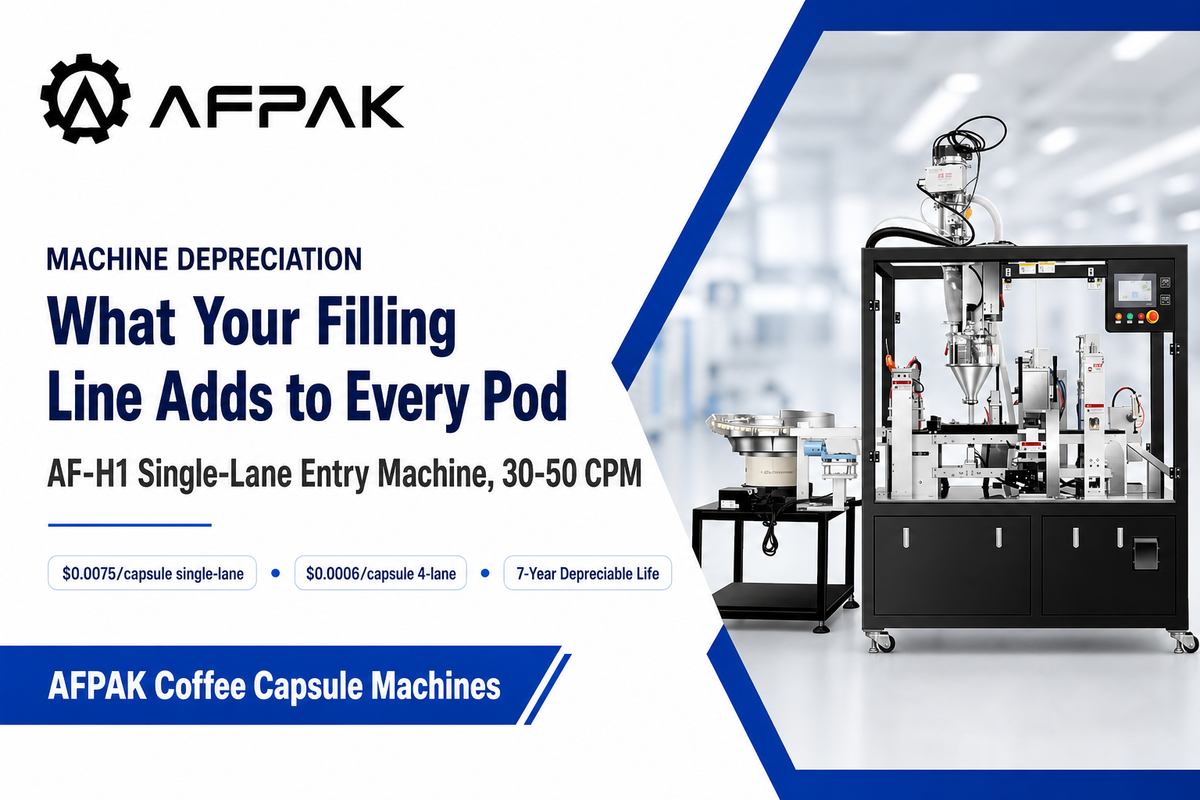
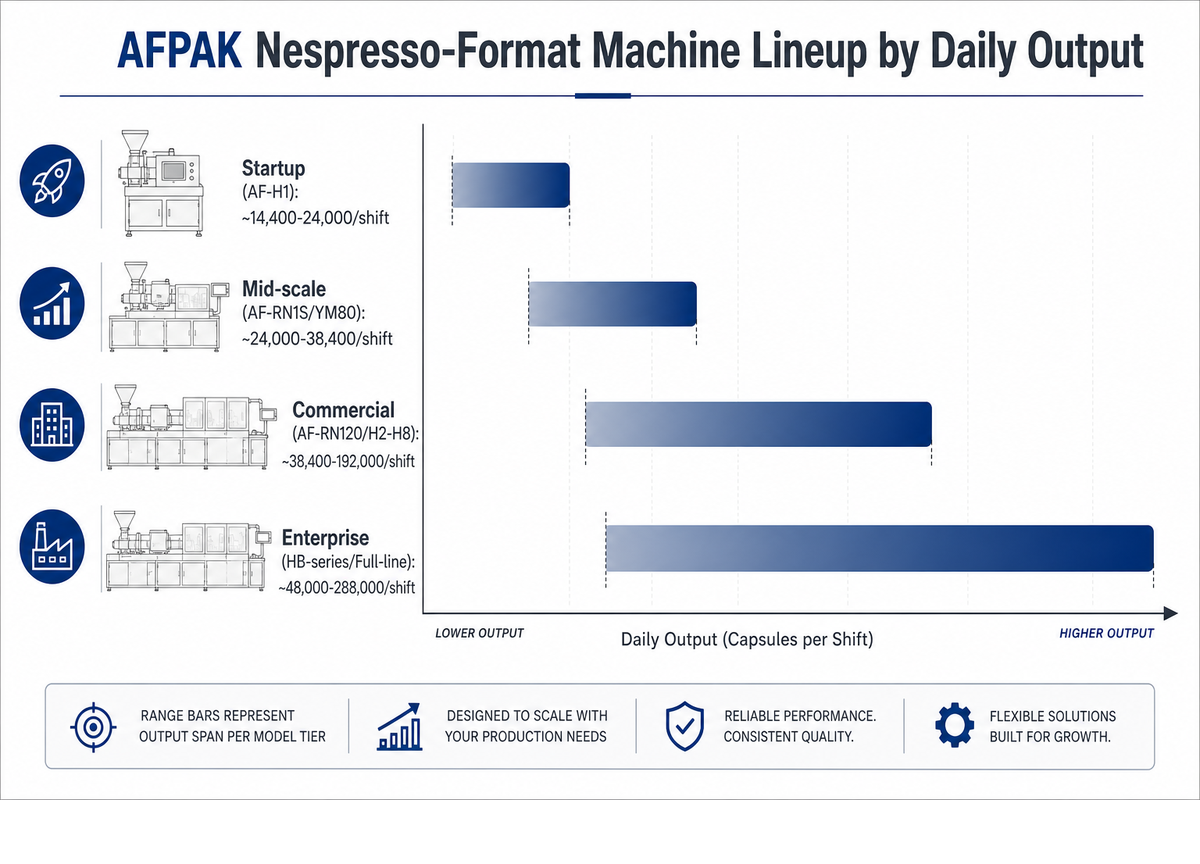
機械償却は、小売価格の比較では決して得られない唯一のコスト要素です。これは、機械償却がタイプに完全に依存するためです 充填機 作業を行う.AFPAK独自のネスプレッソスタイルのマシンのラインは、7 つの異なるモデルで毎分約30 から600 カプセル以上、シングルレーンの基本AF-H1 マシン (30-50 cpm) からマルチレーンリニアマシン (H2-H10、40-50 cpm / レーン) まで、完全な充填-シーリング-カートニングマシン (180-200 cpm) 以下では、異なる速度が減価償却のためのポッドあたりのコストに変換されます:
例えば、$45,000 の仮想単車線機械は、8 時間/250 日の年中に50 cpmで7 年間の減価償却可能寿命にわたって稼働し、収量は50 cpm x 480 分/日 x × 250 日/年 = 6,000,000 カプセルの生涯コストで割ります = カプセルごとの$0.0075 減価償却費のみ ($45,000 / 6,000,000)。ここで、マルチレーン マシン ⁄ 4 レーン $80,000 ユニットを 40 cpm/レーン (160 cpm 結合) で、同じ 8 時間/250 日の運用スケジュールで検討してください ⁄ すると、次のようになります: 160 cpm × 480 分/日 × 250 日/年 × 7 年 = 134,400,000 カプセル、または減価償却費で 1 カプセルあたり $0.0006 単位あたり 1 桁少ないことになります! (注: これは計算計画のための CAPEX の例であり、実際の AFPAK 見積価格 (AFPAK quoted prices) ではない ー機械コストは構成によって異なる 上記の式に、あなた自身の引用された CAPEX を入力する。)
5 年間の総所有コスト: 単一レーン充填ラインと複数レーン充填ライン (例示的な設備投資)
| コストアイテム | シングルレーン (50 cpm) | 4 レーン (160 cpm) |
|---|---|---|
| 購入価格 | $45,000 | $80,000 |
| インストールと試運転 | $2,000~$4,000 | $5,000~$8,000 |
| エネルギー (5 年、1.5 ~ 4kW) | ~$3,000 | ~$6,000 |
| メンテナンスとスペア (5 年) | ~$4,000 | ~$8,000 |
| ダウンタイムのリスク (5 年) | より高い ――単一障害点 | より低い ――マルチレーンの冗長性 |
返済例: 1 車線ラインと $0.03/pod オールイン粗利益率 (小売から次の 2 つのセクションのオールイン COGS を差し引いたもの) で 5 年間で 6,000,000 カプセルが支払われた場合、そのマシンの $45,000 ~ $54,000 5 年間のコストが十分に回収されます。フルボリューム実行の最初の 1 年以内に 1 回収されます。 ⁄本当の制約はマシン自体にあることはほとんどなく、一貫してそのボリュームに達しています。.
労働、窒素、そして誰も予算を立てない頭上
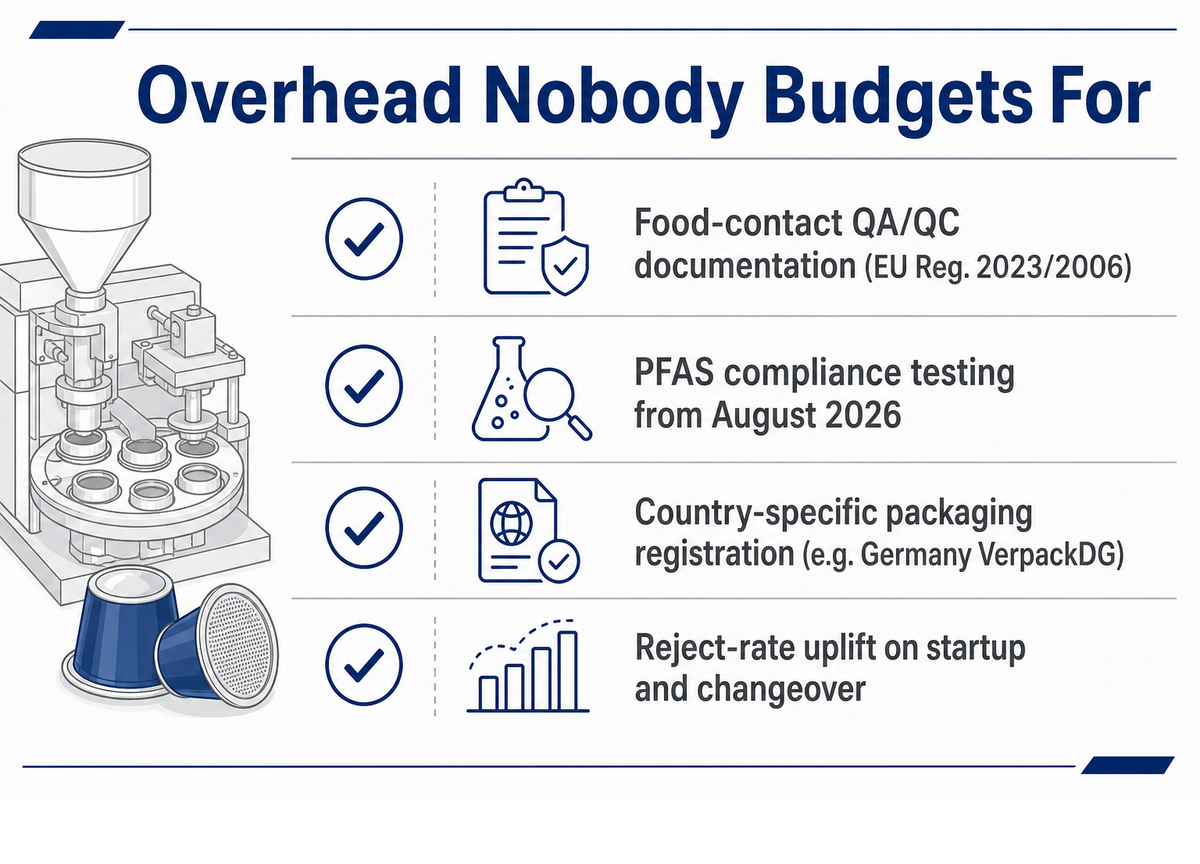
材料費と機械減価償却の範囲外に座って、それらのコストの内訳シートの多くが認識できないオーバーヘッドの第三の、実際の層: コンプライアンスの事務処理、ラボテストと労働のアップスケーリング EUの食品接触法、規則2023/2006 は、監査可能な品質保証/品質管理システム事業サイズにサイズ – 実、継続的な人件費、ポッドごとの材料項目ではない新しいの下で PPWR 規制、PFAS 適合性検査は、2026 年 8 月からすべての EU 食品接触包装に義務付けられ、対象化合物検査の合計フッ素分析にはサンプルあたり最大数千ユーロの「数百ユーロ」の費用がかかり、ラボでの所要時間は 4 ~ 8 週間です。.
労働力は生産量ではなく車線数に比例します。 – 単一車線、単一オペレーター線、および複数車線線は、通常、特定のシフトで人員配置が類似しており、これが、単一車線マシンと複数車線マシンで上記に示したポッドあたりの差額の大幅な減価償却につながります(ポッドあたりの人件費は同じように圧縮されます)。 2026 年 8 月に PPWR と並行して発効するドイツの包装法施行法は、登録と失敗の報告に対して 200,000 トンの罰則を課す可能性をもたらします。 – 最初に登録せずに国内に販売する人にとっては厄介なダウンリスクライン。.
- 食品に関する連絡先 QA/QC 文書 (EU Reg. 2023/2006) ia 進行中の行政労働
- PFAS 準拠テスト *2026 年 8 月から ia 1 SKU あたり数百から数千€
- 国別の包装登録 (例: ドイツのVerpackDG) ~最大€200,000 の不適合リスク
- 拒否率の増加 = すべての充填ラインでは、開始時または切り替え時に実際のスクラップ率が生成されます
ポッドあたりの生産量が実質コストをどのように変化させるか
ポッドあたりのコストは量とともに減少しますが、スムーズに減少するわけではありません。実際の共同梱包価格シートは、さまざまなオプションと最小注文数量を備えており、注文サイズの全範囲にわたって直線的に減少するのではなく、それらの最小値と相関する段階的な減少によって特徴付けられます。.
たとえば、独自の豆を提供するクライアントに対する Peacemaker Coffee の 2026 年のライブ K カップ共同梱包料金は、1 ユニットあたり $0.26 (最低 250 ユニットと、20 ポンドを超える注文の場合は 1 ポンドあたり $1.00 のトールグラインディング料金) に対し、1 ユニットあたり $0.45 です。共同パッカー自身の豆の場合は (最低なし) ~、カスタム ホイル蓋はデザインごとに 5,000 ユニット (4-8 週間のターンタイム) で利用できます。. Bestcup の compostable-pod の共同梱包は、ユニットあたり $0.95 で 2,000 ポッド (コーヒー 75 ポンド) から始まります。これは、消費者への直接チャネル (実際の検証済みの COGS から小売までのギャップ) でのポッドあたり約 $2.00 に相当します。これらの数字は、ネスプレッソ コストの反映としてではなく、一般的なプロキシとして K-Cup ボリュームに当てはまります。.
| ボリュームティア | 代表 AFPAKマシンクラス | 日産 | オールインCOGSドライバー | 制限事項 / 適していません |
|---|---|---|---|---|
| スタートアップ | AF-H1 (30 ~ 50 cpm) | ~14,400~24,000/シフト | 材料の床は支配します; 減価償却/pod最高 | 持続時間約 50,000 単位/日を超えると適していません |
| 中規模 | AF-RN1S (50 ~ 70 cpm) | ~24,000~33,600/シフト | 労働/減価償却率の改善 | シングルレーンでも障害点は 1 つあります |
| 中規模 | AF-YM80、1 レーン (60 ~ 80 cpm) | ~28,800~38,400/シフト | フルメカニカルカム駆動、ラインアップで最もタイトな±0.15g精度 | シングルレーンでも障害点は 1 つあります |
| 商業 | AF-RN120 ロータリー (100 ~ 120 cpm) | ~48,000~57,600/シフト | 減価償却費/床に近づくポッド;労働規模は準線形 | 設備投資を正当化するには、安定したマルチシフト需要が必要です |
| 商業 | AF-H2、2 レーン (80 ~ 100 cpm) | ~38,400~48,000/シフト | 減価償却費/床に近づくポッド;労働規模は準線形 | 設備投資を正当化するには、安定したマルチシフト需要が必要です |
| 商業 | AF-H4、4 レーン (160 ~ 200 cpm) | ~76,800~96,000/シフト | 減価償却費/床に近づくポッド;労働規模は準線形 | 設備投資を正当化するには、安定したマルチシフト需要が必要です |
| 商業 | AF-H8、8 レーン (320 ~ 400 cpm) | ~153,600~192,000/シフト | 減価償却費/床に近づくポッド;労働規模は準線形 | 設備投資を正当化するには、安定したマルチシフト需要が必要です |
| エンタープライズ | HBシリーズ一体型ライン(180~200+ cpm充填+シーリング+カートニング) | ~86,400~96,000+/シフト | Pod あたりの最低減価償却費;オーバーヘッド (コンプライアンス、QA) が相対的な品目として大きくなりました | 一貫した 6 桁の月間数量 ⁄ 設備投資が十分に活用されていない場合は適していません |
| エンタープライズ | フルオートメーション ライン (定格 100 ~ 600 cpm、オペレーター 2 ~ 3 人) | ~48,000~288,000/シフト | Pod あたりの最低減価償却費;オーバーヘッド (コンプライアンス、QA) が相対的な品目として大きくなりました | 一貫した 6 桁の月間数量 ⁄ 設備投資が十分に活用されていない場合は適していません |
EU 市場のもう 1 つの側面: ある EU 市場内で年間 10 トン未満の包装を行う生産者は、PPWR に基づく報告も簡素化されます。これも、ほとんどの量に関する議論では省略されている新興企業のもう 1 つの真のコンプライアンス上の利点です。.
リアルマージン: ポッドを販売した後に残ったもの
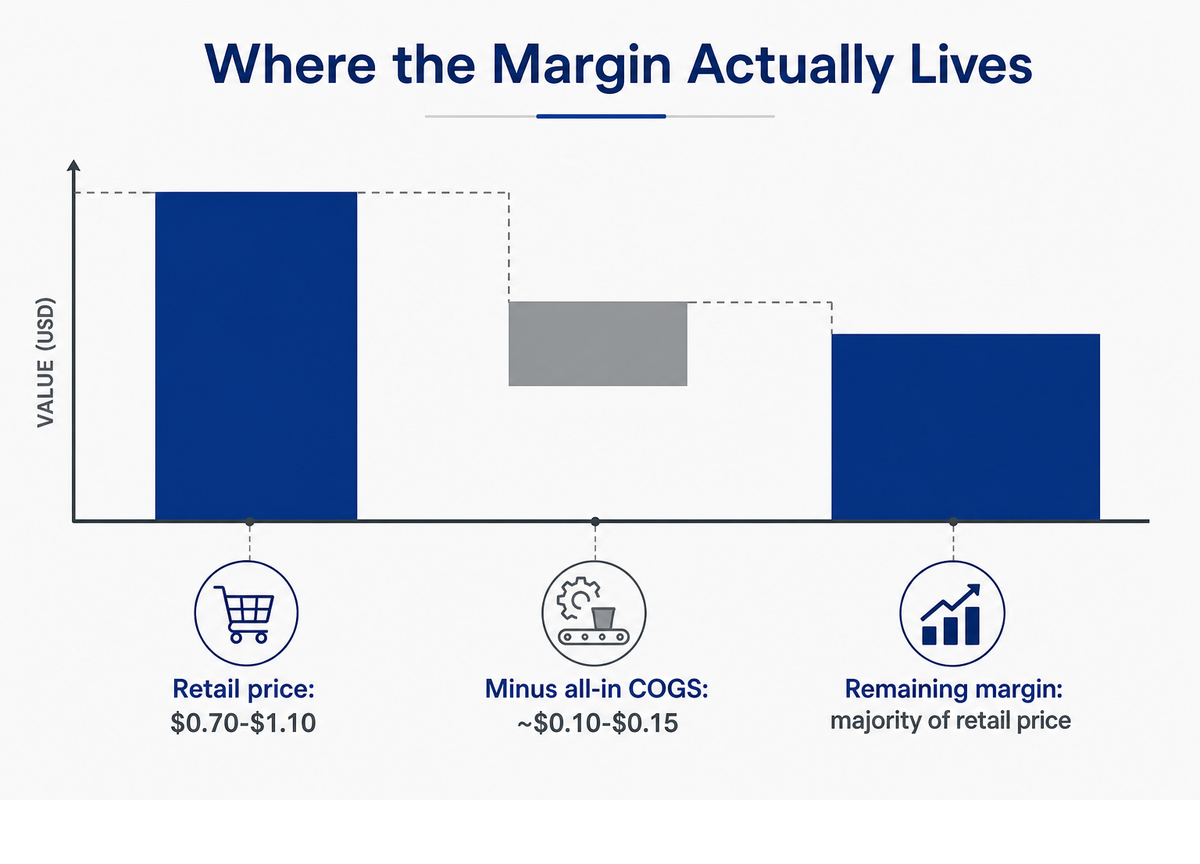
元のラインから戻ると、$0.70 ~ $1.10 での小売、$0.05 ~ $0.06 での材料投入、1 ユニットあたり1 セント未満の規模での機械減価償却、1 ユニットあたり1 セント未満の規模での変換/コーティング/労働、2 倍の材料投入、ポッドあたりおよそ$0.10 ~ $0.15 のためのバッファを追加します これは、ブランド化/流通/小売業者のマークアップを考慮する前に、それに加えて実質的なポッドマージン (ユニットあたり数十セント) を作成します。ここで、かみそりと刃の経済性が影響します = ロスリーダーはデバイスまたは初期パッケージであり、マージンはポッドにあります。.
ただし、そのポッドマージンは影響を受けやすいです 商品ボラティリティ, 、2026 年の市場が明確に明らかにした Keurig Dr Pepperの米国コーヒーセグメントの収益は、2026 年第1 四半期にグリーンコーヒーのコスト、関税、および量の減少により、21.3%四半期比で減少しました KDP経営陣は、グリーンコーヒーのコストはCOGSパススルーで6-9 か月遅れる傾向があると指摘しました 同様に、JM Smuckerは、5 回連続の価格引き上げを開始する代わりに、2025 年に$75 百万以上の関税関連コストを吸収します 独自のポッドレベルのCOGS計算を検討する際のポイントは、独自のサプライチェーンにおける商品価格の動きの6-9 か月のリードタイムを予測し、受信した請求書の迅速なパススルーに注意することです。.
自社生産マージンが共同梱包や DIY 詰め替えを上回る量は単一の数字ではありません 1 つ 1 つ 1 つのポッドあたりの機械の減価償却費 (前の表によると、レーン数に応じて急速に減少します) が共同生産のマシンの減価償却費を下回るポイントです。 – パッカーは、注文サイズでユニットごとに料金を請求します (通常、上記の中規模層と商用層の間のどこか)。.
社内生産 vs 共同梱包 vs DIY 詰め替え
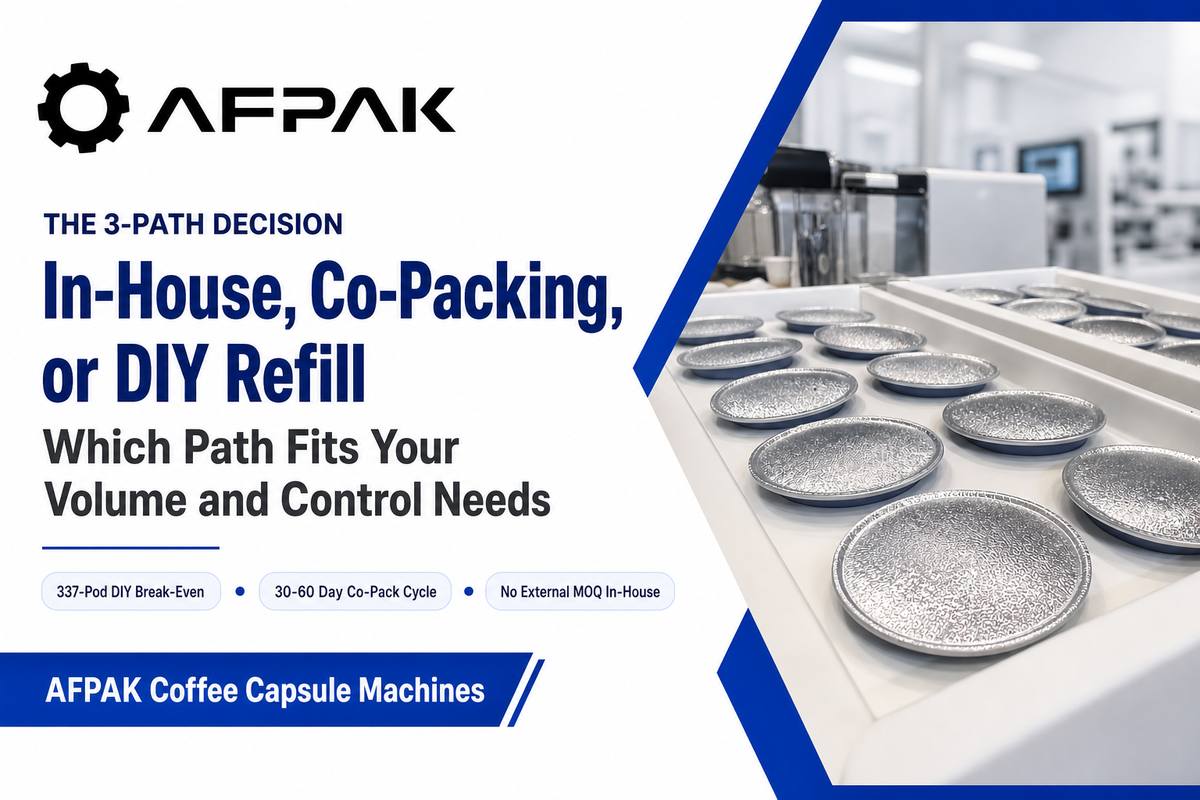
3 パスのビルド対購入の意思決定ツリー
3 パス ビルド対購入決定ツリーは、すべてのカプセル ブランドが直面する 3 つの選択肢です。社内の生産能力を構築するか、共同パッカーから能力を購入するか、顧客に独自のポッドを補充させるかです。.
ネスプレッソ形式のカプセルには 3 つの実際の経路があり、どれが最適であるかについての本当の答えは、「それは、本質的に「賢い」ものであるかではなく、容量と制御のニーズによって異なります」です。 DIY リフィル、自分で豆を購入し、使用済みのコーヒー粉を自分で詰めることは、紙の上で最も安く見えます。ポッドあたりのコストは、詰め替えカプセルの場合は約 $0.21-$0.43 になる場合がありますが、ブランド ポッドの場合は $1.00 になります。カプセルを詰め替えるためのハードウェアでも休憩は、おおよそ 337 個で、これは平日に 1 回エスプレッソの約 67 週間に相当します。実際の経験?各セッションの「10 分間の手探りの準備、粘着性のあるカウンター、無駄な敷地、そして時折の悪いシール」と、詰め込みすぎ時の失敗または弱いショットの約 40%。.
時間と故障率を考慮すると、DIY が購入よりも安くなることはほとんどありません。.
共同梱包により、CAPEX と故障率の問題の両方が解消されますが、リードタイムと MOQ の両方のハードルが追加されます。プライベート ラベルのネスプレッソ カプセルのエンドツーエンドの製造充填パッケージ サイクルは 30 ~ 60 日です (上記の Novocapsule インタビューによると)。 )、通常はカスタム ツール セット(蓋、カートン)を最低 5,000+ で購入する必要があります。.
あなた自身の社内充填機はまたDIYの詰め替えの品質の問題を取り出し、共同パッキングのMOQ限界、上記のCAPEXおよび減価償却費の考慮の費用で、あなたの容積が閾値を越えたら論理的なステップです。.
- 設備投資も減価償却計算もありません
- 注文ごとに 30 ~ 60 日のサイクルタイム
- カスタムツーリング上のリアルMOQ摩擦(5,000+ユニット/デザイン)
- 品質管理はあなたではなく、コパッカーのものです
- Capex + 減価償却費、数量で相殺されます (コストクロスオーバーしきい値を参照)
- サードパーティへのサイクル時間の依存関係はありません
- 外的なMOQの天井無し
- 品質管理とフォーマットの切り替えはお客様自身の手で行ってください
ネスプレッソ互換機器への投資のメリットを比較検討しているブランド所有者は、次の関連記事を参照してください カプセル生産設備が投資に値するかどうか, 、そしてなぜDIYネスプレッソ補充は、最終的に貧弱なブランディング戦略を作るのかについては、上の私たちの記事を読んでください DIYネスプレッソ詰め替えがブランドチャンスとして失敗する理由.
購入前の統合とユーティリティの要件
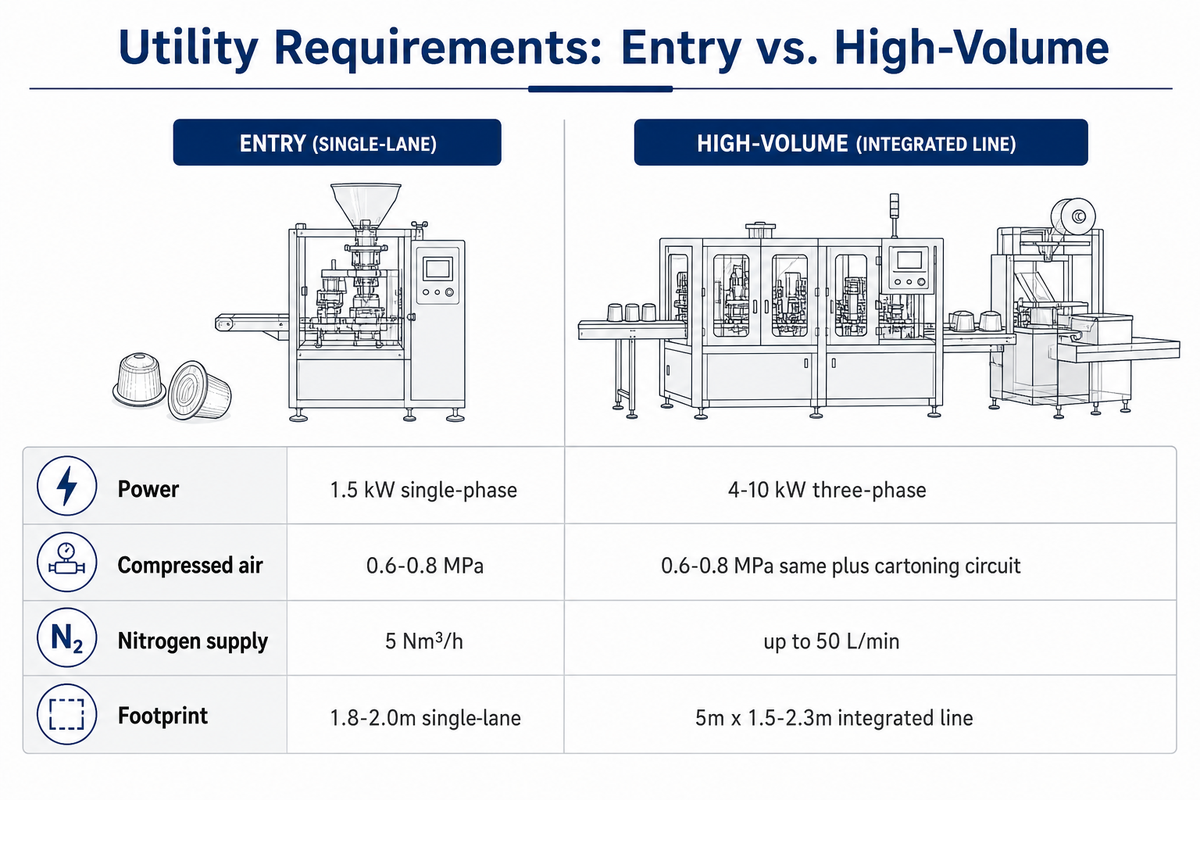
施設はまずマシンを実際に実行できなければならず、AFPAKのエントリーレベルとハイエンドの要件が必要です ネスプレッソ 装置 サイトの選択に影響を与えるのに十分な範囲に広く範囲を広げます。.
単一レーン機械(H1、RN1S)は通常、1.5 kWの単相電力と0.6 から0.8 MPaの圧縮空気のみを必要とします。 、多車線の統合された充填ラインの場合、要件は三相電力(4 から10 kW)に加えて、カートニング機械のための追加の回路に登り、圧縮空気供給、窒素流量、そしてもちろん床面積の要件が並行して増加します。たとえば、単一車線の進入機械には約 5 Nm3/h の窒素供給が必要ですが、上位機械は 50 L/min に近い流量で稼働できます。.
生産高や統合レベルとともにスペースのニーズも増加します。 1車線ユニットが約1.8-2.0mの床面積を占め、カートニングを含む統合された複数車線のHBシリーズ機械が約5m x 1.5-2.3mの面積を測定します。.
圧縮空気露点と窒素純度の仕様は、常に機械メーカーに確認する必要があります。これらを適切に供給できないことが、新しい機器の起動遅延の一般的な原因であるためです。.
- ポッドあたりの減価償却費は急速に減少します (機械の減価償却費のセクションを参照)
- マルチレーンの冗長性により、単一障害点のダウンタイム リスクが軽減されます
- ボリュームがクロスオーバーのしきい値をクリアすると、相対オーバーヘッドが低くなります
- 三相電力と多回路窒素供給には、ほとんどのスタートアップにはない施設のアップグレードが必要です
- Capex は、それを正当化するボリュームの下でアイドル状態にあります
- コンプライアンスオーバーヘッド (QA 事務処理、PFAS テスト) は、マシンサイズに関係なく SKU あたりに適用されます
ネスプレッソ形式の充填ラインを購入しないとき
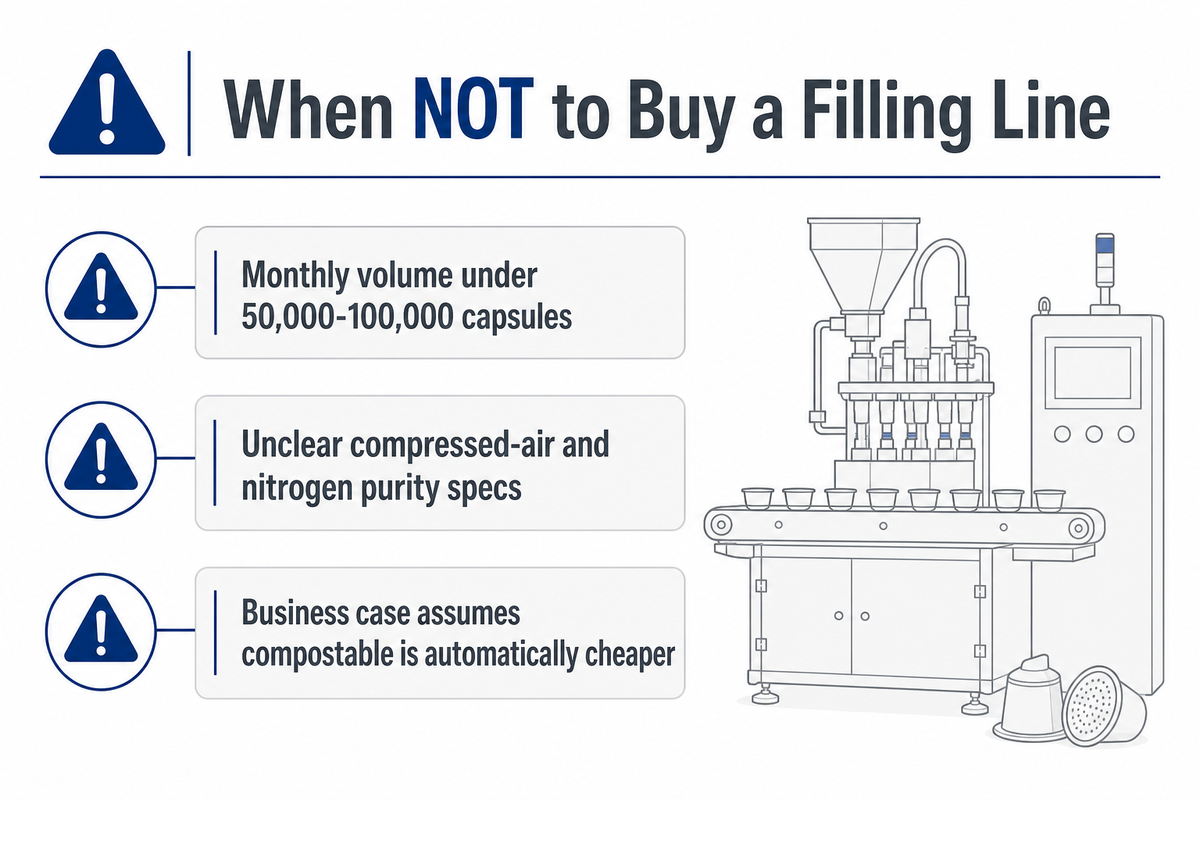
欠点は、アップサイドストーリーの横にある場所が必要です あなたの現実的な月間実行率、例えば50Kから100Kカプセル以下であれば、そして今後1 年かそこらにわたってそうであると予想される、共同パッカーを介してより良い全体的な単価をもたらすはずです MOQ ティア 価格 (上記のボリューム層の説明を参照)、30 ~ 60 日のターン時間と機器の減価償却を考慮することもあります。.
圧縮空気露点の圧力と配合に必要な窒素純度の「9」をまだ明確にしていない場合、それは問題になったばかりの潜在的な試運転日です。.
そして、堆肥化可能なカプセル材料を使用するためのあなたの会社のビジネスケースが、「堆肥化可能とは、常にお金を節約しながら、地球も自動的に節約することを意味します」というものである場合、次の項目はおそらくオプションの読み取りではありません。.
Compostable は必ずしも安価な選択であるとは限りません
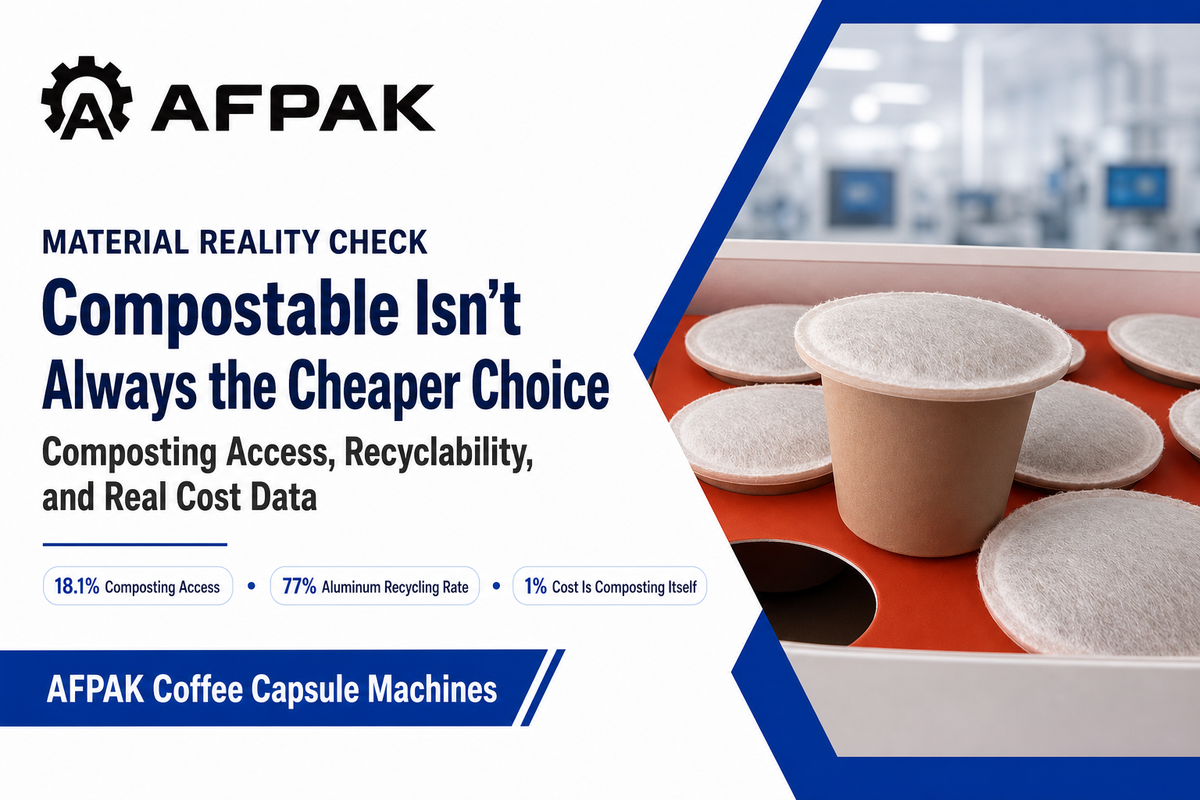
A 査読済みの 2020 年のライフサイクル評価 PLA の堆肥化可能ポッドのうち、堆肥化可能ポッドが従来のプラスチック ポッドよりも約 21% 安価であるという 1 つの状況は、堆肥化プロセスではなく、堆肥化プロセスの購入方法による節約であり、分析されたすべての状況で総コストの 1% であることを示しました。.
この問題は、インフラストラクチャの欠如によってのみ増幅されます: わずか18.1%の米国人口は、食品スクラップと堆肥化可能なパッケージを取得するプログラムにアクセスできるのに対し、35.9%は食品廃棄物の堆肥化にまったくアクセスできないと、将来想定どおりに処分した場合、アルミニウムのリサイクルは最大77%になる一方、バイオポリマーのリサイクルはすでに何であれ構造的に最高になると予測さえした、別の最近(2024)の査読済み比較ライフサイクル評価では、材料は実際にはそれほど確実にリサイクル可能ではなく、実際には真に閉ループのリサイクルが可能ではないため、(リサイクルではなく)埋め立てと堆肥化がより多く行われる傾向がある、独自のネスプレッソ互換堆肥化可能なカプセルを確立しようとするある焙煎業者の逸話が気に入っています。品質が不安定で、コンポーネントを調達するのが苦痛で、完成したカプセルには従来のポッドにプレミアム(割引ではありません)の価格タグが付いていました。.
もちろん、それ自体はアルミニウムに関する議論ではなく、材料の選択は「堆肥化可能」という一般的な(そして誤った)考えではなく、廃棄コストとアクセスに関する特定のデータに基づいて行われるべきであるという議論にすぎません。最後の言葉。.
よくある質問frequently Asked Questions
Q: ネスプレッソのポッドは高すぎますか?
ネスプレッソポッドの価格は、コーヒー1ポンド当り約$50~$80で、小売店の全豆キャリー1ポンド当たり$9~$22を大幅に上回っていますが、利便性と一貫した投与量を考慮すると、比較はリンゴとリンゴではまったく異なります。.
Q: ネスプレッソ ポッドとキューリグ K カップスの価格はいくらですか?
ネスプレッソとキューリグを直接比較すると、2025 ~ 2026 年の市場比較によると、ネスプレッソ Vertuo ポッドはそれぞれ約 $1.00 ~ $1.50 で動作するのに対し、キューリグ K カップは約 $0.40 ~ $1.10 で動作します。.
Q: ネスプレッソ ポッドは店頭またはオンラインで購入する方が安くなりますか?
コミュニティ取引追跡サイトからの実際の取引価格によると、オリジナル ラインのマルチパックは、サブスクリプション割引後、カプセルあたり約 $0.58 ~ $0.71 で決済され、ほとんどの購入ガイドの見積もり値である $0.70 ~ $1.10 定価を大幅に下回ります。.
Q: なぜVertuoカプセルはOriginal Lineよりも高価ですか?
Vertuo は、Original Line の期限切れの特許であるオープン フォーマットには搭載されていない、特許取得済みの訴訟済みのクローズド システム (バーコード読み取り遠心分離抽出) を実行します。これが、単に高品質の豆ではなく、価格ギャップの背後にある本当のメカニズムです。.
Q: ネスプレッソのポッドを再利用できますか?
再利用可能なカプセルは両方のラインに存在しますが、ハードウェアの損益分岐点は約 337 リフィルであり、工場レベルの投与精度は家庭で再現するのが困難です。.
Q: ネスプレッソ対応ポッドを製造するのにブランドに実際にかかる費用はいくらですか?
原材料は、オリジナル ライン ポッドあたり約 $0.05 ~ $0.06 で動作します。通常、機械減価償却費と諸経費が追加されると、商業用量のオールイン COGS は小売価格の半分をはるかに下回ります。.
なぜこれを書くのか
当社は、世界中で製造されているネスプレッソ、K-Cup、ドルチェ グスト カプセルのかなりの部分で充填およびシール機械を製造しているため、このトピックは小売「需要」側ではなく、ビジネスの「供給」側からアプローチしています。この作品の商品価格、機械仕様、規制期限は、競合他社のブログ投稿ではなく、一次情報源 (政府貿易データ、特許出願、査読済みのライフサイクル調査) と独自の機器ラインナップから得られます。.
参考文献と情報源
- 消費者物価指数: 2025 年の振り返り 米国労働 統計局
- 複合指標価格 (I-CIP) 国際 コーヒー 機構
- 商品市場の見通し、ピンクシート、2026 年 6 月 世界銀行
- 鉱物商品概要 2026、アルミニウム 米国地質調査所
- エスプレッソコーヒーマシンの決定 オートリテ ド ラ コンカレンス(フランス競争当局)
- コーヒーポッド、結び目のある商品、そして利益の追求 INSEADの知識
- 堆肥化可能なコーヒーポッドのライフサイクル評価 Scientific Reports (Nature Portfolio)、PubMed Central 経由
- 新しい SPC 研究は、米国における堆肥化アクセスの増加を示しています 持続可能な包装連合
- コーヒーカプセルのライフサイクル評価の比較 持続可能な生産と消費 (ScienceDirect)
- 欧州の包装および包装廃棄物規制の概要 レイサム&ワトキンス
- スーパーマーケットでは米国のコーヒーの価格が急騰 ローストマガジンによるデイリーコーヒーニュース
- コーヒーカプセルはどのように製造され、充填されますか? パーフェクト デイリー グラインド
- ネスプレッソのVertuo Pods: Barcodes That Aren’t Barcodes FPC レビュー
関連記事
- K カップ カップあたりの生産コスト: 実数 同じコンポーネントコストの方法論が K-Cup フォーマットに適用されました
- オリジナルラインネスプレッソポッド: アルミニウム vs 堆肥化可能 vs プラスチック 上のシェルコストラインの背後にある材料選択の比較
- ブランドチャンスとしてDIYネスプレッソ詰め替えが失敗する理由 上のDIYセクションの後ろの完全なるティアダウン
- コーヒーカプセル生産設備は投資する価値がありますか?
- ネスプレッソコーヒーカプセル充填&シーリングマシン AFPAKのネスプレッソ形式のフル装備ラインナップ
AFPAK 技術チームによってレビューされました。.


