
빠른 사양
| 오리지널 라인 소매 가격 | 포드 당 $0.70–$1.10 |
| Vertuo 소매 가격 | 포드 당 $1.00–$1.50 |
| 원료 바닥 (원래 선) | ≈포드 당 $0.05–$0.06 (쉘 + 뚜껑 + 그린 커피, 전환/로스팅/노동 전) |
| 커피 복용량 | 5–6g (원본) · 7–12.5g (버튜오, 컵 사이즈 기준) |
| AFPAK 네스프레소 포맷 머신 제품군 | 7 개의 모형에 걸쳐 30–600+ 캡슐/분 |
네스프레소 포드 비용은 두 부분으로 구성된 질문입니다: 결제 시 지불하는 소매 스티커 가격과 그 뒤에 있는 제조 비용 및 마진이 훨씬 덜 눈에 띕니다. 네스프레소 포드 비용 포드 당 $0.70 에서 $1.10 오리지널 라인과 $1.00 ~ $1.50 이는 Nespresso 자체 주문 페이지와 여러 독립 구매 가이드에서 조정한 2026년 가격에 따른 Vertuo의 2026년 소매 가격에 해당합니다. 대부분의 글은 여기서 멈춥니다. 거의 모든 글에서 빠진 것은 장부의 반대편입니다. 이는 집에서 커피를 추출하는 사람과 브랜드 소유자 모두에게 똑같이 중요한 부분입니다. 즉, Nespresso 캡슐의 실제 제조 비용, 카운터 위에 놓이게 될 Nespresso 머신이 무엇이든 충전 기계가 그 비용에 더하는 금액, 그리고 소매 마진을 제거해 부품 수준의 경제성으로 환산했을 때 남는 금액입니다.
그러나 매일 Nespresso를 사용하는 경우 AFPAK은 Nespresso 호환 캡슐을 채우고 밀봉하는 기계를 구축하므로 이 분석은 제조 측면, 실제 상품 투입 가격, 실제 기계 처리량 계층 및 마진 계산을 통해 실행될 수 있습니다. 다른 사람의 마케팅 사본이 아닌 자신의 숫자.
- 포드 소매 가격은 10-20 배 원료 바닥 – 차이는 변환, 기계 상각, 노동, 그리고 (Vertuo의 경우) 브랜드 기반 충전뿐만 아니라 실제 특허 폐쇄 시스템입니다.
- Vertuo의 Original Line과의 가격 차이는 우수한 콩 선택이 아닌 강제 비호환성과 연계 상품 경제성에 대한 광범위한 법적 역사의 산물입니다.
- 미국 퇴비화 시설에 대한 접근성과 알루미늄의 고유한 우수한 장기 재활용성을 고려하면 퇴비화 가능한 캡슐이 반드시 더 저렴하거나 지속 가능한 것은 아닙니다.
네스프레소 포드가 매장에서 실제로 드는 비용(2026)
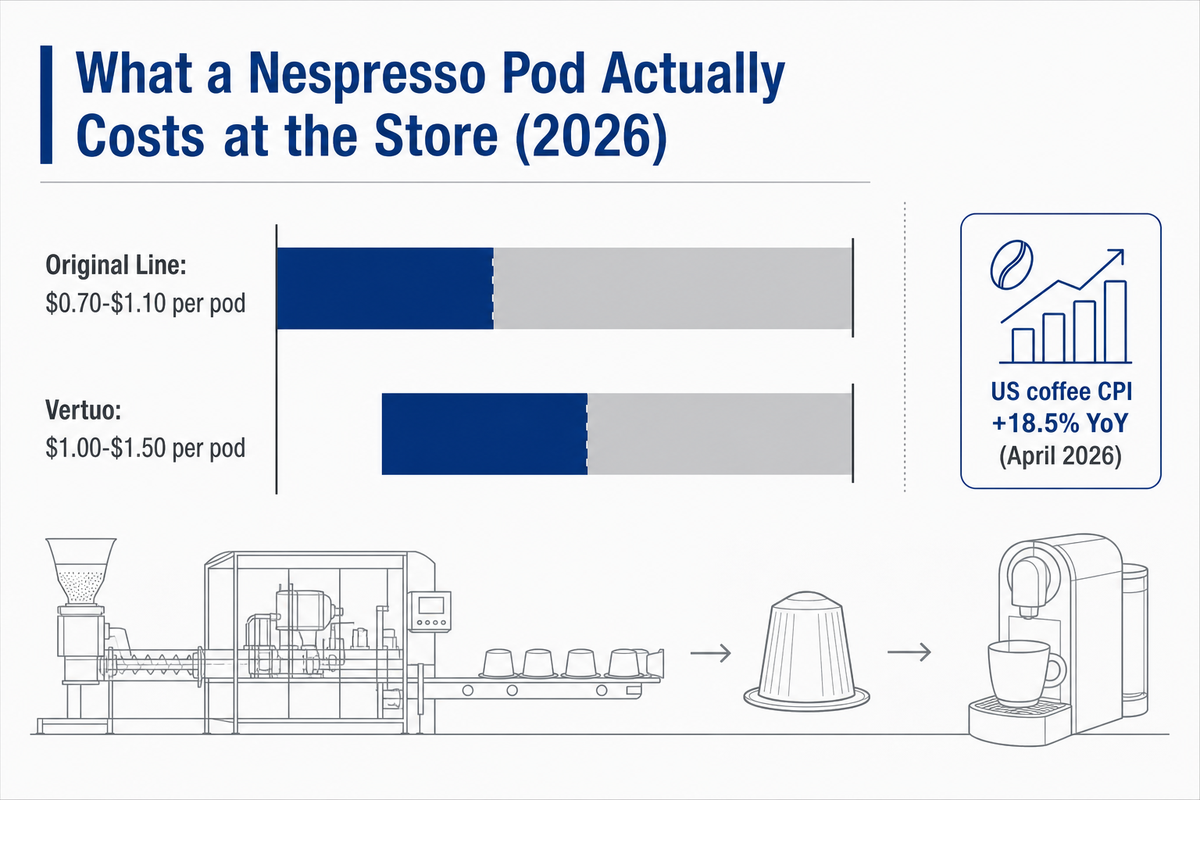
2026 년에 오리지널 라인 포드 – 에스프레소,리스트레토 또는 룽고 -는 $0.70 에서 $1.10 사이에 소매되며 10 팩은 $7 에서 $11 사이에 소매됩니다. Vertuo 의 동일한 크기 캡슐은 $1.00 에서 $1.50 까지 실행되며 더 큰 복용량 크기와 폐쇄 시스템 프리미엄을 반영합니다. 이들은 어려운 숫자가 아닙니다: 네스프레소는 2025 년에 미국 가격을 두 번 인상했으며,1 월에 포드 당 2 ~ 15 센트,6 월에 예고되지 않은 금액으로 두 번 모두 높은 커피 및 운송 비용을 언급했습니다.
이러한 요소 중 어느 것도 네스프레소만의 고유한 요소는 없습니다. 예를 들어 소매점의 분쇄 로스트 커피는 4 월 미국에서 파운드당 $9.72 를 기록했으며 심지어 정부 자체 소비자 물가 지수 커피에 대한 그 같은 기간 동안 년 18.5% 상승했다. 널리 인용 2007 가격 통과에 대한 미국 농무부의 연구는 녹색 커피 콩의 파운드의 비용에 10 센트 상승은 같은 분기에 소매 및 제조업체 수준에서 단지 2 센트 증가로 변환 – 대략 20% 통과 비율 – 이는 상품의 스윙이 항상 등록에서 달러에 달러를 번역하지 않는 이유입니다.
포드가 대안보다 비싸나요? 많은 양으로,예: 평균 네스프레소 습관은 파운드당 $50 에서 $80 사이까지 합산됩니다. 각 포드는 약 5-6 그램의 커피를 포함하고 있기 때문에,집에서 필터 커피로 양조 된 소매 통콩,드립 커피 또는 사전 분쇄 커피의 파운드당 평균 $9 에서 $22 에 비해 이러한 절충안,포드가 신선한 스페셜티 커피만큼 향기로운 맛을 낼 수 있는지 여부는 Home-Barista.com 과 같은 커피 애호가 포럼에서 자주 논의되며 다음 섹션의 정확한 주제입니다 — 에스프레소 캡슐의 편의 프리미엄 만이 아닙니다.
Vertuo가 원래 라인보다 비용이 더 많이 드는 이유(진짜 이유)
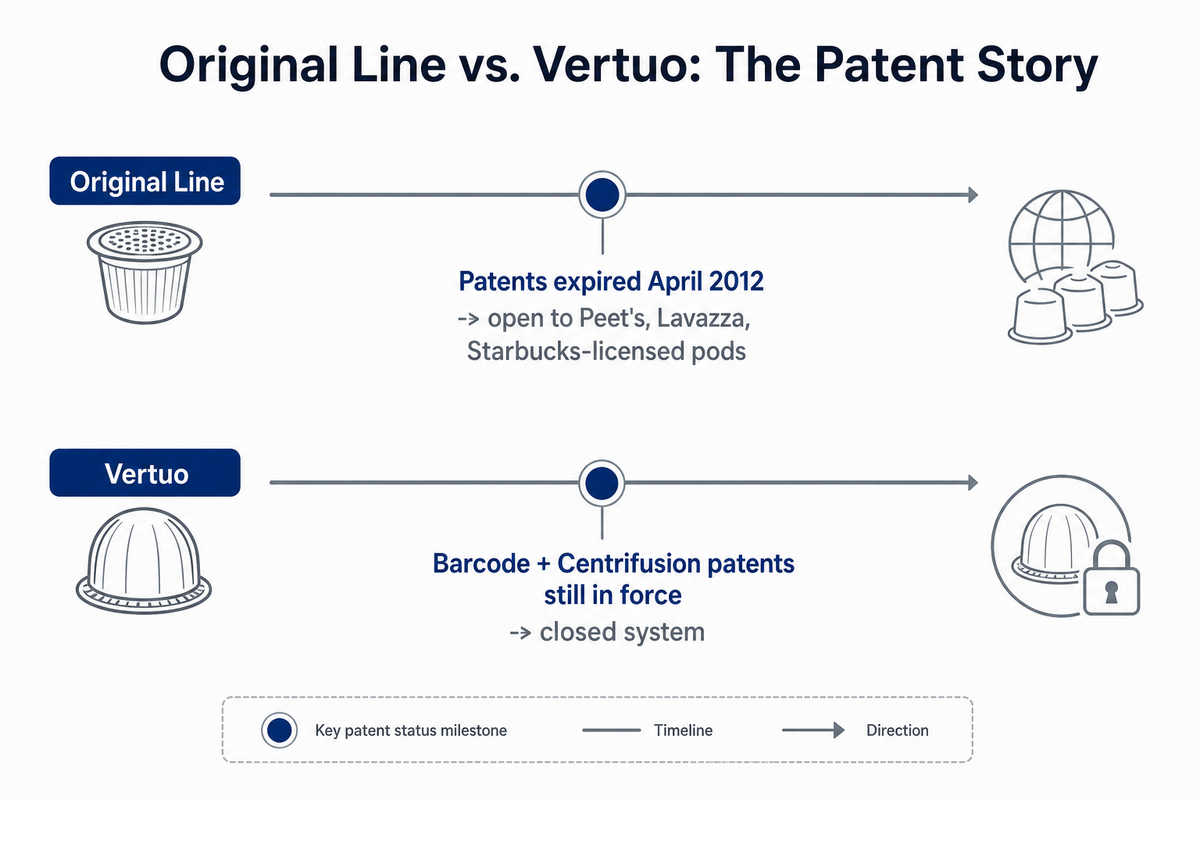
Original Line보다 Vertuo의 프리미엄이 높은 이유는 원두 품질이 아니라 특허 보호와 관련 소송에 있습니다. 각 Vertuo 캡슐의 테두리에는 바코드가 다섯 번 반복 인쇄되어 있고, 광학 센서가 이를 읽어 캡슐 회전 속도(Nespresso의 특허 Centrifusion 커피 추출에서는 최대 7,000 rpm), 추출 온도 및 용량을 조절합니다.
오리지널 라인 캡슐에는 바코드가 없으며, 1990 년대 시대의 오리지널 특허는 2012 년 4 월에 만료되었습니다 – 라이선스가 부여된 스타벅스 포드, 라바짜, 피츠, 기타 오리지널 라인의 오리지널 기계용 호환 포드의 수문을 연 날짜인 버튜오 커피 캡슐 (VertuoLine으로 수년간 판매) 은 여전히 유효한 자체 바코드 및 캡슐 특허를 보유하고 있습니다.
해결되지 않은,도전이 없는 해자: K-fee System GmbH 는 실제로 2021 년에 Vertuo 의 바코드가 자체 특허 중 3 개를 침해했다고 주장하면서 Nestlé를 고소했습니다. 그 미국 사건은 Vertuo 의 코드가 “바코드”가 아닌 기술적 인 “비트 코드”라는 이유로 2022 년 6 월에 기각되었습니다.- 그러나 평행 스위스 연방 특허 법원은 실제로 기술적으로 반대 결론에 도달했지만 (Vertuo 포드는 바코드를 가지고 있습니다), 선행 기술에 대한 특허를 별도로 무효화했습니다. 이러한 특허는 마케팅 연극이 아니라 실제적이고 소송이 제기되었으며 완벽하지 않았습니다.
“개인 라벨 캡슐 주문의 전체 제조-충진-패키지 주기는 30~60일 동안 끝에서 끝까지 실행됩니다.” – 다른 형식에 비해 초미세 분쇄 및 질소 플러시 감도 캡슐 커피에 필요한 기술적 장벽을 반영합니다.
Novocapsule의 CEO인 Yuval Weinshtock은 Perfect Daily Grind에서 인용했습니다
이 모든 것을 뒷받침하는 더 오래되고 하드 코어 데이터 포인트가 있습니다: 프랑스의 경쟁 당국은 2014 년에 네스프레소가 Original Line 기계 재배치 씰을 변경하고,갈비뼈를 추가하고,추출 케이지를 조정하여 – 다른 브랜드의 캡슐을 물리적으로 호환되지 않게 만들고 또한 보증을 네스프레소 브랜드 캡슐에만 제한했습니다. 네스프레소는 결국 행동 변화에 7 년 동안 헌신했습니다. 더 넓은 싱글 서브 공간을 연구 한 학자들 (인시드 4 개의 지배적 인 브랜드에서 93%의 시장 점유율을 다루는 2005-2013 포르투갈 시장을 연구 한 결과) 일반적인 메커니즘을 확인했습니다: 기계는 원가 이하로 판매되며 캡슐은 20-30% 마진, 고전적인 면도날 역학을 구성하며 여기 포르투갈에서는 1% 포드 가격 인상으로 인해 기계 판매가 5% 이상 감소했습니다.
프리미엄 Vertuo 가격 책정은 거의 항상 “마케팅 비용을 지불하고 있습니다”에 기인합니다. 실제로 기본 메커니즘은 그 반대인 것 같습니다; 모든 단일 서비스 카테고리를 뒷받침하는 면도날 경제성 위에 구축된 진정한 폐쇄형, 소송형, 특허 보호 시스템 – 유일한 차이점은 원래 제품 라인에서 특허가 소진되었다는 것입니다.
네스프레소 비용 스택 내부: 실제로 파드의 비용을 구성하는 4 가지 구성 요소
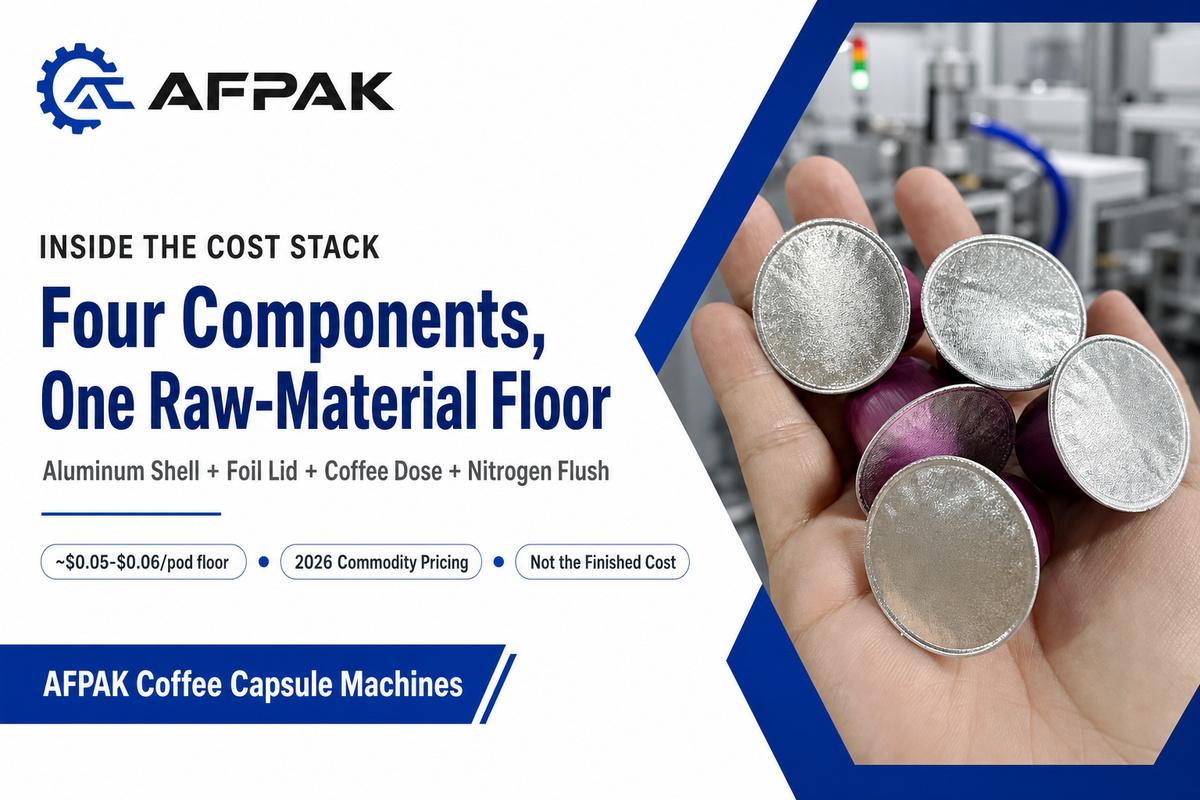
커피 포드와 캡슐 또는 일반적으로 포드에 사용하는 용어는 알루미늄 캡슐은 4 가지 구성 요소로 만들어지며 Original Line 캡슐은 완성 된 포드가 더 순한 금발 에스프레소 로스트이든 더 대담한 오리지널 커피 블렌드이든간에 범위에 걸쳐 동일한 기본 구조를 포함합니다: 알루미늄 쉘,호일 뚜껑,커피 복용량 및 보호 질소 플러시. 이 네 가지 모두 실제 원천 공급 가능한 2026 상품 가격을 뒤에두고 있습니다. 변환기의 실제 완제품 가격없이 재료 투입 비용에 대한 감각을 제공하기 위해 (변환기는 그러한 수치를 공개하지 않음), 구성 요소별로 숫자를 계산하고 이러한 수치가 재료 바닥을 나타낸다는 내장 된주의 사항을 장비 자본 투자의 성형,코팅, 로스팅,노동 및 상각에 앞서:
벗겨진 캡슐은 비어 있을 때 약 3g의 알루미늄입니다. LME 1차 알루미늄은 2026년 4~5월 미터톤당 $3,600-$3,666을 거래했습니다. — 세계은행의 핑크 시트 상품 데이터에 따르면 2024년 평균보다 51% 증가한 가격입니다. 그 가격에서 껍질 중 생 알루미늄만으로도 캡슐당 약 $0.011로 배럴 바닥을 긁습니다. 미국 알루미늄은 Midwest Premium(배송 추가 요금 —가 투입되면 더 비쌉니다.; 2026년 1월 처음으로 섹션 232 관세(2026년 3월 25%에서 6월까지 50%로 인상됨)와 공급망 중단에 대해 잠시 lb당 $1.00을 초과했습니다. 에 따라 USGS 광물 상품 요약 2026.
뚜껑에서 나온 알루미늄 호일 1~2그램은 캡슐당 대략 $0.001에서 $0.002까지 다시 밀어 올릴 것입니다; 내가 확인한 변환기는 정확한 뚜껑 무게를 게시하지 않습니다.
| 컴포넌트 | 입력 무게 | 2026년 상품 가격 | 원자재 바닥 | 제한 사항 / 완성된 비용이 아닙니다 |
|---|---|---|---|---|
| 알루미늄 쉘 | ~3g 알 | $3.60–$3.67/kg(lme) | ~$0.011 | 스탬핑, 코팅(21 CFR 175.300 래커), 툴링은 제외됩니다 |
| 호일 뚜껑 | ~0.3–0.5g Al(엔지니어링 추정치) | 동일한 상품 사료 | ~$0.001–$0.002 | 공개된 뚜껑 무게 소스를 찾을 수 없습니다; 방향성으로 취급합니다 |
| 커피 복용량(원본) | 5~6g | $7.30/kg 녹색 아라비카(세계은행, 2026년 5월) | ~$0.037–$0.044 | 그린빈 바닥만 해당; 로스팅/연삭/물류가 더 추가됩니다 |
| 질소 플러시 | 포드당 부피가 작고 단위당 소스를 찾을 수 없습니다 | $0.11–$0.14/kg 산업용 N2(2026) | 센트의 분수 | 비용 동인은 가스 자체가 아닌 플러시 스테이션 용량 및 사이클 시간입니다. — 다음 섹션을 참조하세요 |
각 캡슐을 채우는 녹색 아라비카 커피는 완성 된 포드가 중간 로스팅 또는 어두운 로스팅이 되든간에 가격이 동일합니다. 로스트 레벨이이 원료 단계 이후에 적용되기 때문에 모든 것을 집계하면 원래 라인 원료 바닥이 대략 $0.05-$0.06 포드 당 – 선반에서 찾을 수있는 $0.70-$1.10 가격과는 거리가 멀습니다. 그리고 그것은 단지 재료 바닥입니다 – 실제로 포드를 형성하는 데 드는 비용,식품 등급 코팅 적용,밀폐 밀봉,이를 수행하는 노동,품질 관리,기계 감가 상각 및 배송 비용을 포함하지 않고 선반에 넣습니다. 비교를 위해: in k-cup 비용을 분석한 이전 기사입니다, (순서 크기에 따라서) $0.09 에 $0.17 에 다만 총 물자 비용 (컵, 뚜껑, 여과기, 커피) 를, 우리 분류했습니다; 네스프레소의 알루미늄 (단 하나 뚜껑) 단 하나 컵 형태 요인은 그것의 알루미늄에 더 무거운 가격 당 아마 모든 것이 끝난 후에 동일한 범위로 끼워넣을지라도, 더 적은 플라스틱을 사용합니다.
포장 형태에 따른 비용에 대한 두 번째 규제 변형은 EU의 새로운 포장 및 포장 폐기물 규정이 전체 알루미늄 포장을 제7조 재활용 내용물 요구 사항에서 면제한다는 것입니다. 그 규정은 중량 기준으로 5% 이상의 플라스틱을 함유한 포장에만 초점을 맞추고 있기 때문입니다. 그러나 플라스틱 바디 캡슐은 의무를 피하기 위해 2030년 1월까지 10% PCR 비용을 발생시킵니다(2040년까지 25%로 증가); 알루미늄은 2030년 말까지 추가 PCR 비용을 발생시키지 않습니다. 구체적이고 날짜가 적힌 형태별 비용 비대칭이 있습니다.
기계 감가상각: 채우기 라인이 모든 포드에 추가하는 것
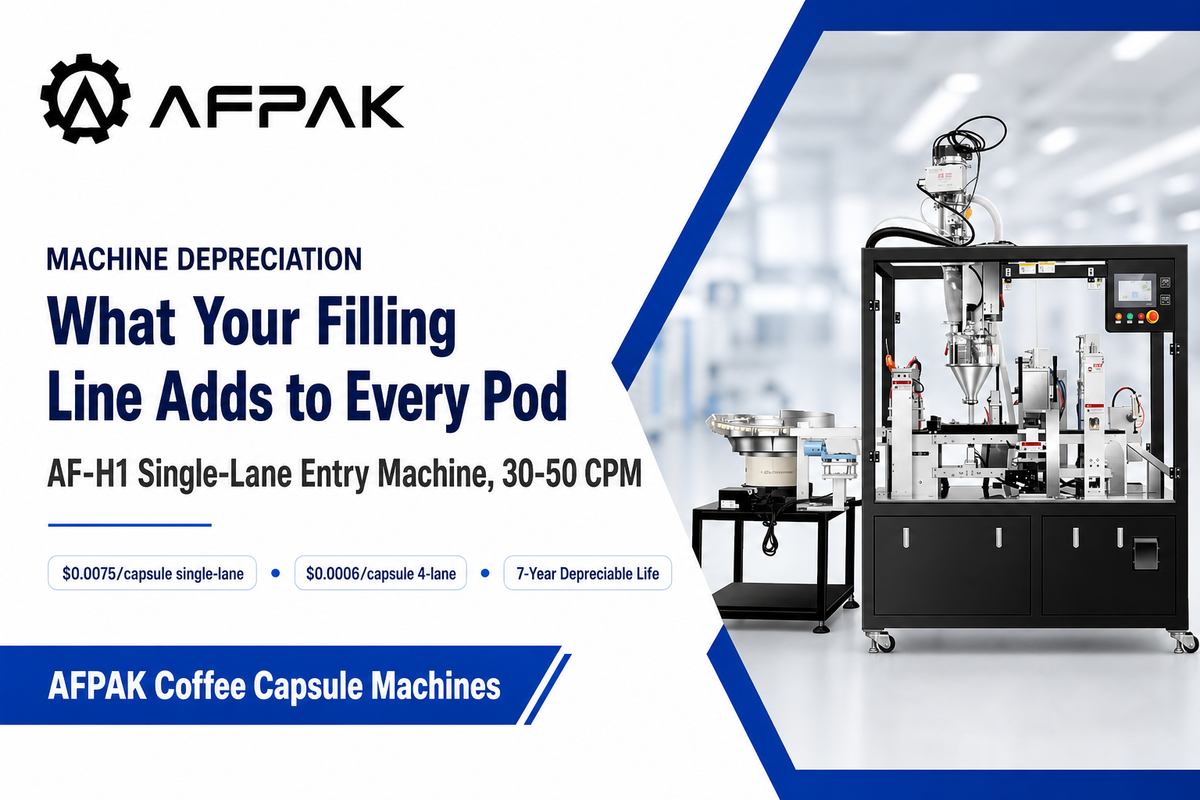
기계 상각은 소매 가격 비교가 결코 얻을 수 없는 비용 요소 중 하나입니다. 왜냐하면 이는 유형에 전적으로 의존하기 때문입니다 충전물 기계 일을 하고 있습니다. AFPAK 의 네스프레소 스타일 기계 자체 라인은 단일 레인 기본 AF-H1 기계 (30-50 cpm) 에서 다중 레인 선형 기계 (H2-H10,40-50 cpm/레인) 를 거쳐 완전한 충전-밀봉-카톤 기계 (180-200 cpm) 에 이르기까지 7 개의 다른 모델로 분당 약 30 에서 600 캡슐까지 실행됩니다. 아래에서 다른 속도는 감가 상각에 대한 포드 당 비용으로 변환됩니다:
예를 들어, $45,000 의 비용이 드는 가상의 단일 레인 기계는 8 시간/250 일 년 동안 50 cpm에서 7 년 감가 상각 수명을 통해 실행됩니다 수율: 50 cpm × 480 분/일 × 250 일/년 = 6,000,000 캡슐의 수명 비용 =로 나눕니다 캡슐 당 $0.0075 감가상각만 ($45,000 / 6,000,000) 의 경우. 이제 동일한 8-hr/250 일 운영 일정으로 40cpm/레인 (160cpm 결합) 에서 4 레인 $80,000 유닛 —을 고려하면: 160cpm × 480 분/일 × 250 일/년 × 7 yrs = 134,400,000 캡슐,또는 감가상각에서 캡슐 당 $0.0006 단위 당 크기가 더 적은 순서입니다! (참고: 이것은 실제 AFPAK 견적 가격이 아닌 계산 계획을위한 CAPEX 예제입니다 – 기계 비용은 구성에 따라 다릅니다. 위의 공식에 자신의 인용 CAPEX를 입력하십시오.)
5년 총 소유 비용: 단일 차선 대 다중 차선 충전 라인(예시적 자본금)
| 비용 항목 | 단일 차선(50cpm) | 4레인(160cpm) |
|---|---|---|
| 구매 가격 | $45,000 | $80,000 |
| 설치 및 시운전 | $2,000–$4,000 | $5,000–$8,000 |
| 에너지(5년, 1.5~4kW) | ~$3,000 | ~$6,000 |
| 유지보수 및 예비품(5년) | ~$4,000 | ~$8,000 |
| 가동 중지 시간 위험(5년) | 더 높음 – 단일 실패 지점 | 더 낮은 — 다중 차선 중복성 |
회수 예: 단일 레인 라인의 경우 5 년 동안 6,000,000 캡슐과 $0.03/포드 올인 총 마진 (소매에서 다음 두 섹션의 올인 COGS를 뺀 값) 에서 해당 기계의 $45,000 –$54,000 5 년 비용은 전체 볼륨 실행의 첫 해 안에 잘 복구됩니다 — 실제 제약은 기계 자체가 거의 아니며 지속적으로 해당 볼륨에 도달합니다.
노동, 질소, 간접비 누구도 예산을 책정하지 않습니다
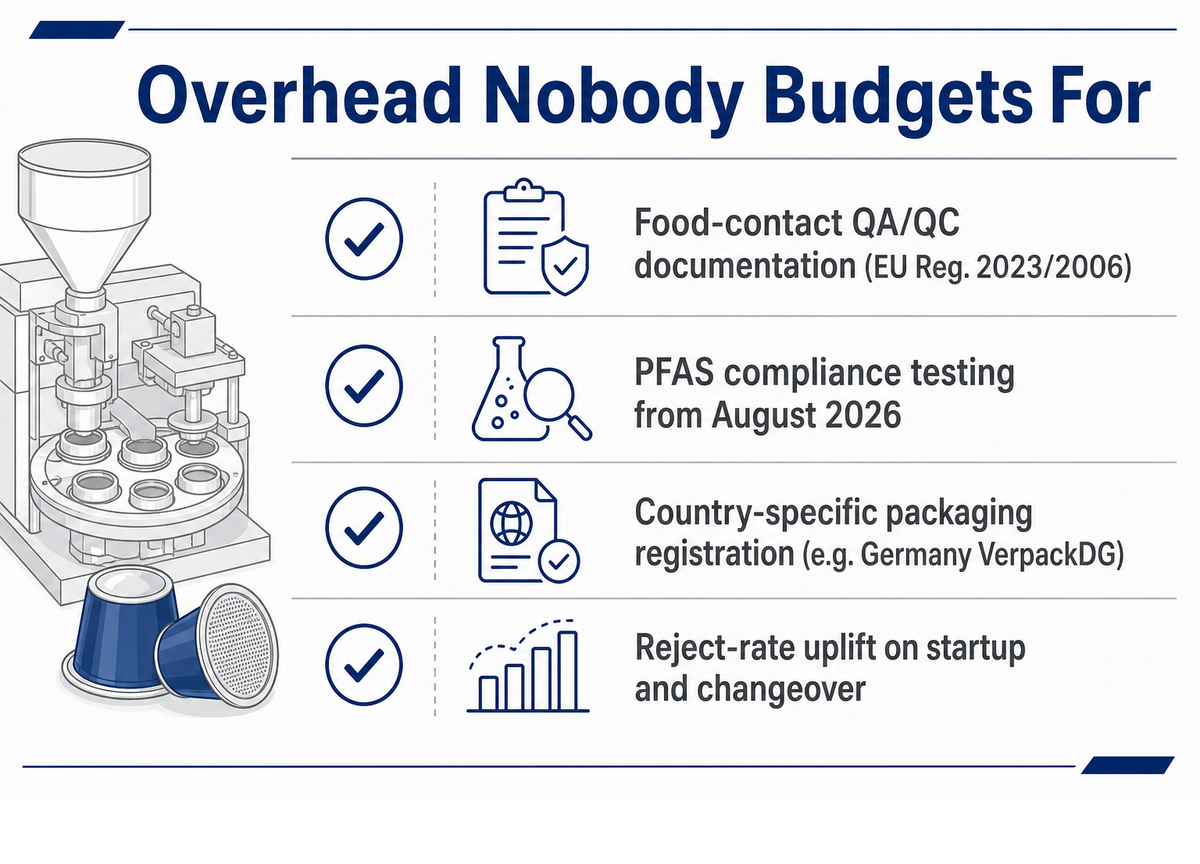
재료비 및 기계 감가상각의 범위를 벗어나는 것은 많은 비용 분석 시트가 인식하지 못하는 세 번째 실제 간접비 계층입니다: 규정 준수 서류 작업, 실험실 테스트 및 노동력 확대. EU의 식품 접촉 법안인 규정 2023/2006은 기업 규모에 맞는 감사 가능한 품질 보증/품질 관리 시스템 – 포드당 재료 품목이 아닌 실제적이고 지속적인 인건비를 주장합니다. 새로운 하에서 PPWR 2026년 8월부터 모든 EU 식품 접촉 포장에 의무화되는 규정, PFAS 준수 테스트 비용은 표적 화합물 테스트를 위해 최대 수천 개의 총 불소 분석을 위해 샘플당 “수백 유로”이며 실험실 처리 시간은 4-8주.
노동은 출력의 양이 아니라 차선 수에 비례합니다. – 단일 차선,단일 운영자 라인 및 다중 차선 라인은 일반적으로 주어진 교대 근무에서 직원 배치 측면에서 유사하며 이것이 위에 표시된 포드당 엄청난 감가상각으로 이어집니다. 단일 대 다중 차선 기계에 대해(포드당 인건비는 동일한 방식으로 압축됨). 각 국가에는 규정 준수 관련 비용 추가도 있습니다. 2026년 8월 PPWR과 함께 발효되는 독일의 포장법 시행법은 등록 및 신고 실패에 대해 200k 벌금 가능성을 제공합니다. – 먼저 등록하지 않고 해당 국가에 판매하는 사람에게는 불쾌한 다운리스크 라인입니다.
- 식품 접촉 QA/QC 문서(EU Reg. 2023/2006) – 지속적인 행정 업무
- PFAS 규정 준수 테스트 – 2026년 8월부터 – SKU당 수백 ~ 최저 수천 €
- 국가별 포장 등록 (예, 독일의 VerpackDG) – 최대 €200,000 의 비준수 위험
- 거부율 증가 – 모든 충전 라인은 시작되거나 교체될 때 실제 스크랩 비율을 생성합니다
생산량이 포드당 실제 비용을 어떻게 변화시키는지
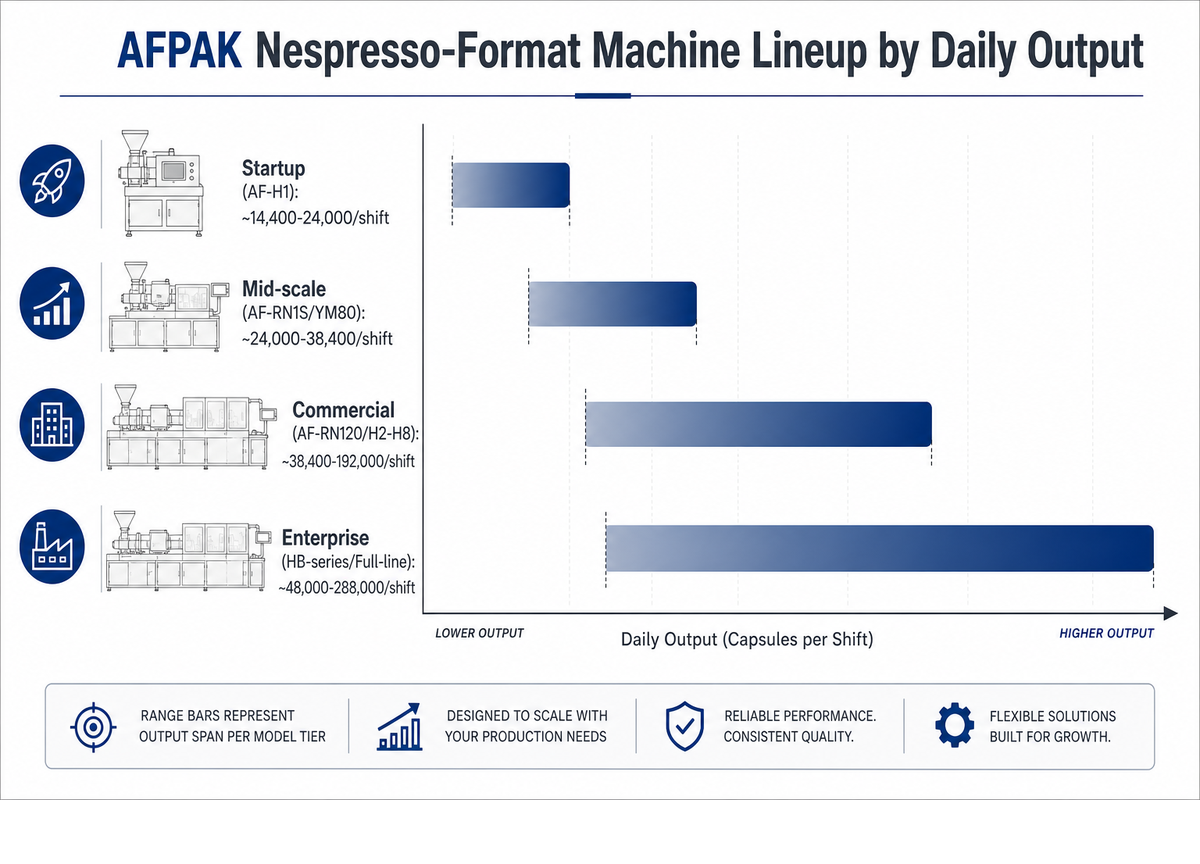
포드 당 비용은 볼륨에 따라 감소하지만 원활하게 감소하지는 않습니다; 다양한 옵션과 최소 주문 수량을 갖춘 실제 공동 포장 가격표는 전체 주문 크기에 걸쳐 선형 감소가 아니라 해당 최소값과 상관 관계가있는 단계별 감소가 특징입니다.
예를 들어, Peacemaker Coffee의 2026년 라이브 K-Cup 공동 포장 요금은 자체 콩을 제공하는 클라이언트에 대해 단위당 $0.26(최소 250개에 20파운드를 초과하는 주문에 대해 파운드당 $1.00의 유료 연삭 수수료 추가)입니다. 공동 포장자의 콩에 대한 단위당 $0.45(최소 없음) – 맞춤형 호일 뚜껑은 디자인당 5,000개 단위로 제공됩니다(4-8주 전환 시간). 베스트컵의 퇴비화 – 포드 공동 포장은 단위 당 $0.95 에서 2,000 포드 (75 lbs 커피) 에서 시작되며, 이는 소비자 직접 채널 – 실제 검증 된 COGS – 소매 간격에서 포드 당 대략 $2.00 으로 변환됩니다. 이 수치는 네스프레소 비용을 반영하지 않고 일반적인 프록시로 K 컵 볼륨에 적용됩니다.
| 볼륨 계층 | 대표 AFPAK 기계 클래스 | 일일 출력 | 올인 COGS 드라이버 | 제한 사항 / 적합하지 않습니다 |
|---|---|---|---|---|
| 스타트업 | AF-H1(30~50cpm) | ~14,400~24,000/교대 | 재료 바닥이 지배적임; 감가상각/포드가 가장 높습니다 | ~50,000 단위/일 이상 지속에는 적합하지 않습니다 |
| 중간 규모 | AF-RN1S(50~70cpm) | ~24,000~33,600/교대 | 노동/감가상각비율 개선 | 단일 차선은 여전히 단일 실패 지점입니다 |
| 중간 규모 | AF-YM80, 1레인(60~80cpm) | ~28,800~38,400/교대 | 가득 차있 기계적인 캠 드라이브, 라인업에서 가장 단단한 ±0.15g 정확도 | 단일 차선은 여전히 단일 실패 지점입니다 |
| 상업 | AF-RN120 로터리(100~120cpm) | ~48,000~57,600/교대 | 감가상각/포드가 바닥에 접근함; 노동은 하위 선형으로 확장됩니다 | 자본 지출을 정당화하려면 안정적인 다중 교대 수요가 필요합니다 |
| 상업 | AF-H2, 2레인(80~100cpm) | ~38,400~48,000/교대 | 감가상각/포드가 바닥에 접근함; 노동은 하위 선형으로 확장됩니다 | 자본 지출을 정당화하려면 안정적인 다중 교대 수요가 필요합니다 |
| 상업 | AF-H4, 4레인(160~200cpm) | ~76,800~96,000/교대 | 감가상각/포드가 바닥에 접근함; 노동은 하위 선형으로 확장됩니다 | 자본 지출을 정당화하려면 안정적인 다중 교대 수요가 필요합니다 |
| 상업 | AF-H8, 8레인(320~400cpm) | ~153,600~192,000/교대 | 감가상각/포드가 바닥에 접근함; 노동은 하위 선형으로 확장됩니다 | 자본 지출을 정당화하려면 안정적인 다중 교대 수요가 필요합니다 |
| 엔터프라이즈 | HB-시리즈 통합 라인 (180–200+ cpm 충전+밀봉+카톤 처리) | ~86,400–96,000+/교대 | 포드당 최저 감가상각; 이제 간접비(규정 준수, QA)가 더 큰 상대 항목이 됩니다 | 일관된 6자리 월간 볼륨 이하에서는 적합하지 않습니다. — capex 활용도가 낮습니다 |
| 엔터프라이즈 | 완전 자동화 라인(정격 100~600cpm, 운영자 2~3명) | ~48,000~288,000/교대 | 포드당 최저 감가상각; 이제 간접비(규정 준수, QA)가 더 큰 상대 항목이 됩니다 | 일관된 6자리 월간 볼륨 이하에서는 적합하지 않습니다. — capex 활용도가 낮습니다 |
EU 시장의 또 다른 측면: 한 EU 시장 내에서 연간 10톤 미만의 포장을 생산하는 모든 생산자는 PPWR에 따라 단순화된 보고를 받습니다. – 대부분의 대량 논의에서 생략되는 스타트업의 또 다른 실제 규정 준수 이점.
진짜 마진: 당신이 파드를 판매 한 후 남은 것
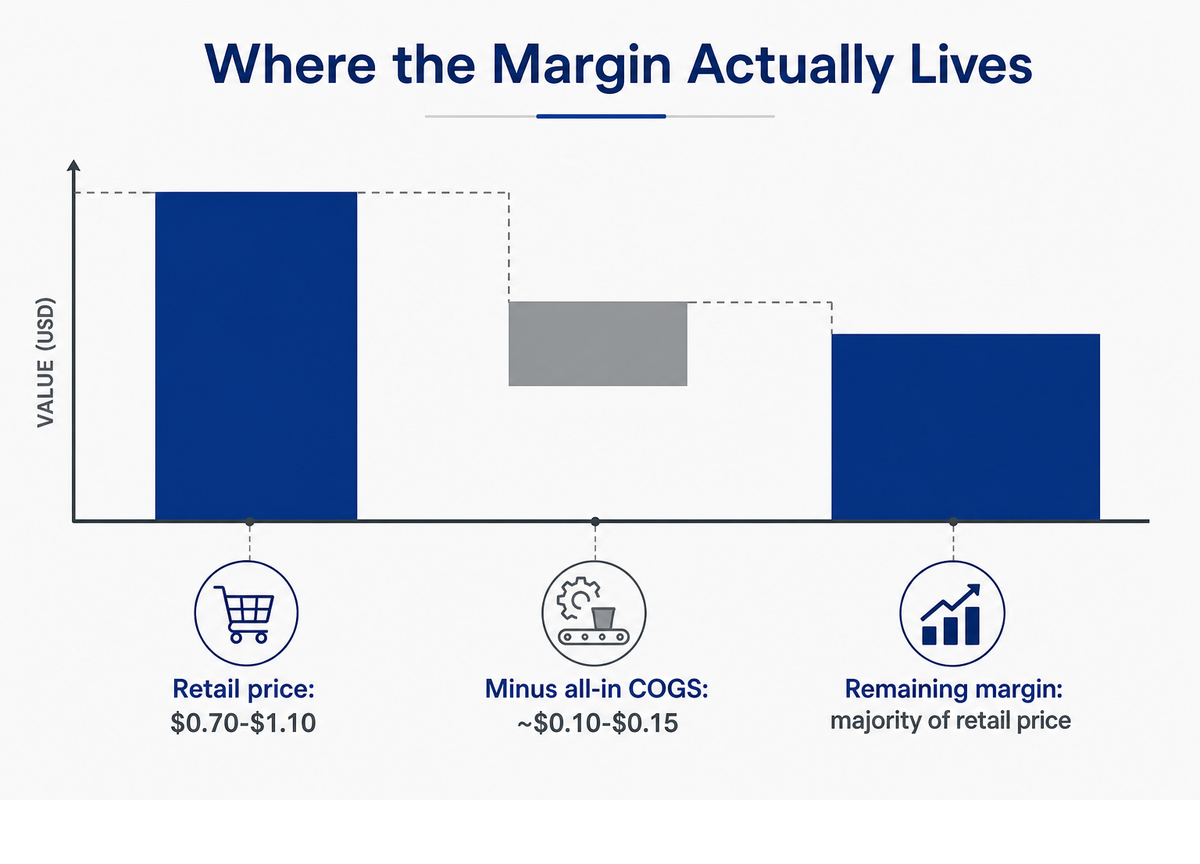
원래 라인에서 다시 작업: $0.70 –$1.10 에서 소매, 재료 입력 $0.05 –$0.06, 단위 당 1 센트 미만의 규모에서 기계 감가 상각. 변환 / 코팅 / 노동에 대한 계정에 버퍼를 추가, “규모에 올인 COGS” 에 대한 이중 재료 입력, 대략 $0.10 –$0.15 포드 당. 이것은 상당한 포드 마진 (단위 당 센트의 수십) 를 생성 브랜딩 / 유통 / 소매 마크 업을 회계하기 전에 그 위에. 면도칼과 칼날 경제학이 작용되는 곳입니다 – 손실 리더는 장치 또는 초기 패키지이며 마진은 포드에 있습니다.
그러나 해당 포드 마진은 취약합니다 상품 변동성, 2026 년 시장이 분명히 밝힌 것을 의미합니다. Keurig Dr Pepper 의 미국 커피 부문 수입은 2026 년 1 분기 대비 21,3% 로 하락했습니다. 이는 그린 커피 비용,관세 및 물량 감소로 인해 KDP 경영진은 그린 커피 비용이 COGS 통과에서 6-9 개월 뒤처지는 경향이 있다고 지적했습니다. 마찬가지로 JM Smucker 는 5 번째 연속 가격 인상을 시작하는 대신 2025 년 관세 관련 비용에서 $75 백만 이상을 흡수합니다. 자신의 포드 수준 COGS 수학을 고려할 때 테이크 아웃은 자신의 공급망에서 상품 가격 변동에 6-9 개월 리드 타임을 예상하고 들어오는 송장에 대한 빠른 통과를 경계하는 것입니다.
사내 생산 마진이 공동 포장 또는 DIY 리필을 초과하는 양은 단일 숫자가 아닙니다. — 포드당 기계 감가상각비(이전 표에 따라 레인 수에 따라 빠르게 감소함)가 공동 생산 마진보다 낮아지는 지점입니다. -패커는 주문 크기에 따라 단위당 비용을 청구합니다. – 일반적으로 위의 중간 규모 계층과 상업용 계층 사이 어딘가입니다.
사내 생산 대 공동 포장 대 DIY 리필
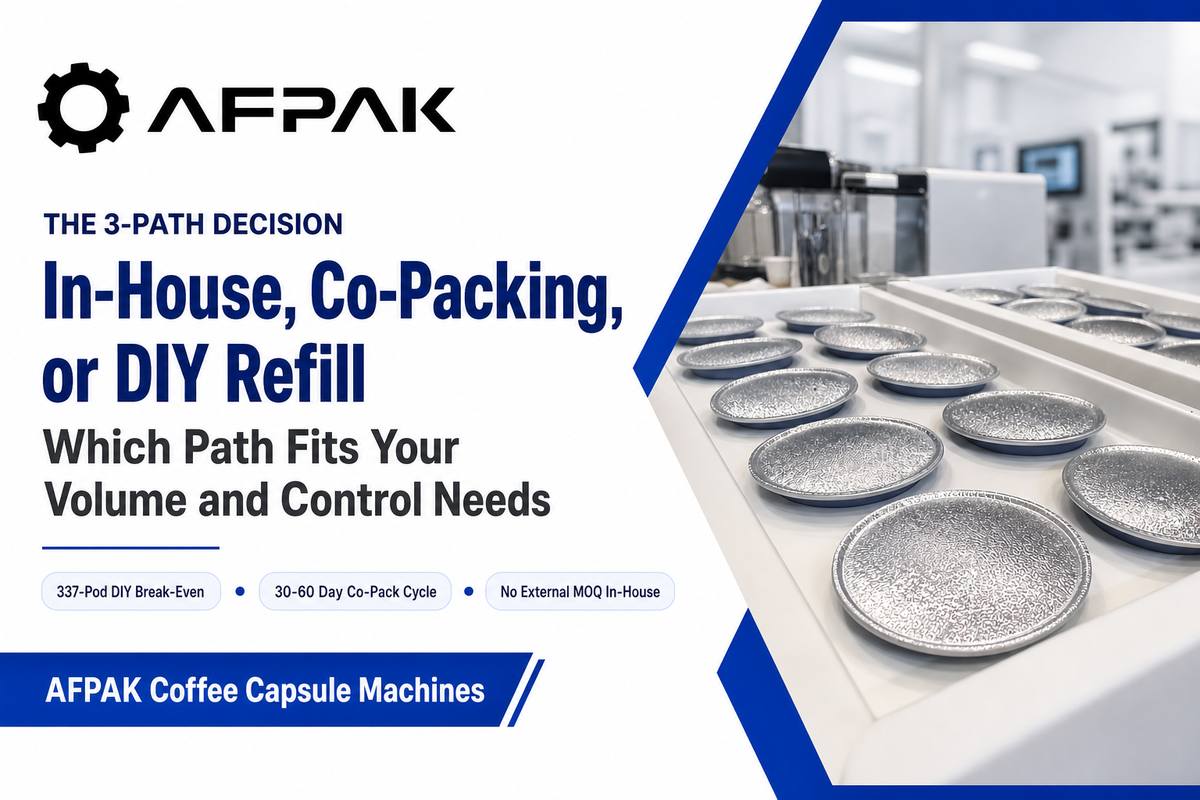
3-경로 빌드-vs-구매 결정 트리
3-Path Build-vs-Buy Decision Tree 는 모든 캡슐 브랜드가 직면하는 3 방향 선택입니다: 사내 생산 능력을 구축하거나,공동 포장 업체로부터 용량을 구입하거나,고객이 자신의 포드를 다시 채우도록합니다.
네스프레소 형식의 캡슐에는 세 가지 실제 경로가 있으며,어떤 것이 가장 좋은지에 대한 실제 대답은 다음과 같습니다: “본질적으로 ‘더 똑똑한’것이 아니라 볼륨 및 제어 요구에 따라 다릅니다.’ DIY 리필,자신의 콩을 구입하고 사용한 커피 찌꺼기를 포장하는 것이 종이에 가장 저렴해 보입니다: 포드 당 비용은 리필 된 캡슐의 경우 대략 $0.21-$0.43 대 브랜드 포드의 경우 $1.00 으로 내려갈 수 있습니다. 캡슐을 리필하기위한 하드웨어에서도 휴식 시간은 대략 337 개의 리필 된 포드로,이는 평일에 한 번 에스프레소의 약 67 주에 해당합니다. 실제 경험? 각 세션마다 ”10 분간의 까다로운 준비,끈적 끈적한 카운터,낭비 된 접지 및 가끔 나쁜 봉인“, 그리고 과충전시 실패하거나 약한 샷의 약 40%.
DIY는 시간과 실패율을 고려할 때 구매하는 것보다 저렴하지 않습니다.
공동 포장은 CAPEX 및 고장률 문제를 모두 제거하지만 리드 타임과 MOQ 장애물을 모두 추가합니다: 개인 상표 Nespresso 캡슐의 엔드투엔드 제조-충진-패키지 주기는 30~60일입니다(위의 Novocapsule 인터뷰에 따르면), 일반적으로 최소 5,000+로 맞춤형 도구 세트(뚜껑, 상자)를 구매해야 합니다.
자체 사내 충전 기계는 위에서 논의한 CAPEX 및 감가상각 고려 사항을 희생하면서 DIY 리필의 품질 문제와 공동 포장의 MOQ 한도도 제거합니다. 볼륨이 임계값을 넘으면 논리적인 단계입니다.
- 자본금도 없고 감가상각 수학도 없습니다
- 순서 당 30 – 60 일 주기 시간
- 주문 장식새김에 진짜 MOQ 마찰 (5,000+ 단위/디자인)
- 품질 관리는 공동 포장업자에게 속하지, 당신이 아닙니다
- Capex + 감가상각비, 거래량별 상쇄(비용 교차 임계값 참조)
- 제3자에 대한 주기 시간 종속성이 없습니다
- 외부 MOQ 천장 없음
- 품질 관리 및 형식 전환은 직접 수행하세요
네스프레소 호환 장비에 대한 투자의 장점을 평가하는 브랜드 소유자는 관련 기사를 참조할 수 있습니다 캡슐 생산 장비가 투자 가치가 있는지 여부, 그리고 DIY 네스프레소 리필이 궁극적으로 잘못된 브랜딩 전략을 만드는 이유에 대한 기사를 읽어보세요 DIY 네스프레소 리필이 브랜드 기회로 실패하는 이유.
구매 전 통합 및 유틸리티 요구 사항
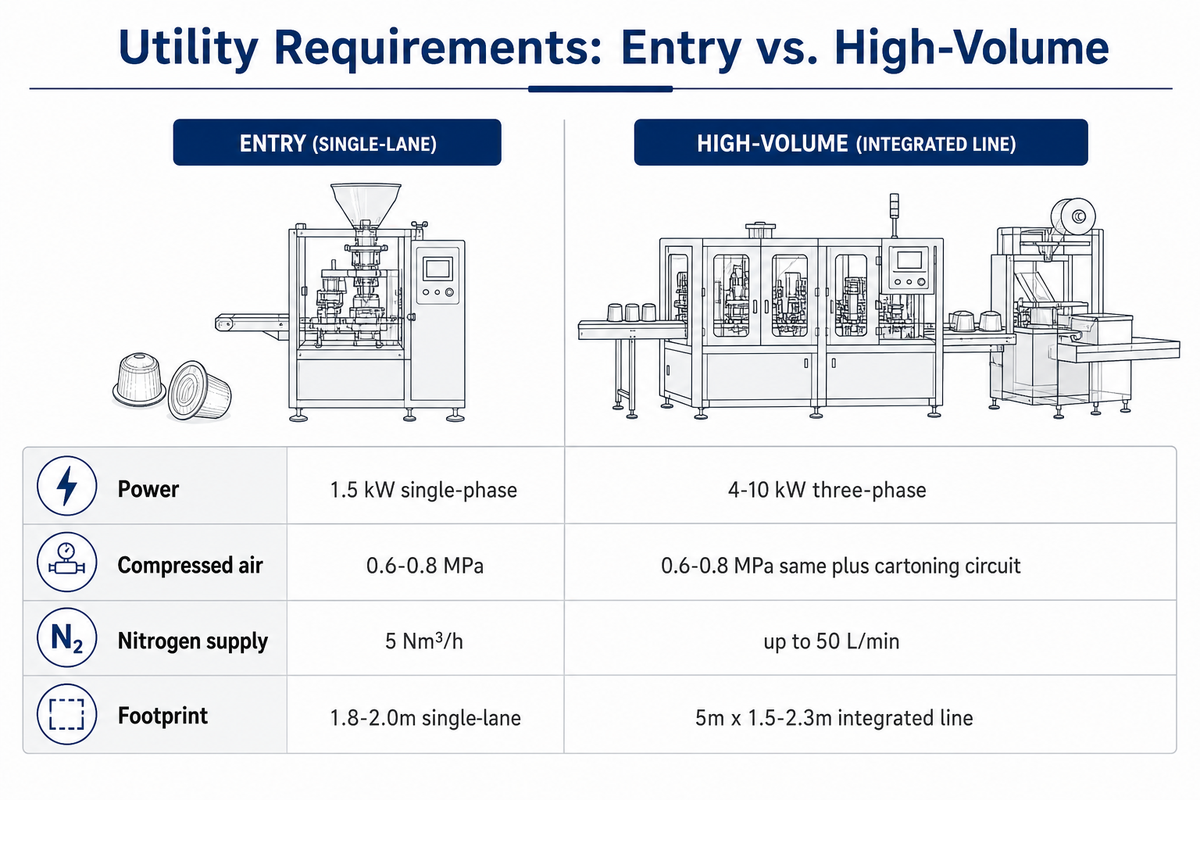
시설은 먼저 기계를 실제로 실행할 수 있어야 하며 AFPAK의 보급형 대 고급형 요구 사항이 필요합니다 네스프레소 장비 사이트 선택에 영향을 미칠 수 있을 만큼 범위가 넓습니다.
단일 레인 기계 (H1, RN1S) 는 일반적으로 단상 전력이 1.5kW에 불과하고 압축 공기가 0.6 ~ 0.8MPa만 필요합니다. 대용량, 다중 레인, 통합 충전 라인의 경우 요구 사항은 압축 공기 공급, 질소 흐름 및 물론 바닥 공간 요구 사항이 병렬로 증가하는 카토닝 기계에 대한 추가 회로와 함께 3 상 전력 (4 ~ 10kW) 으로 올라갑니다. 예를 들어 단일 레인 진입 기계는 약 5Nm³ /h의 질소 공급이 필요한 반면 고급 기계는 50L /min에 가까운 흐름으로 실행할 수 있습니다.
생산 산출과 통합 수준과 함께 공간 요구가 증가합니다. 단일 차선 단위는 대략 1,8-2,0 m 의 바닥 공간을 차지하는 반면,카톤을 포함한 통합 된 다중 차선 HB 시리즈 기계는 거의 5 m x 1,5-2,3 m 를 측정합니다.
특정 압축 공기 이슬점 및 질소 순도 사양은 항상 기계 제조업체에 확인해야 합니다. 이를 적절하게 공급하지 못하는 것이 새로운 장비 시동 지연의 일반적인 원인이기 때문입니다.
- 포드당 감가상각비는 빠르게 감소합니다(기계 감가상각 섹션 참조)
- 다중 차선 중복성은 단일 고장 지점 가동 중지 시간 위험을 줄입니다
- 볼륨이 크로스오버 임계값을 지우면 상대 오버헤드가 낮아집니다
- 3 상 전력 및 다중 회로 질소 공급에는 대부분의 신생 기업이 갖지 못한 시설 업그레이드가 필요합니다
- Capex는 이를 정당화하는 볼륨 아래에 유휴 상태로 있습니다
- 규정 준수 오버헤드 (QA 서류 작업,PFAS 테스트) 는 기계 크기에 관계없이 SKU 당 적용됩니다
네스프레소 형식 충전 라인을 구입하지 말아야 할 때
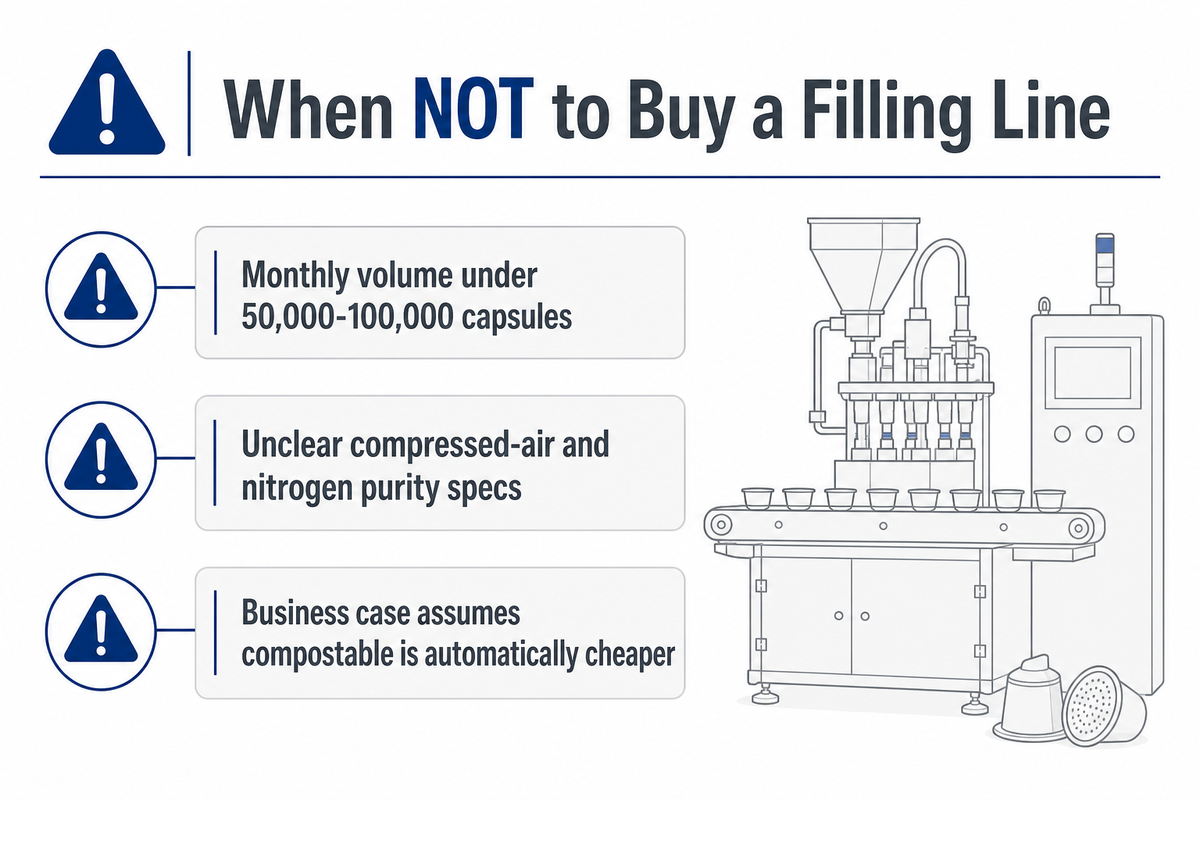
단점은 거꾸로 이야기 나란히 장소가 필요합니다. 당신의 현실적인 월간 실행 속도, 아래, 예를 들어, 50K ~ 100K 캡슐, 그리고 다음 해 정도에 대 한 그렇게 유지 될 것으로 예상, 공동 포장 업체를 통해 더 나은 전체 단위 비용을 초래 한다 MOQ 계층 가격 (위의 볼륨 계층 토론 참조), 심지어 30~60일 턴 시간과 장비 감가상각을 고려합니다.
압축 공기 이슬점의 압력이 무엇인지, 제제에 필요한 질소 순도가 몇 “9”인지 아직 명확히 밝히지 않았다면, 이는 문제가 된 잠재적 인 커미션 날짜입니다.
그리고 퇴비화 가능한 캡슐 재료를 사용하는 회사의 비즈니스 사례가 “퇴비화 가능하다는 것은 항상 돈을 절약하는 동시에 자동으로 지구를 절약한다는 것을 의미합니다”라면 다음 항목은 아마도 선택 사항이 아닐 것입니다.
퇴비화 가능한 것이 항상 저렴한 선택은 아닙니다
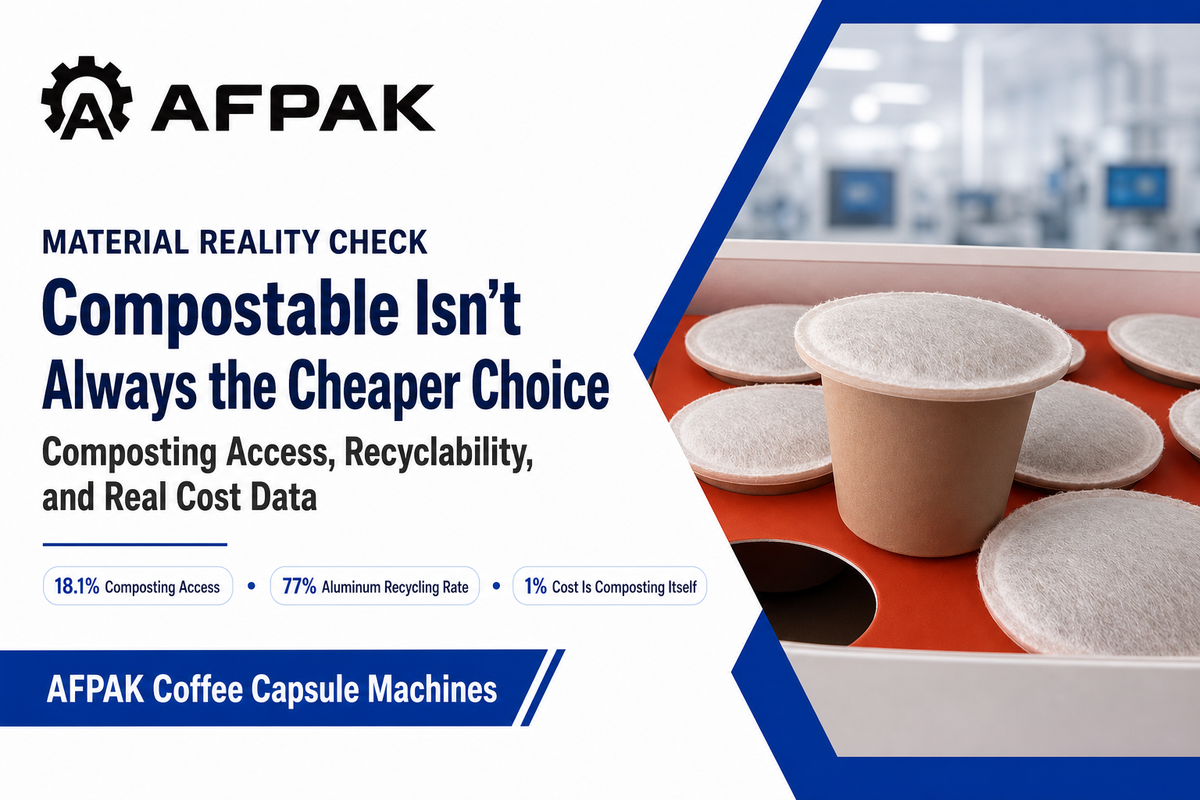
A 동료 검토를 거친 2020년 수명주기 평가 PLA 퇴비화 가능한 포드의 한 가지 상황은 퇴비화 가능한 포드가 전통적인 플라스틱 포드보다 약 21% 저렴하다는 것을 보여 주었고, 절약은 모든 분석에서 총 비용의 1%인 퇴비화 공정이 아니라 구입 방식에서 비롯되었습니다. 상황.
문제는 인프라의 부족에 의해서만 증폭됩니다: 미국 인구의 18.1%만이 음식물 찌꺼기와 퇴비화 가능한 포장을 가져가는 프로그램에 접근할 수 있습니다. 이는 음식물 쓰레기 퇴비화에 전혀 접근할 수 있는 35.9%와 비교됩니다. 최근(2024) 동료 검토를 거친 또 다른 비교 수명주기 평가에서는 바이오폴리머 재활용이 구조적으로 이미 무엇이든 최고 수준인 반면, 재료는 실제로 안정적으로 재활용할 수 없고 실제로 폐쇄 루프 재활용이 불가능하므로 알루미늄에 비해 더 많은 매립 및 퇴비화(재활용보다는)가 발생하기 쉽다는 예측도 있었습니다. 자체 네스프레소 호환 퇴비화 캡슐을 구축하려는 로스터 한 사람의 일화를 좋아합니다: 품질이 불규칙하여 구성 요소를 소싱하는 데 어려움이 있었고 완성된 캡슐에는 기존 포드에 프리미엄(할인 아님!) 가격표가 붙어 있었습니다.
물론, 그것은 알루미늄 자체에 대한 주장이 아니라, 단지 재료의 선택이 “퇴비화 가능”이라는 일반적인(그리고 잘못된) 생각이 아니라 폐기 비용 및 접근에 대한 특정 데이터에 따라 결정되어야 한다는 주장일 뿐입니다. 마지막 단어.
자주 묻는 질문
Q: 네스프레소 포드는 너무 비싸나요?
네스프레소 포드의 가격은 커피 파운드당 약 $50~$80으로, 소매 통콩 운반 파운드당 $9~$22보다 훨씬 높지만, 편리함과 일관된 투여량을 고려하면 비교가 사과 대 사과가 아닙니다.
Q: 네스프레소 포드의 가격은 큐리그 K컵스 대비 얼마인가요?
Nespresso와 Keurig를 직접 비교하면 Nespresso Vertuo 포드는 2025~2026년 시장 비교에 따라 약 $0.40~$1.10에서 Keurig K-Cups에 비해 각각 대략 $1.00~$1.50으로 실행됩니다.
Q: 네스프레소 포드를 매장에서 구매하는 것이 더 저렴합니까, 아니면 온라인으로 구매하는 것이 더 저렴합니까?
커뮤니티 거래 추적 사이트의 실제 거래 가격은 구독 할인 후 캡슐당 약 $0.58–$0.71에 정착하는 오리지널 라인 멀티팩을 보여줍니다. 이는 대부분의 구매 가이드 견적에서 $0.70–$1.10 정가보다 의미 있게 낮습니다.
Q: Vertuo 캡슐이 Original Line보다 비싼 이유는 무엇입니까?
Vertuo는 Original Line의 만료된 특허 개방형 형식이 제공하지 않는 특허 소송 폐쇄 시스템(바코드 판독 원심분리 추출)을 운영하고 있습니다. 이는 단순히 고품질 원두가 아닌 가격 격차의 실제 메커니즘입니다.
Q: 네스프레소 포드를 재사용할 수 있나요?
두 라인 모두에 재사용 가능한 캡슐이 존재하지만 하드웨어의 손익분기점은 대략 337개의 리필이며 공장 수준의 투여 정밀도는 집에서 복제하기 어렵습니다.
Q: 네스프레소 호환 포드를 제조하는 데 실제로 브랜드 비용이 얼마나 드나요?
원자재는 Original Line 포드당 대략 $0.05–$0.06을 실행합니다; 상업용 물량의 올인 COGS는 일반적으로 기계 감가상각비와 간접비가 추가되면 소매가의 절반 미만으로 떨어집니다.
우리가 이것을 쓰는 이유
전 세계에서 만들어진 네스프레소,K-컵,돌체 구스토 캡슐의 상당 부분을 위한 충전 및 밀봉 기계를 구성하기 때문에,우리는 이 주제에 소매 “수요” 측면이 아닌 비즈니스의 “공급” 측면에서 접근하고 있습니다. 이 작품의 상품 가격,기계 사양 및 규제 기한은 경쟁사의 블로그 게시물이 아닌 1 차 소스 (정부 무역 데이터,특허 출원,동료 검토 수명주기 연구) 및 자체 장비 라인업에서 나옵니다.
참고자료 및 출처
- 소비자 물가 지수: 2025년 검토 미국 노동통계국
- 종합지표가격(I-CIP) 국제 커피 기구
- 상품 시장 전망, 핑크 시트, 2026년 6월 세계 은행
- 2026년 광물 상품 요약, 알루미늄 미국 지질 조사국
- 에스프레소 커피 머신 결정 Autorité de la concurrence (프랑스 경쟁 당국)
- 커피 포드, 묶인 물품, 이익 추구 INSEAD 지식
- 퇴비화 가능한 커피 포드의 수명주기 평가 PubMed Central을 통한 과학 보고서(자연 포트폴리오)
- 새로운 SPC 연구에 따르면 미국의 퇴비화 접근성이 증가한 것으로 나타났습니다 지속 가능한 포장 연합
- 커피 캡슐의 비교 수명주기 평가 지속 가능한 생산 및 소비(ScienceDirect)
- 유럽 포장 및 포장 폐기물 규정 요약 레이섬 & 왓킨스
- 슈퍼마켓에서 미국 커피 가격이 급등했습니다 Roast Magazine의 일일 커피 뉴스
- 커피 캡슐은 어떻게 제조되고 채워지나요? 퍼펙트 데일리 그라인드
- 네스프레소의 버튜오 포드: 바코드가 아닌 바코드 FPC 검토
관련 기사
- 컵당 K컵 생산 비용: 실제 숫자 k-cup 형식에도 동일한 구성 요소 비용 방법론이 적용되었습니다
- 오리지널 라인 네스프레소 포드: 알루미늄 대 퇴비화 가능 대 플라스틱 위의 쉘 비용 라인 뒤의 재료 선택 비교
- DIY 네스프레소 리필이 브랜드 기회로 실패하는 이유 위의 DIY 섹션 뒤의 전체 분해
- 커피 캡슐 생산 장비는 투자 가치가 있습니까?
- 네스프레소 커피 캡슐 충전 및 밀봉 기계 AFPAK 의 전체 네스프레소 포맷 장비 라인업
AFPAK 기술팀이 검토했습니다.


