
Plnicí stroje: Co potřebují pražírny kávy vědět před nákupem
| Parametr | Hodnota |
|---|---|
| Pokryté typy strojů | K-Cup, Nespresso, Dolce Gusto, ESE Pod |
| Rozsah rychlosti | 8,25 CPM (poloautomatický) · 40,200+ CPM (inline/rotační) |
| Přesnost plnění | ±0,1 g a ±0,3 g (dávkování augeru) |
| Metody těsnění | Tepelné těsnění, ultrazvukové těsnění |
| Dusík Flush | Volitelné; snižuje zbytkový O2 na <3% |
| Materiál rámu | 304 nerezová ocel (potravinářská) |
Kávový průmysl s jedním porcí zastínil celosvětové tržby přesahující 1 TP4T38 miliard, přičemž vzestupná trajektorie zůstává strmá. Údaje z Národní trendy v údajích o kávě NCA 2025 označuje, že 231 TP3 T amerických pijáků kávy denně sáhne po individuálním pivovaru na šálky Pro pražírny pozorující tento přechod od výroby celozrnných formátů směrem k rychle se rozvíjejícímu maloobchodnímu sektoru stojí za vedení plnicí stroje na kapsle a zařízení na balení kávy Tento článek vysvětluje různé typy strojů, specifikace a celkové náklady na vlastnictví, aby bylo možné použít a pochopit informace Ať už máte v úmyslu koupit stolní plnicí stroj na kávové kapsle nebo rotační linku běžící na 600 kapslí za minutu, to je materiál, který bude užitečný.
Co jsou stroje na plnění pod a proč na nich záleží?
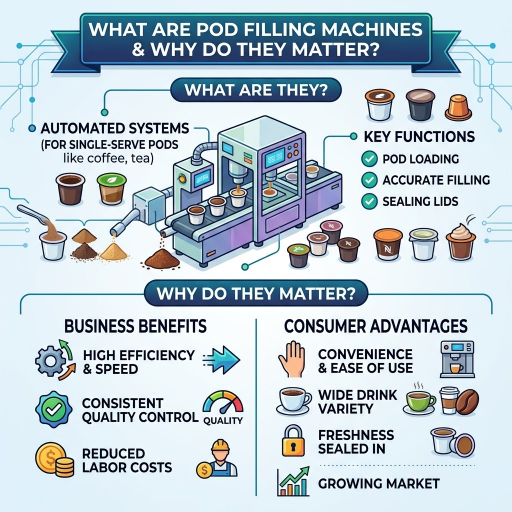
Plnicí stroj na kávové kapsle je zařízení, které dávkuje mletou kávu do předem vytvořených kapslí nebo kapslí, volitelně dusíkové proplachy, víčka nebo filmy, tepelně utěsní do formátu kávových kapslí stabilních na polici, jednodávkové. Plniva kávových kapslí jsou k dispozici ve stolním formátu pro ruční plnění kávy operátorem až po rotační systémy, kde se pravidelně plní a utěsňuje 600 kapslí.
Pozadí trhu bude ilustrovat, proč pražírny mají zájem investovat do stroje na plnění kapslí. Globální průmysl kávových kapslí a kapslí překonal v roce 2023 hodnotu 1 TP4T38,01 miliardy a předpokládá se, že poroste složeným ročním tempem 6,21 TP3T, což se v roce 2030 vyšplhá na 1 TP4T58,19 miliardy, uvádí Výzkum Grand View. Současně Zpráva NCA 2025 svědčí o tom, že 661 TP3T Američanů konzumuje kávu denně s několika formáty vaření, které pozorují vzestup; jeden šálek druhý vedoucí.
Většina pražíren se domnívá, že plnění kávových kapslí vyžaduje investici šesti nebo více čísel. To nemusí být tento případ. Poloautomatické jednotky vstupní úrovně mohou začít pod $5 000, takže testování malých dávek může začít dříve, než dojde k přijetí ve velkém měřítku. Plnou řadu strojů na plnění kávových kapslí AFPAK lze použít od malých startovacích zařízení až po plně automatizované integrované linky.
Samotný průmysl plnění kávových kapslí v USA má hodnotu přesahující 1 4 4,5 miliardy TP4 T a je řízen chováním domácí spotřeby, které se usadilo během dlouhodobé globální pandemie, cituje Mordorská inteligence. Pro nezávislé pražírny, provozovatele soukromých značek a smluvní balírny se jedná o téměř existující tok příjmů pro kávový byznys, pokud plnicí systémy podporují požadovanou propustnost.
Jak funguje proces plnění a těsnění
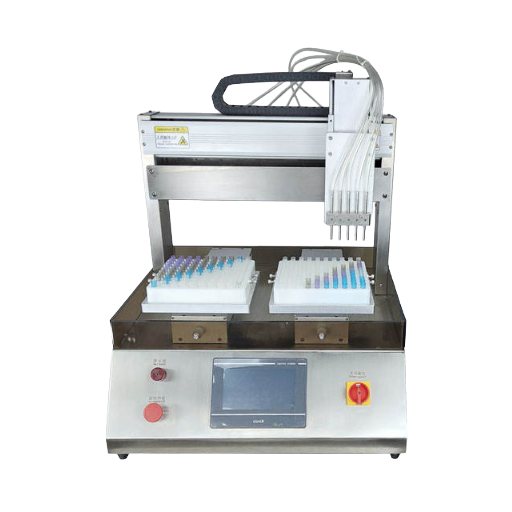
Každý plnicí stroj na kávové kapsle používal stejný základní proces plnění, bez ohledu na to, zda poloautomatický nebo plně automatický, pomalý nebo rychlý. Těchto pět kroků je třeba chápat, aby určení, které vlastnosti stroje jsou klíčové a které jsou výčnělky, mohlo být přímočarým procesem.
- Nakládací kapsle (loading Capsules) (a) (Prázdné kapsle) jsou umístěny v kapsách nebo hnízdech umístěných na dopravníku nebo otočném stole Operátor pak každou kapsli naloží na poloautomatický stroj Inline uspořádání nebo otočné nastavení využívá odhnízďovací jednotku, která dokáže umístit kapsle do stroje automaticky ze stohu.
- Dávkování a plnění 1 x Šnek šneku nebo objemový píst dávkuje mletou kávu do kapsle Šneky mohou poskytnout těsnější přesnost (0,1 g gravimetrické, 0,3 g objemové).Hmotnost náplně se liší pro každý formát; Nespresso kapsle obvykle potřebují 5 5 g, 7 g, Dolce Gusto 14 16 g, K-Cups 9 12 g.
- Proplachování dusíkem 2 Čerstvý plynný dusík je vstřikován tryskou, aby se vytlačil kyslík uvnitř kapsle. Tento volitelný proces se důrazně doporučuje pro speciální kávu. Při správné kalibraci a konstrukci je čerstvý zbytkový kyslík snížen na méně než 31 TP3T, přičemž nové systémy dosahují úrovně až 0,081 TP3T, měřeno pomocí Optima Packaging výzkum.
- Umístění víka 2, Víko fólie nebo fólie (předřezané) je řezáno tepelně a nanášeno na naplněnou, dusíkem propláchnutou kapsli. Některé stroje používají fólie z role s in-line vysekáváním, jiné stroje používají předřezaná fóliová víčka přiváděná ze zásobníku Stroje na umístění víka K-Cup také vkládají papírový filtr před horní víko.
- Tepelné těsnění a kontrola 2 Na těsnicí stanici aplikuje vyhřívaná matrice v jednom kroku přesné, vzduchotěsné těsnění přes okraj kapsle prostřednictvím tepelného utěsnění; prodleva a upevnění jsou specifické pro použitý materiál kapsle. Volitelné vizuální a funkční kontrolní stanice ověřují integritu těsnění, hmotnost náplně a absenci vizuálních vad.
Engineering Note (Inženýrská poznámka) Teplota těsnění podle materiálu kapsle
PP (polypropylenové) kapsle: 180-220 C těsnící teplota, Hliníkové fóliové kapsle: 160-190 C. Nadměrné teplo může produkovat vrásčité těsnění, které není mechanicky zdravé, nesprávně zahřáté těsnění, které umožňuje vstup kyslíku, nebo hnědnoucí film, který produkuje nežádoucí příchutě. Příliš málo tepla může způsobit neúplnou adhezi, mačkání a netěsnosti.
Všechny povrchy a materiály přicházející do styku s potravinami musí splňovat FDA 21 CFR část 117 dokument s pokyny k současné správné výrobní praxi, analýze rizik a preventivním kontrolám založeným na rizicích pro lidské potraviny.
Doba použitelnosti (Perf Life) (Perfl Life) (Perfl Life) (Perfekce) (Perfekce) (Perfekce) (Perfekce) (Perfekce) (Perfekce) (Perfekce) (Perfekce) (Perfekce) (Perfekce) (Perfekce) (Personal Life) (Personky) (Personky) (Personky) zůstávají čerstvé 6-12 měsíců, na rozdíl od 2-4 měsíční trvanlivosti nesplachovaných kapslí (Perfekce) Čerstvost kávy je kritická pro pražírny, které se snaží dostat produkt ze skladu ke spotřebiteli v přijatelném stavu, zejména pro maloobchod.
Podrobný popis dalších typů plnicích strojů a rozsahů rychlostí naleznete v uživatelské příručce AFPAK.
Typy plnicích strojů: K-Cup, Nespresso a formáty kapslí
Ačkoli podobné tvarem a koncepcí, ne všechny kapsle pracují s použitím stejných formátů, Tři dominantní formáty zásobníků v současné době dominují na trhu 3 dominantní formáty zásobníků „K-Cup, Nespresso a Dolce Gusto“, všechny používají různé rozměry balení, hmotnosti náplní a techniky těsnění, Školení jediného stroje k vyplnění každého formátu není ani praktické, ani moudré použití kapitálu.
| Funkce | K-Cup | Nespresso | Dolce Gusto |
|---|---|---|---|
| Materiál kapsle | Plast (PP) | Hliník / PP | Plast (PP) |
| Hmotnost výplně | 9 12g | 5,7g | 14,16g |
| Typ těsnění | Tepelné těsnění + filtr | Tepelné těsnění | Tepelné těsnění |
| Typická rychlost (inline) | 40,80 CPM | 50 100 CPM | 30,60 CPM |
| Filtr Povinné | Ano (papír) | Ne | Ne |
Vzhledem k tomu, že K-Cup používá papírový filtr mezi kávovým lůžkem a výstupní jehlou, plnivo K-Cup musí mít také další stanici pro vkládání filtrů. To přidává $3 000 až $5 000 k nákladům na stroj a je další součástí a bodem mechanické poruchy. Pokud je vaše systémová strategie K-Cup zaměřena na prodej K-Cup, počítejte s tímto dodatečným vybavením v procesu plánování zařízení a kapitálového plánování.
Nespresso stroje mohou být vyrobeny, které používají dva materiály, například hliník a polypropylenové Nespresso pohárky, Hliník je blíže ke komerčním specifikacím Nespresso, teplota těsnění je 160-190 C, ale PP kapsle stojí méně. Někteří spotřebitelé mají pocit, že hliníková kapsle označuje vyšší nebo lepší výrobek. Dodáváme plnicí a těsnící stroje Nespresso, které přijímají buď materiál.
Kapsle Dolce Gusto jsou zjevně větší a hmotnost náplně je 14 °C (téměř 3 x dávka Nespressa).Káva bude konzumována vyšší rychlostí na jeden lusk a její plnění bude trvat o něco déle (dávka většího objemu).Bude možný víceformátový, ale doba přechodu na euro je 30 až 90 minut, v závislosti na tom, kolik dílů je třeba vyměnit. Tabulky pro každý obalový materiál stroj-line variace lze nalézt v AFPAK řešení balicích strojů na kávové kapsle.
Poloautomatický vs. plně automatický: přizpůsobení měřítka výrobě
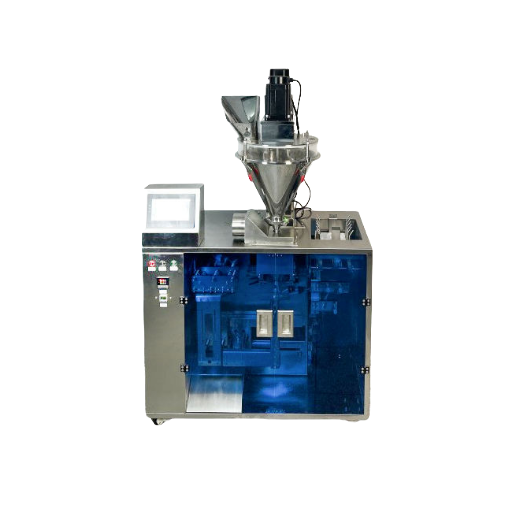
Rozhodnutí o poloautomatickém nebo plně automatickém provedení budou záviset především na jednom faktoru: denním výkonu. Nákup větší strojní linky, než je potřeba, povede k nadsazeným nákladům na modul; příliš malý nákup vytvoří kapacitní omezení, které si může vyžádat další směny. Níže je tabulka, která odpovídá úrovním stroje s realizovatelným výstupem v reálném světě.
| Spec | Manuální / Stolní | Poloautomatický | Inline Automatické | Rotační |
|---|---|---|---|---|
| Rychlost | 2,5 šálků za minutu | 8,25 CPM | 40,80 CPM | 100 600+ CPM |
| Operátoři | 1–2 | 1–2 | 1 | 1–2 |
| Denní výstup (8 hodin) | 100–400 | 500–2,000 | 3,000–10,000 | 10,000–50,000+ |
| Cenové rozpětí | $1,500 th$5,000 | $5,000 th$15,000 | $15,000 th$50,000 | $80,000 th$300,000+ |
Poloautomatické výhody
- Nízký kapitálový požadavek ($5 K,$15 K)
- Drobná stopa, hodí se pro stávající pražírny
- Rychlá změna formátu (15 30 min)
- Ideální pro běhy výzkumu a vývoje a testování trhu
️ Poloautomatická omezení
- Únava obsluhy omezuje reálnou propustnost
- Vyšší mzdové náklady na lusk ve velkém měřítku
- Konzistence plnění závisí na dovednosti operátora
- Není životaschopné nad 2 000 lusků za hodinu pro trvalou produkci kávy
ly Plně automatické výhody
- Konzistentní hmotnost náplně (±0,1 g gravimetrické)
- Nižší mzdové náklady na lusk při objemu
- Integrované proplachování a kontrola dusíku
- Rotační stroje měří na 50 000+ kapslí za hodinu denně
ly️ Plně automatická omezení
- Vyšší počáteční náklady (1 TP4T15 K, 1 TP4T300 K+)
- Vyžaduje vyhrazenou podlahovou plochu a uspořádání balicího zařízení
- Delší dodací lhůta pro instalaci
- Riziko nadměrné kapacity, pokud projekce objemu chybí
Pražírny často přestřelují. Poloautomatická linka 2000 p/h při zatížení 601 TP3T má vyšší náklady na modul než poloautomat 500 lusků/hodinu při 1001 TP3T. Před nákupem stroje určete svou poptávku v prvním roce (neje to nejlepší případ s růstem zabudovaným v (o) a přidejte 20 301 TP3T dodatečné kapacity pro růst.
Pro Tip Kontrolní seznam rozhodnutí o denním objemu
- Pod 500 lusků/den → manuální nebo stolní ($1,500,$5,000)
- 500 až 2 000 lusků/den → poloautomatické ($5 000 až $15 000)
- 2 000 až 10 000 pod/den → inline automat ($15 000 až $50 000)
- 10 000+ modulů/den → rotační systém ($80 000,$300 000+)
Viz AFPAK stroje na plnění a uzavírání kapslí pro příklady instalace v reálném světě.
Klíčové specifikace, které řídí kvalitu podvozku a životnost
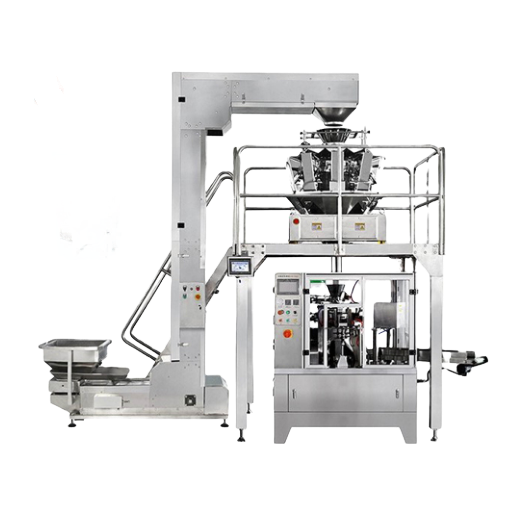
Základem všech ostatních specifikací na stroji na plnění kapslí jsou tři hodnoty: přesnost plnění, účinnost proplachování dusíkem a integrita těsnění. Pečlivě kontrolované tyto faktory určují čerstvost vašich kapslí na polici nebo vaši záruku den za dnem a nespokojenost zákazníků.
Přesnost plnění
Dávkování Auger je téměř univerzálně používáno pro přesné plnění mleté kávy; gravimetrická zpětná vazba s uzavřenou smyčkou dosahuje přesnosti 0,1 g (oproti 0,3 g).Pomáhá nám představit si efekt škálování velkého objemu: když míříte k plnění cíle 10 g, variace 0,5 g má za následek buď 41 TP3 T vaší kávy, která je pod plněním (špatná) nebo 41 TP3 T přes plnění (dobrá).Extrapolujte efekt přes 10 000 lusků za den, za použití stejného cíle plnění a přeplnění 41 TP3 T se promítá do 400 g/den nepoužité kávy, nebo v závislosti na zeleném původu přibližně 1 TP4T4,1 TP4T8/den nad náklady na zelenou.
Výkon splachování dusíku
Engineering Note Parametry splachování dusíku v dusíku
Cílový zbytkový O₂: <3 %; při vícestupňovém proplachu lze dosáhnout 0.08% zbytkového O₂. Průtok: 2–5 liter/min. na jednu dráhu, přizpůsobený objemu náplně kapsle a rychlosti linky. Odběr vzorků: průběžné monitorování Mocon s testem plynů v horním prostoru nebo ruční rychlá off-line analýza jehlovou sondou.
Oxidace aromátů při zbytkových hladinách O2 nad 51 TP3T je nebezpečná; zhoršení aromatu může být patrné během 2,3 dne denních pražených testů podle Rovema NA technické pokyny.
Údaje o skladovatelnosti naznačují, že kapsle propláchnuté dusíkem chrání po dobu 6 12 měsíců (přijatelná čerstvost) oproti 2,4 měsíce u nespláchnutých kapslí; když je váš produkt distribuován v obchodě s potravinami a/nebo online kanálu s časovým rámcem 60 120 dnů proplachování plynem není vhodné a pokud váš produkt vyžaduje publikované a ověřené USFDA-preferované hygienické postupy FSMA pro manipulaci s potravinami, proplachování dusíkem je automatický minimální krok.
Integrita těsnění a kvalita sestavení
Rám stroje a všechny povrchy při styku s výrobkem by měly být vyrobeny z odolné nerezové oceli (třída 304) pro hygienu potravinářské kvality, odolnost proti korozi a snadné čištění. Vyberte provedení s certifikací CE a kompatibilitou s HACCP. Konstrukce těsnicí hlavy ovlivňuje konzistenci v průběhu času. Obráběné hliníkové těsnicí hlavy s teflonovými povlaky udrží rovnoměrné rozložení tlaku mnohem déle než svařované těsnicí hlavy Pro všechna nastavení výrobní řady kávových kapslí AFPAK každý model obsahuje rám z nerezové oceli 304 SS a kontaktní plochy výrobku a dokumentaci CE.
Kolik stojí plnicí stroje pod? (Celkové náklady na vlastnictví)
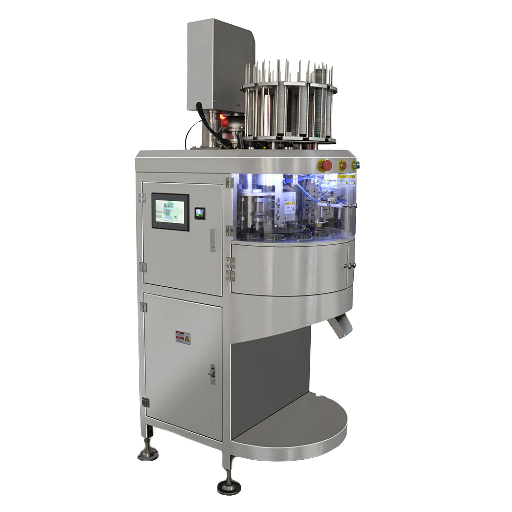
Počáteční pořizovací náklady stroje jsou pouze částí rovnice Celkové náklady na vlastnictví zahrnují také požadavky na zásobu kapslí a vík, kávu, práci, přívod dusíku, údržbu stroje a možné moduly upgradu Cenové rozpětí (nastíněné výše ve srovnávací tabulce) může zahrnovat rozpětí od 1 TP4T1 500 pro manuální stolní systém až po 1 TP4T300 000+ pro vysoce výkonný rotační systém, takže na analýze návratnosti investic záleží.
Běžné doplňky, které ovlivňují cenu:
- Modul proplachování dusíkem: přidává 15 251 TP3 T k základním nákladům stroje
- Systém kontroly zraku: $3 000 $8 000
- Vložení filtru (K-Cup): $3,000 až $5,000
- Instalace a uvedení do provozu: $2 000 $10 000 v závislosti na umístění
- Sada náhradních dílů (první rok): $500 $2 000
Příklad výpočtu nákladů na disk
Předpoklady: $10 000 poloautomatický systém, 1 000 lusků/den, 250 pracovních dnů/rok = 250 000 lusků.
| Nákladová složka | Za Pod |
|---|---|
| Amortizace stroje (5 let) | $0.008 |
| Mletá káva (10 g @ $5/lb) | $0.050 |
| Prázdná kapsle | $0.030 |
| Víko / fólie | $0.010 |
| Práce (1 operátor) | $0.020 |
| Celkem | ~$0.118 |
S výrobními náklady až $0.118/pod a maloobchodními cenami v průměru od $0.50 do $0.80 na modul budou mít malé a střední podniky velkorysou ziskovou marži. Jak objem výstupu roste, náklady na faktor amortizace stroje se zužují směrem k nule a mzdové náklady na modul klesají, což představuje primární finanční ospravedlnění pro přechod na plně automatický přístroj. Technická posádka AFPAK může promítnout váš exkluzivní graf nákladů v závislosti na požadovaném objemu a složení modulu.
Často kladené otázky
Otázka: Jak funguje stroj na plnění modulů?
Zobrazit odpověď
Otázka: Jaký je rozdíl mezi kávovými kapslemi a kávovými kapslemi?
Zobrazit odpověď
Otázka: Kolik stojí stroj na plnění kapslí?
Zobrazit odpověď
Otázka: Mohu si naplnit vlastní kávové kapsle pro další prodej?
Zobrazit odpověď
Otázka: Jaké formáty kapslí zvládne jeden stroj?
Zobrazit odpověď
Otázka: Jak si udržíte přesnost plnění v průběhu času?
Zobrazit odpověď
O této analýze
Tento stručný informační list je založen na veřejně dostupných specifikacích od výrobců, údajích o trhu NCA a zásadách stanovených FDA. AFPAK dodala 14 let tmelů a pultů na kávové kapsle v Šanghaji v Číně více než 300 domácím značkám na místech ve více než 40 zemích. Ceny a technické specifikace jsou reprezentativní pro trh roku 2025 a mohou se lišit v různých konfiguracích.
Reference a zdroje
- NCA 2025 National Coffee Data Trends (Národní trendy v oblasti kávových dat) a National Coffee Association (ncausa.org)
- Zpráva o velikosti trhu kávových lusků 2030 (Grand View Research) (grandviewresearch.com)
- FDA Food Safety Modernization Act (FSMA) od amerického Úřadu pro kontrolu potravin a léčiv (fda.gov)
- 21 CFR Část 117: Současná správná výrobní praxe a FDA (accessdata.fda.gov)
- Balíček šetřící dusík pro kávové kapsle 100 Optima Packaging (optima-packaging.com)
- Kávové lusky a kapsle Analýza trhu (Coffee Pods and Capsules Market Analysis) (Mordor Intelligence)mordor intelligence.com)
- Udržování nízkých hladin zbytkového kyslíku (Provema NA) (rovema-na.com)


