
Bijgewerkt augustus 2026
Vervalt koffie? Het verlopen van de koffie is meestal een smaakvraag, geen veiligheidsgrens: droge koffie verliest geleidelijk aroma en smaak door oxidatie in plaats van de manier te bederven waarop melk of vlees dat doet. Een halfgebruikte zak achterin de voorraadkast roept meestal deze gedachte op, elke keer dat een klant een “ vindt na de vervaldatum. In werkelijkheid is het antwoord ingewikkelder dan een simpel ja of nee. ”Eigen koffie gaat niet noodzakelijkerwijs slecht zoals melk of vlees, maar toch verandert het, en begrijpen hoe het verandert is wat onderscheid maakt tussen een bittere kop muffe, kartonnen smakende koffie en wanneer je hem officieel in het afval moet gooien.
Deze gids pakt elk type koffie uit, legt uit wat de “best by”-data betekenen vanuit juridisch oogpunt (en een wijziging in de Californische wet in 2026), en scheidt de twee soorten vragen: wat is het beste aan oude koffie en wat is er veilig aan?
Speciale koffiedrinkers stellen vaak twee enigszins verschillende vragen: wordt koffie muf en vervalt koffie echt? Maandenoude koffie betekent niet automatisch dat het niet langer consumeerbaar is, maar hoe lang koffie duurt en hoe lang koffie vers blijft, hangt grotendeels af van hoe het wordt bewaard. Koffie blijft goed als je het in een afgesloten, droge verpakking bewaart, maar het kan veel sneller van smaakvol naar flauw gaan dan verwacht als je de zak eenmaal hebt geopend. Deze gids onderzoekt elke soort koffie, beschrijft hoe elk exemplaar bijdraagt aan verschillende houdbaarheidsduur, en identificeert welke de langste houdbaarheid van allemaal heeft. Uiteindelijk is het de bedoeling om u te helpen zo lang mogelijk van uw koffie te genieten, of het daardoor twee keer per ongeluk vers blijft.
Snelle specificaties: Koffieplankleven in één oogopslag
| Hele boon, ongeopend | 3-9 maanden voor pieksmaak, veilig tot ver daarbuiten als het wordt verzegeld |
| Gemalen koffie, geopend | 1-2 weken voor pieksmaak |
| Oploskoffie, ongeopend | 1-2 jaar |
| Stikstofdoorgespoelde capsule/zak | 6-12 maanden of langer, verzegeld |
Vervalt koffie? Snel antwoord
Vervalt koffie op een manier die het onveilig maakt om te consumeren? Niet zoals bedorven melk die binnen enkele dagen gestremd of verlopen vlees wordt, rottend Koffie is een droog goed met een zeer beperkt vochtgehalte, en het heeft geen bederfrisico geassocieerd met zijn “ indien gebruikt door” datum volgens de USDA Voedselveiligheid en Inspectiedienst; kortom, de “best by”-datum op een opgeslagen product van koffie benadrukt wanneer het zijn optimale smaakprofiel heeft, niet wanneer het vervalt. In plaats daarvan is wat er na verloop van tijd met koffie gebeurt dat het aroma (de vluchtige aromaverbindingen) geleidelijk afbreekt door oxidatie. een langzaam en onvermijdelijk proces dat het van zijn aroma en smaak ontdoet, waardoor het product plat wordt en niet gevaarlijk.
“A ‘Best if Used By’ datum geeft aan wanneer een product van de beste smaak of kwaliteit zal zijn Het is geen aankoop – of veiligheidsdatum, behalve voor wanneer gebruikt op zuigelingenvoeding.”
. Ministerie van Landbouw, Voedselveiligheid en Inspectie
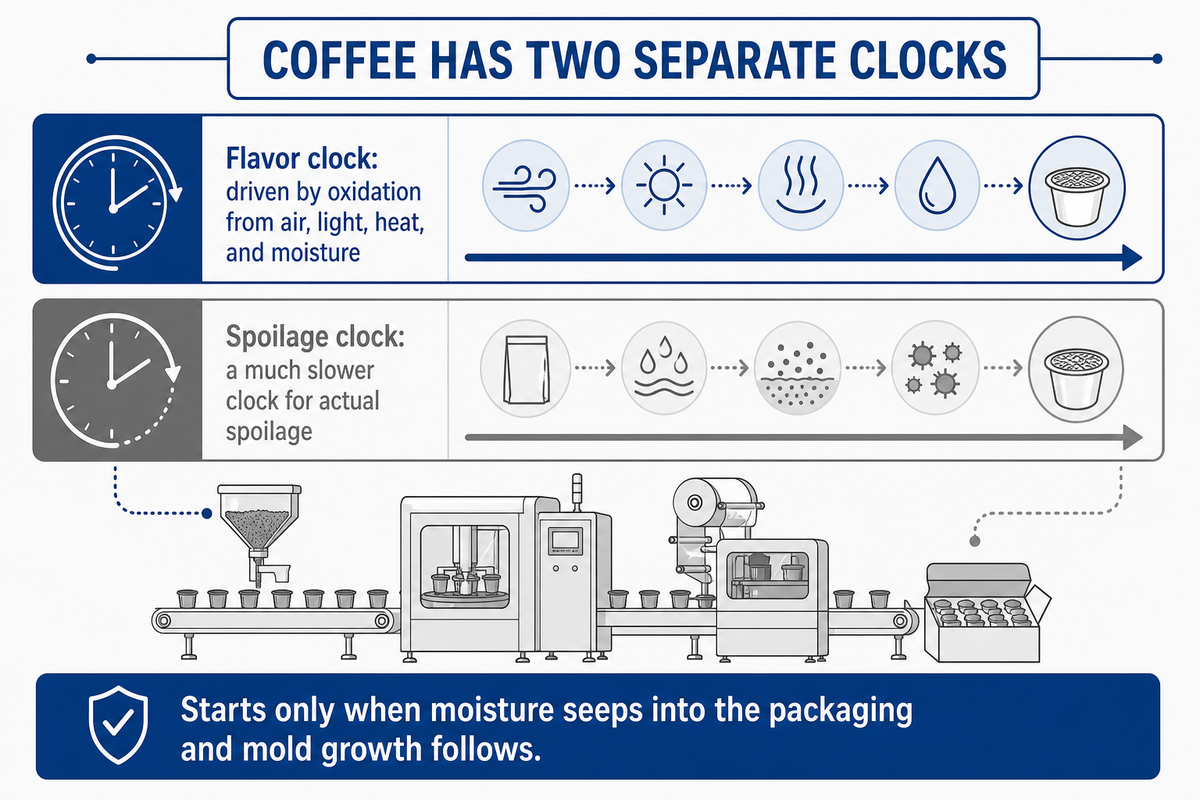
Twee tijdlijnen naast elkaar in koffie’s wereld ‘Noem het het Twee-Klok Model Het samenvoegen van de ene klok met de andere is meestal de bron van de hele verwarring Ten eerste, de smaak klok tikt naar beneden van oxidatie veroorzaakt door lucht, licht, warmte, en vocht ‘-de belangrijkste oorzaken van verlies voor de oliën en aroma verbindingen die vrijkomen tijdens het branden (het proces dat CO2 vrijgeeft en het aroma verbetert) Ten tweede, de bederf klok is een veel langzamere klok voor daadwerkelijk bederf; het tikt echter alleen naar beneden wanneer vocht sijpelt in de verpakking en schimmelgroei volgt, wat duidt op een gebrekkige opslag.
De Best-By Mythe
Er zijn twee concurrerende onwaarheden met betrekking tot koffie en beide zijn verkeerd. Er is die over hoe koffie “, zoals elk ander bederfelijk voedsel, uitdrijft, wat mensen ertoe aanzet om de week na de gedrukte datum perfect goede bonen te dumpen. Een tweede onwaarheid heerst binnen de ruimte van koffieliefhebbers: dat droge koffie effectief onsterfelijk is en nooit echt slecht kan worden. Het feitelijke gedrag van koffie belandt ergens in het midden van deze twee uitersten: droge koffie zal een gezond persoon niet ziek maken louter op basis van leeftijd, maar het kan en zal bederven als het nat, beschimmeld of besmet wordt door ongedierte. Peer-reviewed onderzoek naar hoe koffie het beste kan worden bewaard, ondersteunt de smaak-vervalkant van deze meer rechtstreeks gepubliceerde Pe-studies. De online PMC-database van National Institutes of Health houdt gebrande koffie bij gedurende negen maanden opslag en vindt een kwantificeerbare achteruitgang in smaakkwaliteit als gevolg van een oxidatiegedreven proces, niet door biologie.
| Formaat | Ongeopend / Verzegeld | Geopend | Primaire bederfchauffeur | Ideal Storage |
|---|---|---|---|---|
| Hele boon | 3-9 maanden over gebraden voor piek smaak | 2-4 weken piek smaak, 3+ maanden nog bruikbaar | Oppervlakte-olie-oxidatie | Luchtdicht, donker, koel |
| Gemalen koffie | 3-5 maanden piek smaak, tot 2 jaar nog bruikbaar indien verzegeld | 1-2 weken piek smaak, tot 1 maand nog bruikbaar | Oxidatie, groter oppervlak | Luchtdicht, donker, koel |
| Instant koffie | 1-2 jaar | 2-6 maanden | Vochtopname, klonteren | Luchtdicht, droog |
| Stikstofdoorgespoelde capsule/zak | 6-12 maanden of langer | Eenpersoonsdienst, n.v.t | Afdichtings-/barrièrefilmintegriteit | Koel, droog, ongeopend |
| Standaard (niet-gespoelde) koffiepad | Varieert met filmkwaliteit, doorgaans korter dan N2-gespoeld | Eenpersoonsdienst, n.v.t | Zuurstofpermeatie door film | Koel, droog |
| Groene (ongebrande) bonen | 12-15+ maanden | N.V.T | Langzame vocht/kwaliteitsdrift | Koel, droog, ademend zakje |
| Gebrouwen koffie, kamertemperatuur | N.V.T | 12-24 uur, beste in de eerste 30 minuten | Oxidatie en bacteriegroei | Snel koelen |
| Gebrouwen koffie, gekoeld | N.V.T | 3-4 dagen | Smaakoxidatie | Luchtdichte container, koelkast |
| Cold brew concentraat, gekoeld | N.V.T | 5-7 dagen zelfgemaakt, tot 1-2 weken commercieel verzegeld | Bacterieel/pathogeenrisico als het niet koud wordt gehouden | Koel continu, nooit lang kamertemperatuur |
Wat de Datum op de Tas Eigenlijk Betekent
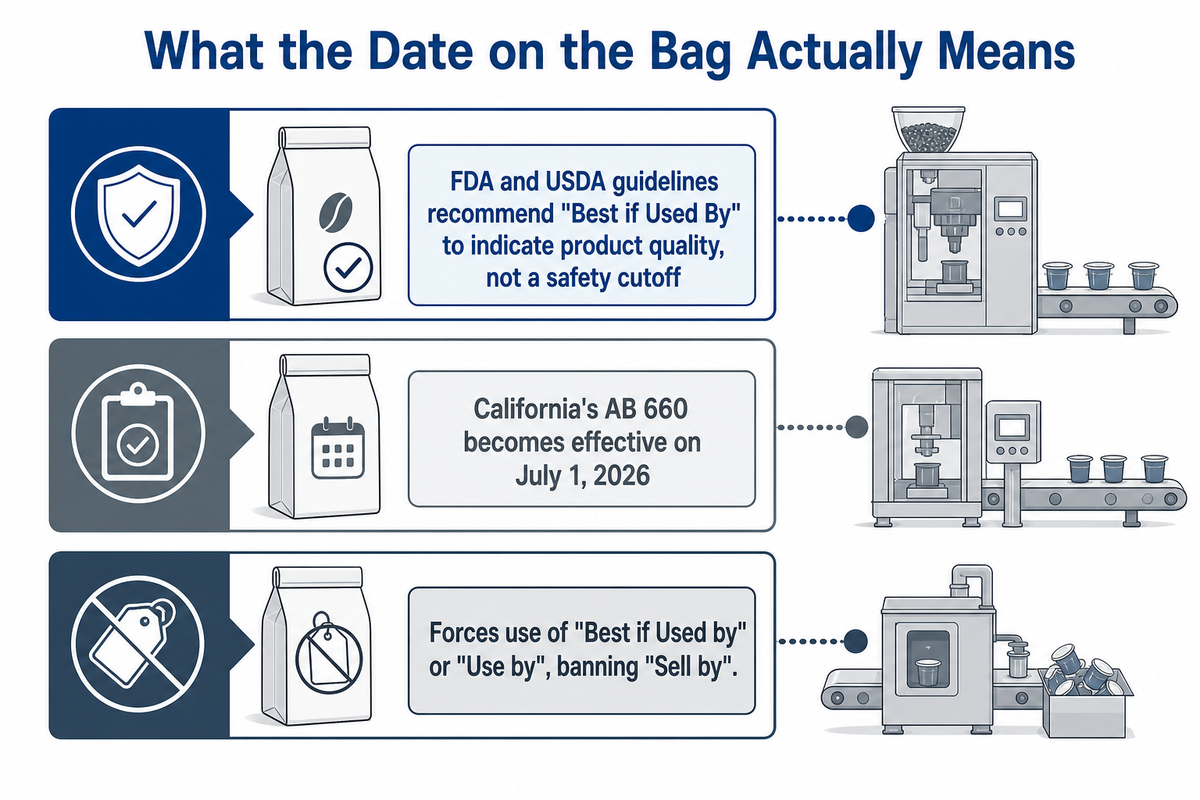
In de Verenigde Staten zijn dadels op voedsel optioneel, en slechts enkele artikelen hoeven een datumlabel te dragen. Federaal FDA- en USDA-richtlijnen raad fabrikanten gezamenlijk aan om etikettering zoals “Best te gebruiken als By” wordt gebruikt om de productkwaliteit aan te geven, en niet om een veiligheidsgrens. De meeste houdbare producten, waaronder koffie, vereisen zelfs helemaal geen afgedrukte datum. Wanneer een brander er wel een afdrukt, is deze bedoeld als kwaliteitsmarkering en niet als aftelling van de kill-date.
Dat gezegd hebbende, komen er veranderingen op staatsniveau, en de dubbelzinnigheid over wie precies moet voldoen draagt alleen maar bij aan de verwarring die het winkelend publiek al voelt over datumlabels. De Californische AB 660, aangenomen door de staatswetgever, wordt van kracht op 1 juli 2026 en is de moeite waard om te ontleden, aangezien het gemakkelijk is om precies in te schatten wat het voorschrijft. AB 660 schrijft niet voor dat branders alle koffiezakken moeten dateren. In plaats daarvan vereist het alleen dat een van deze entiteiten een etiket vermeldt met een datum waarop ze een kwaliteits- of veiligheidsdatum produceren, verpakken of verkopen, of wanneer dit vereist is door andere statuten. Zodra die datum verstrijkt, dwingt het elke entiteit om ‘Best ’ te gebruiken ‘voor ’. Ministerie van Voedsel en Landbouw van Californië en een studie over deze kwestie gepubliceerd door de Nationaal Centrum voor Landbouwrecht steun deze preciezere lezing: de door de wet gestandaardiseerde labels; het verplichtte niet dat data op alle producten zouden staan.
Vooral voor koffie betekent dit dat er een beetje verandert. Wat er meer toe doet dan een ‘best by’-datum op de zak is de gebraden datum. Roasters berekenen een koffie “best-by”-datum meestal als een vast venster (vaak 12 tot 24 maanden) na het braden, ongeacht hoe de zak is bewaard. De klok begint op het moment dat de koffie brandt, niet op de dag dat deze wordt verpakt of verkocht.
Whole Bean Coffee: hoe lang het eigenlijk duurt
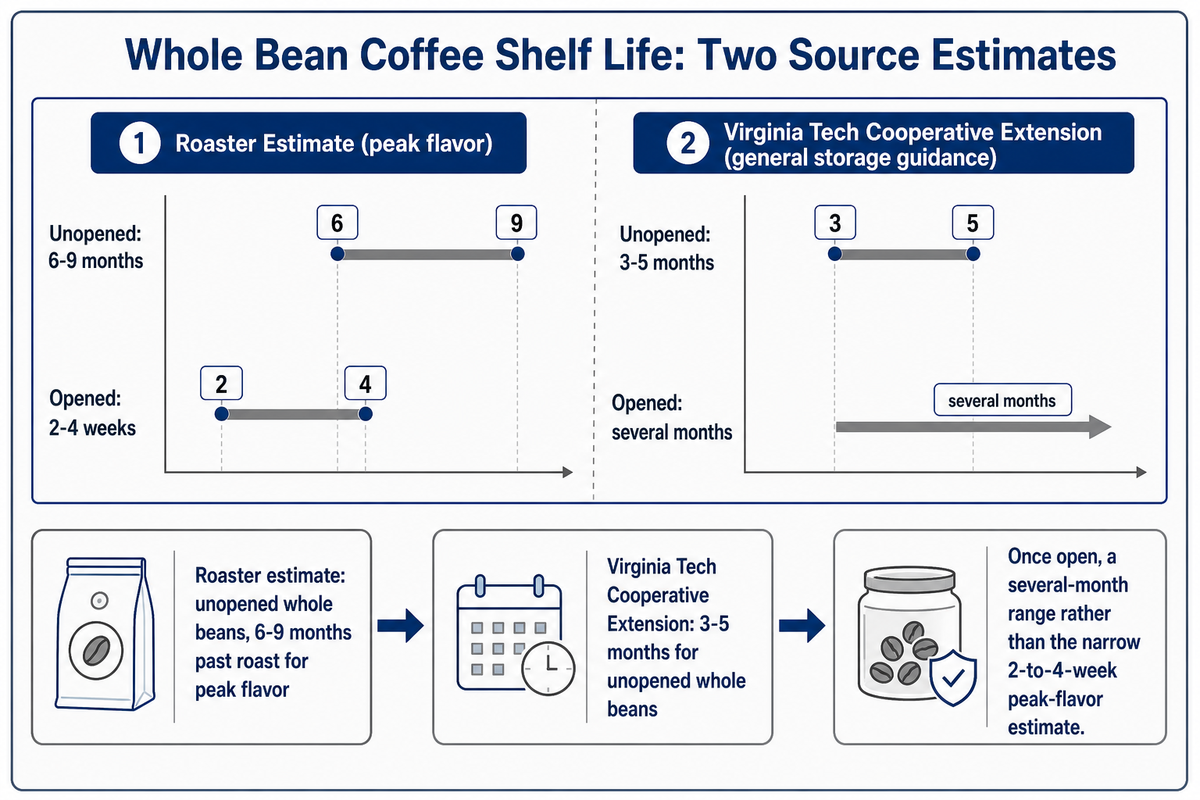
Koffie van hele bonen behoudt de smaak langer dan enig ander formaat omdat het blootgestelde oppervlak het kleinst is. Gidsen van roostersourced plaatsen vaak ongeopende, goed bewaarde hele bonen 6-9 maanden na hun gebraden datum voor pieksmaak; een herziene voedselopslaggids uit 2025 van Coöperatieve uitbreiding van Virginia Tech beveelt een meer conservatieve 3-5 maanden aan voor ongeopende hele bonen, en eenmaal geopend, maakt een bereik van meerdere maanden mogelijk in plaats van de smalle schattingen van de pieksmaak van 2 tot 4 weken die branders doorgaans bieden. Deze twee cijfers zijn geenszins tegenstrijdig: de kortere, van brander afkomstige bereiken beschrijven wanneer hele bonen op hun absoluut meest verse zijn, terwijl de langere, van verlenging afkomstige richtlijnen beschrijven wanneer ze nog redelijk goed zijn, waarbij beide cijfers wijzen op veiligheid die deze grenzen ruimschoots overschrijdt, zolang de zak is nooit nat geworden.
Het komt neer op een proces dat ontgassing wordt genoemd. Nieuw geroosterde bonen geven wekenlang kooldioxide af na het braden. Dit is de reden dat sommige branders “resting”-bonen adviseren, en de oorzaak van die licht gezwollen, vacuümverzegelde geroosterde zakken. Het is in deze ontsnapping van kooldioxide dat de meerderheid van die vluchtige, aromatisch ruikende moleculen in een vers brouwsel ook ontsnappen, en de Eigen peer-reviewed onderzoek van het Institute of Food Technologists bevestigt hoe opslag na de roostering het proces beïnvloedt.
Koffieliefhebbers gebruiken de “15-15-15 rule” om hun versheidsverwachtingen te managen, hoewel de regel op meer dan één manier wordt toegepast Volgens sommigen betekent het 15 dagen van braad tot brouwsel, 15 minuten van maal tot brouwsel en 15 minuten om te consumeren; een paar anderen doen er 15-15-15 over om 15 maanden houdbaarheid te betekenen voor ongeopende, ongebrande bonen, 15 dagen smaakpieken na de braad, en een derde, elastischere “15” Hoe dan ook, de kernles is hetzelfde: koffie is op zijn best dicht bij zijn gebrande datum, en niet voor heel lang.
Gemalen koffie: waarom het sneller muf wordt
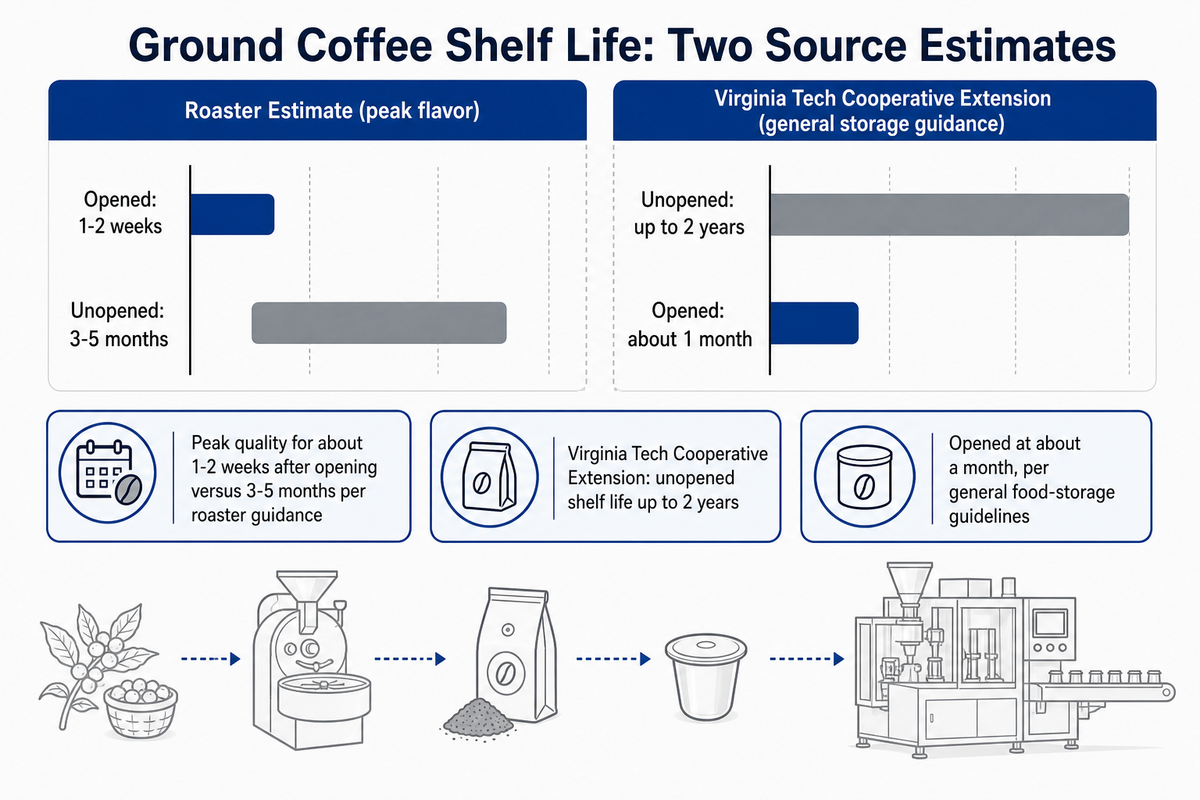
Gemalen koffie verliest zijn verse smaak sneller dan hele bonen, waarbij de piekkwaliteit meestal ongeveer 1-2 weken na opening behouden blijft, tegenover 3-5 maanden volgens de richtlijnen van de brander (Coöperatieve uitbreiding van Virginia Tech brengt de ongeopende houdbaarheid op maximaal 2 jaar en wordt geopend op ongeveer een maand, hoewel dat de algemene richtlijnen voor voedselopslag weerspiegelt in plaats van een koffiespecifiek venster met pieksmaak). Eenmaal gemalen neemt het oppervlak van de boon dramatisch toe, wat hetzelfde oxidatieproces versnelt dat hele bonen ondergaan, net veel sneller.
Dit is de echte reden dat serieuze koffiedrinkers de tijd nemen om vlak voor het koffiezetten te malen, in plaats van voorgemalen bonen in bulk te kopen Voorgemalen bonen kopen voor het gemak zal altijd ten koste gaan van een lange levensduur in smaakkwaliteit Mochten voorgemalen opties onvermijdelijk zijn, kies dan voor de kleinst beschikbare verpakkingsgrootte en investeer in een echt luchtdichte container van topkwaliteit om het pleziervenster te verlengen.
Gemalen koffie gedraagt zich heel anders dan hele koffiebonen, en koffie kan binnen enkele dagen oud worden als het eenmaal is gemalen en aan lucht is blootgesteld. Koffie verliest zijn aroma het snelst direct na het malen, omdat het malen het oppervlak vermenigvuldigt dat wordt blootgesteld aan zuurstof; koffiedik kan ook geuren oppikken uit de koelkast of voorraadkast eromheen als het onbedekt blijft. Dit is de reden waarom mensen die koffie als hele bonen bewaren en alleen malen wat ze nodig hebben, consistentere resultaten krijgen van kop tot kop. Hoe je koffiedik gebruikt direct na het openen van de zak, heeft invloed op hoe snel de rest van de stales. Koffie blijft veel langer verzegeld als hele bonen dan gemalen. Hoe koffie smaakt een week na het openen sterk vergevingsgezind is hoe vergevingsgezind het is tussendoor.
Instant Coffee: het langstdurende formaat
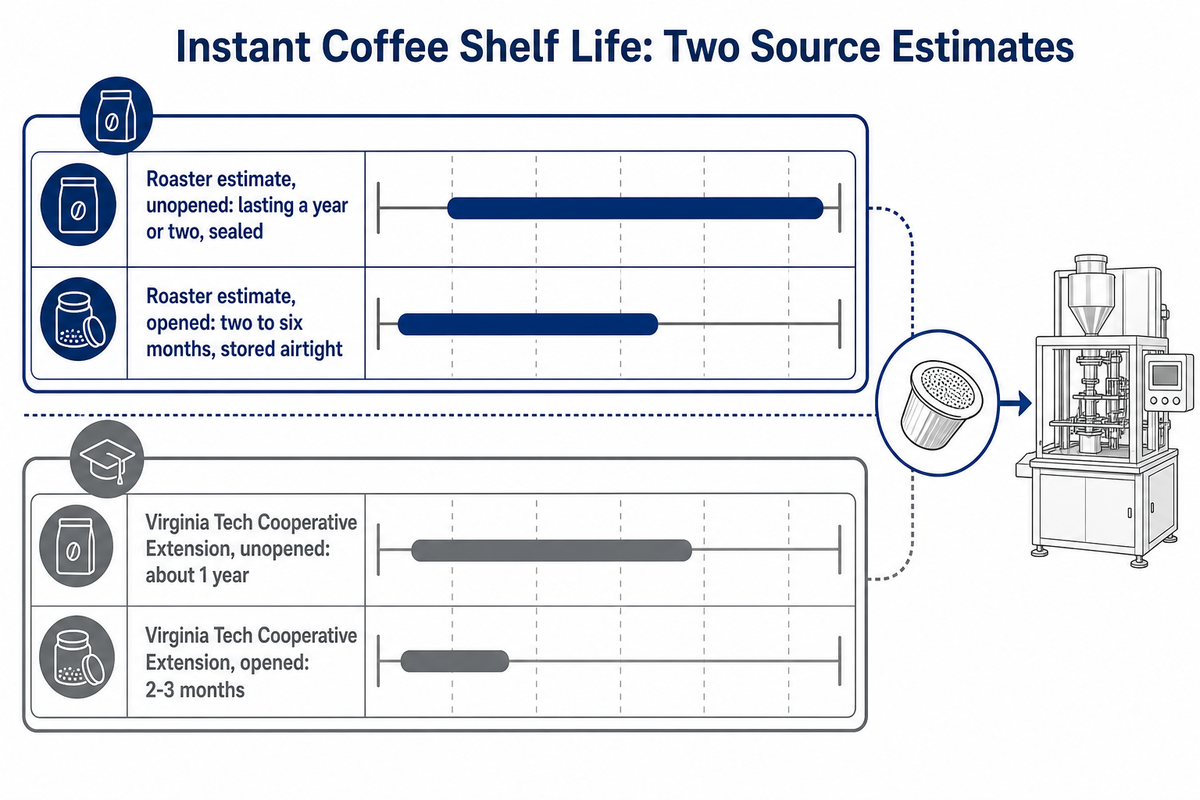
Oploskoffie is het meest houdbare formaat van allemaal en duurt volgens sommige bronnen een jaar of twee (ongeopend en verzegeld) of twee tot zes maanden nadat het is geopend en luchtdicht is bewaard terwijl de textuur en smaak beginnen af te vallen; geopende oploskoffie overtreft nog steeds ruimschoots geopende gemalen koffie. Coöperatieve uitbreiding van Virginia Tech biedt een meer conservatieve schatting van ongeveer 1 jaar ongeopend en 2-3 maanden geopend, wat de algemene richtlijnen voor voedselopslag weerspiegelt in plaats van een venster met pieksmaak. Dat komt omdat gebrouwen oploskoffie vervolgens wordt gevriesdroogd of gesproeidroogd om bijna al het vochtgehalte te verwijderen, waardoor oxidatie en water steeds minder doelgericht werken.
Gevriesdroogde korrels hebben de enige echte opslagrand ten opzichte van gesproeidroogde korrels, omdat het droogproces met lagere warmte minder schade aan de vluchtige aromaverbindingen veroorzaakt. Beide formaten delen echter exact dezelfde faalmodus: vocht. Een geopende pot oploskoffie zal, zodra deze aan vochtigheid is blootgesteld, snel beginnen te klonteren en uit te harden, wat het duidelijkste teken is dat deze moet worden vervangen.
Vervallen K-Cups en Koffie Capsules?
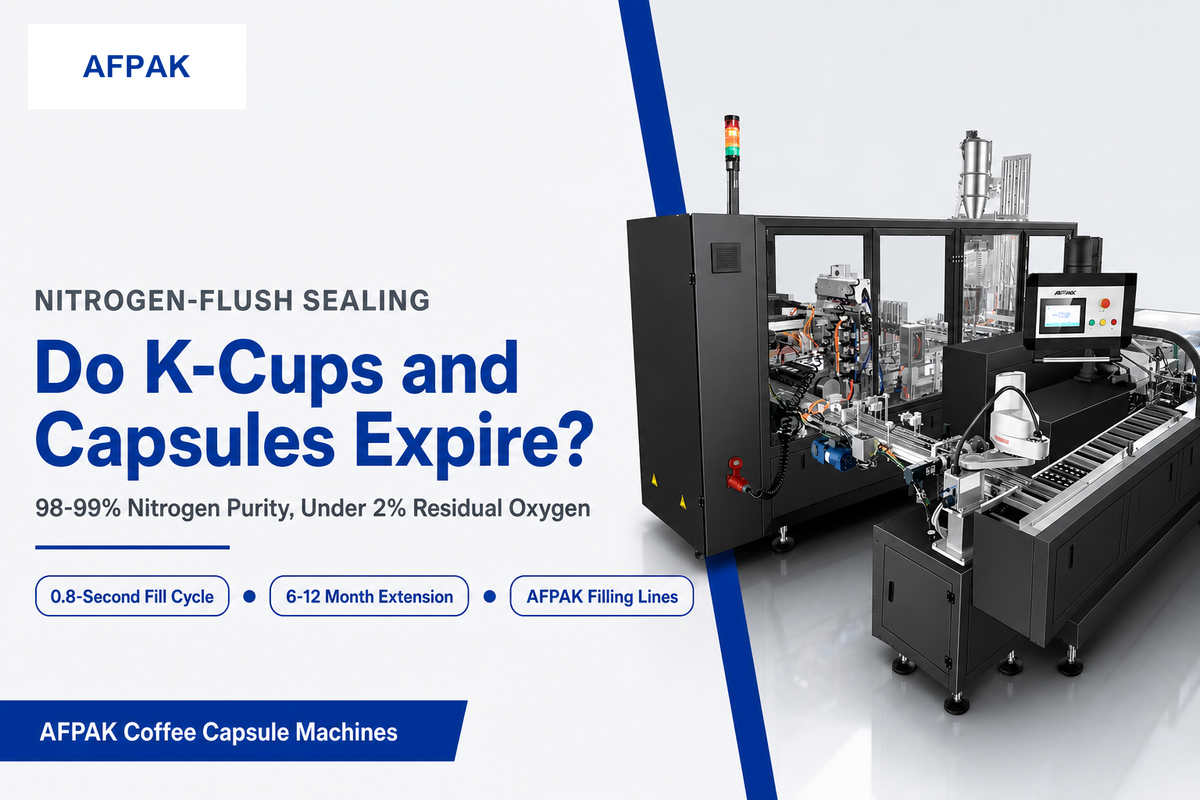
Ja, K-Cups en Nespresso-formaat capsules zijn wel houdbaar, maar de houdbaarheid van capsules voor eenmalig gebruik wordt minder bepaald door de koffie erin dan door het verpakkingssysteem eromheen. Een afgesloten koffiekapsel blijft lange tijd vers op basis van het type gas in de capsule, het gebruikte barrièrefilmmateriaal en de opslagtemperatuur.
Dit is de reden waarom technologieën zoals stikstofspoelen bestaan. Op AFPAK’s eigen vul- en afdichtingslijnen voor koffiecapsules overspoelt een geoptimaliseerde vacuüm-stikstof 3-fasige pulsatiecyclus elke capsule met 98-99% zuiver stikstofgas, waardoor de luchtinhoud van de capsule, inclusief zuurstof, wordt verplaatst en de resterende zuurstof in de afgesloten capsule wordt verminderd tot onder 2% binnen ongeveer 0,8 seconden tijdens de vul- en sluitcyclus. Dit proces behoudt de koffie en kan de houdbaarheid van een afgesloten koffiecapsule verlengen van 6 tot 12 maanden of langer, een cijfer dat aansluit bij de eigen consument. De naar het milieu gerichte bewering is dat 4 vacuümverzegelde of stikstofgestookte capsulezakken die langer worden bewaard, op een laatste plaats worden afgedichte plaats worden gehouden, een instant koelegde capsule, is. peer-reviewed verpakkingsfilmonderzoek in moleculen dat mat direct hoe standaard aluminium-folie barrière-film verpakking zich verhoudt tot een recyclebaar alternatief voor capsule koffie versheid in de tijd.
In de praktijk is het echte probleem niet hoe lang koffiecapsules in abstracte zin meegaan, het is welk capsuleverpakkingssysteem wordt gebruikt. Voor een product met één serve, een koffiemerk dat de juiste verpakking voor zijn product moet kennen, of een koper die zich afvraagt hoe de koffie met één serve van een bepaald merk maanden na productie vers blijft, is de echte vraag welke combinatie van gas en barrièrefilm deze specifieke capsule gebruikt?“ K-Cup vul – en afdichtingsapparatuur of een Nespresso-formaat capsulelijn kiezen in feite net zo goed voor een houdbaarheidsresultaat als voor een productielijn. AFPAK’s eigen technische uitsplitsing van hoe stikstofbescherming de versheid van koffiecapsules verlengt behandelt het gasspoelproces in meer detail op productieniveau, en de bijbehorende gids het verhogen van de houdbaarheid van de koffiecapsule loopt door de maal-, verpakkings- en opslagvariabelen die zich vermengen met gasspoelen om het frisheidsvenster van een capsule in de echte wereld te bepalen.
Voor iedereen die thuis een enkele Nespresso- of K-Cup-pod heeft: een goed afgesloten, ongeopende pod van een commercieel merk is meestal nog prima tot ver na de gepubliceerde uiterste gebruiksdatum, omdat de individuele luchtdichte verpakking zuurstof slechts buiten hoeft te houden tot de moment dat het in de machine is gedrenkt, een voordeel dat grote koffiezakken niet hebben als ze eenmaal zijn geopend.
Gebrouwen en koude brouwerijkoffie: een andere klok
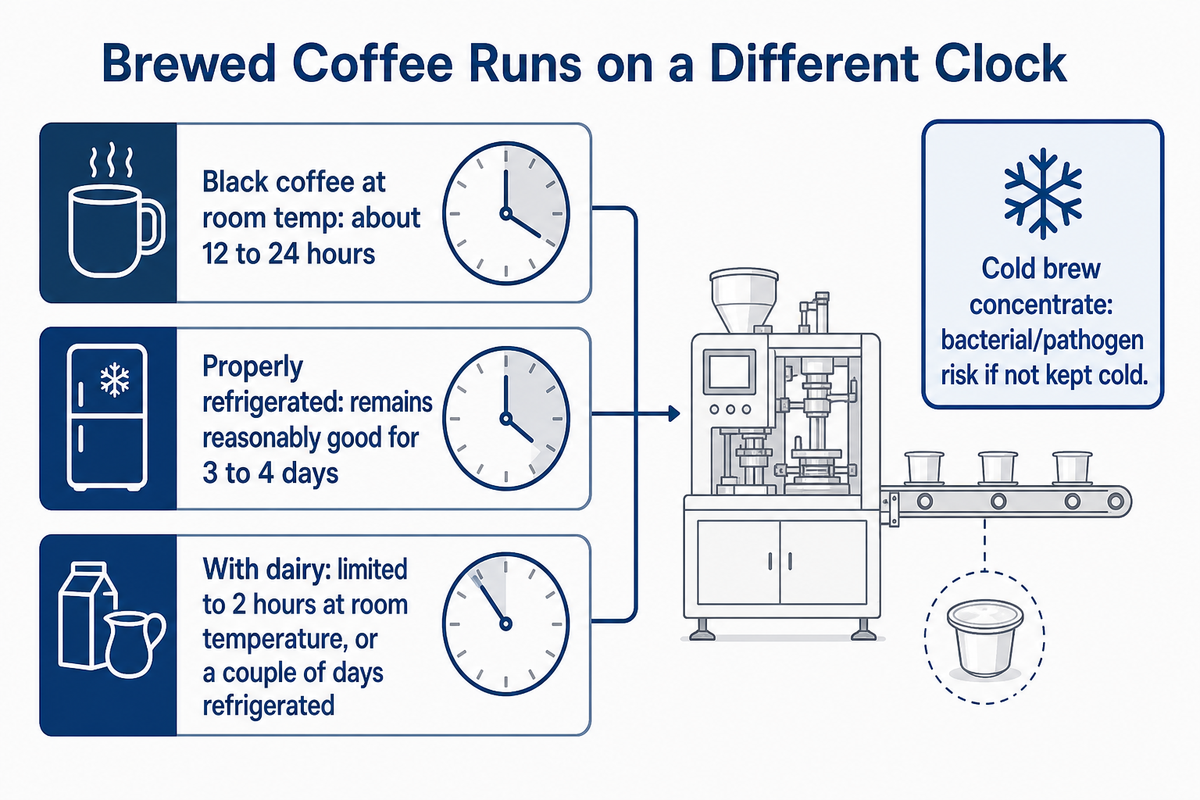
Nadat het klaar is, verandert het opslaggesprek helemaal: omdat gebrouwen koffie een vochtige (geen droog goed), zuurarme vloeistof is, werkt het op een radicaal snellere klok dan bonen of gruis. FDA’s “twee-uurregel” is over het algemeen van toepassing op voedingsmiddelen die het bureau als bederfelijk beschouwt, zoals vlees, gevogelte, zeevruchten, eieren en producten, en zwarte koffie staat niet op die lijst. Daarom heeft gewone zwarte koffie meer kwaliteitsgerichte (niet op veiligheid gerichte) speelruimte dan een grens van twee uur, wat zich vertaalt in een langere houdbaarheid die wordt bepaald door kwaliteit in plaats van door veiligheid. Zwarte koffie die buiten de luchtdichte container bij kamertemperatuur wordt bewaard, kan doorgaans ongeveer 12 tot 24 uur worden gedronken, hoewel de smaakkwaliteit veel eerder aanzienlijk verslechtert (rond de eerste 30 minuten na de hitte).
Goed gekoeld in de luchtdichte container blijft het 3 tot 4 dagen redelijk goed. Zodra de creamer of melk in contact komt met de koffie, wordt de houdbaarheid dramatisch korter: voeg zuivel en koffie toe en volg nu het normale zuivelopslagprotocol, beperkt tot 2 uur bij kamertemperatuur, of een paar dagen gekoeld.
Is gebrouwen koffie hetzelfde als het drinken van droge koffie? niet eens, verse gebrouwen koffie is het beste binnen het eerste uur, en vers gezette koffie die op de warmhoudplaat in de karaf van een koffiemachine zit gaat sneller af dan koffie die in een afgesloten kopje is weggelaten bij kamertemperatuur. ijstoffie is niet anders dan gewone gekoelde gezette koffie zodra het ijs erin is gesmolten.
Cold brew heeft een eigen discussie nodig “om voor de hand liggende redenen, dit is ”gebrouwen, maar koud.” In tegenstelling tot warmgebrouwen koffie, die een hitte-kill stap omvat, steilt cold brew vele uren op kamer- of zelfs koelingstemperatuur zonder warm-gebrouwen stap om de veiligheid ervan te beïnvloeden Zelfgemaakt cold brew concentraat, continu gekoeld bewaard, kan goed worden gebruikt binnen 5-7 dagen Commercieel geproduceerd en verzegeld koud koffiebereiding heeft een langere voorgestelde houdbaarheid (soms een week of twee gekoeld), hoewel Het komt neer op meer dan alleen stalheid in dit geval Cold brew heeft niet de bijna koelende hittedodende stap van warm koffiezetten, en groot, indien ongekoeld, droog, zonder cosmetisch smaak, droog, droog, zonder cosmetisch te zijn, droog te zijn, een zeer.
Tekent dat uw koffie daadwerkelijk slecht is geworden
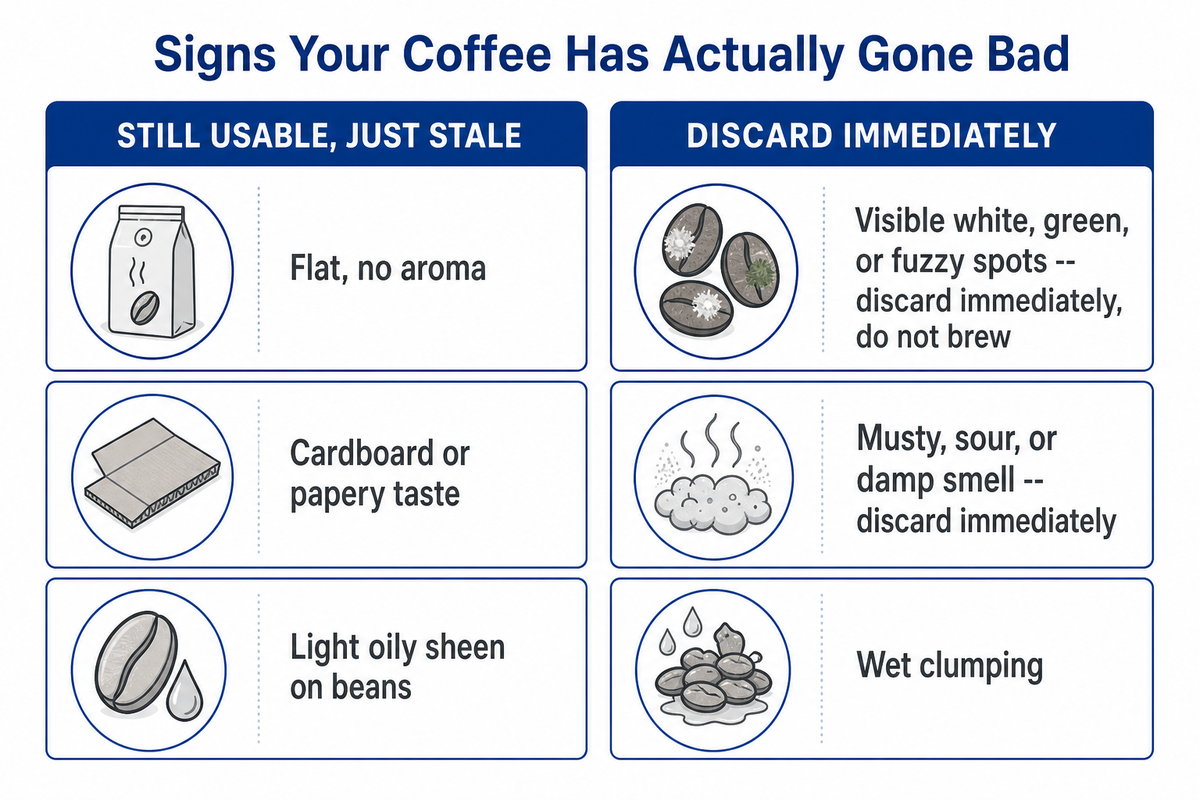
Veel van wat consumenten herkennen als “verlopen koffie, komt eigenlijk neer op weinig meer dan muffe koffie. Er zijn subtiele maar significante verschillen in het uiterlijk en het gedrag van de twee formaten die een snel onderscheid mogelijk maken. Leren hoe je muffe koffie kunt onderscheiden van echt ”“-koffie is veel belangrijker dan goed letten op een zak bonen. Deze tabellen onderscheiden alleen kwaliteit, alleen esthetische indicatoren van waarschuwingsborden op regelrecht weggooiniveau, wat betekent dat het echt tijd is om de koffie te gooien.
| Signaal Type | Waarschijnlijk Oorzaak | Nog Bruikbaar? | Aanbevolen Actie |
|---|---|---|---|
| Plat, geen aroma | Oxidatie, CO2 is ontgast | Ja, gewoon muf | Gebruik voor koud brouwen, of vervang |
| Karton of papierachtige smaak | Verlengde oxidatie | Ja | Brouw sterker, of vervang snel |
| Lichte olieachtige glans op bonen | Normale gebraden oliën, of bonen die hun beste tijd hebben overschreden | Meestal wel | Controleer de geur voordat u gaat koffiezetten |
| Zichtbare witte, groene of vage vlekken | Schimmel van vochtindringing | Nee | Gooi onmiddellijk weg, brouw niet |
| Muffe, zure of vochtige geur | Vochtverontreiniging | Nee | Onmiddellijk weggooien |
| Natte klontering (onmiddellijk of gemalen) | Vochtopname | Nee | Gooi weg, rehydrateer of gebruik niet |
| IJskristallen op bevroren bonen | Freeze-dooicycli, condensatie | Ja, kwaliteit-verminderd | Binnenkort gebruiken, vermijd opnieuw invriezen |
| Pantrymotten of insecten aanwezig | Ongediertebesmetting | Nee | Gooi het weg, inspecteer de opslagruimte |
| Grijze of groenachtige verkleuring | Oxidatie, of mogelijke verontreiniging | Hangt ervan af | Weggooien indien gecombineerd met geur of schimmel |
Het benadrukt dat de sensorische aanwijzingen voor het beoordelen van kwaliteit en stalenheid, zoals uiterlijk, geur en smaak, opmerkelijk betrouwbaar zijn voor droge koffie, omdat het vochtgehalte zo laag is dat de proliferatie van ziekteverwekkers moeilijk is. Deze controles bieden geen adequate bescherming voor nat voedsel, zoals gezette koffie of koud brouwsel. Volgens de FDA’s eigen consumentenrichtlijnen voor voedselopslag, voedsel kan ziekten veroorzaken, zelfs als het er normaal uitziet, ruikt en smaakt, wat vooral geldt voor natte koffieproducten vergeleken met de droge soort die in een voorraadkast rust.
Is het veilig om verlopen koffie te drinken?
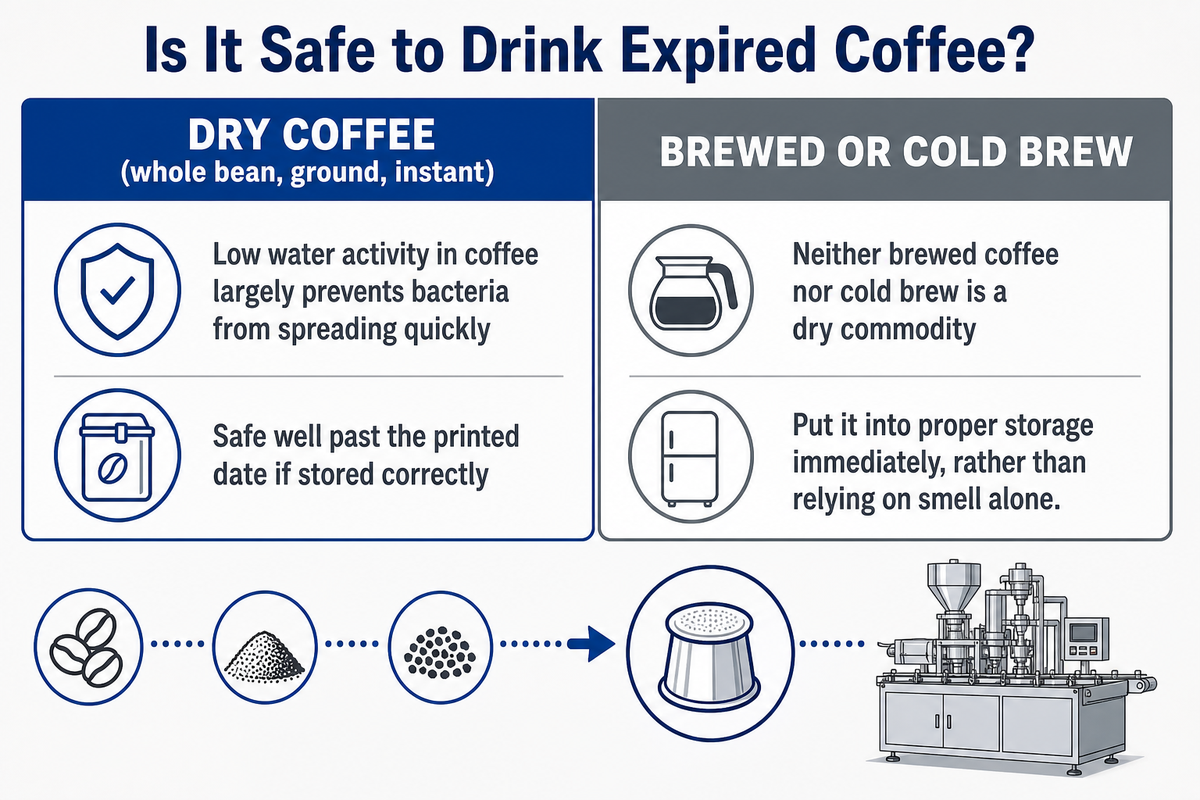
Voor hele bonen, gemalen of instant droge koffie is het antwoord een nadrukkelijk ja, ervan uitgaande dat u de koffie correct hebt bewaard en het geen van de hierboven vermelde borden op weggooiniveau weergeeft die om verwijdering vragen Lage wateractiviteit in koffie voorkomt grotendeels dat bacteriën zich snel verspreiden, en daarom is de De Voedselveiligheids- en Inspectiedienst van USDA beschouwt de datum die op een koffiezak is gedrukt als een kwaliteitsindicator, in tegenstelling tot een definitieve datum voor verwijdering.
Maar dat cijfer verandert als koffie nat is. Noch gebrouwen koffie, noch cold brew is een droog goed, en “ ruikt fijn” als kwaliteitscontrole is een veel minder betrouwbare maatstaf. Dit geldt vooral voor cold brew als het niet gekoeld is of bij ongecontroleerde temperaturen in batches is gefermenteerd. Reële verhalen van koffiedrinkersgemeenschappen lijken vaak meer in lijn te zijn met de droge kant van koffie: een langlopende forumdiscussie over oudere gemalen koffie concludeerde dat het niet noodzakelijkerwijs vervalt, maar het blijft muf… het zou oké moeten zijn voor consumptie als het werd verzegeld, wat precies is voor de algemene bevindingen.
Elders bestaat er verwarring tussen verlopen en beste voorheen, waarbij een koffiedrinker het verschil beschrijft als: verlopen kan betekenen dat het onveilig is of binnenkort onveilig is, maar het beste betekent dat het nog steeds veilig is maar niet langer lekker smaakt; voor dranken in het algemeen is dit redelijk accuraat, hoewel we hebben gezien dat noch de woorden verlopen, noch de beste woorden vóór de sapcent op koffie een daadwerkelijke veiligheidsdrempel betekenen.
Gebruik dit als algemene vuistregel: ga voor droge koffieproducten op geur. Maar zodra het gebrouwen is, en vooral als het koud brouwsel is, moet je het onmiddellijk op de juiste manier bewaren, net als elk ander drankje, in plaats van alleen op geur te vertrouwen.
Hoe Koffie te bewaren om de klok te vertragen
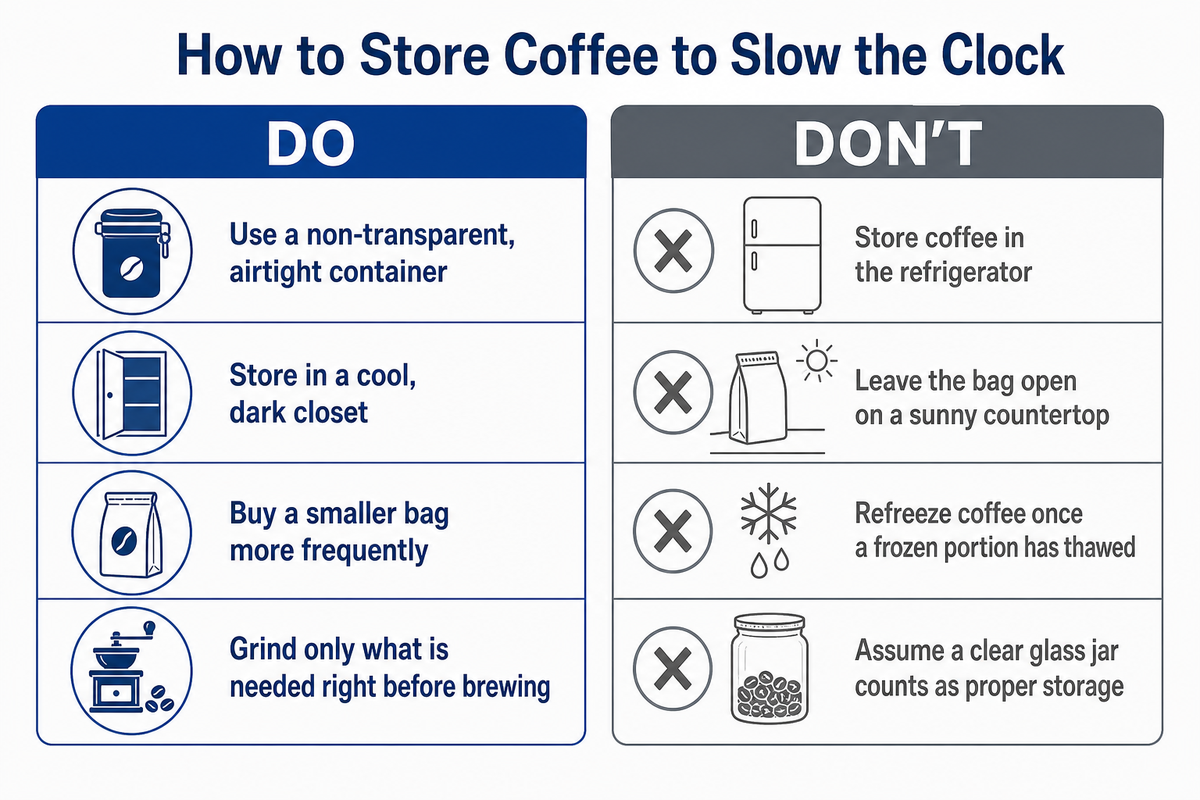
Het eenvoudigste advies om te voorkomen dat uw koffie zijn smaak verliest, hangt af van hoe koffie wordt bewaard. Zelfs een beetje voorraadkast of kast uit de buurt van uw fornuis is beter dan een zak die openlijk op het aanrecht staat. Houd koffie uit de buurt van overmatige hitte en licht op een koele, donkere plaats, en zodra u het pakket openscheurt, verliest het zowel zijn smaak als aroma bij elk moment van blootstelling aan de lucht. Kopers die koffie in bulk kopen, moeten grote zakken opsplitsen in kleinere, luchtdichte porties in plaats van voortdurend één zak te openen en te sluiten; het doel is altijd smaakvolle koffie wanneer u deze daadwerkelijk zet.
De meeste gidsen zijn het eens over hoe je koffiebonen het beste kunt bewaren en je koffie in het algemeen kunt bewaren: een luchtdichte container, koel en donker gehouden, houdt koffie veel langer vers dan een zak die dichtgeknipt en op de toonbank blijft staan Deze tips om je koffie vers te houden gelden voor hele bonen, gemalen en instantformaten, en een paar eenvoudige stappen die op koffie worden toegepast om de houdbaarheid ervan te verlengen Op deze manier bewaard blijft koffie veilig en redelijk smaakvol tot ver na de gedrukte datum, of je nu koffie per zak koopt of afhankelijk bent van een koffieabonnement voor een betere algehele koffie-ervaring Goed verzegeld, koffie kan tot ver na de gedrukte datum duren zonder onveilig te worden.
Ongeacht de manier van bewaren die u kiest, staling is niet iets dat volledig kan worden stopgezet, maar het stelt het aanzienlijk uit. Door enkele eenvoudige regels onder de knie te krijgen, kunnen weken of maanden van de levensduur van uw droge frisheid in elk droog formaat worden teruggewonnen. Volgens de NCA (Nationale Koffievereniging) evenals de academische wereld (koffiewetenschappelijke onderzoeksprogramma’s zoals de UC Davis Koffiecentrum), drie elementen bedreigen verse koffie in alle droge formaten: licht, lucht en vocht, die allemaal door warmte erger worden.
- Gebruik een niet-transparante, luchtdichte container, gebruik de oorspronkelijk meegeleverde clip niet om de zak te sluiten
- Bewaren in een koele, donkere kast en buiten bereik van de oven of het fornuis
- Koop vaker een kleinere tas dan één grote tas die maandenlang open zou blijven
- Maal vóór het koffiezetten alleen wat nodig is
- Bewaar koffie in de koelkast
- Laat de tas open op een zonnig aanrecht
- Vries koffie opnieuw in zodra een bevroren portie is ontdooid
- Stel dat een doorzichtige glazen pot als juiste opslag geldt
Koeling verdient speciale vermelding Dit is een al te gebruikelijke, maar contraproductieve gewoonte Als een koude bak op kamertemperatuur komt, vormt zich condens op het oppervlak, en dat vocht werkt tegen onze pogingen om koffie droog te houden.
Hoewel koffie misschien eenvoudig te bewaren lijkt, komt elke discussie onder koffiedrinkers thuis over hoe ze hun kostbare droge koffie het beste op de lange termijn kunnen bewaren altijd terug op dit enkele punt. Koeling voegt alleen maar blootstelling aan vocht toe in vergelijking met het bewaren van koffie in een eenvoudige, afgesloten container in een droge kast. In kleinere porties invriezen is de uitzondering. Breek het af voordat u het invriest en trek een of twee kleine hoeveelheden uit om tegelijk te ontdooien in plaats van een grotere zak of container meerdere keren te openen en te sluiten.
Sniff-Look-Taste-uitspraak
Of uw doel voor uw koffie elke ochtend is piek versheid, of u vertrouwt op een maandelijks abonnement van koffie die op uw deurmat als onderdeel van uw gewone koffie ritueel, de beste gewoonten blijven Er zijn verrassend eenvoudige dingen die u kunt doen om de levensduur van uw koffie te verlengen “luchtdicht, donker, koel, en geconsumeerd wanneer het op zijn hoogtepunt is is de gouden regel voor het houden van goede koffie goed en voor het genieten van alle genuanceerde smaken die u oorspronkelijk geselecteerd die koffie voor. Door deze methoden, goede droge koffie kan veilig en op zijn minst minimaal smakelijk blijven voor langere perioden na de gedrukte ”best by” datum.
Als een zak al een tijdje blijft hangen, zijn er drie snelle tests om de meeste twijfels in een minuut of zo op te lossen. Geef het eerst een snuifje: verse, goed geconserveerde koffie is rijk en uniek, terwijl muffe koffie plat of stoffig is en mogelijk naar oud karton ruikt. Als koffie muf of zuur ruikt, gooi het dan onmiddellijk, aangezien beschimmelde koffie een gevaar is. Ten tweede, onderzoek het op uiterlijk: goede, droge koffie moet los zijn en vrij van klonteren, aanzienlijke verkleuring of tekenen van schimmel, en alles wat nat, klonterig of met schimmel bedekt is, moet worden weggegooid. Ten derde, als de bovenstaande controles doorgaan, neem dan een klein slokje: muffe koffie, zal smaken, stom water zal plat en potentieel goed zijn, stinkend water.
Over deze analyse
Deze gids is gebaseerd op de richtlijnen voor voedseletikettering van de USDA en de FDA, collegiaal getoetst onderzoek naar koffieopslag en AFPAK’s eigen productievloergegevens over het afdichten van stikstofspoelingscapsules, verzameld over de vul- en sluitmachines voor koffiecapsules. Ons technische team ontwerpt voor capsuleproducenten over de hele wereld De cijfers voor het spoelen van stikstof die worden aangehaald voor capsules in K-Cup- en Nespresso-formaat zijn rechtstreeks afkomstig van de gasspoelingsparameters die worden gebruikt op AFPAK’s eigen vul- en afdichtingslijnen, bevestigd door het technische team van AFPAK.
Veelgestelde vragen
Vraag: Kun je 2 jaar ouderwets koffie drinken?
Ja, ongeopende droge koffie die 2 jaar na de gedrukte datum is, is meestal nog steeds veilig om te drinken als deze verzegeld, koel en droog is bewaard, hoewel de smaak merkbaar doffer zal zijn dan verse koffie.
Q: Is koffie na 4 jaar nog goed?
Vier jaar oude koffie is zeer waarschijnlijk veilig om te drinken als deze de hele tijd verzegeld en droog blijft, maar verwacht een platte, gedempte kop in plaats van iets dat op verse koffie lijkt.
Vraag: Is koffie van 10 jaar oud nog goed?
Tien jaar oude verzegelde, droge koffie is over het algemeen nog steeds veilig om te drinken, maar op dit punt zal het bijna volledig van de container smaken in plaats van van koffie, en de meeste mensen zullen het niet de moeite waard vinden om te zetten.
Vraag: Wat is de 15-15-15-regel voor koffie?
Een populaire afkorting, de 15-15-15-regel, is een richtlijn voor ruwe versheid voor koffie, maar wordt niet consistent toegepast: sommige bronnen definiëren het als 15 dagen vanaf het braden tot het gebruik, 15 minuten vanaf het malen tot het brouwen en 15 minuten om te brouwen. drinken, terwijl anderen het gebruiken om ongeveer 15 maanden houdbaarheid van groene bonen en 15 dagen pieksmaak na het braden te beschrijven.
Vraag: Vervalt koffie als deze niet geopend is?
Ongeopende koffie vervalt niet echt, maar verliest geleidelijk aan smaak, zelfs als deze wordt afgesloten, en blijft doorgaans 6-9 maanden (hele boon) of 3-5 maanden (gemalen) na de gebraden datum in de buurt van de piekkwaliteit.
Vraag: Vervalt koffie in de koelkast?
Het bewaren van droge koffie in de koelkast zorgt er niet direct voor dat deze verloopt, maar introduceert condensatie elke keer dat de container wordt verwijderd en opnieuw gekoeld, wat de staliteit versnelt in plaats van vertraagt.
Q: Wat is de houdbaarheid van koffiepads?
De houdbaarheid van koffiepads en capsules hangt af van hoe de individuele capsule is afgesloten in plaats van één vast aantal; Door stikstof gespoelde capsules met een sterke barrièrefilm houden gewoonlijk 6-12 maanden of langer hun smaak vast, terwijl koffiepads die zonder gasspoeling zijn afgesloten doorgaans een korter, variabeler venster aanhouden.
Referenties en bronnen
- Food Product Dating USDA Voedselveiligheid en Inspectiedienst
- USDA-FDA zoekt informatie over de etikettering van voedseldata Amerikaanse Food and Drug Administration
- Bewaart u voedsel veilig? Amerikaanse Food and Drug Administration
- Etikettering van de voedseldatum (AB 660) Ministerie van Voedsel en Landbouw van Californië
- Datumlabels en de nieuwe wet van Californië Nationaal Centrum voor Landbouwrecht
- Veranderingen in de sensorische kwaliteitskenmerken van koffie tijdens opslag Nationale Instituten voor Gezondheid, PMC
- Relatie tussen koffiekwaliteit en opslagomstandigheden Instituut voor Voedselingstechnologen (Wiley Online Library, peer-reviewed)
- Opslag en houdbaarheid Nationale Koffie Vereniging
- Coffee Research UC Davis Koffiecentrum
- Richtlijnen voor voedselopslag voor consumenten Coöperatieve uitbreiding van Virginia Tech
- Coffee Pod Packaging Film Study Moleculen (MDPI, peer-reviewed)
- Overleving van ziekteverwekkers in onderzoek naar koude brouwerijkoffie PubMed (peer-reviewed)
Gerelateerde artikelen
- Hoe zorgt de stikstofbescherming voor een revolutie in de versheid van de koffiecapsules? De technische uitsplitsing aan de productiezijde van het gasspoelproces waarnaar hierboven wordt verwezen
- Hoe de houdbaarheid van de koffiecapsule te verlengen maal-, verpakkings- en opslagfactoren voor capsuleproducenten
- Nespresso vs Dolce Gusto: Welke koffiecapsule wilt u produceren?
- Powder-in-Cap-verpakking: levensvatbaarheidsanalyse


