
Actualizat în august 2026
Expiră cafeaua? Expirarea cafelei este în mare parte o întrebare de aromă, nu o limită de siguranță: cafeaua uscată își pierde treptat aroma și gustul prin oxidare, mai degrabă decât să strice modul în care o face laptele sau carnea. O pungă pe jumătate folosită în spatele cămarăi stârnește de obicei acest gând, oricând un cumpărător observă o “cea mai bună dată de apariție dincolo de expirarea ei. În realitate, răspunsul este mai complicat decât un simplu da sau nu. cafeaua nu merge neapărat rău ca laptele sau carnea, dar se schimbă și înțelegerea modului în care se schimbă este ceea ce distinge între o ceașcă amară de cafea veche, cu gust de carton și când să o arunci oficial la gunoi.
Acest ghid despachetează fiecare tip de cafea, explică ce înseamnă “cele mai bune date de până la urmă din punct de vedere legal (și o modificare a legii din California în 2026) și separă cele două tipuri de întrebări: ce este mai bine la cafeaua veche și ce este sigur în ea?
Băutorii de cafea de specialitate pun frecvent două întrebări ușor diferite: cafeaua rămâne învechită și cafeaua expiră cu adevărat? Cafeaua veche de luni nu înseamnă automat că nu mai este consumabilă, dar cât durează cafeaua și cât timp cafeaua rămâne proaspătă depinde în mare măsură de modul în care este depozitată. Cafeaua rămâne bună atunci când o păstrezi într-un ambalaj sigilat și uscat, dar poate trece de la aromată la slabă mult mai repede decât se aștepta odată ce deschizi punga. Acest ghid examinează fiecare varietate de cafea, descrie modul în care fiecare contribuie la durate diferite de valabilitate și identifică care dintre ele are cea mai lungă durată de valabilitate dintre toate. În cele din urmă, scopul este de a vă ajuta să vă bucurați de cafea cât mai mult posibil, indiferent dacă asta înseamnă că rămâne proaspătă timp de două săptămâni sau doi ani. Cititorii pun de obicei mai multe versiuni ale aceleiași întrebări: cafeaua se strică, cât durează cafeaua odată deschisă, cafeaua preparată se strică până a doua zi dimineață și cum puteți spune dacă cafeaua s-a stricat de fapt doar prin miros.
Specificații rapide: Perioada de valabilitate a cafelei dintr-o privire
| Fasole întreagă, nedeschisă | 3-9 luni pentru aroma de vârf, în condiții de siguranță mult peste asta dacă sigilat |
| Cafea măcinată, deschisă | 1-2 săptămâni pentru aroma de vârf |
| Cafea instant, nedeschisă | 1-2 ani |
| Capsulă/pungă spălată cu azot | 6-12 luni sau mai mult, sigilat |
Cafeaua expiră? Raspuns rapid
Cafeaua expiră într-un mod care face nesigură consumul? Nu ca laptele stricat care se coagulează sau carnea expirată putrezește în câteva zile. Cafeaua este un bun uscat cu un conținut foarte limitat de umiditate și nu are niciun risc de alterare asociat cu “cel mai bun dacă este folosit până la data de valabilitate conform Serviciul USDA pentru Siguranța Alimentară și Inspecție; pe scurt, data “cel mai bun by” de pe un produs depozitat de cafea evidențiază când acesta este la profilul său optim de aromă, nu când expiră. În schimb, ceea ce se întâmplă cu cafeaua în timp este că aroma sa (compușii volatili de aromă) se degradează treptat prin oxidare într-un proces lent și inevitabil care o dezlipește de aroma și aroma sa, transformând produsul plat, nu periculos.
“O dată ‘Cel mai bun dacă este utilizat până’ indică când un produs va avea cea mai bună aromă sau calitate. Nu este o dată de cumpărare sau de siguranță, cu excepția cazului în care este utilizat pe formula pentru sugari.”
0 Departamentul Agriculturii, Securității Alimentare și Serviciului de Inspecție al SUA
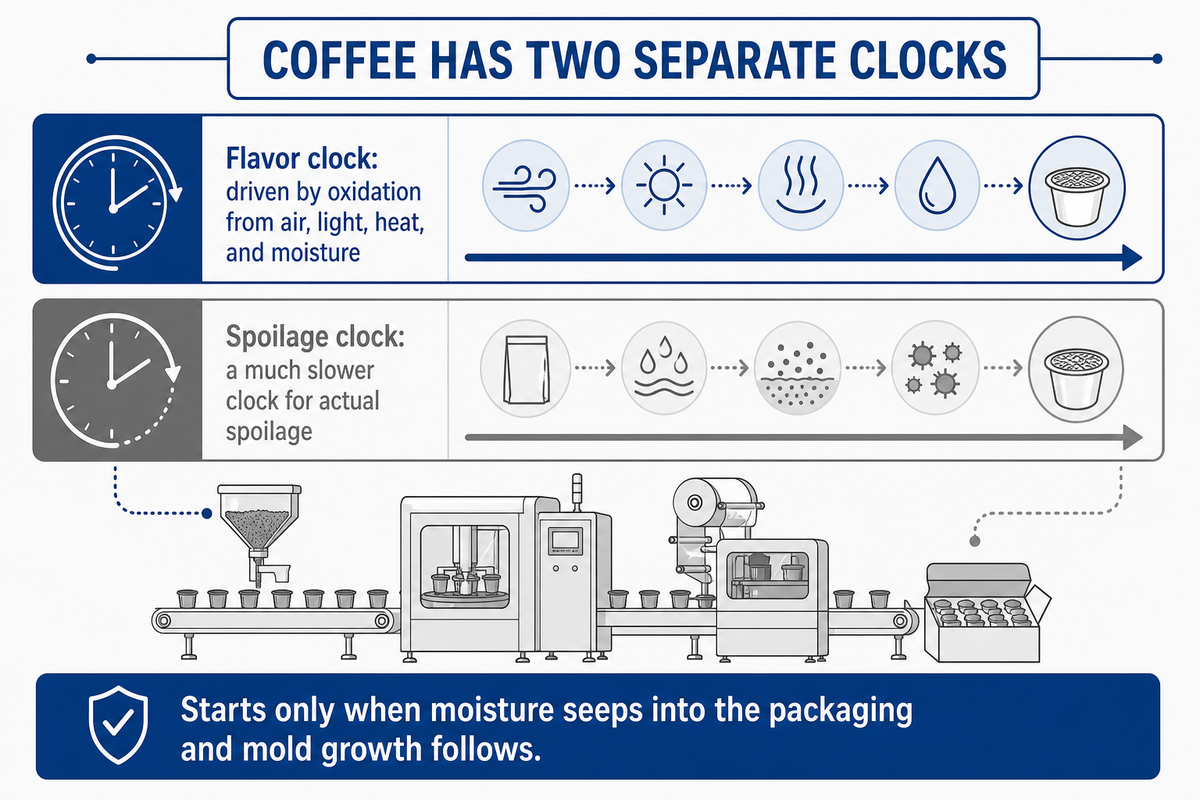
Două linii temporale coexistă în lumea cafelei, cum ar fi să o numim Modelul cu două ceasuri. Conflația unui ceas cu celălalt este de obicei sursa întregii confuzii. în primul rând, ceasul cu aromă se scurge de oxidarea cauzată de aer, lumină, căldură și umiditate, fiind principalii factori de pierdere pentru uleiurile și compușii de aromă eliberați în timpul prăjirii (procesul care eliberează CO2 și îmbunătățește aroma). În al doilea rând, ceasul de alterare este un ceas mult mai lent pentru deteriorarea reală; bifează, totuși, numai atunci când umiditatea se infiltrează în ambalaj și urmează creșterea mucegaiului, ceea ce indică o depozitare defectuoasă.
Mitul Best-By
Există două falsități concurente în ceea ce privește cafeaua și ambele sunt greșite. Există cel despre modul în care cafeaua “expiră” ca orice alt aliment perisabil care îi determină pe oameni să arunce boabe perfect bune în săptămâna după data tipărită. O a doua falsitate este predominantă în spațiul pasionaților de cafea: că cafeaua uscată este efectiv nemuritoare și nu poate niciodată să se strice cu adevărat. Comportamentul real al cafelei aterizează undeva în mijlocul acestor două extreme: cafeaua uscată nu va îmbolnăvi o persoană sănătoasă doar în funcție de vârstă, dar se poate și se va strica dacă se udă, mucegăiește sau este infestată de dăunători. Cercetările evaluate de colegi cu privire la modul în care cafeaua este cel mai bine depozitată sprijină mai direct partea de degradare a aromei a acesteia. Unul dintre numeroasele studii de stocare revizuite de colegi publicate în Baza de date online PMC a National Institutes of Health urmărește cafeaua prăjită pe parcursul a nouă luni de depozitare și găsește o scădere cuantificabilă a calității aromei datorită unui proces condus de oxidare, nu a biologiei.
| Format | Nedeschis/sigilat | Deschis | Driver primar de deteriorare | Depozitare ideală |
|---|---|---|---|---|
| Fasole întreagă | 3-9 luni după prăjire pentru aromă maximă | 2-4 săptămâni de aromă de vârf, 3+ luni încă utilizabile | Oxidarea uleiului de suprafață | Etanș, întunecat, rece |
| Cafea măcinată | 3-5 luni de aromă de vârf, până la 2 ani încă utilizabil dacă este sigilat | 1-2 săptămâni de aromă de vârf, până la 1 lună încă utilizabilă | Oxidare, suprafață mai mare | Etanș, întunecat, rece |
| Cafea instant | 1-2 ani | 2-6 luni | Absorbția umidității, aglomerarea | Etanș, uscat |
| Capsulă/pungă spălată cu azot | 6-12 luni sau mai mult | Single-serve, N/A | Integritatea sigiliului/barierei-film | Răcoros, uscat, nedeschis |
| capsulă de cafea standard (nespălată) | Variază în funcție de calitatea filmului, de obicei mai scurtă decât cea spălată cu N2 | Single-serve, N/A | Permeabilitatea oxigenului prin film | Răcoros, uscat |
| Fasole verde (neprăjită) | 12-15+ luni | N/A | Umiditate lentă/derivare de calitate | Geantă rece, uscată, respirabilă |
| Cafea preparată, temperatura camerei | N/A | 12-24 de ore, cel mai bine în primele 30 de minute | Oxidarea și creșterea bacteriilor | Refrigerați prompt |
| Cafea preparată, refrigerată | N/A | 3-4 zile | Oxidarea aromei | Recipient etanș, frigider |
| Concentrat de preparare la rece, refrigerat | N/A | 5-7 zile de casă, până la 1-2 săptămâni sigilate comercial | Risc bacterian/patogen dacă nu este păstrat la rece | Refrigerați continuu, niciodată temperatura camerei pentru mult timp |
Ce înseamnă de fapt data de pe geantă
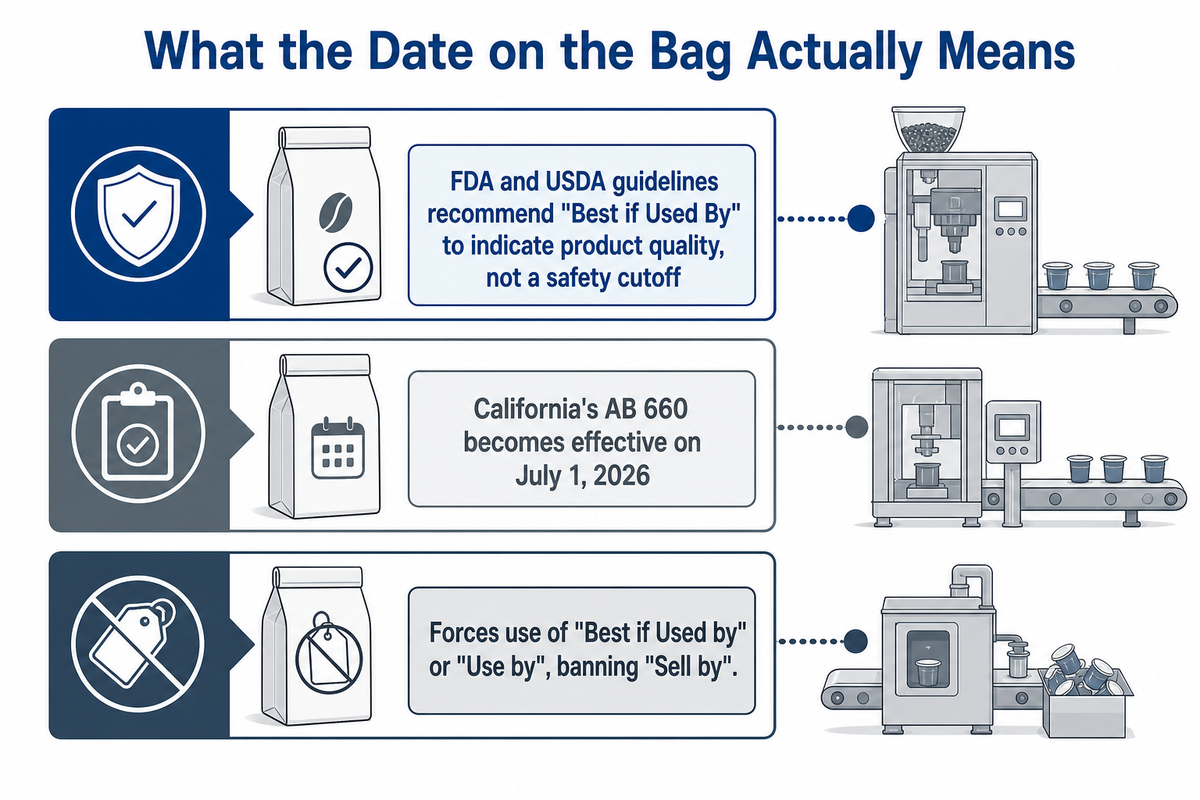
În Statele Unite, datele de pe alimente sunt opționale și doar unele articole sunt obligate să poarte o etichetă de dată. Federal Ghidurile FDA și USDA recomandați în comun producătorilor să folosească etichete precum “Cel mai bun dacă este folosit By” pentru a indica calitatea produsului, nu o limită de siguranță. Majoritatea produselor stabile la depozitare, inclusiv cafeaua, nici măcar nu necesită deloc o dată tipărită. Când un prăjitor imprimă unul, acesta este conceput ca un marker de calitate, nu o numărătoare inversă pentru data uciderii.
Acestea fiind spuse, urmează schimbări la nivel de stat, iar ambiguitatea cu privire la cine trebuie să se conformeze nu face decât să adauge confuziei pe care cumpărătorii o simt deja cu privire la etichetele datei. AB 660 din California, adoptat de legislatura statului, intră în vigoare la 1 iulie 2026 și merită disecat, deoarece este ușor să supraestimați exact ceea ce impune. AB 660 nu impune ca prăjitorii să dateze toate pungile de cafea. În schimb, cere ca oricare dintre aceste entități să eticheteze cu o dată la care produc, ambalează sau vând un produs etichetat cu o dată de calitate sau de siguranță sau când este cerut de alte statute. Odată ce această dată trece, obligă orice entitate să folosească fie ‘Cel mai bun dacă este folosit de’ (pentru calitate), fie ‘Utilizați de’ (pentru siguranță), interzicând ’Vinde de’. Atât Departamentul pentru Alimentație și Agricultură din California și un studiu pe această temă publicat de Centrul Național de Drept Agricol susțineți această lectură mai precisă: statutul etichetele standardizate; nu a impus ca datele să fie pe toate produsele.
Pentru cafea în special, acest lucru înseamnă că puțin se schimbă. Ceea ce contează mai mult decât o dată ‘cel mai bun până la’ pe pungă este data de prăjire. Prăjitorii calculează de obicei o dată de cafea “cel mai bun după” ca o fereastră fixă (adesea 12 până la 24 de luni) după prăjire, indiferent de modul în care a fost depozitată punga. Ceasul începe în momentul în care cafeaua se prăjește, nu în ziua în care este ambalată sau vândută.
Cafea cu fasole întreagă: cât durează de fapt
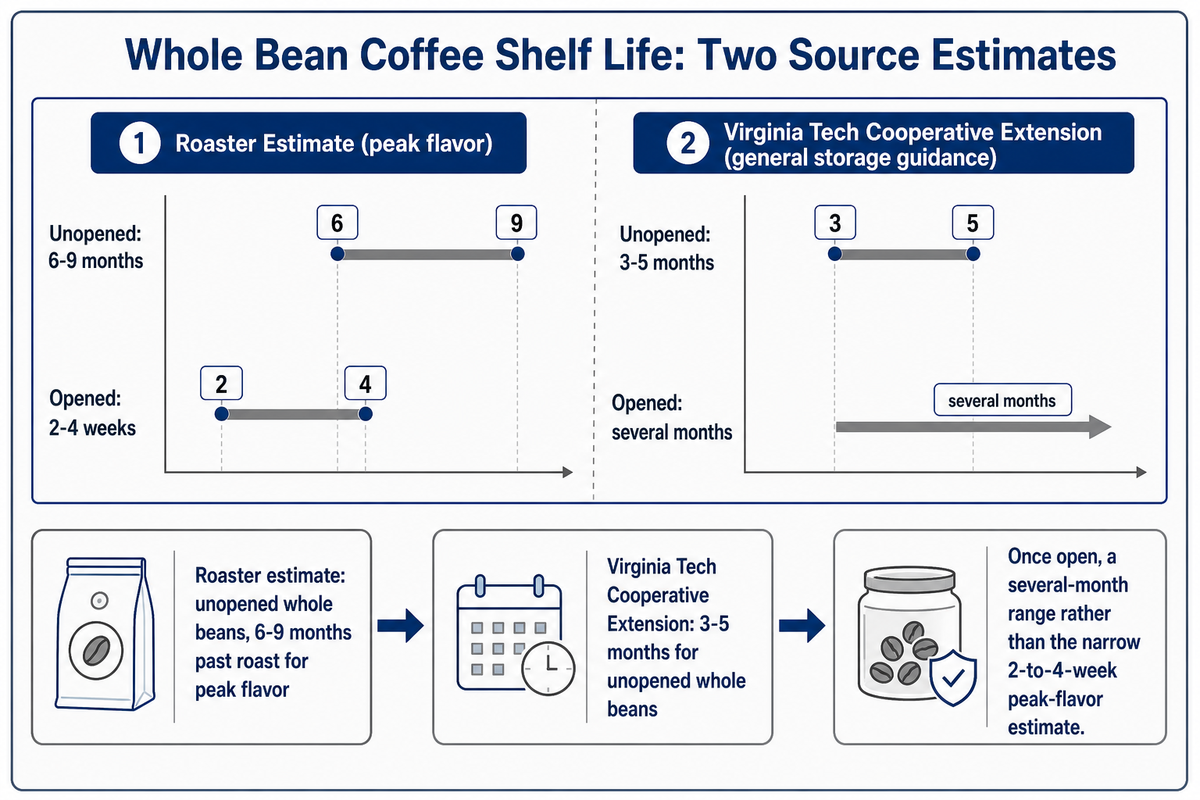
Cafeaua de fasole întreagă păstrează aroma mai mult decât orice alt format, deoarece suprafața expusă este cea mai mică. ghidurile din surse de prăjitor plasează frecvent boabe întregi nedeschise, depozitate corespunzător, la 6-9 luni după data de prăjire pentru aroma de vârf; un ghid de depozitare a alimentelor revizuit în 2025 de la Extensia cooperativă a Virginia Tech recomandă o perioadă mai conservatoare de 3-5 luni pentru fasolea întreagă nedeschisă și, odată deschisă, permite o gamă de câteva luni, mai degrabă decât estimările înguste de 2 până la 4 săptămâni cu aromă de vârf pe care prăjitorii tind să le ofere. Aceste două cifre nu sunt deloc contradictorii: intervalele mai scurte, provenite de la prăjitor, descriu când fasolea întreagă este la cea mai proaspătă lor, în timp ce ghidul mai lung, provenit din extensie, descrie când sunt încă destul de bune, ambele cifre indicând siguranța cu mult peste aceste limite, atâta timp cât sacul nu s-a udat niciodată.
Se rezumă la un proces numit degazare. Fasolea proaspăt prăjită eliberează dioxid de carbon timp de săptămâni după prăjire, deoarece acesta este motivul pentru care unii prăjitori sfătuiesc fasolea “repaus” și cauza acelor pungi prăjite sigilate în vid. În această evadare a dioxidului de carbon, majoritatea acelor molecule volatile, cu miros aromatic, într-o băutură proaspătă, scapă și ele, iar Cercetarea peer-reviewed a Institutului Tehnologilor Alimentari confirmă modul în care depozitarea post-prăjire afectează procesul.
Pasionații de cafea folosesc regula “15-15-15” pentru a-și gestiona așteptările de prospețime, deși regula este aplicată în mai multe moduri. Potrivit unora, înseamnă 15 zile de la prăjire la preparare, 15 minute de la măcinare la preparare și 15 minute de consumat; alții au nevoie de 15-15-15 pentru a însemna 15 luni de valabilitate pentru boabele nedeschise, neprăjite, 15 zile de vârf de aromă post-prăjire și un al treilea “15” mai elastic pentru cafeaua măcinată. Oricum, lecția de bază este aceeași: cafeaua este cel mai bine aproape de data de prăjire și nu pentru foarte mult timp.
Cafea măcinată: de ce se învechește mai repede
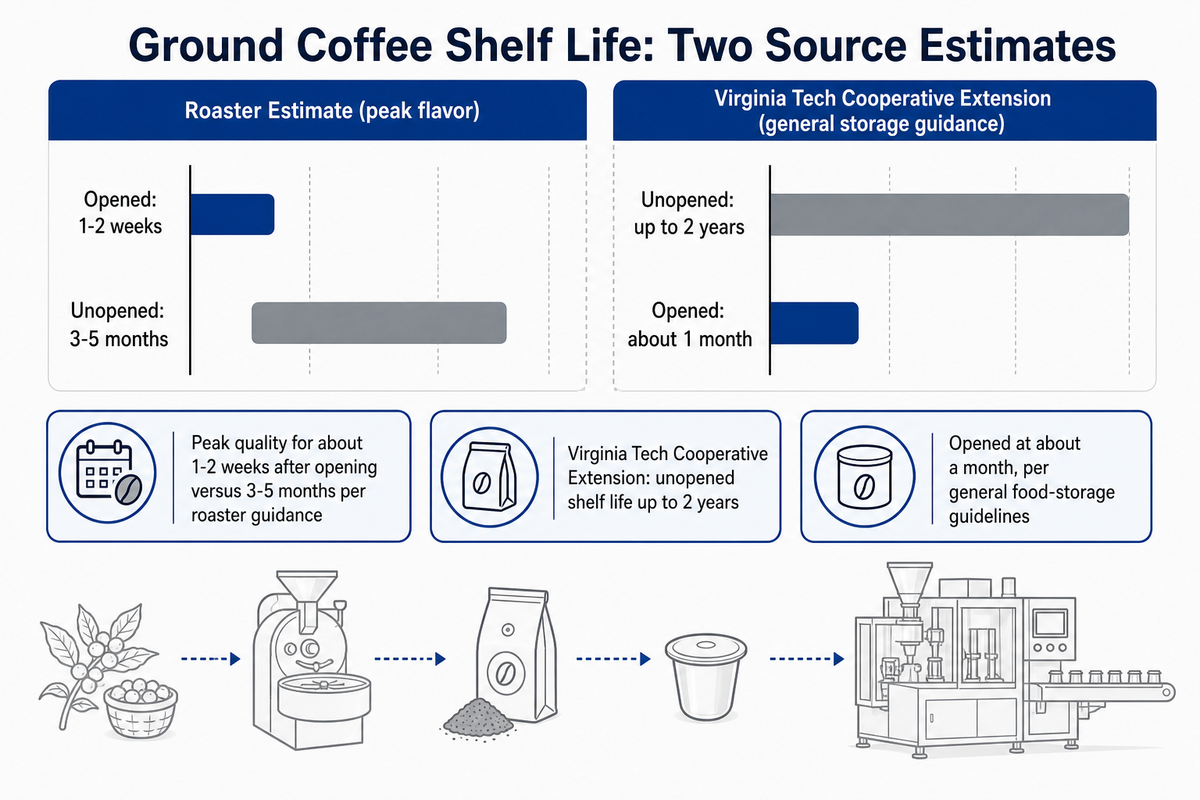
Cafeaua măcinată își pierde aroma proaspătă mai repede decât boabele întregi, menținând de obicei calitatea maximă timp de aproximativ 1-2 săptămâni după deschidere, față de 3-5 luni, conform îndrumărilor prăjitorului (Extensie de cooperare Virginia Tech pune termenul de valabilitate nedeschis la până la 2 ani și deschis la aproximativ o lună, deși asta reflectă regulile generale de depozitare a alimentelor, mai degrabă decât o fereastră cu aromă de vârf specifică cafelei). Odată măcinată, suprafața boabelor crește dramatic, ceea ce accelerează același proces de oxidare pe care îl suferă boabele întregi, doar mult mai repede.
Acesta este motivul real pentru care băutorii serioși de cafea își fac timp să măcine chiar înainte de preparare, față de achiziționarea de boabe pre-măcinate în vrac. Cumpărarea boabelor pre-măcinate pentru comoditate va veni întotdeauna în detrimentul longevității în calitatea aromei. În cazul în care opțiunile pre-măcinate sunt inevitabile, optați pentru cea mai mică dimensiune disponibilă a pachetului și investiți într-un recipient de calitate superioară, cu adevărat etanș, pentru a extinde fereastra de distracție.
Cafeaua măcinată se comportă foarte diferit față de boabele întregi de cafea, iar cafeaua poate rămâne învechită în câteva zile odată măcinată și expusă la aer. Cafeaua își pierde aroma cel mai repede imediat după măcinare, deoarece măcinarea înmulțește suprafața expusă la oxigen; Zăcământul de cafea poate, de asemenea, să capteze mirosurile din frigider sau cămară din jurul lor dacă este lăsat descoperit. Acesta este motivul pentru care oamenii care păstrează cafeaua ca boabe întregi și doar macină ceea ce au nevoie obțin rezultate mai consistente de la ceașcă la ceașcă, cum folosești zațul de cafea imediat după deschiderea pungii afectează cât de repede se blochează restul. Cafeaua rămâne proaspătă mult mai mult timp sigilată ca boabe întregi decât măcinată. Cum are gustul cafelei la o săptămână după deschidere depinde în mare măsură de modul în care a fost depozitată între ele și, oricum doriți să gustați cafeaua, gustul cafelei este mult mai iertător atunci când este încă fasole întreagă.
Cafea instant: cel mai lung format
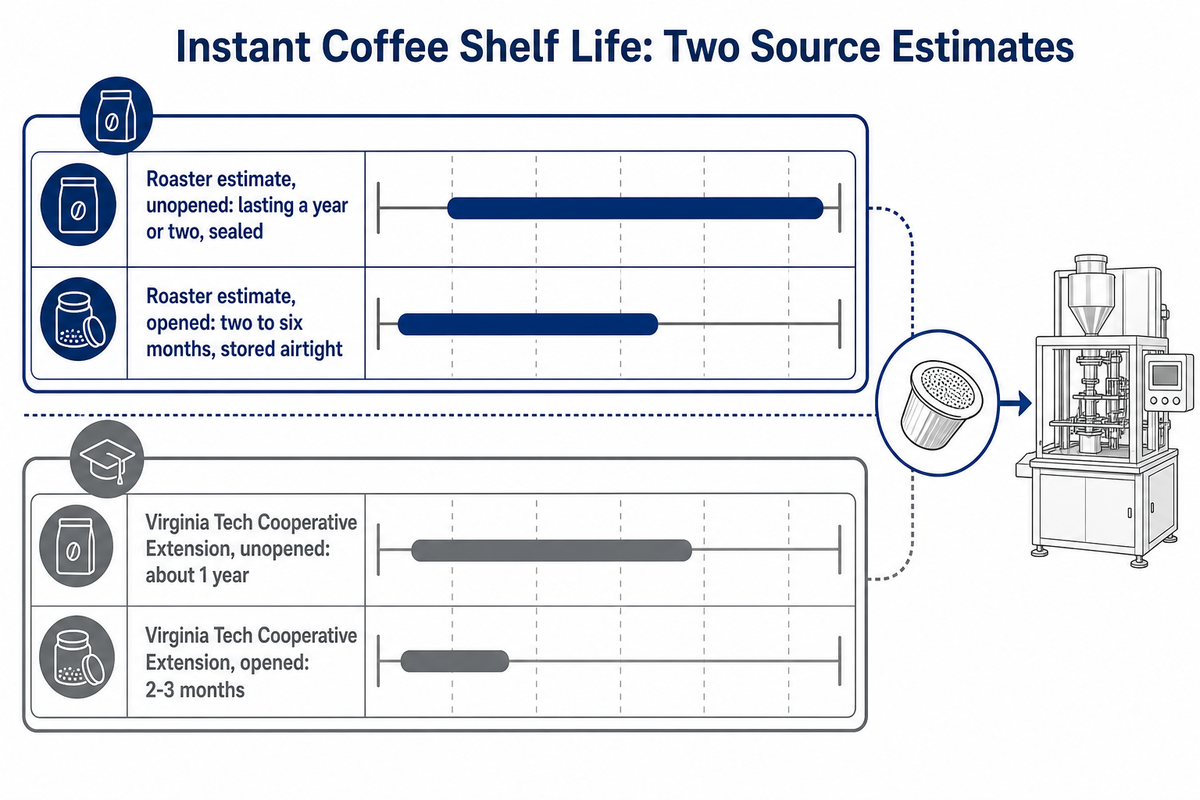
Cafeaua instant este cel mai stabil format dintre toate, durând un an sau doi, conform unor surse (nedeschisă și sigilată) sau două până la șase luni odată deschisă și depozitată etanș, pe măsură ce textura și aroma încep să scadă; cafeaua instant deschisă încă supraviețuiește cafelei măcinate deschise cu o marjă largă. Extensia cooperativă a Virginia Tech oferă o estimare mai conservatoare de aproximativ 1 an nedeschis și 2-3 luni deschis, care reflectă mai degrabă ghidarea generală de depozitare a alimentelor decât o fereastră cu aromă maximă. Asta pentru că cafeaua instant preparată este apoi liofilizată sau uscată prin pulverizare pentru a elimina aproape tot conținutul de umiditate, făcând oxidarea și apa să funcționeze în tot mai puțin scop.
Granulele liofilizate dețin singura margine reală de depozitare față de cele uscate prin pulverizare, deoarece procesul de uscare cu căldură mai mică provoacă mai puține daune compușilor aromatici volatili. Ambele formate au exact același mod de defecțiune, totuși: umiditate. Un borcan deschis de cafea instant, odată expus la umiditate, va începe rapid să se aglomereze și să se întărească, ceea ce este cel mai clar semn pe care trebuie să-l înlocuiască.
K-Cups și capsule de cafea expiră?
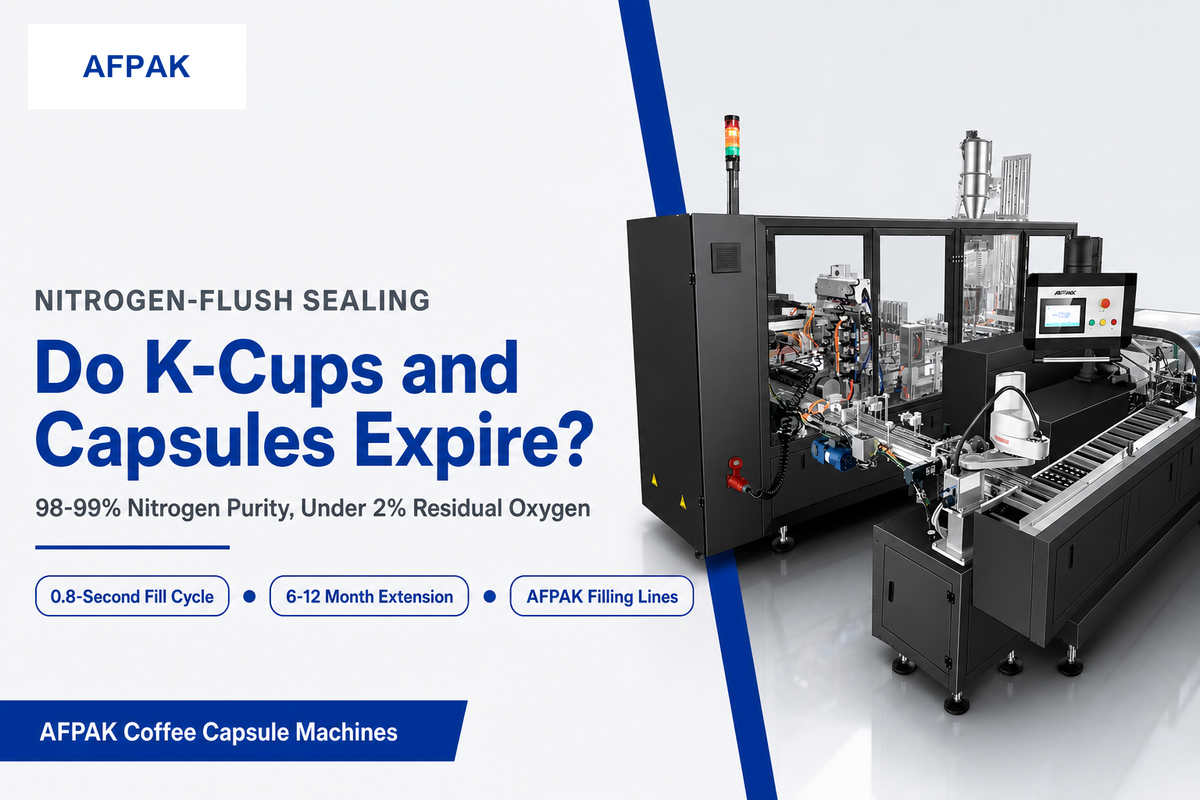
Da, capsulele în format K-Cups și Nespresso au o durată de valabilitate, dar durata de valabilitate a capsulei de unică folosință este determinată mai puțin de cafeaua din interior decât de sistemul de ambalare din jurul acesteia. O capsulă sigilată de cafea rămâne proaspătă mult timp, în funcție de tipul de gaz din interiorul capsulei, materialul de peliculă barieră utilizat și temperatura de depozitare.
Acesta este motivul pentru care există tehnologii precum spălarea cu azot. Pe liniile de umplere și etanșare a capsulei de cafea ale AFPAK, un ciclu optimizat de pulsație trifazată cu azot în vid inundă fiecare capsulă cu azot pur gazos 98-99%, înlocuind conținutul de aer al capsulei, inclusiv oxigenul, și reducând oxigenul rezidual din interiorul capsulei sigilate la sub 2% în aproximativ 0,8 secunde în timpul ciclului de umplere și etanșare. Acest proces păstrează cafeaua și poate prelungi durata de valabilitate a capsulei de cafea sigilate oriunde de la 6 la 12 luni sau mai mult, o cifră care se aliniază cu afirmația unui prăjitor de cafea comercial, orientată spre consumator, conform căreia pungile sigilate în vid sau spălate cu azot care conțin cafea prăjită, măcinată sau instantanee pot dura 6 până la 12 luni sau mai mult atunci când sunt ținute sigilate într-un loc răcoros și întunecat la care s-a ajuns complet independent de orice context de fabricare a capsulei. Este, de asemenea, în concordanță cu a studiu peer-reviewed packaging-film în Molecules aceasta a măsurat direct modul în care ambalajul standard din folie de aluminiu cu folie de barieră se compară cu o alternativă reciclabilă pentru prospețimea cafelei capsulă în timp.
În practică, adevărata problemă nu este “cât durează capsulele de cafea” în abstract, ci ce sistem de ambalare a capsulelor este utilizat. Pentru un produs cu o singură porție, o marcă de cafea care trebuie să cunoască pachetul potrivit pentru produsul său sau un cumpărător care se întreabă cum cafeaua cu o singură porție a unei anumite mărci rămâne proaspătă luni de la producție, adevărata întrebare este “ce combinație de gaz și film de barieră folosește această capsulă specifică?” Branduri evaluând Echipamente de umplere și etanșare K-Cup sau a Linie capsulă Nespresso-format sunt, de fapt, alegerea unui rezultat de valabilitate la fel de mult ca o linie de producție. defalcare tehnică proprie AFPAK de cum protecția cu azot extinde prospețimea capsulei de cafea acoperă procesul de spălare cu gaz în mai multe detalii la nivel de producție și ghidul însoțitor creșterea duratei de valabilitate a capsulei de cafea parcurge variabilele de măcinare, ambalare și depozitare care se combină cu spălarea cu gaz pentru a determina fereastra de prospețime a unei capsule din lumea reală.
Pentru oricine are o singură capsule de cafea Nespresso sau K-Cup acasă: o capsule de cafea bine sigilată, nedeschisă de la o marcă comercială este, de obicei, încă bine cu mult peste data de utilizare publicată, deoarece ambalajul său individual etanș trebuie să țină oxigenul afară doar până când momentul în care este cufundat în aparat, cu un avantaj pe care pungile mari de cafea nu îl au odată ce au fost deschise.
Cafea preparată și rece: un ceas diferit
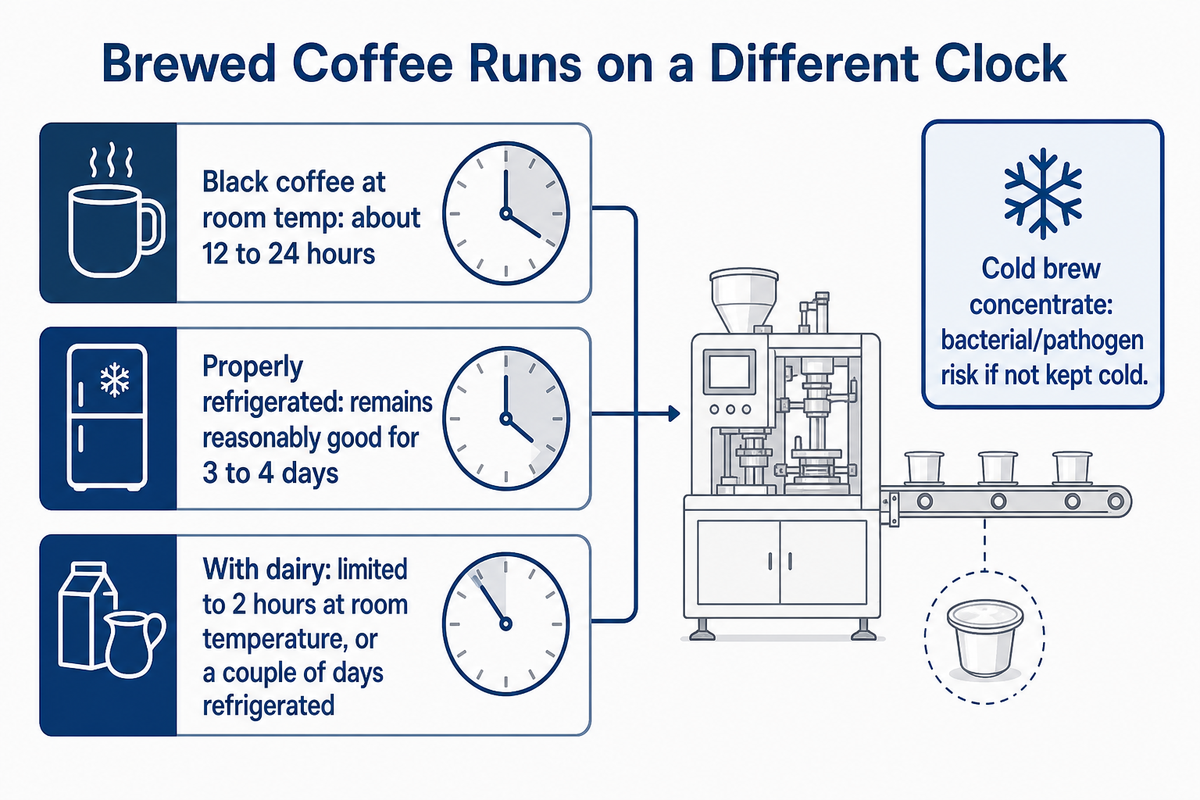
După ce s-a terminat, conversația de depozitare se schimbă cu totul: deoarece cafeaua preparată este un lichid umed (nu un bun uscat), cu conținut scăzut de acid, funcționează pe un ceas radical mai rapid decât boabele sau zațul. “Regula de două ore” a FDA” în general, se aplică alimentelor pe care agenția le consideră perisabile, cum ar fi carnea, păsările de curte, fructele de mare, ouăle și produsele, iar cafeaua neagră nu se află pe această listă, motiv pentru care cafeaua neagră simplă are o calitate mai concentrată (nu concentrată pe siguranță). marja de manevră decât o limită de două ore, care se traduce într-o perioadă de valabilitate mai lungă determinată de calitate, mai degrabă decât de siguranță. Cafeaua neagră depozitată în afara recipientului său etanș la temperatura camerei poate fi de obicei băută timp de aproximativ 12 până la 24 de ore, deși calitatea aromei se degradează semnificativ mult mai devreme (în jurul primelor 30 de minute după încălzire).
Refrigerat corespunzător în recipientul etanș, va rămâne rezonabil de bun timp de 3 până la 4 zile. Odată ce crema sau laptele intră în contact cu cafeaua, durata de valabilitate a acesteia se micșorează dramatic: adăugați lactate și cafeaua urmează acum protocolul normal de depozitare a lactatelor, limitat la 2 ore la temperatura camerei sau câteva zile la frigider.
Este cafeaua preparată la fel ca și consumul de cafea uscată? nici măcar. Cafeaua proaspătă preparată este cea mai bună în prima oră, iar cafeaua proaspăt preparată care stă pe placa de încălzire din carafa unui aparat de cafea se stinge mai repede decât cafeaua depozitată într-o ceașcă sigilată lăsată afară la temperatura camerei. Cafeaua înghețată nu este diferită de cafeaua preparată la frigider obișnuită odată ce gheața s-a topit în ea.
Băutură rece are nevoie de propria discuție (într-un motiv evident, aceasta este “cafea preparată, dar rece.” Spre deosebire de cafea preparată la cald, care include un pas de caldura-ucidere, infuzare la rece abrupturi pentru multe ore la temperatura camerei sau chiar la refrigerare cu nici un pas de preparare la cald pentru a afecta siguranța sa. concentrat de preparare la rece de casă, păstrat continuu la frigider, este bine utilizat în termen de 5-7 zile. Prepararea la rece produsă comercial și sigilată are o durată de valabilitate sugerată mai lungă (uneori o săptămână sau două refrigerate), deși. Se reduce la mai mult decât doar stalence în acest caz. Prepararea la rece nu are etapa de distrugere a căldurii aproape de fierbere a preparării la cald și, dacă este lăsată nerefrigerată sau produsă în cantități mari fără controlul temperaturii, prezintă o problemă reală de siguranță alimentară, în plus față de aromă, nu doar una cosmetică. Nu fi liniștit într-un sentiment fals de securitate de la cafeaua uscată fiind cu risc foarte scăzut, iar prepararea la rece odată umedă și neîncălzită, trebuie tratată cu aceeași disciplină de refrigerare ca orice altă băutură.
Semne că cafeaua ta a dispărut de fapt rău
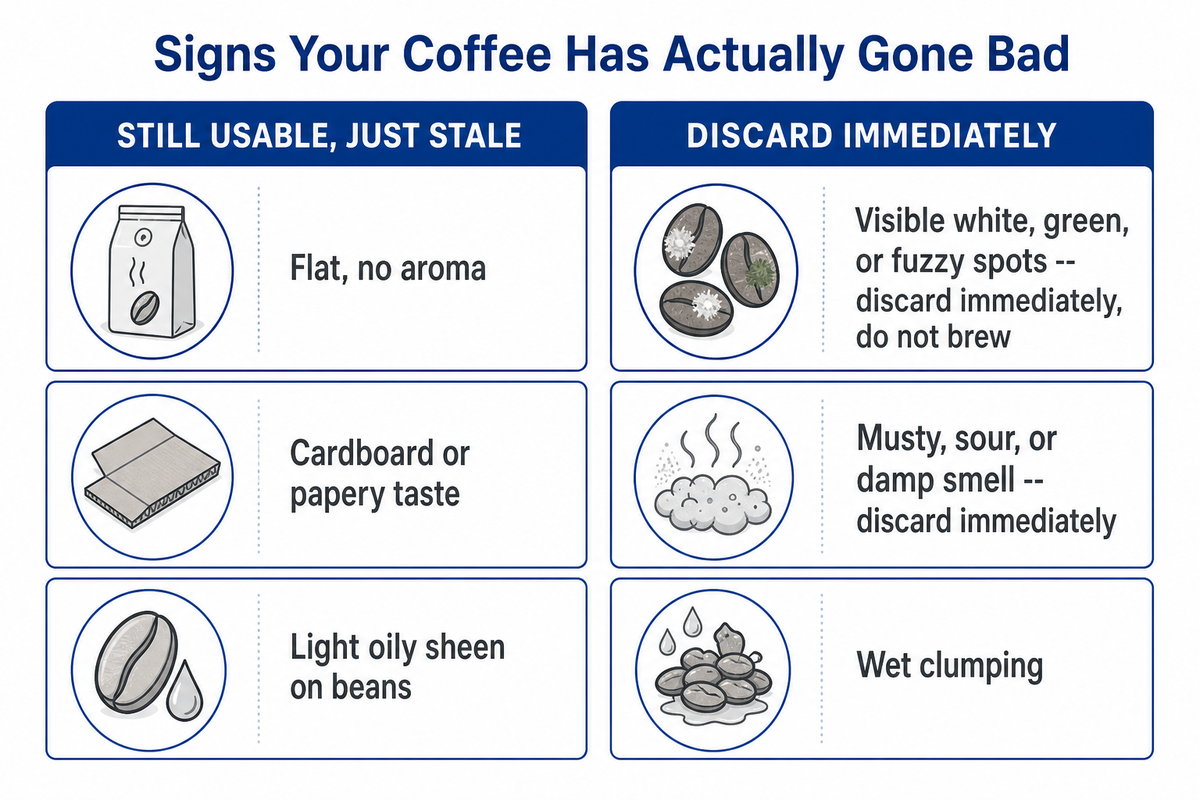
O mare parte din ceea ce consumatorii recunosc ca “cafeaua expirată” se reduce într-adevăr la puțin mai mult decât cafeaua învechită. Există diferențe subtile, dar semnificative în aspectul și comportamentul celor două formate care permit o distincție rapidă. Învățarea cum să distingem cafeaua învechită de cafeaua cu adevărat “ruinată” este mult mai importantă decât acordarea unei atenții deosebite unei pungi de boabe. Aceste tabele disting indicatorii doar de calitate, doar estetici, de semnele de avertizare la nivel de aruncare, care înseamnă că este cu adevărat timpul să arunci cafeaua.
| Tip semnal | Cauza probabila | Încă utilizabil? | Acțiune recomandată |
|---|---|---|---|
| Plat, fără aromă | Oxidare, CO2 a fost evacuat | Da, doar învechit | Utilizați pentru preparare la rece sau înlocuiți |
| Gust de carton sau hârtie | Oxidare extinsă | Da | Beți mai puternic sau înlocuiți în curând |
| Luciu ușor uleios pe fasole | Uleiuri normale prăjite sau fasole trecută de vârf | De obicei da | Verificați mirosul înainte de a prepara |
| Pete vizibile albe, verzi sau neclare | Mucegai din pătrunderea umidității | Nu | Aruncați imediat, nu preparați |
| Mucegăit, acru sau miros umed | Contaminarea umidității | Nu | Aruncați imediat |
| Aglomerare umedă (instantanee sau măcinată) | Absorbția umidității | Nu | Aruncați, nu rehidratați și nu utilizați |
| Cristale de gheață pe fasole congelată | Ciclu îngheț-dezgheț, condens | Da, calitate-redusă | Utilizați în curând, evitați re-înghețarea |
| Moliile de cămară sau insectele prezente | Contaminarea dăunătorilor | Nu | Aruncați, inspectați zona de depozitare |
| Decolorare gri sau verzuie | Oxidare sau posibilă contaminare | Depinde | Aruncați dacă este asociat cu miros sau mucegai |
Se subliniază faptul că indiciile senzoriale pentru a judeca calitatea și stalitatea după aspect, miros, gust sunt remarcabil de fiabile pentru cafeaua uscată, deoarece nivelurile de umiditate sunt atât de scăzute încât proliferarea agenților patogeni este dificilă. Aceste verificări nu oferă o protecție adecvată pentru alimentele umede, cum ar fi cafeaua preparată sau prepararea la rece. Potrivit Îndrumările proprii ale FDA pentru consumatori privind depozitarea alimentelor, alimentele pot provoca boli chiar dacă arată, miros și au un gust normal, ceea ce este valabil mai ales pentru produsele umede de cafea, comparativ cu cele uscate care se odihnesc într-o cămară.
Este sigur să bei cafea expirată?
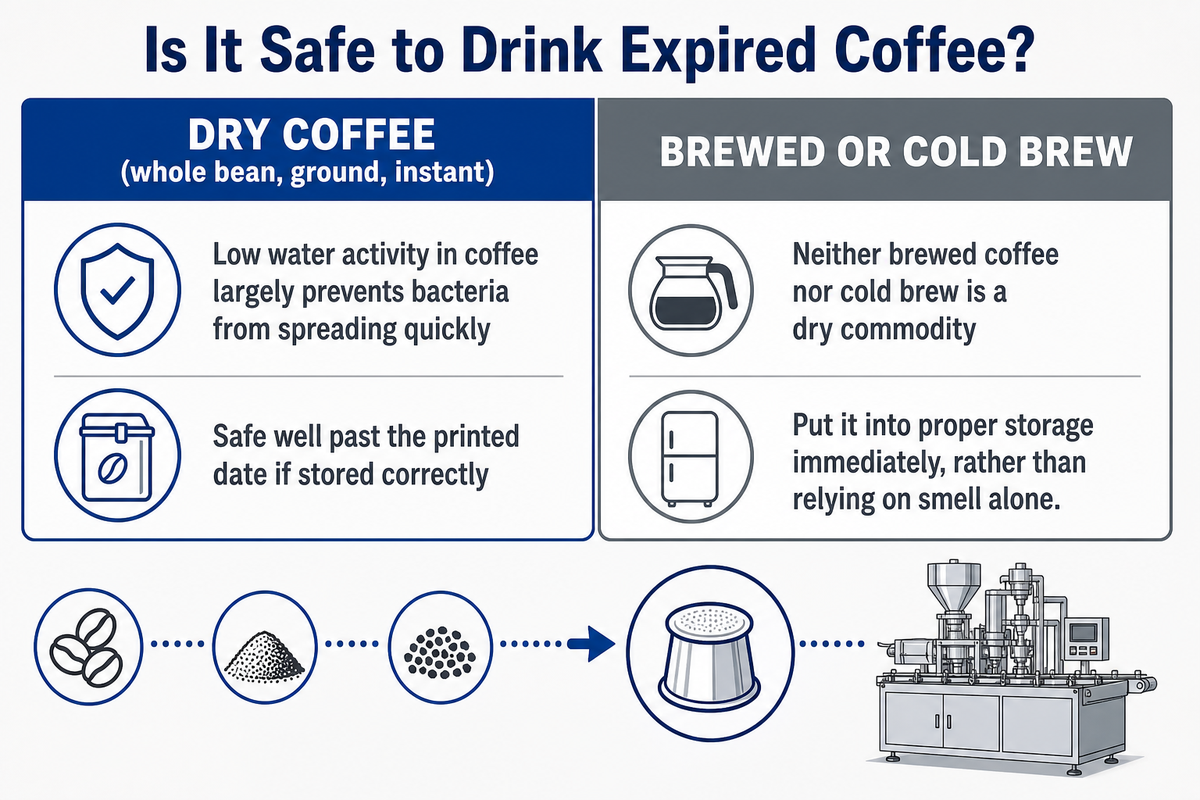
Pentru boabe întregi, măcinate sau cafea uscată instant, răspunsul este un da emfatic, presupunând că ați depozitat cafeaua corect și nu afișează niciunul dintre semnele de nivel de aruncare enumerate mai sus care necesită eliminare. Activitatea scăzută a apei în cafea împiedică în mare măsură bacteriile să se răspândească rapid, motiv pentru care Serviciul de inspecție și siguranță alimentară al USDA consideră că data imprimată pe o pungă de cafea este un indicator de calitate, spre deosebire de o dată definitivă pentru eliminare.
Dar această cifră este modificată atunci când cafeaua este umedă. Nici cafeaua preparată, nici cea rece nu este o marfă uscată și “miroase frumos, deoarece verificarea calității este o măsură mult mai puțin fiabilă, deoarece acest lucru este valabil mai ales pentru prepararea la rece dacă a petrecut timp nerefrigerat sau a fost fermentat în loturi la temperaturi necontrolate. Conturile din lumea reală de la comunitățile de băutori de cafea par adesea să se alinieze mai mult cu capătul uscat al cafelei: o discuție de lungă durată pe forum despre cafeaua măcinată mai veche a concluzionat că ”nu expiră neapărat, dar se învechește… ar trebui să fie ok pentru consum dacă a fost sigilat,“ care este perfect pentru constatările generale.
În altă parte, există confuzie între expirat și cel mai bun înainte, un băutor de cafea descriind diferența ca fiind expirată poate însemna că este nesigur sau în curând să fie nesigur, dar cel mai bine înainte înseamnă că este încă sigur, dar nu mai are gust bun; pentru băuturi, în general, acest lucru este destul de precis, deși, așa cum am văzut, nici cuvintele expirate, nici “cel mai bun înainte” pe cafea nu înseamnă un prag real de siguranță.
Utilizați aceasta ca regulă generală: pentru produsele din cafea uscată, mergeți după miros. Dar odată ce este preparat și mai ales odată ce devine rece, puneți-l imediat într-un depozit adecvat, ca orice altă băutură, în loc să vă bazați doar pe miros.
Cum să păstrați cafeaua pentru a încetini ceasul
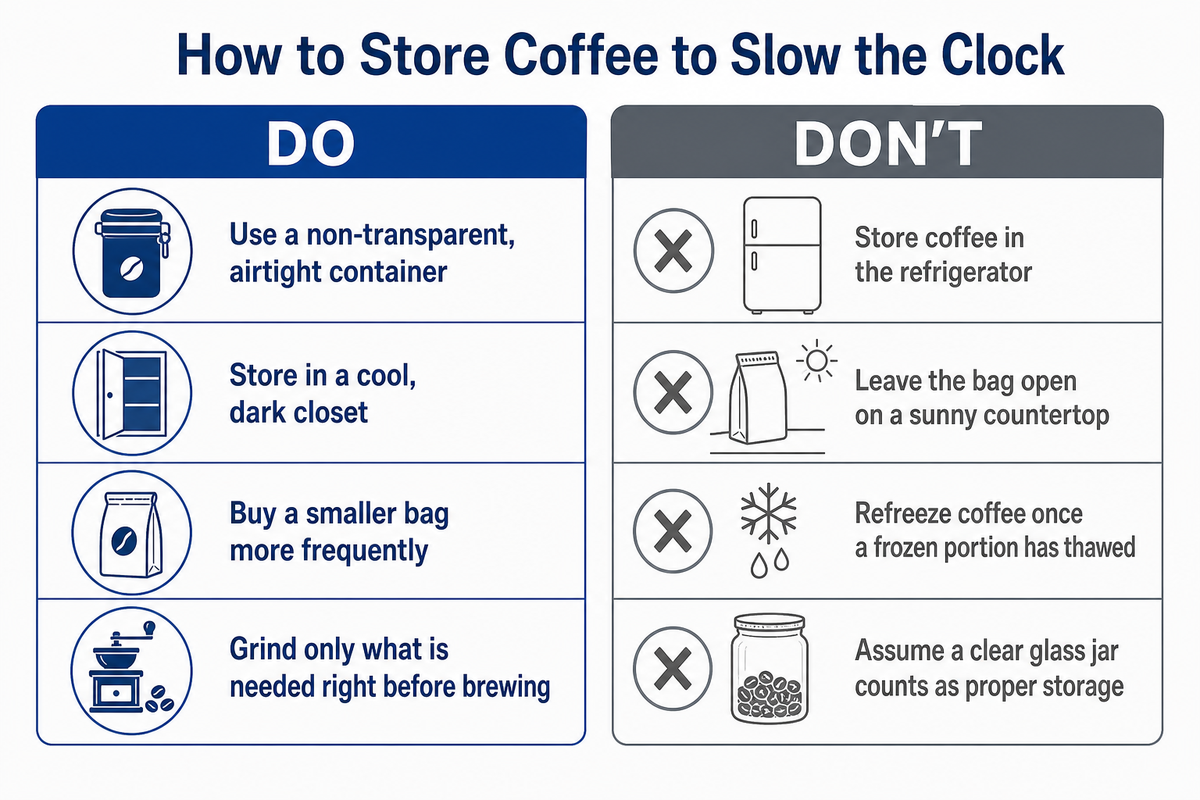
Cel mai simplu sfat pentru a vă împiedica cafeaua să-și piardă aroma depinde de modul în care este depozitată cafeaua, chiar și o cămară sau un dulap departe de aragaz este mai bun decât o pungă care stă deschis pe blat. Păstrați cafeaua departe de căldură și lumină excesivă într-un loc răcoros și întunecat și, odată ce deschideți pachetul, își va pierde aroma și aroma cu fiecare moment de expunere la aer. Cumpărătorii care cumpără cafea în vrac ar trebui să împartă pungile mari în porții mai mici, etanșe, în loc să deschidă și să închidă continuu o pungă; scopul, întotdeauna, este cafeaua aromată ori de câte ori o preparați efectiv.
Majoritatea ghidurilor sunt de acord cu privire la cel mai bun mod de a stoca boabele de cafea și de a vă păstra cafeaua în general: un recipient etanș, păstrat rece și întunecat, păstrează cafeaua proaspătă mult mai mult decât o pungă tăiată închisă și lăsată pe blat. Aceste sfaturi pentru a vă menține cafeaua proaspătă se aplică în formate întregi de fasole, măcinate și instantanee și câțiva pași simpli aplicați cafelei pentru a prelungi durata de valabilitate a acesteia merg mult. Depozitată în acest fel, cafeaua rămâne sigură și destul de aromată cu mult peste data tipărită, indiferent dacă cumpărați cafea la pungă sau vă bazați pe un abonament la cafea pentru o experiență generală mai bună a cafelei. sigilată corespunzător, cafeaua poate dura cu mult peste data tipărită fără a deveni nesigură.
Indiferent de metoda de depozitare pe care o alegeți, învechirea nu este ceva care poate fi pus la punct, dar o amână semnificativ. Prin stăpânirea unor reguli simple, săptămâni sau luni din durata de viață a prospețimii tale uscate în orice format uscat pot fi recuperate. conform NCA (Asociația Națională a Cafelei) precum și mediul academic (programe de cercetare în știința cafelei, cum ar fi Centrul de cafea UC Davis), trei elemente amenință cafeaua proaspătă în toate formatele uscate: lumină, aer și umiditate, toate acestea căldura se înrăutățește.
- Utilizați un recipient netransparent, etanș, nu utilizați clema furnizată inițial pentru a închide punga
- A se păstra într-un dulap răcoros și întunecat și la îndemâna cuptorului sau a aragazului
- Cumpărați o geantă mai mică mai frecvent decât o geantă mare care ar fi lăsată deschisă timp de multe luni
- Măcinați doar ceea ce este necesar chiar înainte de prepararea berii
- Păstrați cafeaua în frigider
- Lăsați punga deschisă pe un blat însorit
- Reînghețați cafeaua odată ce o porție înghețată s-a dezghețat
- Să presupunem că un borcan de sticlă transparentă contează ca depozitare adecvată
Refrigerarea merită o mențiune specială. acesta este un obicei prea comun, dar contraproductiv. pe măsură ce un recipient rece se ridică la temperatura camerei, se formează condens pe suprafața sa și că umiditatea funcționează împotriva eforturilor noastre de a menține cafeaua uscată.
Deși cafeaua poate părea simplu de depozitat, orice discuție între băutorii de cafea de acasă despre cum să-și păstreze cel mai bine prețioasa cafea uscată pe termen lung ajunge întotdeauna înapoi în acest singur punct – refrigerarea adaugă doar expunerea la umiditate în raport cu păstrarea cafelei într-un recipient simplu și sigilat în un dulap uscat. Congelarea în porții mai mici este excepția. Defalcați-l înainte de a-l îngheța și scoateți una sau două cantități mici pentru a se dezgheța la un moment dat, mai degrabă decât să deschideți și să închideți o pungă sau un recipient mai mare de mai multe ori.
Verdict Sniff-Look-Taste
Indiferent dacă obiectivul dvs. pentru cafea în fiecare dimineață este prospețimea maximă sau vă bazați pe un abonament lunar de cafea care ajunge la ușa dvs. ca parte a ritualului obișnuit de cafea, cele mai bune obiceiuri rămân. Există lucruri surprinzător de simple pe care le puteți face pentru a prelungi durata de viață utilă a cafelei dvs. etanșă, întunecată, rece și consumată atunci când este la apogeu este regula de aur pentru a păstra o cafea bună și pentru a vă bucura de toate aromele nuanțate pentru care ați selectat inițial acea cafea. Prin aceste metode, cafeaua uscată bună poate rămâne sigură și cel puțin minim gustoasă pentru perioade lungi de timp dincolo de data tipărită “cel mai bun by”.
Dacă o pungă persistă de ceva timp, există trei teste rapide pentru a rezolva majoritatea îndoielilor într-un minut sau cam asa ceva. În primul rând, dă-i un miros: cafeaua proaspătă, bine conservată este bogată și unică, în timp ce cafeaua învechită este plată sau prăfuită, putând mirosi ca cartonul vechi. Dacă cafeaua miroase mucegăit sau acru, aruncați-o imediat, deoarece cafeaua mucegăită este un pericol. În al doilea rând, examinați-o pentru aspect: cafeaua bună, uscată ar trebui să fie liberă și fără aglomerare, decolorare semnificativă sau semne de mucegai și orice este umed, aglomerat sau acoperit cu mucegai ar trebui aruncat. În al treilea rând, dacă verificările de mai sus trec, luați o înghițitură mică: cafeaua învechită va avea un gust plat și potențial apos, dar va fi de obicei sigur de băut, în timp ce orice are gust“ off,” dincolo de simpla stalence, nu merită riscul și necesită în schimb o oală proaspătă. Aceste verificări – miros, vedere și gust – sunt pentru a judeca cafeaua uscată; nu înlocuiesc obiceiurile bune de depozitare în cazul cafelei preparate sau preparate la rece.
Despre această analiză
Acest ghid se bazează pe ghidurile USDA și FDA privind etichetarea alimentelor, cercetarea privind stocarea cafelei revizuită de colegi și datele proprii ale etajului de producție ale AFPAK privind etanșarea capsulelor cu spălare cu azot, adunate pe mașinile de umplere și etanșare a capsulelor de cafea pe care echipa noastră de ingineri le proiectează pentru producătorii de capsule din întreaga lume. Cifrele de spălare cu azot citate pentru capsulele K-Cup și Nespresso-format provin direct din parametrii de spălare cu gaz utilizați pe liniile de umplere și etanșare proprii ale AFPAK, confirmați de echipa tehnică a AFPAK.
Întrebări frecvente
Î: Poți să bei cafea 2 ani depășiți?
Da, cafeaua uscată nedeschisă, care a trecut cu 2 ani de data tipărită, este de obicei încă sigură de băut dacă a fost păstrată sigilată, rece și uscată, deși aroma va fi vizibil mai plictisitoare decât cafeaua proaspătă.
Î: Cafeaua este încă bună după 4 ani?
Cafeaua veche de patru ani este foarte probabil să bea în siguranță dacă a rămas sigilată și uscată tot timpul, dar așteptați-vă la o ceașcă plată și dezactivată, mai degrabă decât la ceva care seamănă cu cafeaua proaspătă.
Î: Cafeaua veche de 10 ani este încă bună?
Cafeaua uscată, sigilată, veche de zece ani, este în general încă sigură de băut, dar până în acest moment va gusta aproape în întregime din recipientul său, mai degrabă decât din cafea, iar majoritatea oamenilor vor descoperi că nu merită preparată.
Î: Care este regula 15-15-15 pentru cafea?
O scurtătură populară, regula 15-15-15, este un ghid de prospețime brută pentru cafea, dar nu este aplicată în mod consecvent: unele surse o definesc ca fiind 15 zile de la prăjire la utilizare, 15 minute de la măcinare la preparare și 15 minute pentru bea, în timp ce alții îl folosesc pentru a descrie aproximativ 15 luni de valabilitate a fasolei verzi și 15 zile de aromă maximă după prăjire.
Î: Cafeaua expiră dacă nu este deschisă?
Cafeaua nedeschisă nu expiră cu adevărat, dar își pierde treptat aroma chiar și sigilată, rămânând de obicei aproape de calitatea maximă timp de 6-9 luni (fasole întreagă) sau 3-5 luni (măcinată) după data fripturii.
Î: Cafeaua expiră în frigider?
Depozitarea cafelei uscate în frigider nu face ca aceasta să expire în mod direct, dar introduce condens de fiecare dată când recipientul este îndepărtat și răcit din nou, ceea ce accelerează mai degrabă stalențiozitatea decât încetinirea acesteia.
Î: Care este termenul de valabilitate al păstăilor de cafea?
Perioada de valabilitate a capsulei de cafea și a capsulei depinde de modul în care păstaia individuală a fost sigilată, mai degrabă decât de un număr fix; Capsulele spălate cu azot cu o peliculă de barieră puternică păstrează de obicei aroma timp de 6-12 luni sau mai mult, în timp ce capsulele de cafea sigilate fără spălare cu gaz durează de obicei o fereastră mai scurtă și mai variabilă.
Referințe și surse
- Întâlniri cu produse alimentare Serviciul USDA pentru Siguranța Alimentară și Inspecție
- USDA-FDA Căutați informații despre etichetarea datei alimentelor Administrația SUA pentru Alimente și Medicamente
- Depozitați alimentele în siguranță? Administrația SUA pentru Alimente și Medicamente
- Etichetarea datei alimentelor (AB 660) Departamentul pentru Alimentație și Agricultură din California
- Etichetele datei și noua lege din California Centrul Național de Drept Agricol
- Modificări ale caracteristicilor calității senzoriale ale cafelei în timpul depozitării National Institutes of Health, PMC
- Relația dintre calitatea cafelei și condițiile de depozitare Institutul Tehnologilor Alimentari (Biblioteca Online Wiley, evaluată de colegi)
- Depozitare și valabilitate Asociația Națională a Cafelei
- Cercetarea cafelei Centrul de cafea UC Davis
- Ghid pentru depozitarea alimentelor pentru consumatori Extensie de cooperare Virginia Tech
- Studiu de film pentru ambalarea podurilor de cafea Molecule (MDPI, evaluate de colegi)
- Supraviețuirea patogenului în studiul cafelei Cold Brew PubMed (revizuit de colegi)
Articole înrudite
- Cum revoluționează protecția cu azot prospețimea capsulei de cafea? Defalcarea tehnică pe partea de producție a procesului de spălare cu gaz menționat mai sus
- Cum să creșteți durata de valabilitate a capsulei de cafea factori de măcinare, ambalare și depozitare pentru producătorii de capsule
- Nespresso vs Dolce Gusto: Ce capsulă de cafea doriți să produceți?
- Ambalare pulbere în capac: analiza viabilității


