
Last updated: October 2026
The best Korean coffee brands to explore include Maxim for a creamy instant mix, KANU for cafe-style instant choices, Fritz and Coffee Libre for specialty beans, and A Twosome Place for coffee with cake. Momos offers a Busan roasting perspective, while EDIYA connects the coffee shop with packaged products for home.
A yellow packet on a desk solves a different problem than a bag of freshly roasted beans or an iced americano from a cafe. Comparing them as the same purchase makes choosing harder. Start with the drink you want and the equipment you have; the brand comes next.
This guide brings together ten coffee makers, roasters and café brands. Maxim and KANU share one entry under their maker, Dongsuh Foods. The list moves from convenient packaged drinks to specialty roasting and then places to visit, so you can use the relevant section without working through every company history.
Published by AFPAK, a coffee capsule filling equipment supplier. The recommendations are based on company and product information. We haven’t conducted a blind taste test.
Korean coffee brands at a glance
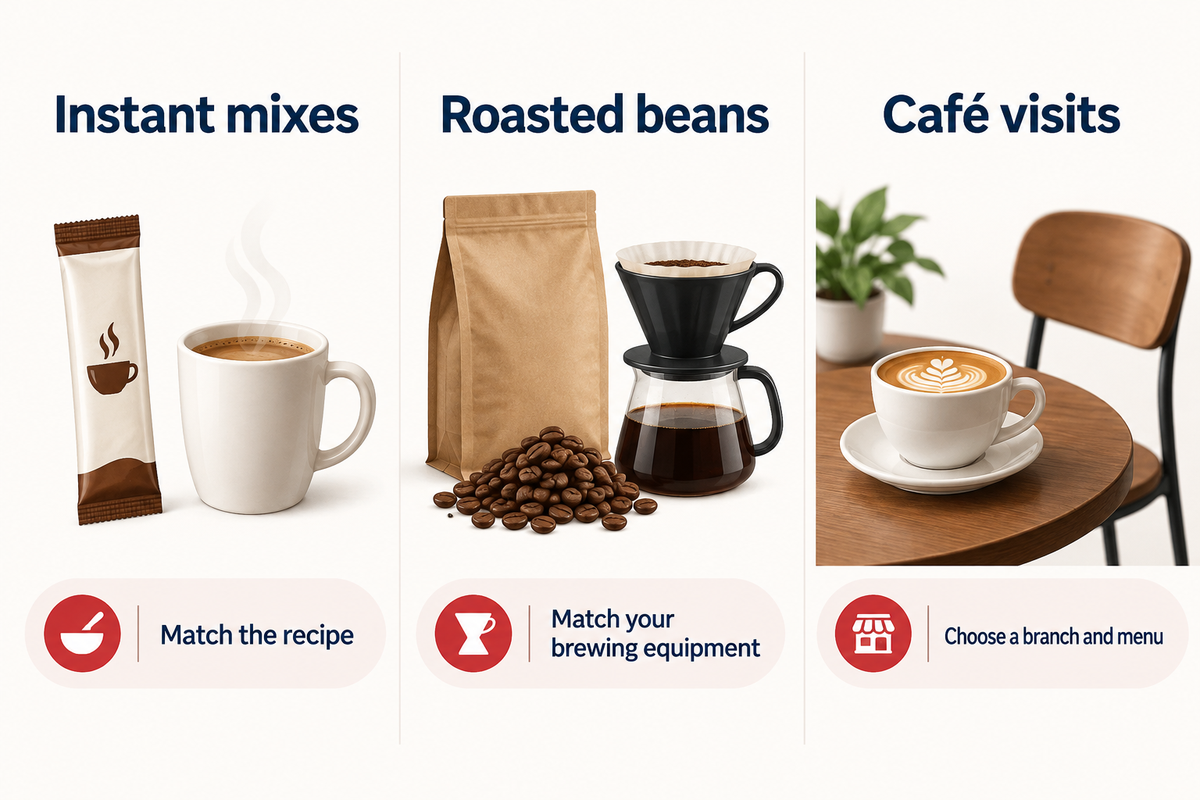
A good starting point is a sweet mix for a quick creamy drink, roasted beans for control over brewing, or a cafe for a ready to drink cup. Good quick picks are described below. The recommendations don’t require every drinker to prefer the same level of roast, sweetness or serving style.
- Best for a familiar instant-mix starting point: Maxim within the Dongsuh Foods portfolio.
- Best for comparing several milk-based mix variants: Namyang French Cafe.
- Best for moving between a café and home coffee sticks: EDIYA Coffee.
- Best for specialty beans with convenient packaged alternatives: Fritz Coffee Company.
- Best for an origin-focused roaster shortlist: Coffee Libre and Momos.
- Best for a coffee-and-cake stop: A Twosome Place.
How We Selected These Coffee Makers and Brands
We selected ten entries covering instant mixes, specialty roasting and cafe visits, using official product ranges, company histories and practical buying formats. Company information was checked against official websites and public sources in October 2026. Non-Korean-origin international chains, equipment manufacturers, directories and duplicate brand concepts were excluded. Maxim and KANU are grouped under Dongsuh Foods to make their shared maker clear.
The recommendations are arranged in the above order. An established date can refer to a company, a consumer brand or a first cafe, and the table differentiates these meanings. “Base” refers to the stated office or operating location, if available. These provide clarity for companies with similar names.
| No. | Brand / company | Base | Established | Formats | Best for | Main distinction | Buying limitation | Official website |
|---|---|---|---|---|---|---|---|---|
| 1 | Dongsuh Foods: Maxim and KANU | Seoul office, South Korea | 1968, company | Packaged coffee; instant choices | Comparing mix and cafe-style lines | Both names share a maker | Recipe varies by product | https://www.dongsuh.co.kr/ |
| 2 | Namyang French Cafe | Seoul, South Korea | 2010, French Cafe brand | Mix, black, stevia and decaf options | Milk-based instant mixes | Non-fat milk in its mix | Black and mix are different recipes | https://company.namyangi.com/ |
| 3 | EDIYA Coffee | Seoul, South Korea | 2001, first store | Café drinks, BEANIST, mixes, capsules | Cafe familiarity at home | BEANIST25 introduced in 2012 | Packaged and café drinks differ | https://www.ediya.com/ |
| 4 | Fritz Coffee Company | Seoul, South Korea | 2014 | Beans, blends, cold brew, coffee bags | Specialty coffee across formats | Producer relationships and Easy Coffee | Whole beans require brewing equipment | https://en.fritz.co.kr/ |
| 5 | Coffee Libre | Seoul, South Korea | 2009 | Blends and single-origin roasted coffee | Origin-focused home brewing | Origin visits and producer connections | Roasted coffee needs extraction | https://m.en.coffeelibre.kr/ |
| 6 | Momos Coffee | Busan, South Korea | 2007 | Roasted specialty coffee; café drinks | Exploring Busan’s roasting scene | Jooyeon Jeon, 2019 world champion | Company-listed cafes are in Busan | https://momoscoffee.net/ |
| 7 | Terarosa | Gangneung, South Korea | 2002 | Roasted beans and drip bags | Filter coffee with a portable option | Retail and wholesale coffee offer | Drip bags need a brewing step | https://terarosa.com/ |
| 8 | Hollys | Seoul, South Korea | 1998, first espresso shop | Prepared coffee, drinks and food | An established espresso-café stop | Gangnam beginnings | Café menu differs from packaged mixes | https://www.hollys.co.kr/ |
| 9 | A Twosome Place | South Korea; cafe network | 2002, first café | Coffee, cakes and desserts | Coffee with cake | Dedicated roasting plant since 2015 | A café visit here depends on branch-specific menu availability. | https://en.twosome.co.kr/ |
| 10 | Mega MGC Coffee | Seoul, South Korea | 2015, first Hongdae store | Coffee and other prepared beverages | Large-format everyday drinks | BIG SIZE 2 SHOT positioning | Size does not specify caffeine content | https://www.mega-mgccoffee.com/ |
A small first purchase is ok. A large multipack is good after you know you like it, but it is a poor way to discover you like black coffee better than a milky mix. For beans, pick a format you can prepare at home. For a café, the branch’s current location and menu are more important than a founding year.
Korean instant coffee: mixes, black coffee and cafe brands
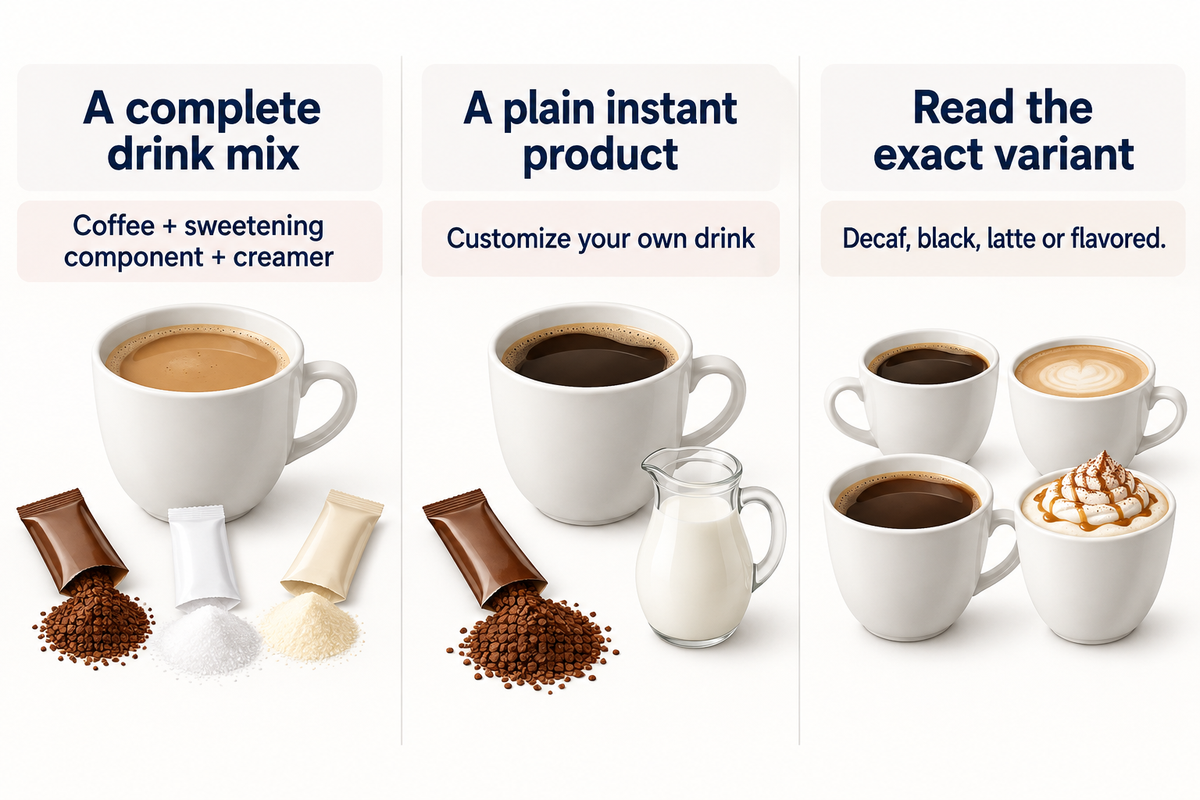
Packaged Korean instant coffee can be a sweet instant coffee mix, a black product, or a flavored latte. “Stick” describes the package shape. Stick packs can contain sugar, milk ingredients, or just a coffee product. The choice depends on the product name on the front label and the ingredient list.
A 3 in 1 mix combines coffee with a sweetening component and creamer in a convenient serving. A plain instant product gives you control over what you add. Both provide convenience, but the former gives you a ready-made balance and the latter allows you to choose your own milk and sweetness.
1. Dongsuh Foods: Best for comparing Maxim mixes and KANU choices
Base: Seoul office, South Korea · Founded: 1968, Dongsuh Foods · Type: food manufacturer and coffee brand owner.
Official website: https://www.dongsuh.co.kr/
Main products: Maxim and KANU packaged coffee products; the company also manufactures coffee creamer.
Notable work: Dongsuh Foods presents Maxim and KANU in the same brand portfolio, while its company introduction dates its launch to 1968.
Maxim is the useful starting name when your idea of Korean stick coffee is a quick, creamy cup, while KANU gives you another product family to explore for cafe-style choices at home. Grouping the two together makes it easier to compare their actual packs without mistaking them for unrelated manufacturers. Choose the exact mix, americano or latte line before choosing a box size; the family name alone doesn’t specify how sweet the finished beverage will be.
Buying limitation: Different products under these familiar names use different recipes and preparation formats, so buying by the logo alone can produce the wrong drink.
2. Namyang French Cafe: Best for milk-based mixes with several variants
Headquarters: Seoul, South Korea, for Namyang · Established: 2010, French Cafe brand · Type: packaged coffee brand.
Official website: https://company.namyangi.com/
Main products: Mild, Original, Arabica Gold Label, Arabica Gold Label Black, Stevia and decaffeinated products.
Notable work: According to Namyang’s product page, its coffee mix combines dual espresso coffee with non-fat milk.
French Cafe offers a useful comparison when you want a milky instant drink but would like to explore different recipes within one Korean instant coffee brand. The presence of both a mix and Arabica Gold Label Black makes the product name especially important, and the stevia and decaffeinated lines answer different preferences again. A shopper replacing a familiar creamy packet can begin with the mix range, while someone seeking a plain cup should look at the separate black product instead.
Buying limitation: The mix, black, stevia and decaffeinated products are distinct recipes; a feature of one doesn’t describe the whole range.
3. EDIYA Coffee: Best for connecting a café brand with home coffee sticks
Headquarters: Seoul, South Korea · Established: 2001, first store · Type: coffeehouse chain with packaged products.
Official website: https://www.ediya.com/
Main products: Café drinks, BEANIST sticks, coffee mixes and capsule products.
Notable work: EDIYA’s official history records BEANIST25 in 2012, BEANIST mini in 2014, and its Dream Factory roasting operation.
EDIYA is useful when you recognize a local café name and want to explore what it offers for home preparation. Its history connects a store business, a coffee research institute and packaged products, giving you more than a café sign to choose from. A BEANIST product can suit a desk or travel bag, while a prepared drink at an EDIYA branch serves a different need and gives you a chance to try the current menu.
Buying limitation: A packaged stick and an espresso-based drink from the café are separate recipes and preparation methods, even when they carry the same brand.
Reading an instant pack without guessing the recipe
The most useful words on a pack describe what you’ll prepare: a mix, black, americano, latte, or decaffeinated. A roast description provides another piece of information. A “dark roast” describes a choice made during the roasting process; the ingredient list, the amount of caffeine, and the level of sweetening are attributes of the product.
The initial comparison is between a complete drink mix and a plain instant product you will customize. The maker of the drink mix has chosen a balance of components. Comparing a ready-made mix with black coffee and your preferred milk is more useful than assuming a premium product description means a drink closer to your own taste.
For preparation, follow the instructions provided on the product itself. Stir the contents into the specified amount of hot water and don’t assume each stick is for the same mug size. If a full mug tastes weak, the issue may be dilution rather than the roast. A coffee-only packet and a creamy mix can look similar in size but produce quite different servings.
Instant coffee powder is prepared to dissolve. Ground roasted beans need to be extracted and separated from the drink. That’s especially important when you switch from a stick to a filter bag. Our article on freeze-dried coffee describes one of the production methods, and the product’s own instructions are more useful for the practical side of your cup.
Korean coffee roasters and specialty beans
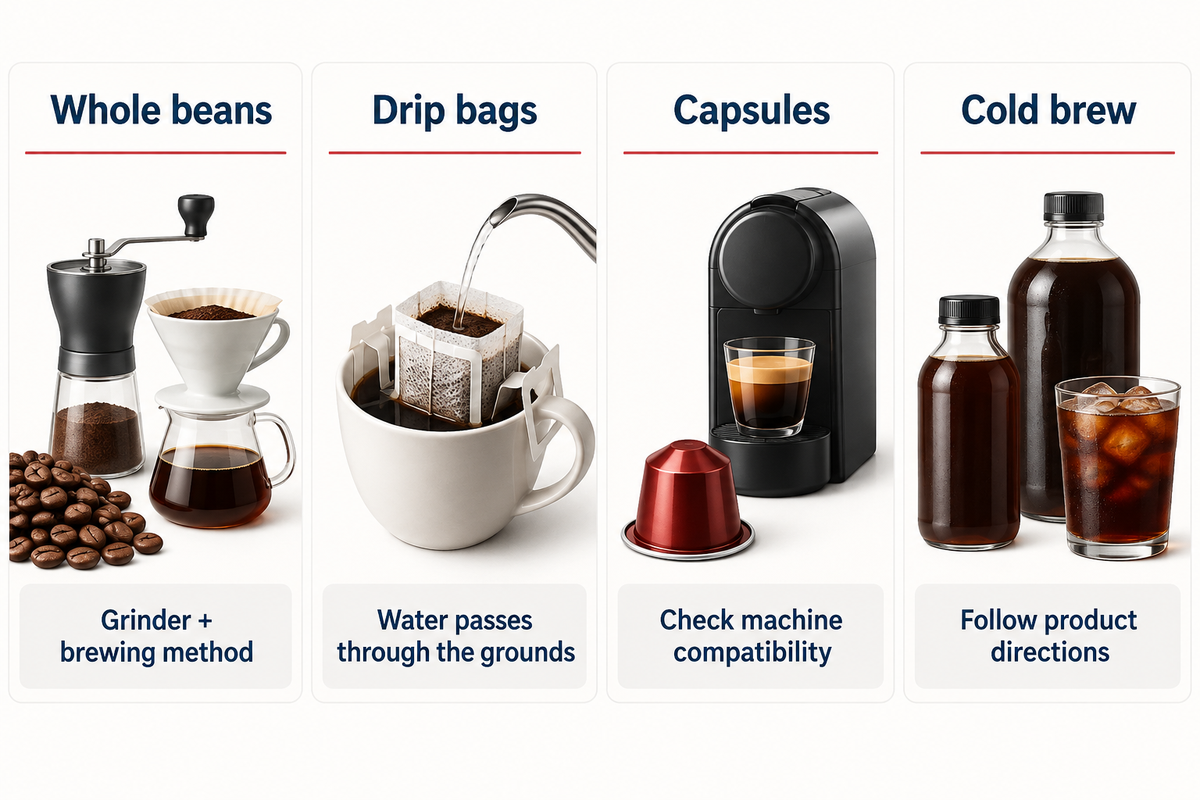
Fritz, Coffee Libre, Momos and Terarosa are useful places to begin exploring roasted coffee from Korean businesses. Here, choosing the bag or brewing format matters as much as choosing the company. Whole beans, pre-ground portions, drip bags and capsules require different equipment and give you different amounts of control.
A Korean roaster may purchase coffee grown elsewhere and roast it in Korea. The origin name on the bag indicates where the beans were grown, and the roaster’s name identifies the business that selected and prepared them. Reading those two pieces together is more informative than treating “Korean coffee” as a single bean origin or flavor profile.
4. Fritz Coffee Company: Best for specialty beans and convenient formats
Base: Seoul, South Korea · Founded: 2014 · Type: specialty coffee roaster and café operator.
Official website: https://en.fritz.co.kr/
Main products: Single-origin coffee, blends, cold brew and coffee bags.
Notable work: In an interview with commercial partner Morning, co-founder BK Kim describes direct relationships with producers and the convenience idea behind its Easy Coffee formats.
Fritz offers a practical route into a roaster’s range when you want to choose how much preparation to do yourself. Its official categories let you begin with a blend or single-origin bag, then consider a more convenient format for a different part of your day. The founder interview also discusses capsules, showing how a specialty-roasting business can make its products accessible beyond a grinder-and-pour-over setup.
Buying limitation: A whole-bean bag still requires grinding and brewing equipment; it shouldn’t be ordered as a substitute for a ready-to-brew pack when you have only a kettle.
5. Coffee Libre: Best for origin-focused home brewing
Headquarters: Seoul, South Korea · Founded: 2009 · Type: specialty coffee roaster.
Official website: https://m.en.coffeelibre.kr/
Main products: Blends and single-origin roasted coffee.
Notable work: Its own introduction describes visits to coffee origins, careful roasting and connections between producers and customers; B Lab’s company directory records its Seoul headquarters and 2009 founding.
Coffee Libre belongs on a shortlist for a drinker who enjoys learning where the beans came from and how a roaster presents them. That sourcing emphasis gives you a useful way to compare a familiar blend with a new origin while keeping your brewing method consistent. Choose a bag that fits the equipment you already use, then let the origin and roast description guide which direction to explore next.
Buying limitation: Its roasted-coffee offer needs a brewing step, so it doesn’t replace the tear-and-dissolve routine of an instant mix.
6. Momos Coffee: Best for exploring Busan’s specialty scene
Base: Busan, South Korea · Founded: 2007 · Type: specialty coffee roaster and café operator.
Official website: https://momoscoffee.net/
Main products: Roasted specialty coffee and prepared café drinks.
Notable work: Momos identifies Jooyeon Jeon as the 2019 World Barista Champion and dates its direct-trade work to 2011.
Momos gives this selection a Busan base and a clear connection between roasting, sourcing and barista craft. The company traces its beginning to a small take-out operation in 2007 and describes later relationships with producers, making its own story more specific than a general claim of high-quality coffee. For someone visiting Busan, a café stop and a bag to take home can be complementary ways to explore the same roaster.
Buying limitation: The cafés listed in the company’s profile are in Busan; a Seoul-only itinerary calls for a packaged purchase or a separate trip.
7. Terarosa: Best for roasted beans with a drip-bag option
Base: Gangneung, South Korea, registered company address · Established: 2002 · Type: specialty roaster and café brand.
Official website: https://terarosa.com/
Main products: Roasted coffee beans and drip bags.
Notable work: Terarosa’s official website describes the brand as dating from 2002 and lists both packaged retail products and wholesale coffee supply.
Terarosa is useful when you want the option of a bag for your regular brewer and a smaller brewing format for time away from home. A drip bag carries a portion of ground coffee and its filter together, making it portable without turning it into instant coffee. That distinction is helpful for a traveler who has access to hot water but wants a brewed cup rather than a complete sweetened mix.
Buying limitation: Water must pass through the grounds in a drip bag; emptying the grounds directly into a mug won’t make them dissolve.
Choosing a roaster’s format before choosing a bag
Your equipment will quickly narrow the choice. Whole beans suit someone who has a grinder and a preferred brewing method. Pre-ground coffee removes the step of grinding the beans, but still requires a brewer. Capsules and filters are also options, but a brewing method is still required. Cold brews come ready to drink or as concentrate, so product directions determine preparation.
Consider a blend as a starting point toward a familiar product, or a bag of single-origin as an opportunity to experiment with a new product. A number of factors, including roast level, the nature of the bean, and your particular way of preparing coffee, will ultimately determine the final flavor of your coffee. Choose the description closest to your palate rather than the most elaborate description on the product shelf.
While understanding tasting notes can be similar to interpreting ingredient lists, there are a few differences. Descriptive words such as nutty, toffee, or cocoa may represent the maker’s sensory impression of a plain roasted product. By contrast, a flavored mix can contain an added ingredient or flavoring. Identifying ingredients and flavorings is done via an ingredient list, and sensory impressions are described via tasting notes.
Limit the number of variables you’re switching at a time. If you switch roaster, grind, brewer and recipe at once, it becomes difficult to tell which change you enjoyed. Switching to a new bag of coffee gives you a better basis to judge which change you prefer next. The overview of coffee brewing methods can help you identify a good brewing method before you buy equipment.
Packaging convenience doesn’t require giving up a roaster preference. The Fritz co-founder interview explains the thinking behind an easier-to-prepare format. The useful shopping question is which formats that roaster currently sells and which one fits your routine, rather than whether all specialty coffee must be prepared in the same way.
Korean coffee chains for a cafe visit
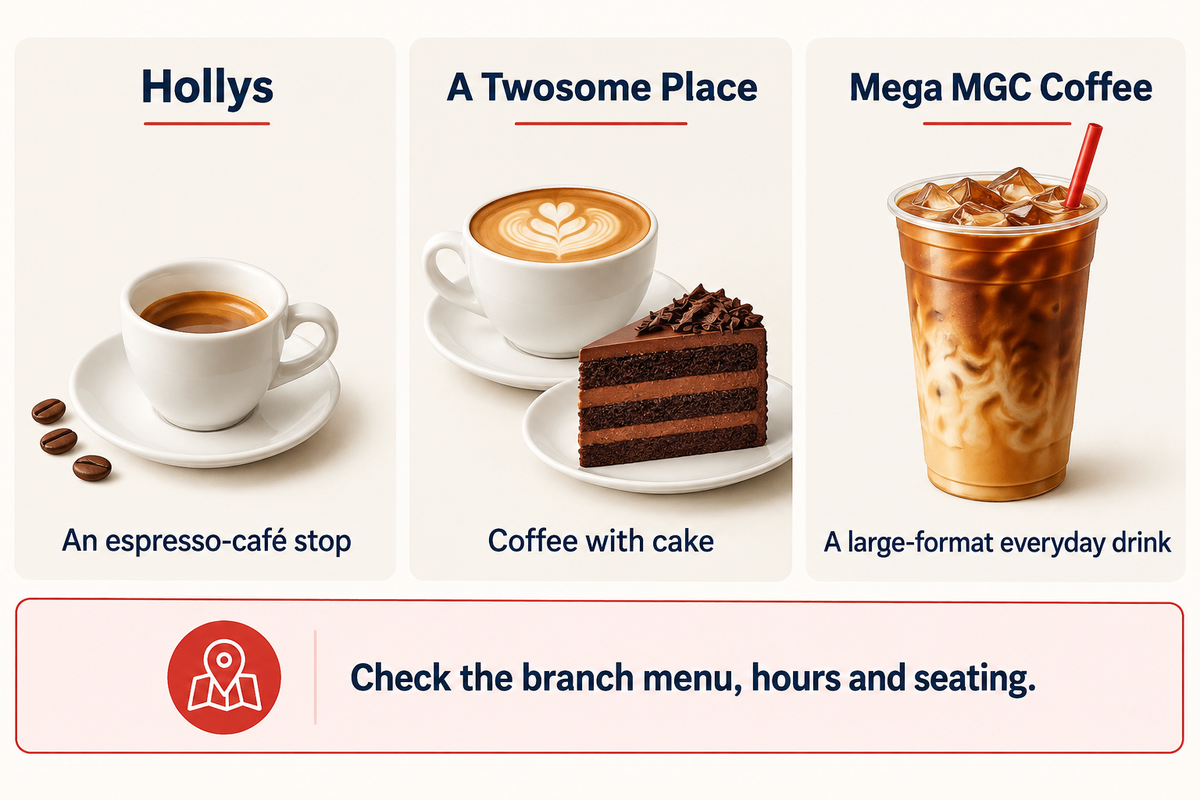
Hollys, A Twosome Place and Mega MGC Coffee suit different kinds of cafe stop: an established espresso-café option, coffee with cake, and a large-format everyday drink. A nearby branch’s menu, opening hours and seating determine how useful it is for the visit you actually have in mind.
Korean coffee culture includes both a quick takeaway drink and a leisurely café visit. A coffee shop in a drama may introduce you to a brand, but it doesn’t tell you what to order at your local branch. Decide based on the beverage you want and the setting you have in mind. Don’t let a known or trendy name make all the decisions for you.
8. Hollys: Best for an established espresso-café option
Headquarters: Seoul, South Korea · Established: 1998, first espresso shop · Type: coffeehouse chain.
Official website: https://www.hollys.co.kr/
Main products: Prepared coffee, other drinks and café food.
Notable work: Hollys dates the opening of its Gangnam espresso shop to June 1998 in its official history.
Hollys is a straightforward name to include when exploring Korean café culture through an espresso-based drink and a place to pause. Its history gives it a different role in this list from a packaged instant coffee brand, while the current website presents drinks and food for a café visit. Choose a branch that suits your route, then decide between a black drink, a milk-based option or something else from that branch’s menu.
Buying limitation: The café menu is a prepared-drink choice, so its espresso offer shouldn’t be treated as the same purchase as a boxed instant mix.
9. A Twosome Place: Best for coffee with cake
Operating market: South Korea · Established: 2002, first café · Type: coffee-and-dessert café chain.
Official website: https://en.twosome.co.kr/
Main products: Coffee blends, cakes and café desserts.
Notable work: Its official timeline records a dedicated roasting plant in 2015, alongside the development of its dessert offer.
A Twosome Place is the clear choice in this group when the cake is part of the plan rather than an afterthought. Its company history presents coffee, sweets and the space around them as a connected experience, which makes it a useful option for a leisurely stop. A black drink can keep the order simple when you already want a sweet dessert, while a milky beverage makes a different pairing.
Buying limitation: For a café visit and dessert pairing, some menu items vary by branch; instant recipes or whole-bean bags for home involve a different purchase.
10. Mega MGC Coffee: Best for a large-format everyday drink
Headquarters: Seoul, South Korea · Established: 2015, first Hongdae store · Type: coffee and beverage chain.
Official website: https://www.mega-mgccoffee.com/
Main products: Prepared coffee and a varied beverage menu.
Notable work: The company uses BIG SIZE 2 SHOT positioning and describes an Arabica coffee offer on its official brand page.
Mega makes sense for someone whose main goal is a large drink during an ordinary day rather than an extended specialty tasting. That size-led positioning gives it a distinct role beside the roasters and dessert cafés above, without requiring you to treat it as a substitute for every other value-oriented chain. Use the current menu to choose a straightforward americano or a more elaborate beverage according to what you actually feel like drinking.
Buying limitation: A large cup and a shot-count slogan don’t specify the caffeine content of every drink on the menu.
Other Korean names worth keeping on your shortlist
Other possible brands include Compose, Paik’s Coffee and The Venti. Tom N Toms and Caffè Bene are also useful names to recognize when browsing local café options.

For specialty roasting, Anthracite and Namusairo can extend your exploration beyond the four roasters profiled here. A historical Sprudge feature on Korean roasters includes Namusairo and Coffee Libre, illustrating the breadth of the scene. Its particular blends and tasting notes belong to that feature’s period, so use a current product catalogue for an order.
Angel-in-us, Coffee Bay, Coffine Gurunaru and Droptop are additional café names to consider. Look for the actual branch you intend to visit rather than treating an older list as a live store directory. Twosome Studio isn’t counted as a second independent brand here; the main A Twosome Place entry covers the brand-level choice.
How to choose Korean coffee with the 3-Question Coffee Match
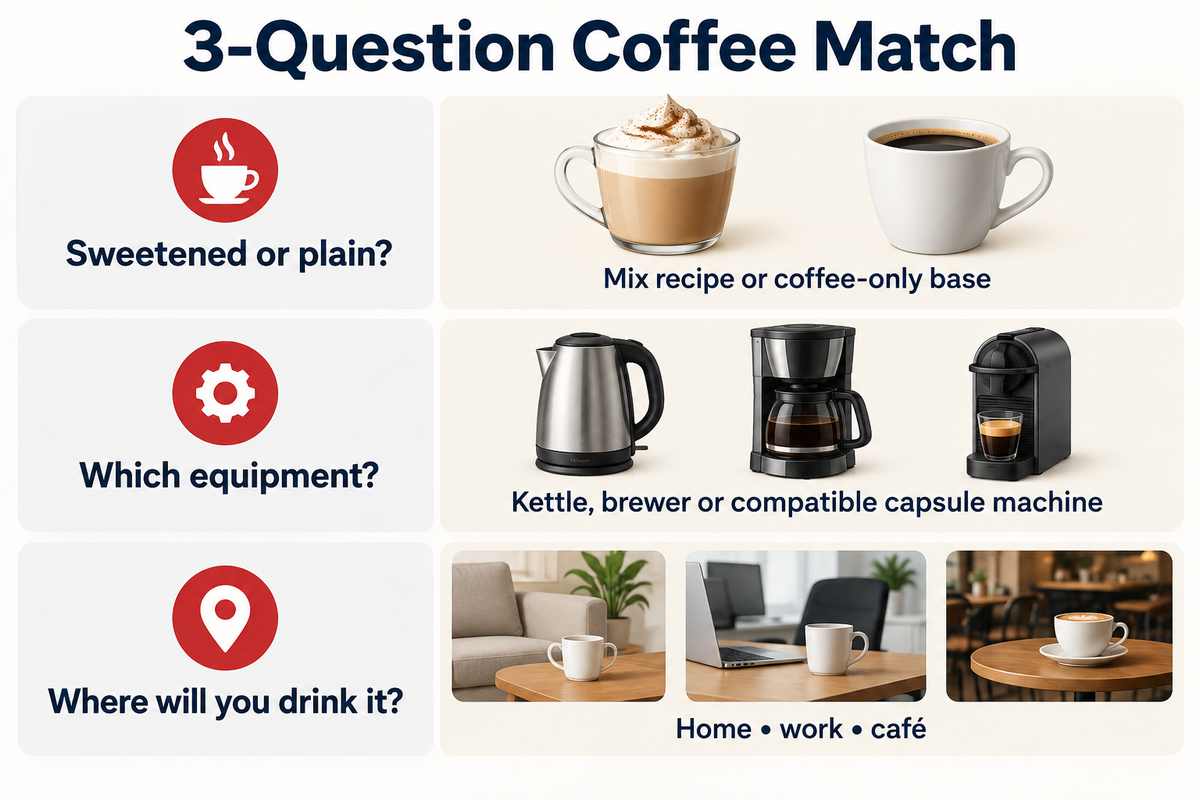
The 3-Question Coffee Match determines whether you want your drink fully sweetened, what equipment you’ll use, and where you’ll consume it. Once you’ve determined those things, you can then decide what other considerations to weigh.
Which Korean coffee should I choose if I do not want a sweet drink?
Choose a ready-made mix for a creamy drink, or select a product labeled as having no added sugar and no milk ingredients for a plain cup. A brand can sell both. Plain roasted beans, brewed without additions, also provide a route to black coffee if you already have suitable equipment.
The French Cafe product range makes the distinction visible: the mix and Arabica Gold Label Black are separate offerings. Stevia and decaffeinated labels answer different questions again. One describes a sweetening choice, while the other concerns caffeine removal. Neither word by itself means “plain black coffee.”
If you prefer to add your own milk, you can start with a coffee-only base and build the drink from there. A complete mix is a convenient choice if you prefer the maker’s finished balance in one stick. Comparing different products designed for different results can happen when you try to find a perfect mix without first deciding your preference.
For a non-dairy preference, or if you have an ingredient restriction, check the complete ingredient and allergen information for the product you’re interested in. Product colors, a creamy appearance and an English marketplace description are weaker guides than information on the product itself. This is where to identify if there’s a dairy ingredient or a plant based substitute.
How do I choose between instant sticks, drip bags, beans and capsules?
In terms of preparation, instant coffee is the easiest option, if you have only a kettle. You can also use a drip bag, to brew it through a filter. A brewer with a grinder gives you flexibility with whole beans. You’ll also need to identify the machine, if you’re buying a capsule, for a compatible brewer.
When buying gifts, these details matter most. A bag from an admired roaster may be an awkward present for someone without a grinder. A capsule gift may also be unhelpful if it’s for a different system. A portable drip bag removes the need to own a separate grinder and dripper. However the recipient still needs to own a suitable vessel and be able to pour water to use the bag.
A “Coffee bag” can also describe various preparations. Some products hang a filter over the edge, while others steep in water. You may want to follow the instructions for the bag you own, rather than assume all bags work the same way. The convenience of the bag is in the portioning, while the extraction method still determines how the drink is made.
When buying capsules, it’s important to look for the compatibility wording for your machine. Appearance can be deceiving and similar looking capsules may not be interchangeable. Brand names and systems are different things and a company can sell more than one format. Our Nespresso and Dolce Gusto system comparison illustrates how the physical format of a capsule is important, specifically for companies choosing a product line.
Will you drink it at home, at work or in a café?
Choose packaged portions for travel and a café branch with the right menu and setting for a visit. A home purchase rewards repeatability. A visit adds practical questions about location, opening hours, seating and if you want to drink there, or takeaway.
On the job, the facilities available determine what’s practical. A kettle makes a stick simple to make. If grounds are available, a way to brew and dispose of them is needed. If several people share the supply, separate plain and mixed products so that a recognizable box doesn’t become an assumption about others’ preferences.
For a café outing, check the branch rather than relying only on the chain name. Different activities, such as takeaway americanos and a meeting over dessert, require different places. A branch’s current menu may include tiramisu or another dessert, but it does not guarantee that other branches sell that particular dessert.
A favourite routine allows for a stable starting point at home. A new coffee or blend can be incorporated into it before buying a new coffee maker. The goal is a tasty cup that’s repeatable and predictable, whether it’s a quick weekday morning cup or a longer weekend brew.
How should you compare packs fairly?
Comparing prices of pack products with the same preparation format and intended use is recommended. A box of mix sachets, a bag of beans and a set of capsules contain different products and require different equipment. Begin with quantity of servings/net weight, delivery and equipment.
- Match the recipe: Compare sweet mixes with sweet mixes and plain products with plain products.
- Match the serving: use each product’s preparation instructions; packet count alone does not establish an identical finished cup.
- Match the equipment: Include a grinder, brewer or compatible capsule machine only if your chosen format requires it.
- Read the dates: Distinguish a roast date from a best-before date and consider how quickly you’ll use the product.
- Read the actual variant: Decaf, black, latte and flavored versions may appear under the same product listing.
- Check the seller’s total: Delivery costs and destination restrictions can affect the practical purchase.
- When ordering from a café, considering which branch has the menu you want and its current seating and hours is more useful than assuming the same across the chain.
Only when these details match can you assess price against your routine. A larger order is helpful only if you will enjoy and use it. Coffee drinking can be part of South Korean culture in many forms, but your own coffee consumption and preparation habits are the better guide to how much to buy.
A small home comparison that helps with your next order
Compare a product you already enjoy with one unfamiliar product in the same format. For example, put your usual creamy mix beside a French Cafe mix, or your regular whole-bean blend beside a Fritz blend. This gives you a familiar reference. Comparing an iced café mocha against a plain instant americano would tell you more about your preferred drink recipe than about the makers.
First, prepare each product according to its own instructions. Use clean cups and taste before adding anything else. Based on your experience, remember what you would say in plain language to describe the sweetness, strength, and finish. Would you say it’s too sweet to enjoy for breakfast? Is it pleasant to drink with milk? Is it easy to drink straight (black)? You don’t need a professional tasting vocabulary to identify what you want to repeat.
Next, try the real-life adjustment you would make at home. Would you add milk to your coffee? Compare those drinks as well. If you like how a certain change turned out, note it so you can make that same change again in the future. Ultimately, buying a new brand is helpful when it helps you to have an improved daily drink; an impressive description alone can’t predict that for you.
This is about what you prefer, not about score based comparisons between the makers. The coffee options provided in the table give starting points for different routines. You should record the product name and format with your notes, because a good experience with a roaster’s blend doesn’t automatically predict your experience with its instant or capsule coffee.
Packing coffee for a trip or choosing a useful gift
Instant sticks are easy to prepare in a hotel room as they only require water and a cup. Hanging drip bags also need space to hang the filter over a cup and require a controlled pour. A whole-bean bag needs a grinder and brewer, and creates used grounds to dispose of. Choose a format based on the facilities you’ll actually have, rather than the equipment you hope to find.
Separate sweetened mixes from plain products and keep the original packaging for each. This allows everyone to view the ingredients and easily identify the recipe. A mixed selection is useful only if the individual portions remain identifiable. Removing the outer box to create a prettier gift may also remove the information that makes it easy to use.
A Coffee Libre or Momos bag makes a useful gift when its grind and preparation match the recipient’s home brewing method. For a recipient whose equipment is unknown, a clearly labelled instant or drip-bag product is easier to explain than an unfamiliar capsule. Include the maker’s preparation instructions with the gift.
Keep individual portions unopened in their original packaging during the trip and follow the storage instructions. Before you take food across a border, check the destination’s official entry guidelines for the actual ingredients that you carry. A plain roasted product and a milk-containing mix, for example, may raise different kinds of questions. The package is useful for both preparing the drink and identifying the ingredients.
Where to buy Korean coffee outside Korea
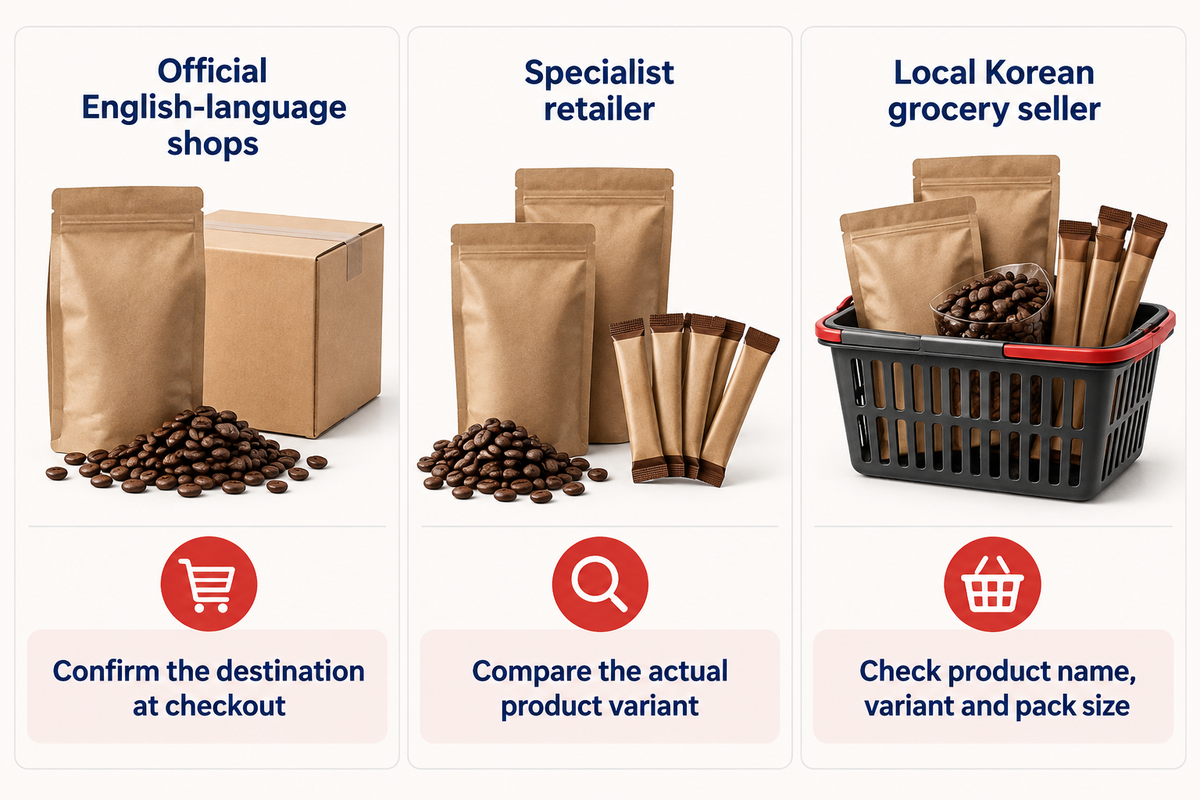
Buy through an official shop, a specialist retailer or a local Korean grocery seller according to the format you want. For a concrete US example, Kumquat’s Fritz listing offers several Fritz formats and identifies a Los Angeles pickup location. Its selection illustrates a buying route; individual variants and stock can change.
A specialist seller can be useful when you want a particular roaster without building a cross-border order yourself. The Fritz listing, for example, separates bean blends, an instant product, capsule options and drip bags. Reading the variant selector carefully is essential: the first product photograph and the name at the top may describe a family of items rather than the exact one in your cart.
Official English-language shops provide another starting point for Fritz, Coffee Libre and Momos. An English interface is convenient for browsing, but the destination and product must still be accepted at checkout. Choose the item first, then examine the delivery options shown for your address.
Korean grocery stores and their online catalogs are good starting places for packaged mixes. When comparing instant Korean coffee across different sites, check the full product name, variant, and size of the pack. Similar artwork may appear on different box sizes, and retailers may translate the names on imported packaging differently. The product label is the common reference.
For roasted beans, consider the date info, and how the order fits your use. A larger selection is less useful if the particular roast you want isn’t available, and/or the quantity is more than you’ll use comfortably. Our guide to coffee dates, freshness and storage discusses reading the package and storage of the different formats.
When buying on someone else’s behalf, send along the format information with the gift. Instructions like whole bean, ground coffee, instant, drip bags and capsules are practical and not just marketing groups. A short note with the product and preparation method can be more helpful than a long brand story.
To make a repeat purchase, having a photo of the pack and the precise variant name helps to find the same recipe. This is particularly useful when a shop sells various mixes with similar names, or when you have to make a purchase across different languages. You can then look for a different product on purpose, rather than accidentally receiving a different one.
Frequently asked questions
What is Maxim coffee good for?
Maxim coffee mix suits a quick, sweet and creamy drink when you don’t want to use a brewer. Start with the water directions on the particular stick rather than filling a large mug automatically. Maxim covers more than one product, so choose the exact recipe you enjoy before ordering a larger pack for regular use.
It’s especially practical when you want the same recipe without separately measuring coffee, sweetener and creamer. For someone who prefers changing the milk or sweetness from day to day, a plain product may be a better starting point. Try the intended serving before changing it: adding extra water to fill a travel mug can make a mix seem weaker than the drink it was designed to produce.
Are Maxim and KANU made by the same company?
Yes. Dongsuh Foods presents Maxim and KANU in its coffee brand portfolio. They’re grouped together in this guide to make that shared maker clear. The connection doesn’t make their products identical: compare the actual mix, americano or latte product, including its ingredients and preparation directions, rather than assuming every pack offers the same drink.
Does Korean coffee mean the beans were grown in Korea?
No. A Korean brand or roaster can use beans grown in other countries. Coffee Libre describes visiting origins to buy coffee, and Momos describes direct-trade relationships with producers. For a bag of beans, read the named origin separately from the roaster’s address. One identifies the coffee’s growing origin; the other identifies the business preparing and selling it.
Can you make Korean instant coffee with ice?
Yes. Follow the product’s iced-drink directions, dissolving it as directed before adding ice cubes.
Which other Korean cafés should I look for?
Compose, Paik’s Coffee and The Venti are additional options for an everyday café stop; Tom N Toms and Caffè Bene are other names to recognize. For specialty roasting, add Anthracite and Namusairo to your exploration. Pick a nearby branch or an available product that suits your route and brewing setup. Choose another product in the same format as a coffee you already enjoy for a useful comparison.
What should I check when comparing caffeine information?
Compare the declared caffeine per prepared serving and its serving size. Use figures for the exact product, rather than a brand-wide estimate.
Is dalgona coffee a Korean coffee brand?
No. Dalgona coffee is a prepared drink style, rather than one of the coffee brands in this list. It’s commonly associated with whipped instant coffee, sugar and water served with milk. If that’s the drink you’re craving, choose a recipe and its specified instant ingredient. A premixed latte or creamer sachet has a different composition from plain instant coffee, so it isn’t automatically an equivalent substitution.
Turning a coffee concept into a packaged product
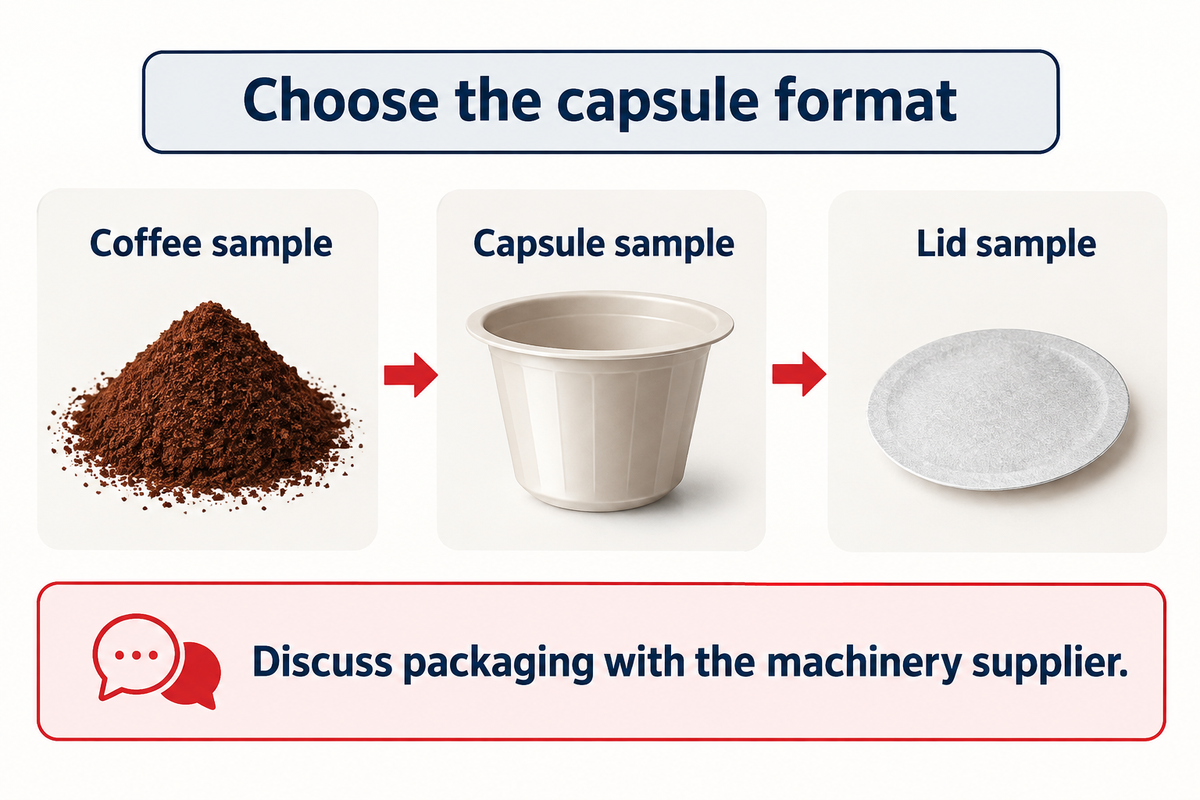
For a roaster or brand team, the next big decision is the product format you want to sell. There are different arrangements for producing beans, instant mixes, drip bags and capsules. A distinctive aroma or blend is just a part of this decision; the package and prep method also need to suit the customer.
AFPAK offers K-Cup Filling Machines and Nespresso Capsule Filling and Sealing Machines. When developing a capsule product, figure out the format you want to sell, and bring samples of the coffee, capsules and lids to discuss packaging with the machinery supplier.
For everyday drinkers, start with the category that fits your routine: convenient mixes, a roaster’s bag or a café visit. Choose one product that you can prepare easily, then use what you enjoyed about it to help you pick the next product.
References & Sources
Company histories and product descriptions below support the dates, locations and formats in this guide. The comparison recommendations are editorial judgments about those formats. They aren’t results from a tasting panel, and no relationship between these coffee brands and AFPAK is implied.
- Dongsuh Foods company introduction company origins and manufacturing activities.
- EDIYA company history first store, BEANIST development and roasting operations.
- Coffee Libre company directory entry B Lab listing for founding year and headquarters.
- Momos company and café story Busan origins, producer relationships and barista history.
- A Twosome Place history café origins and the development of coffee and desserts.


