
Updated October 2026
Coffee capsule provides an estimate of the water vapor transmission rate (WVTR) of sealed coffee packs. A complete qualification program differentiates whole-pack permeation from initial roast moisture, internal equilibrium humidity and gross rim leaks.
Relying on a flat-sheet film certificate alone misses corner draw-thinning and heat-seal flange pathways that occur during the coffee production process. When procurement teams evaluate candidate shells and lidding foils across environmental conditions, every report must capture the geometry, conditioning atmosphere and reporting unit of the specimen.
Control of the amount of water that reaches the roasted coffee bean after processing or manufacturing safeguards the bean’s aroma and stability of the beverage.
Quick Specs: Four Moisture Verification Pillars
- Whole-pack permeation: grams or milligrams of vapor per package per day (g/pkg/day) at locked temperature and humidity.
- Flat-film permeation: grams per square meter per day (g/m²/day) per ASTM F1249-25 or ASTM E96/E96M-24a.
- Product moisture state: dry-basis mass fraction (g H₂O/gdw) paired with thermodynamic water activity (aw).
- Closure integrity: non-destructive vacuum decay per ASTM F2338-24 and strip peel force per ASTM F88/F88M-23.
- Freshly roasted coffee starts near aw = 0.090 and crosses its critical monolayer near aw0 = 0.43 long before bulk caking appears.
- Thermoformed corners and heat-seal flanges dominate finished-pack vapor entry, requiring epoxy-mounted cartridge testing.
- Separate instrument repeat readings from independent physical containers and multi-shift production lots.
Coffee Capsule Moisture Barrier Testing Separates Four Distinct Moisture Metrics
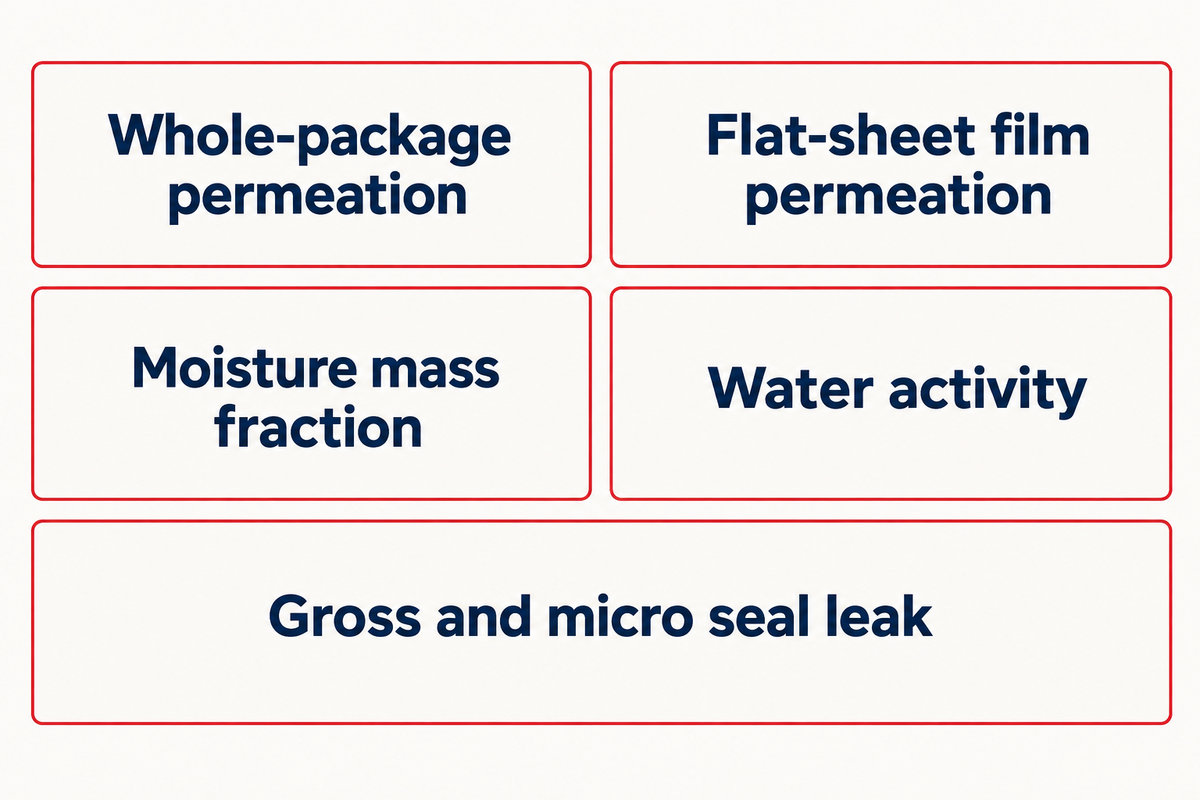
Separate container transmission rate (SCTR) describes the rate of water vapor transmission through a coffee pack. The initial mass of ground coffee and its water activity (aw) as determined by equilibrium moisture content (EMC) and mechanical seal leakage must also be evaluated to verify the integrity of a coffee pack.
Does coffee absorb moisture?
roasting coffee grounds drives off most of the free and chemically combined water and leaves a coffee matrix that’s roughly 0.27% to 1.5% on a dry basis. When relative humidity air comes in contact with a single-serve coffee pack, the coffee bed rapidly sorbs moisture until its internal vapor pressure equals that of the headspace.
In a December 2024 Food Packaging and Shelf Life study by Lopriore and colleagues, 7 g doses of medium-roast Arabica sealed in biodegradable polybutylene succinate shells started at aw = 0.090 ± 0.004 and moisture M = 0.0027 ± 0.0002 g H₂O/gdw (measured by AOAC 979.12 vacuum oven at 1.32 kPa and 70 °C for 15 hours). At that dry state, the glass transition temperature stood at Tg = 52 °C.
As vapor deposited on the container walls during storage, Guggenheim-Anderson-de Boer modeling (C = 2.11, b = 0.95) indicated that the critical monolayer would occur at aw0 = 0.43 and m0 = 0.033 g H₂O/gdw, at which point Tg lowered to 34 °C. Crossing that monolayer plasticized the matrix into a rubbery state, accelerating chlorogenic acid ester hydrolysis and dropping brew pH from 5.40 ± 0.06 below 5.1.
It’s worth noting that aw0 = 0.43 and m0 = 0.033 g H₂O/gdw are specific to one particular medium-roast arabica coffee formulation. Different roast profiles, Robusta blend ratios, granule size distributions, and storage conditions shift the moisture sorption isotherm, so teams must establish product quality cutoffs for each preparation method rather than treating 0.43 as a universal rejection law. Therefore, it would be appropriate for each preparation method to set its own product quality limits, rather than assuming a value of 0.43 to universally reject a lot.
In standard moisture analysis, how adsorption and hygroscopic behavior alter the moisture content of coffee when oxygen and moisture penetrate a single-serve coffee container, is documented. Rapid near-infrared spectrum models in conjunction with principal component analysis, can be used to screen unpacked lots, along with traditional oven test method validation.
| Measurement Metric | Standard Reporting Unit | Test Specimen & Method | What It Proves | What It Cannot Prove |
|---|---|---|---|---|
| Whole-package permeation | g/pkg/day or mg/cavity·day | Empty sealed container epoxy-mounted on test cartridge | Steady-state vapor transfer across body, rim, and lid | Initial roast dryness or gross pinhole occurrence across a shift |
| Flat-sheet film permeation | g/(m²·day) at stated T and RH | Unformed film or foil coupon (ASTM F1249-25) | Intrinsic web barrier before forming or heat sealing | Corner thinning after deep drawing or flange seal integrity |
| Moisture mass fraction (M) | % wet basis or g H₂O/gdw | Unpacked roast bed via vacuum oven (AOAC 979.12) or halogen balance | Total bound plus free water present after quenching and grinding | Container permeation rate or thermodynamic reactivity threshold |
| Water activity (aw) | Dimensionless ratio (0.00 to 1.00) | Equilibrated bed in dew-point or capacitive hygrometer chamber | Equilibrium vapor pressure ratio driving matrix plasticization | Whether excess water entered through the wall or during grinding |
| Gross and micro seal leak | Pa·s⁻¹ decay or strip force (N/15 mm) | Intact container (ASTM F2338-24) or peel strip (ASTM F88/F88M-23) | Mechanical closure continuity and peel separation mode | Diffusive vapor permeation through an intact polymeric wall |
No flat-film datasheet or roaster moisture certificate shows sealed unit performance in a humid environment. Keep those beds checks, whole-pack permeation and coffee capsule (barrier verification) tests in separate qualification columns.
Choose Between ASTM F1249 Infrared Sensors, ISO 15106, and ASTM E96 Gravimetric Cups
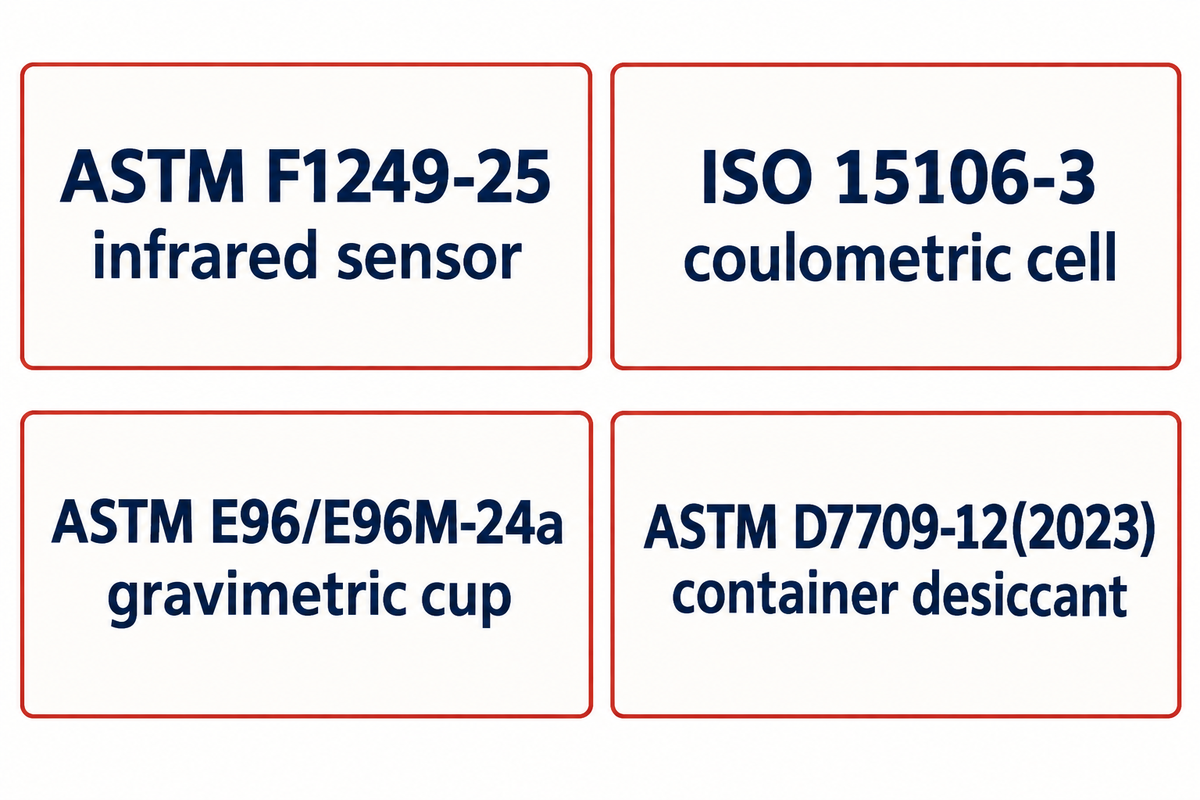
Select sensor-based permeation analyzers (ASTM F1249-25, ISO 15106-2, or ISO 15106-3) for high-barrier containers, and reserve gravimetric cups (ASTM E96/E96M-24a) for higher-permeance materials when outgassing is absent. Matching the detector to the expected permeation range prevents false zero readings and mass-balance errors.
Which water vapor permeance test should you use: ASTM E96 or ASTM F1249?
Use ASTM F1249-25 (or electrolytic phosphorous pentoxide cells) for barrier sheets that transmit less than 0.1 g/(m²·day) and/or require whole package mounting. Use ASTM E96/E96M-24a (gravimetric desiccant or water cups) for barrier sheets that are between 0.01 and 0.1 g/(m²·day) and have a wax seal.
Check the active revision year on every laboratory quote. ASTM International updated F1249 to ASTM F1249-25 in November 2025 (superseding ASTM F1249-20), updated E96 to ASTM E96/E96M-24a in November 2024, and updated E398 to ASTM E398-24 in January 2025. Scope 1.3 of ASTM E398-24 states that water vapor leakage past the clamping seal gives any WVTR method (including Test Methods E96/E96M desiccant procedure at 37.8 °C and 90% relative humidity) a possible lower limit of approximately 0.01 g/(24 h·m²) that can be checked on each instrument with an aluminum foil specimen and compensated by calibration.
“Values for water vapor permeance and water vapor permeability must be used with caution.”
Note 1 of ASTM F1249-25 states that values for water vapor permeance and water vapor permeability must be used with caution, because an inverse relationship to thickness and a direct relationship to water vapor partial pressure differential do not always hold. Likewise, Clause 5.2.1 of ASTM E96/E96M-24a states that a WVTR result obtained under a given set of conditions cannot be used to foresee the result that will be obtained under a different set of conditions.
For ultra-high-barrier structures such as aluminum or thick metallized lidding, AMETEK MOCON’s AQUATRAN 3/34 coulometric phosphorus pentoxide analyzer specifies a flat-film lower detection limit down to 0.005 g/(m²·day). A given instrument’s sensitivity to flat-sheet preparations, however, doesn’t determine the quantification limit for a mounted, whole-container system, which is also a function of epoxy seal area, copper tubing blanks, and the variance in repeated mounting.
Never perform weight-gain measurements on containers filled with freshly roasted coffee. Freshly ground coffee releases carbon dioxide (1% to 2% of roast mass) and volatile compounds; as carbon dioxide escapes or diffuses out, the mass loss masks water uptake on an analytical balance. Loss-on-drying and tga apparatus Drive Off the volatile components of roast, along with water, unless calibrated against a Karl Fischer Titration or Vacuum Oven-desorption.
| Standard / Method | Active Edition | Detection Principle | Typical Specimen Scope | Practical Floor / Blank Rule | Primary Limitation for Coffee |
|---|---|---|---|---|---|
| ASTM F1249-25 / ISO 15106-2 | Nov 2025 | Pulse-modulated infrared sensor | Flexible films, sheets, and cartridge-mounted packages | ~0.005 g/(m²·day) film; package LoQ set by fixture blank | Requires dry nitrogen carrier purge and leak-free epoxy adapter for 3D cups |
| ISO 15106-3 / Coulometric P₂O₅ | Active | Electrolytic Faraday current across P₂O₅ coating | Ultra-high-barrier laminates, foils, and mounted containers | 0.005 g/(m²·day) on AQUATRAN 3/34 flat film | Sensor cell saturates if exposed to gross seal pinholes or wet purge gas |
| ASTM E96/E96M-24a | Nov 2024 | Gravimetric desiccant gain or water loss in wax-sealed dish | Flat sheets and permeable films at controlled T and RH | Limited near 0.01 g/(24 h·m²) by wax clamping seal | Cannot test freshly filled coffee units due to CO₂ mass-loss interference |
| ASTM E398-24 / ISO 15106-1 | Jan 2025 | Dynamic relative humidity accumulation between dry/wet chambers | Sheet barrier screening across 5 to 5,000 g/(24 h·m²) | Requires aluminum foil blank per Scope 1.3 (~0.01 g/(24 h·m²)) | Designed for flat barrier sheets rather than deep-drawn container cartridges |
| ASTM D7709-12(2023) | Jun 2023 | Gravimetric desiccant gain inside intact sealed container | Bottles and thermoformed blister cavities (mg/cavity·day) | Typical 40 °C / 75% RH multi-week weighing schedule | Validated on pharmaceutical cavities; slow turnaround for ultra-low rates |
| AOAC 979.12 / NIR calibration | Active | Vacuum oven drying (1.32 kPa, 70 °C, 15 h) or spectroscopic model | Unpacked ground coffee bed before or after storage | Quantifies M (g H₂O/gdw) directly on coffee sample | Destructive product assay; does not isolate container wall vs seal entry |
Test the Whole Sealed Capsule Instead of Relying on Flat-Sheet Film WVTR
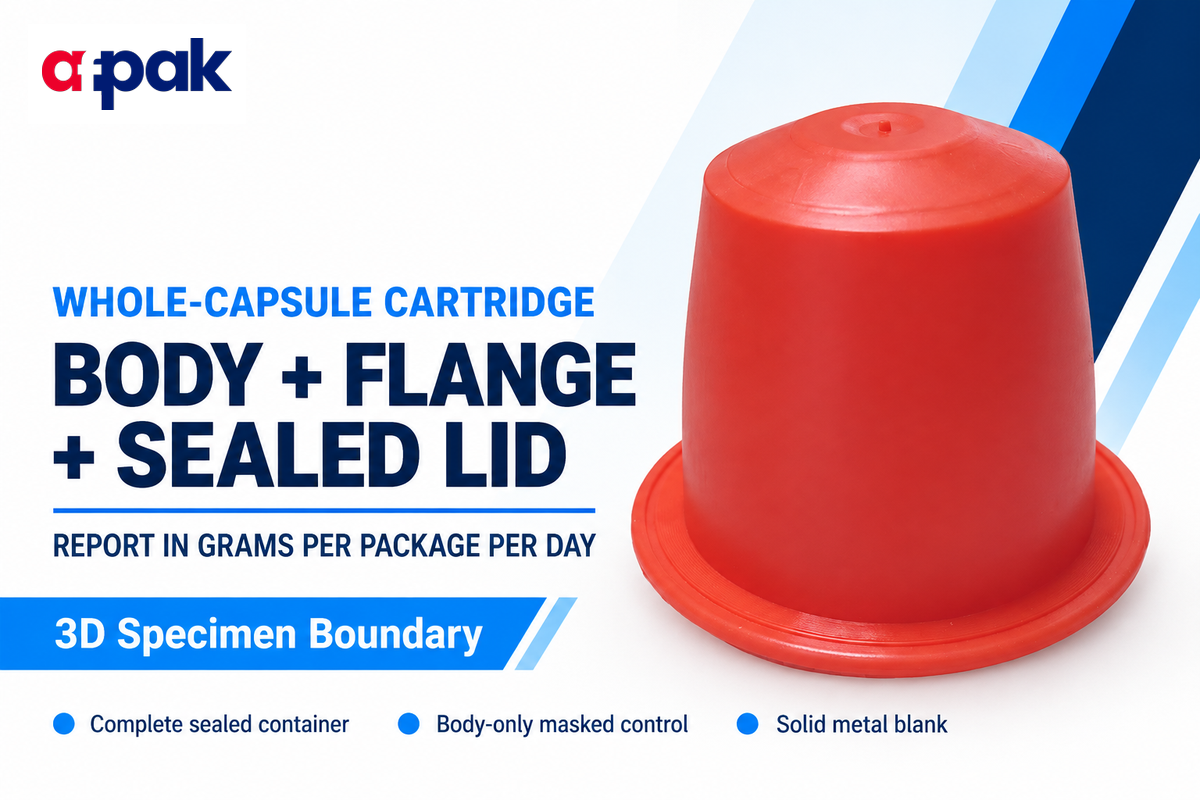
Employ whole-container cartridge testing and express the results in grams per package per day (g/pkg/day) when qualifying thermoformed or injection molded bodies with heat sealed lids. Flat-sheet results (g/m²/day) don’t account for wall thinning at deep draw corners, and changes in crystallite orientation.
See the 2021 Packaging Technology and Science study by Marinello and colleagues and AMETEK MOCON’s Technical Bulletin TB-PTPS-5007 for details on mounting sealed empty containers to metal plates or copper tubes using two-part low outgassing epoxy. Two copper tubes soldered through the base plate allow dry nitrogen carrier gas to sweep the interior while the exterior sits in a 38 °C, 90% RH chamber.
To find the areas where vapor is getting in to a container, labs test three different cartridge arrangements in parallel.
- Complete sealed container (body + flange + lid): An empty container heat-sealed on the production line is bonded at its base to the purge adapter, measuring total ingress across the sidewall, flange interface, and lidding foil.
- Body-only isolation (heavy foil-masked top): The standard lidding is replaced by a thick impermeable aluminum disk bonded with epoxy over the flange, isolating permeation through the formed sidewall and bottom radius.
- Lid-and-seal isolation (rigid metal cup base): The production lidding film is heat-sealed onto a machined metal cup or masked body, isolating diffusion through the lidding web and seal caulk layer.
The reason for the importance of formed geometry, as shown in patent publication US20230192983A1 (published June 2023) is that deep thermoforming of polymeric sheets stretches the sheet unevenly and thins the bottom corner radius, where moisture transmission focuses. Even when a multilayer laminate uses a polyethylene or polypropylene sealant layer, the corner draw ratios alter the local barrier thickness across pharmaceutical bottles, hypromellose shells, and thickening agent capsule (pharmacy) blisters. Thermoforming larger formats on K-Cup filling and sealing machines increases the ratio of seal edge perimeter to sidewall area.
Under ASTM D7709-12(2023) (Scopes 1.1, 1.4, 1.8, and 1.9), closed and sealed containers enclosing desiccant are weighed gravimetrically, typically at 40 °C and 75% relative humidity, and reported directly in milligrams per bottle per day (mg/bottle-day) or milligrams per blister cavity per day (mg/cavity-day), a closed container-closure approach the standard notes should also be suitable for most types and sizes of other consumer packages.
The laboratory must test a solid metal dummy or a heavy aluminum foil blank with the same epoxy bead as your test specimens. Removing or verifying that blank prevents epoxy outgassing and tube-fitting micro leaks from impacting the reported g/pkg/day value.
Calculate Cumulative Exposure with the Capsule-Day Moisture Ingress Budget
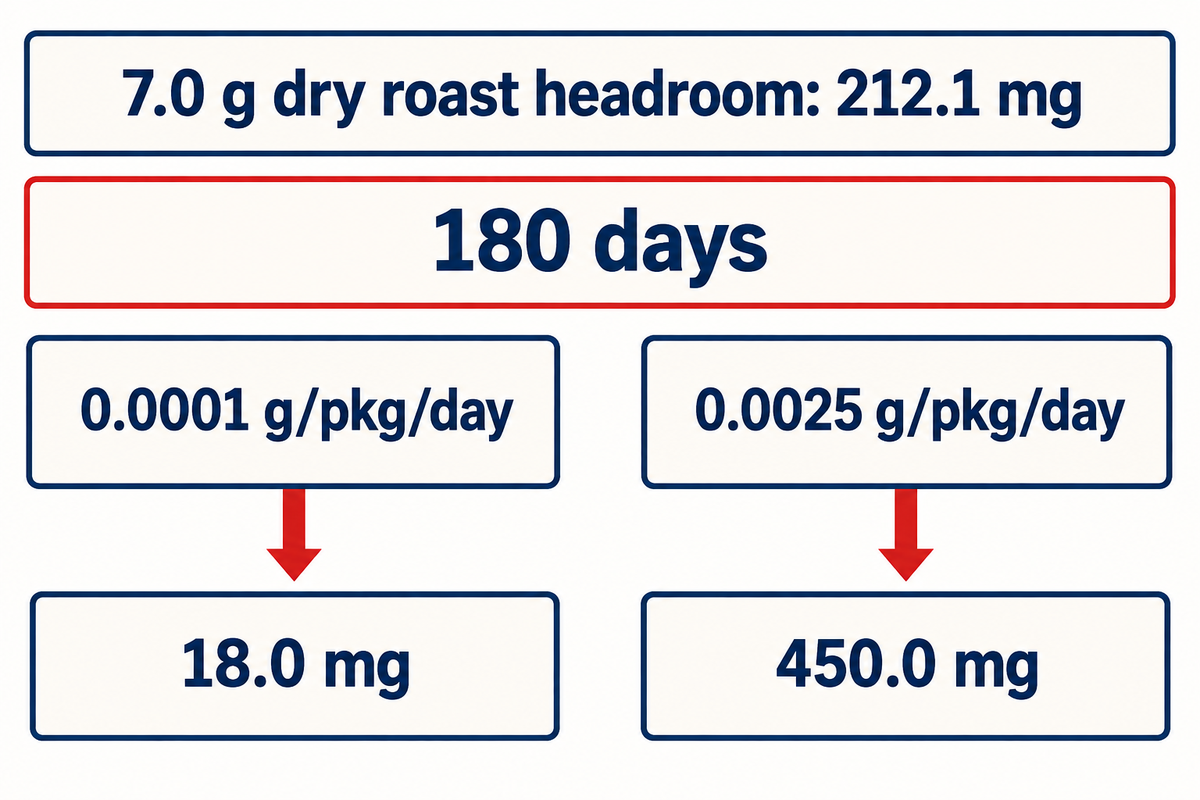
The Capsule-Day Moisture Ingress Budget multiplies a verified whole-package transmission rate (WVTRpkg, in g/pkg/day) by the time (t, in days) the package is stored, to determine the cumulative transmitted mass of water (Mcum, in mg), and compares it to the dry roast dose headroom before monolayer plasticization.
What packaging factor do you think has the biggest impact on coffee shelf life?
In the case of a fully hermetically sealed barrier system, the combined barrier to oxygen and water vapor transmission across the package wall, lidding foil, and heat-seal flange in a given storage condition, determines the primary packaging impact on shelf life.
To illustrate the use of the Capsule-Day Moisture Ingress Budget across any capsule system without overclaiming, state the mass balance equation and boundary conditions explicitly. Under steady-state conditions of external temperature and humidity, the cumulative moisture ingress is Mcum = WVTRpkg × t and consequently dry-basis moisture content is M(t) = Mi + (WVTRpkg × t) / mdry. As volatile coffee aroma compounds are highly reactive above the monolayer, water uptake below this threshold would help retain flavor stabilization.
Reconsider a comparative estimate using the experimental roast parameters in Lopriore et al. (2024). (2024): assume a dry roast fill of m dry = 7.0 g starting at M i = 0.0027 g H₂O/g dw (18.9 mg initial water) with a GAB monolayer limit of m 0 = 0.0330 g H₂O/g dw (231.0 mg water at a w0 = 0.43). The max water headroom before reaching the monolayer is ΔMmax = 231.0 − 18.9 = 212.1 mg H₂O per unit (or 166.7 mg H₂O for a smaller assumed 5.5 g fill).
| Storage Horizon / Parameter | Assumed Pack A (0.0001 g/pkg/day) | Assumed Pack B (0.0005 g/pkg/day) | Assumed Pack C (0.0025 g/pkg/day) | Experimental Reference (Lopriore 2024 PBS) |
|---|---|---|---|---|
| Daily rate in milligrams | 0.10 mg/pkg/day | 0.50 mg/pkg/day | 2.50 mg/pkg/day | Empirical sorption kinetics across T/RH |
| Cumulative ingress at 30 days | 3.0 mg (0.04% of 7 g) | 15.0 mg (0.21% of 7 g) | 75.0 mg (1.07% of 7 g) | Monolayer crossed in 26 d at 45 °C / 75% RH |
| Cumulative ingress at 60 days | 6.0 mg (0.09% of 7 g) | 30.0 mg (0.43% of 7 g) | 150.0 mg (2.14% of 7 g) | Monolayer crossed in 56 d at 30 °C / 75% RH |
| Cumulative ingress at 90 days | 9.0 mg (0.13% of 7 g) | 45.0 mg (0.64% of 7 g) | 225.0 mg (3.21% — exceeds 212.1 mg) | Monolayer crossed in 89 d at 20 °C / 75% RH |
| Cumulative ingress at 120 days | 12.0 mg (0.17% of 7 g) | 60.0 mg (0.86% of 7 g) | 300.0 mg (4.29% — exceeds headroom) | Monolayer crossed in 120 d at 30 °C / 54% RH |
| Cumulative ingress at 180 days | 18.0 mg (0.26% of 7 g) | 90.0 mg (1.29% of 7 g) | 450.0 mg (6.43% — exceeds headroom) | Monolayer crossed in 142 d at 20 °C / 65% RH |
| Cumulative ingress at 270 days | 27.0 mg (0.39% of 7 g) | 135.0 mg (1.93% of 7 g) | 675.0 mg (9.64% — exceeds headroom) | Below monolayer at 20 °C / 54% RH |
| Cumulative ingress at 365 days | 36.5 mg (0.52% of 7 g) | 182.5 mg (2.61% of 7 g) | 912.5 mg (13.04% — exceeds headroom) | Monolayer crossed in 327 d at 20 °C / 54% RH |
| Fraction of 212.1 mg headroom at 180 d | 8.5% of monolayer budget used | 42.4% of monolayer budget used | 212.2% (crosses aw0 = 0.43 near day 85) | Direct GAB isotherm + pH decay validation |
| Engineering screening verdict | Passes 12-month tropical screen | Passes 6–12 month screen; verify fill study | Requires secondary barrier bag or shell upgrade | Demonstrates why PBS needs outer barrier wrap |
We must hold in view two physical boundaries when reading Table 3. First, assuming a constant partial pressure difference across the wall and ignoring the moisture absorbed by the container shell, means that when we multiply a constant daily rate by time, it’s a conservative (upper-bounded) screening budget rather than a dynamic shelf life model. In reality, as the coffee bed absorbs water and its internal water activity rises from 0.090 toward 0.43, the driving partial-pressure difference decreases, so linear multiplication serves as a conservative upper-bound screening budget rather than a dynamic shelf-life model.
Second, as Lopriore et al. (2024) showed in Table 1 of their study, increasing temperature from 20 °C to 45 °C at 75% RH cut the time to reach monolayer aw0 = 0.43 from 89 days to 26 days, accelerate-testing both polymer permeability and chemical changes in soluble solids and fatty acids that drive brew acidity.
Run a Matched Tropical-Condition (38°C / 90% RH) Capsule Qualification Protocol
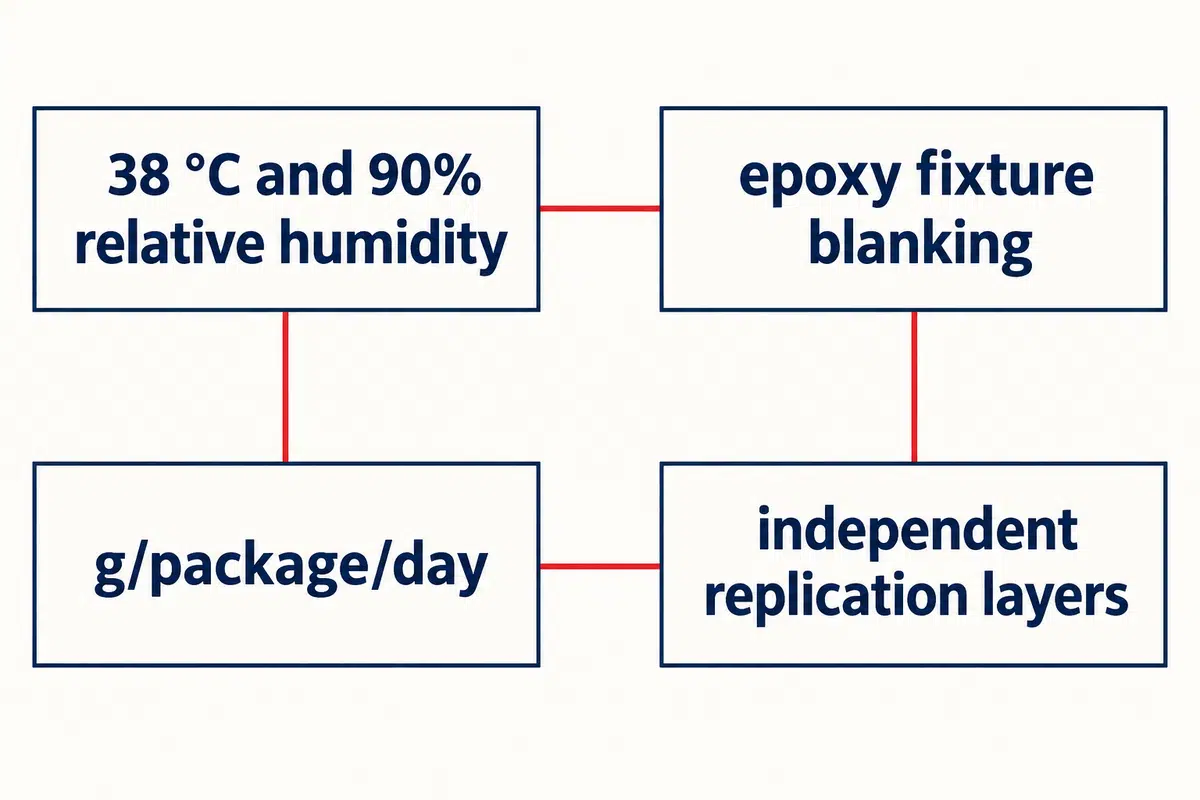
Lock all ten boundary parameters, including 38 °C and 90% relative humidity, pre-conditioning duration, epoxy fixture blanking, and independent replication layers, before comparing two candidate containers. Comparing one supplier’s report at 23 °C / 50% RH against another supplier’s report at 38 °C / 90% RH invalidates procurement rankings.
| Protocol Parameter | Locked Specification Field | Why Mismatch Invalidates Comparison | Audit Verification Evidence |
|---|---|---|---|
| 1. Test temperature & RH | 38.0 ± 0.5 °C and 90 ± 2% RH driving side (tropical stress) | Permeation rises exponentially with temperature and humidity (ASTM E96/E96M-24a 5.2.1) | Raw chamber thermohygrometer log attached to certificate |
| 2. Specimen configuration | Empty production-sealed container + body-only masked control | Separates sidewall corner thinning from flange-and-lid diffusion | Photographs of epoxy mounting and exposed area dimensions |
| 3. Standard method & edition | ASTM F1249-25 (infrared) or coulometric P₂O₅ cell | Gravimetric cups lack resolution below 0.01 g/pkg/day | Certificate cites active standard revision year and detector model |
| 4. Fixture blank subtraction | Solid aluminum dummy or heavy foil blank mounted with identical epoxy | Epoxy bead outgassing or tube-joint leakage mimics container permeation | Reported blank baseline value (g/pkg/day) subtracted from sample |
| 5. Pre-conditioning equilibrium | Minimum 48 to 72 hours at 38 °C / 90% RH before steady-state plateau | Hydrophilic EVOH or bio-polymers show delayed moisture breakthrough | Time-resolved flux curve showing plateau slope over ≥3 points |
| 6. Reporting unit basis | Unnormalized g/package/day (or mg/cavity·day) without area division | Dividing by arbitrary geometric area distorts per-dose ingress budget | Explicit unit label on summary table and raw instrument export |
| 7. Replication hierarchy | ≥3 independent mounted containers × ≥2 production cavity lots | 3 repeat sensor scans on 1 unit measure instrument noise, not lot spread | Cavity number, shift timestamp, and individual specimen values |
| 8. Closure integrity pre-screen | Non-destructive vacuum decay (ASTM F2338-24) before permeation mounting | Mounting a container with a seal channel wastes a 4-week permeation cell | Pass/fail vacuum decay trace recorded prior to epoxy potting |
| 9. Parallel filled-pod aging | Matched roast lot, 7.0 g or nominated dose, stored at 38 °C / 90% RH | Empty-pack WVTR cannot capture internal roast sorption or pH drift | Scheduled pull dates (0, 30, 60, 90 d) for aw, M, and brew pH |
| 10. Incoming lot traceability | Resin grade, EVOH thickness, lidding foil gauge, and COA lot IDs | Unrecorded resin swaps invalidate future production comparisons | Cross-linked to coffee capsule incoming material qualification records |
When assessing laboratory reports, identify three replication layers. The first is repeated detector scans on the same mounted cartridge. The second is independent physical containers from one mold cavity. The third is sampled containers from separate lots of resin or sealing shifts. Three pieces tested in one laboratory order suggest initial feasibility, not the ability to produce at scale.
Diagnose Coupled Humidity-Oxygen Failures and Seal-Rim Micro-Leaks on the Filling Line
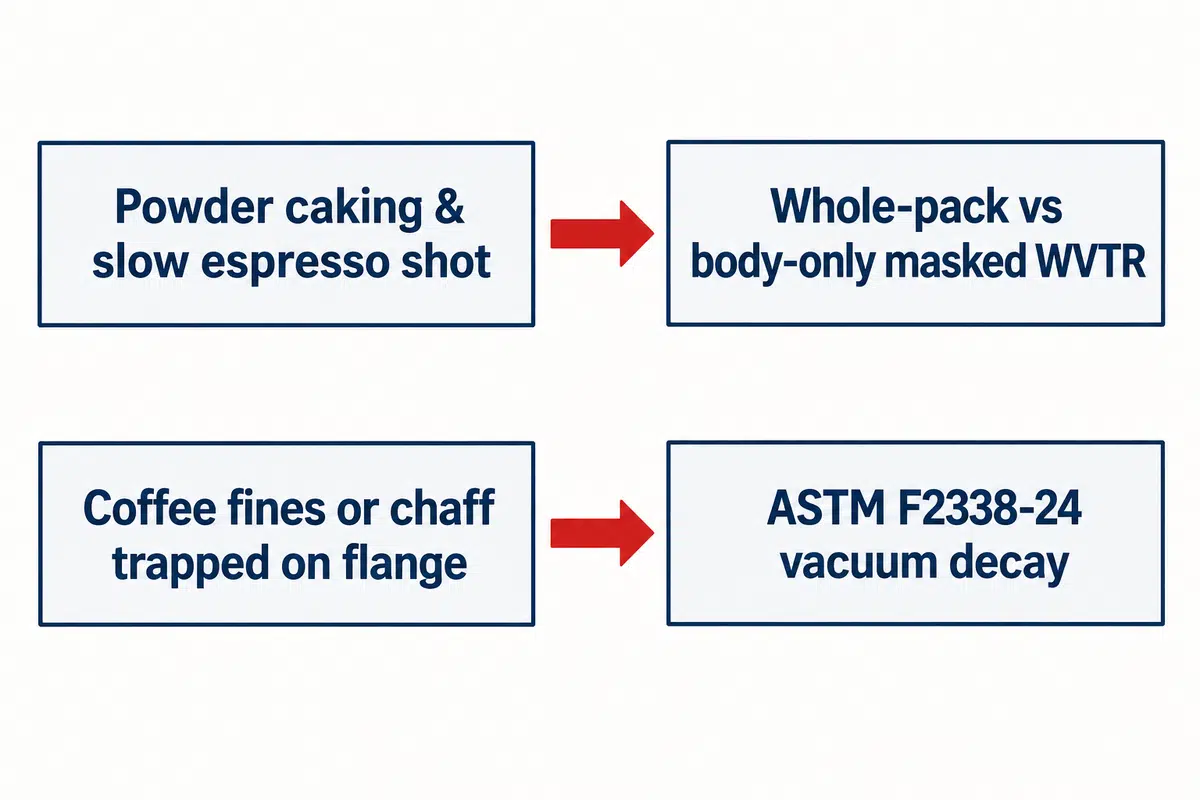
Is it moisture caking? Or aroma staling? If it’s moisture caking, is it due to bulk wall permeation? Or is it due to humidity plasticization of an EVOH barrier layer? Is the coffee fines trapped in the heat-seal rim? Or is there a high initial roast moisture?
Why coffee beans in a bag with a one-way exhaust valve?
coffee beans roasted recently release a lot of CO2 and are flexible, so the bags use a one-way valve to release excess gas without allowing external air to enter. Rigid, single-serving capsules, lack a valve, and roasters typically grind the coffee to be degas to control how long the coffee remains flat prior to encapsulation.
In multilayer polypropylene structures (PP/tie/EVOH/tie/PP), transportation of water vapor and oxygen are interrelated. Evidence supports that elevated relative humidity can plasticize the EVOH copolymer and disrupt the hydrogen bonds, thus increasing oxygen transmission. However, as Jakobsen and Risbo demonstrated in Packaging Technology and Science, the steady-state water activity in the buried EVOH layer depends on the water vapor permeance and asymmetry in thickness of the inner and outer polyolefin protective layers. Placing a thicker polypropylene barrier on the humid exterior side relative to the dry coffee interior can keep the EVOH layer below the critical 75% RH plasticization zone even when ambient humidity is high.
Before increasing heat-seal head temperature or pneumatic pressure on your AFPAK Nespresso coffee capsule filling and sealing machine, try the diagnostic matrix below to isolate material permeation from mechanical closure defects, thus ensuring that each pod pierces cleanly in the consumer’s coffee machine when preparing coffee.
| Observed Defect Symptom | Primary Physical Mechanism | Confirmatory Laboratory / QC Test | Filling-Line Check Before Changing Jaw Heat |
|---|---|---|---|
| Powder caking & slow espresso shot after humid storage, vacuum decay PASS | Bulk wall or lidding vapor permeation exceeds monolayer budget | Whole-pack vs body-only masked WVTR (ASTM F1249-25) at 38 °C / 90% RH | Verify shell wall thickness at bottom corner radius; do not overheat seal rim |
| Sudden oxygen spike & stale aroma only in 90% RH storage, dry OTR PASS | Outer PP layer too thin or symmetric, letting EVOH layer exceed 75% RH (Jakobsen & Risbo) | Humid OTR (ASTM F1927-20) plus cross-section layer micrometry | Audit coextrusion layer ratio on supplier COA; add secondary barrier flow-wrap |
| High aw (>0.35) immediately on day 1 after sealing | High initial roast quench water or humid grinding room uptake before filling | AOAC 979.12 vacuum oven M and dew-point aw at grinder discharge | Check grinder room dehumidification (target <40% RH) and degassing silo hold |
| 1 in 50 units shows rapid moisture gain & low vacuum decay reading | Coffee fines or chaff trapped on flange sealing land creating micro-channels | ASTM F2338-24 vacuum decay + microscopic seal-ring inspection | Inspect auger anti-drip shutoff, static elimination, and rim air-blow cleaning |
| High strip peel force (ASTM F88), yet high WVTR variance across cavities | Excess sealing temperature squeezing out sealant layer (caulk starvation) at flange edge | Lid-and-seal isolated cartridge WVTR + ASTM F2029-16(2021) heat-seal curve | Level platen parallelism and step down jaw temperature by 5 °C increments |
| Severe lidding foil doming within 48 hours of packing, normal moisture | Insufficient post-roast CO₂ degassing time before hermetic sealing | Headspace pressure gauge + gravimetric degassing curve on roast lot | Extend silo degassing window by 4 to 12 hours; verify nitrogen flush timing |
| Corner pinholes or stress whitening on deep-drawn bio-polymer cups | Thermoforming plug-assist draw ratio exceeding resin melt strength | Body-only masked WVTR + dye penetration at bottom corner radius | Reject incoming cup lot; review thermoforming draw profile with cup vendor |
| Delamination between aluminum foil and lacquer layer after 38 °C aging | Adhesive hydrolysis or coffee oil migration into heat-seal lacquer | 90-degree peel mode inspection (ASTM F88/F88M-23) after tropical conditioning | Verify lacquer chemical compatibility with roast lipid level |
| Lab heat-seal coupons pass, but high-speed rotary line units leak | Short rotary dwell time and platen thermal recovery lag (ASTM F2029-16(2021) 4.2) | Compare line-sealed empty units vs lab-sealed units on vacuum decay | Validate dwell-time cam profile and heater thermocouple placement on rotary turret |
- Check grinder-room relative humidity and initial roast aw on day zero.
- Screen sealed units with ASTM F2338-24 vacuum decay before potting WVTR cartridges.
- Isolate body-only vs lid-and-flange permeation when troubleshooting a failed lot.
- Crank heat-seal jaw temperature above the sealant window to fix a wall permeation issue.
- Weigh freshly filled coffee pods on a balance to estimate water vapor transmission.
- Assume dry-gas OTR proves tropical EVOH barrier stability without checking outer PP thickness.
Three hypothetical troubleshooting cases illustrate why diagnostics lead to time savings:
- Scenario 1 (Hypothetical tropical clumping vs jaw overheating): Assume a roaster shipping PP/EVOH/PP pods to a humid coastal market observes compacted coffee powder and slow espresso extraction after 75 days. Maintenance proposes raising the heat-seal station from 185 °C to 210 °C. Quality instead tests day-zero vacuum decay (which passes) and checks the supplier’s coextrusion sheet spec, finding a thin 120 µm outer PP layer and a 0.0022 g/pkg/day whole-pack WVTR at 38 °C / 90% RH. Raising jaw heat would only warp the flange; adding a metallized flow-wrap master bag solves the humid distribution exposure.
- Scenario 2 (Hypothetical grinder-room humidity spike): In a hypothetical monsoon-season shift, quality pulls sealed aluminum pods 2 hours after packing and measures internal water activity at aw = 0.34 instead of the normal 0.11. Because intact aluminum shells have near-zero wall permeation over 2 hours, the team audits the grounding and dosing room, discovering failed desiccant wheel regeneration at 72% ambient RH during a 45-minute open-hopper hold. Restoring room dehumidification below 40% RH eliminates the moisture spike without touching the sealing machine.
- Scenario 3 (Hypothetical rim fines after grind adjustment): Assume a plant switches to a finer espresso grind and sees 2 out of 60 pods fail ASTM F2338-24 vacuum decay while empty-cup WVTR remains unchanged. Inspecting the peeled flange under ASTM F88/F88M-23 reveals a 150 µm channel caused by static-charged coffee powder clinging to the sealing rim. Adjusting the servo auger suck-back and ionizing rim air-knife on the filling turret clears the flange and restores hermetic seals.
Budget Laboratory WVTR Testing Costs and Coordinate an AFPAK Capsule Sealing Trial
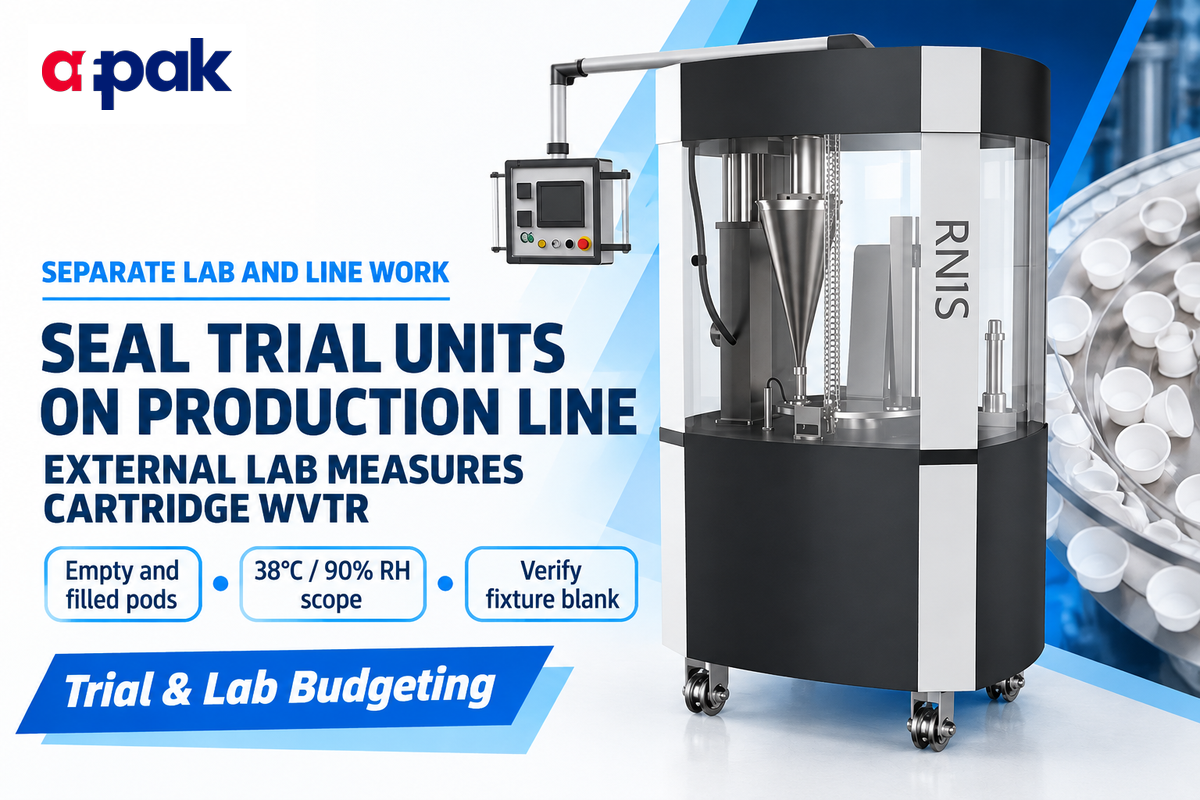
Commission accredited an external laboratory for water vapor transmission rate testing while scheduling a separate production sealing trial with AFPAK. Third party labs (such as AMETEK MOCON, Systech, Labthink and PTI) and analytical instrument makers measure barrier rates, and AFPAK manufactures rotary and linear capsule filling and sealing machines, to seal your trial materials at production line speeds.
When budgeting external laboratory testing, verify the published scope and pricing conditions. As observed on 20 October 2026, Measurlabs’ published whole-package WVTR testing page lists a base price of 745 EUR per sample (excluding VAT) plus a 97 EUR order service fee, requires 3 sample pieces, includes 3 replica measurements at a selected temperature within 15–55 °C and relative humidity within 20–100% RH, and states a typical 4-week turnaround with a detection limit of 0.01 g/package/day.
Since high-barrier coffee pods typically require quantification below 0.01 g/package/day, buyers should ask for a quote of a trace-level infrared (ASTM F1249-25) or coulometric cartridge with a verified lower limit of quantification before sending the samples for testing.
University research laboratories provide an alternative channel for material screening. Iowa State University’s PolyCy (Cochran Research Group) Lab Spaces & Equipment page lists Mocon-WVTR testing at $176 per sample (assisted) and $117 per sample (unassisted) and states that non-university users are welcome to use its facilities by email inquiry, while custom capsule cartridge fabrication, replicate counts, and fee effective dates aren’t listed on the page and require direct confirmation.
As mentioned in Clause 4.2 of ASTM F2029-16(2021), there are several differences between laboratory and manufacturing equipment such as the size of the sealing area, processing speed, and others. As a result, there may be a large difference between the capabilities of the laboratory and the capabilities of the manufacturing equipment. Hence, curve and seal strength data from the laboratory heat sealing equipment and seal bars are of little or no value for the design of equipment for full-scale manufacturing.
Sending empty shells and rollstock lidding to AFPAK for a trial on an RN1S rotary machine or H-series linear line generates production-sealed empty and filled units that you can then forward to the accredited laboratory for cartridge WVTR testing. You can then ship the sealed units to the accredited lab for WVTR testing.
Completed RFQ & Sealing Trial Preparation Checklist:
| Workstream Item | Target Specification to State | Owner | Verification Deliverable |
|---|---|---|---|
| 1.AFPAK machine sealing trial | Send 500–1,000 empty shells + matching lidding rollstock; seal empty and coffee-filled groups on coffee capsule production line | AFPAK engineering + buyer | Recorded jaw temperature (°C), pressure (MPa), dwell time (s), and sealed trial units |
| 2. Whole-pack WVTR lab order | Specify ASTM F1249-25 or coulometric cartridge at 38 °C / 90% RH; confirm LoQ ≤ 0.0005 g/pkg/day | External third-party lab | Signed quote confirming epoxy adapter blank subtraction and g/pkg/day reporting |
| 3. Component isolation groups | Order 3 complete empty-sealed pods + 3 body-only foil-masked pods per candidate resin | Buyer quality + external lab | Separate sidewall vs flange-and-lid transmission values in mg/pkg/day |
| 4. Roast & sorption baseline | Measure initial M (g H₂O/gdw), initial aw, and GAB monolayer target on nominated roast blend | Internal QC or food lab | Baseline roast sheet attached to storage study protocol |
Industry Outlook: Retest Bio-Based, Fiber, and Monomaterial Capsules Under High Humidity
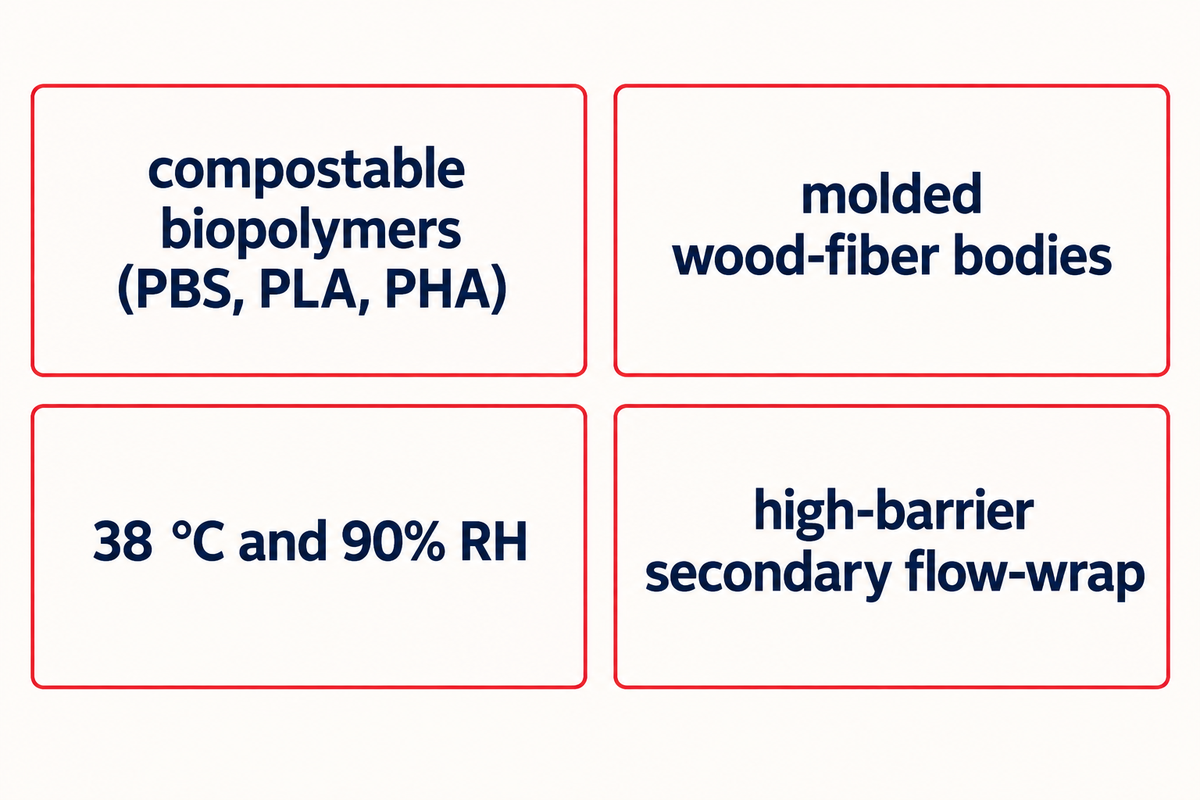
Re-verify whole-package water vapor transmission at 38 °C and 90% RH, and budget for a high-barrier secondary flow-wrap, whenever transitioning from aluminum or multilayer EVOH shells to compostable biopolymers (PBS, PLA, PHA) or molded wood-fiber bodies. Improvements in oxygen barrier in bio based resins may not reduce moisture barrier.
Recent material developments show this asymmetry between oxygen and water vapor performance across different materials. To reduce the moisture entering bio-based shells, engineers must test both resin chemistry and secondary wrapping. A November 2025 Bioplastics Magazine report on Fraunhofer IAP and Golden Compound describes home-compostable sunflower-hull biocompounds where researchers lowered oxygen permeability, yet explicitly noted that water vapor barrier optimization remains ongoing work. Similarly, Packaging World’s coverage of Nestlé’s paper-based Nespresso pilot notes that the 82% wood-fiber body relies on a thin compostable biopolymer liner and precision flange sealing to resist moisture and extraction pressure.
Experimental storage data confirm why bio-based formats require either inorganic/nanofiller barrier modifications (such as those explored in US20230192983A1) or secondary outer bags. In Lopriore et al. (2024), unprotected polybutylene succinate capsules crossed the aw0 = 0.43 monolayer in 327 days at 20 °C / 54% RH, 120 days at 30 °C / 54% RH, 56 days at 30 °C / 75% RH, and just 26 days at 45 °C / 75% RH. Conversely, Basile and colleagues (Foods 2024, PMC10931445) showed that enclosing single-serve paper pods or groups of ten plastic capsules inside high-barrier multilayer outer bags (such as PET 12 µm / Al 8 µm / PE 60 µm or PET 12 µm / MPET 12 µm / PE 55 µm) shifts the primary vapor barrier to the secondary pouch for 180 days at 25 °C and 40 °C until the consumer opens the outer bag.
As Packaging Strategies reported on Plastic Technologies Inc. (PTI) capsule testing, how structural components are assembled into the final container governs real-world barrier performance. Before switching to a compostable or monomaterial shell, validate both coffee capsule packaging material compatibility on the heat-seal station and whole-package WVTR across your target distribution climate.
Frequently Asked Questions
What is Good Coffee Packaging?
Good coffee packaging hermetically isolates roasted coffee from external water vapor and oxygen while accommodating post-roast carbon dioxide pressure across its target distribution climate.
In single-serve production, effective coffee packaging combines a rigid or semi-rigid container body, a compatible puncture-ready lidding laminate, and a continuous circumference heat seal verified in grams per package per day. Rather than relying on generic material labels, quality teams evaluate the complete packaging system at 38 °C and 90% relative humidity so internal water activity stays below the monolayer threshold (aw0 ≈ 0.43) throughout retail shelf life.
How can you tell if coffee beans are high quality?
High-quality coffee beans exhibit uniform roast color, intact cellular structure without surface oil oxidation, low post-roast moisture content, and clean specialty cup aroma free of rancid or woody defects.
From an analytical quality perspective, green coffee is dried to 10% to 12% moisture before roasting, whereas freshly roasted beans exit the cooling tray near 0.3% to 1.5% moisture content and water activity below 0.20. During storage inside a sealed pod or bag, maintaining low equilibrium humidity prevents lipid hydrolysis, preserves volatile aldehydes, and keeps brewed espresso pH stable above 5.1.
Which coffees are tested for mold?
Green coffee lots, high-moisture parchment shipments, and decaffeinated or tropical-stored coffees are routinely screened for mycotoxin-producing molds such as Aspergillus and Penicillium species.
Mold growth and ochratoxin A formation occur primarily when green coffee or spent coffee grounds sit above a water activity of 0.70 to 0.80 during harvesting, drying process steps, or maritime transit. Although commercial roasting destroys live fungal spores and lowers roast water activity near 0.09, coffeecapsule moisture barrier testing ensures sealed pods never re-absorb enough tropical humidity to support microbial spoilage or caking.
What is Specialty Coffee?
Specialty coffee is Arabica or fine Robusta scoring 80 points or higher on a 100-point sensory scale.
Because delicate origin volatiles degrade rapidly when exposed to humidity, single-serve specialty roasters require tight whole-package moisture barrier limits.
How can adulterants be detected in coffee?
Laboratories detect coffee adulterants using attenuated total reflectance Fourier-transform infrared spectroscopy, chromatography, and microscopy.
Chemometric models plot a spectral contour line for each substance (chemistry) to separate pure Arabica from husks or Theobroma grandiflorum seed fillers.
Does a low oxygen transmission rate guarantee a low water vapor transmission rate in coffee capsules?
No. Oxygen and water vapor transmission follow different polymer solubility-diffusion mechanisms, so a material with low dry oxygen permeability can still transmit significant moisture or lose its oxygen barrier under high humidity.
For example, hydrophilic ethylene-vinyl alcohol (EVOH) and certain bio-based polyesters exhibit strong dry oxygen barriers but absorb water molecules when exposed to tropical relative humidity, which plasticizes the polymer chains and accelerates both moisture and oxygen ingress. Conversely, polyolefins such as polypropylene resist water vapor well but require a barrier layer to block oxygen. Always test both whole-package WVTR and humid OTR independently.
Can you measure coffee capsule WVTR on capsules filled with roasted ground coffee?
No. Standard permeation instruments test empty sealed capsules swept with dry carrier gas or filled with calibrated desiccant.
Freshly ground coffee outgasses carbon dioxide and volatile organics while sorbing moisture internally, which corrupts gravimetric cup weights and fouls infrared or coulometric permeation sensors.
Need Production-Sealed Samples for Your Laboratory WVTR Qualification?
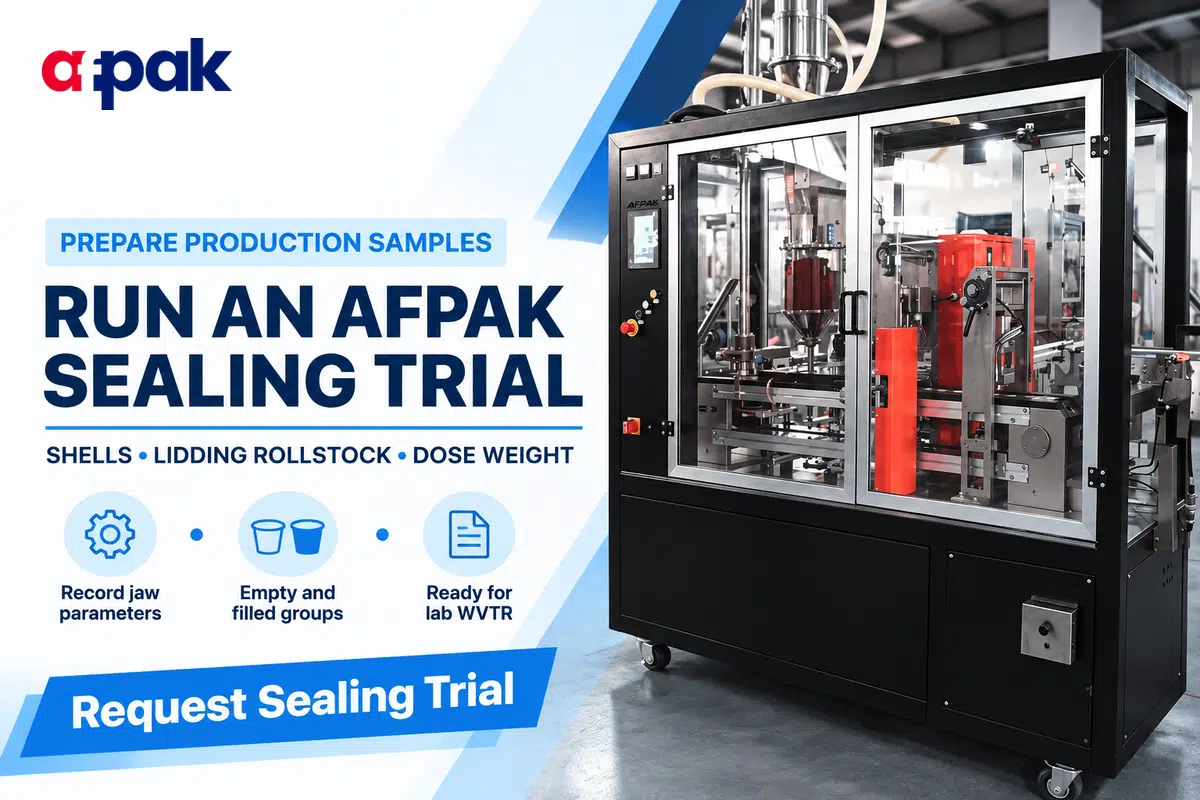
Send AFPAK your candidate capsule shells, lidding rollstock, and target dose weight to run a controlled sealing trial on our rotary or linear equipment. Explore our coffee capsule production line solutions to prepare repeatable empty and filled test groups for your external laboratory verification.
The Capsule-Day Moisture Ingress Budget table, examples of engineering planning, and references to production troubleshooting and published literature are illustrative cases based on certain premises and assumptions, and not AFPAK accredited laboratory testing or customer plant examples.
References & Sources
- ASTM International: ASTM F1249-25, Standard Test Method for Water Vapor Transmission Rate Through Flexible Barrier Materials Using a Modulated Infrared Sensor (Active, Nov 2025)
- ASTM International: ASTM F1249-20, Historical revision superseded by F1249-25
- ASTM International: ASTM E96/E96M-24a, Standard Test Methods for Gravimetric Determination of Water Vapor Transmission Rate of Materials (Active, Nov 2024)
- ASTM International: ASTM E398-24, Standard Test Method for Water Vapor Transmission Rate of Sheet Materials Using Dynamic Relative Humidity Measurement (Active, Jan 2025)
- ASTM International: ASTM D7709-12(2023), Standard Test Methods for Measuring Water Vapor Transmission Rate (WVTR) of Pharmaceutical Bottles and Blisters
- ASTM International: ASTM F88/F88M-23, Standard Test Method for Seal Strength of Flexible Barrier Materials
- ASTM International: ASTM F2338-24, Standard Test Method for Nondestructive Detection of Leaks in Packages by Vacuum Decay Method
- ASTM International: ASTM F2029-16(2021), Standard Practices for Making Laboratory Heat Seals for Determination of Heat Sealability of Flexible Barrier Materials
- Lopriore, M., et al. (2024): Moisture uptake during storage of coffee packed into compostable capsules, Food Packaging and Shelf Life, Vol. 46, 101403
- Marinello, S., et al. (2021): Technical and environmental comparison of coffee capsules, Packaging Technology and Science
- Jakobsen, M., & Risbo, J. (2008): A simple model for the interaction between water vapour and oxygen transmission in multilayer barrier materials, Packaging Technology and Science, 21(4), 207–216
- Basile, G., et al. (2024): Impact of Different Packaging Films on Coffee Pods and Capsules Shelf Life, Foods, 13(5), 759
- Iowa State University PolyCy (Cochran Research Group): Lab Spaces & Equipment Public Fee Schedule
- U.S. Patent Application Publication US20230192983A1 (2023): Biodegradable multilayer coffee capsule structures and ASTM E96 barrier evaluation
- Bioplastics Magazine (Nov 19, 2025): Improved oxygen barrier in biodegradable plastic for coffee capsules
- Packaging World: Nestlé Tests Waters with Paper-Based Nespresso Capsules
- Packaging Strategies: Research Study Findings Show That Coffee Capsule Barrier Performance Varies Significantly Across Types & Brands


