
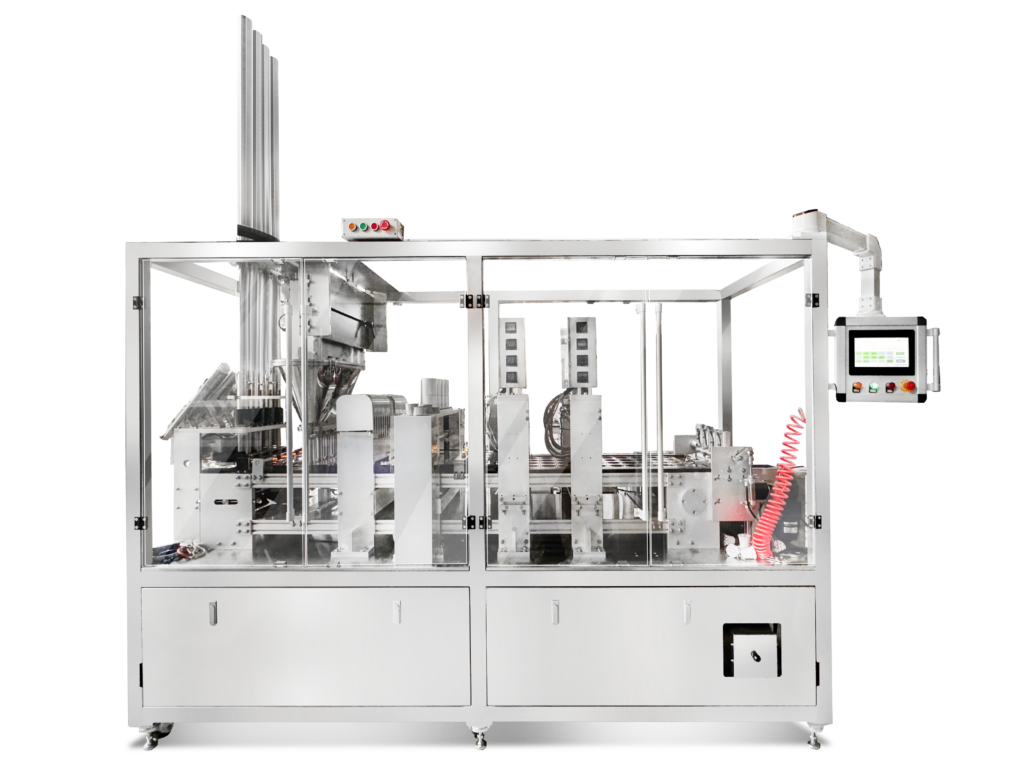
AFPAK / H-SERIES K-CUP PRODUCTION
Meet H4.
One platform. Five production scales.
Choose 4, 6, 8, 10 or 12 channels. Each channel runs at around 50 cups per minute, with up to approximately 600 cups per minute at 12 channels.
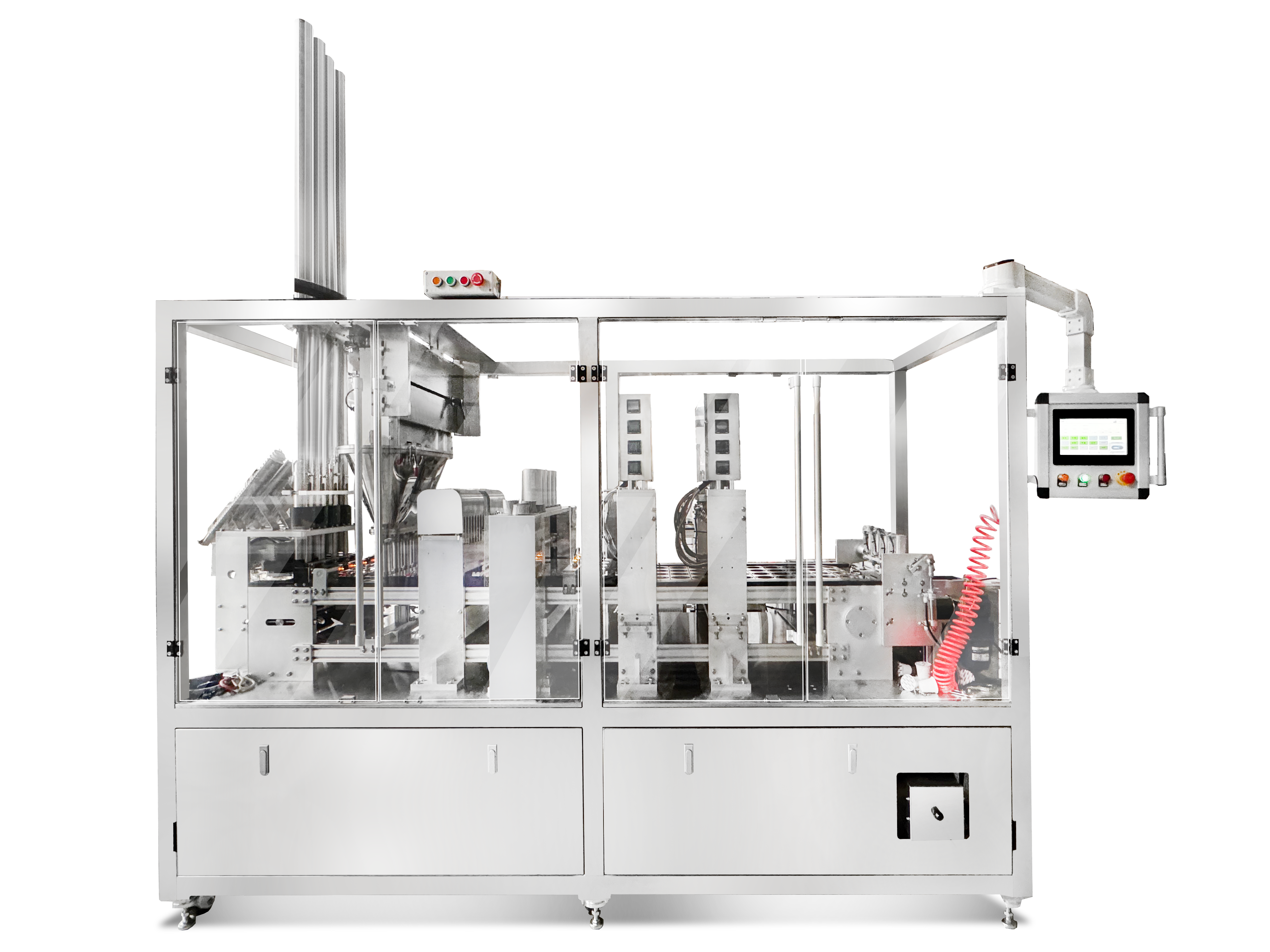
Performance depends on product, cup, lid, operating settings and selected inspection functions. Verify final output with your materials.
Highlights
Scale the line.
Keep control of every cup.
One platform, many powders.
Coffee, instant powder, cocoa, matcha and other evaluated products, with adjustable target weight.
Leave room to grow.
Optional flavor dosing, inline checkweighing and seal or leak detection.
Choose your scale.
Select 4, 6, 8, 10 or 12 channels at around 50 cups per minute per channel.
One operator is enough.
Humanized controls make standard operation simple and fast for one trained operator.
Reduce product waste.
Reference finished-product yield can reach up to 99.9% under agreed conditions.
Easy daily cleaning.
Optimized structure and accessible working areas support routine cleaning and changeovers.
Serviceable components.
Schneider, Omron, Airtac and equivalent components can be sourced globally.
Use your space well.
The compact footprint keeps site requirements practical while leaving room for expansion.
Dosing
Your coffee.
Your target dose.
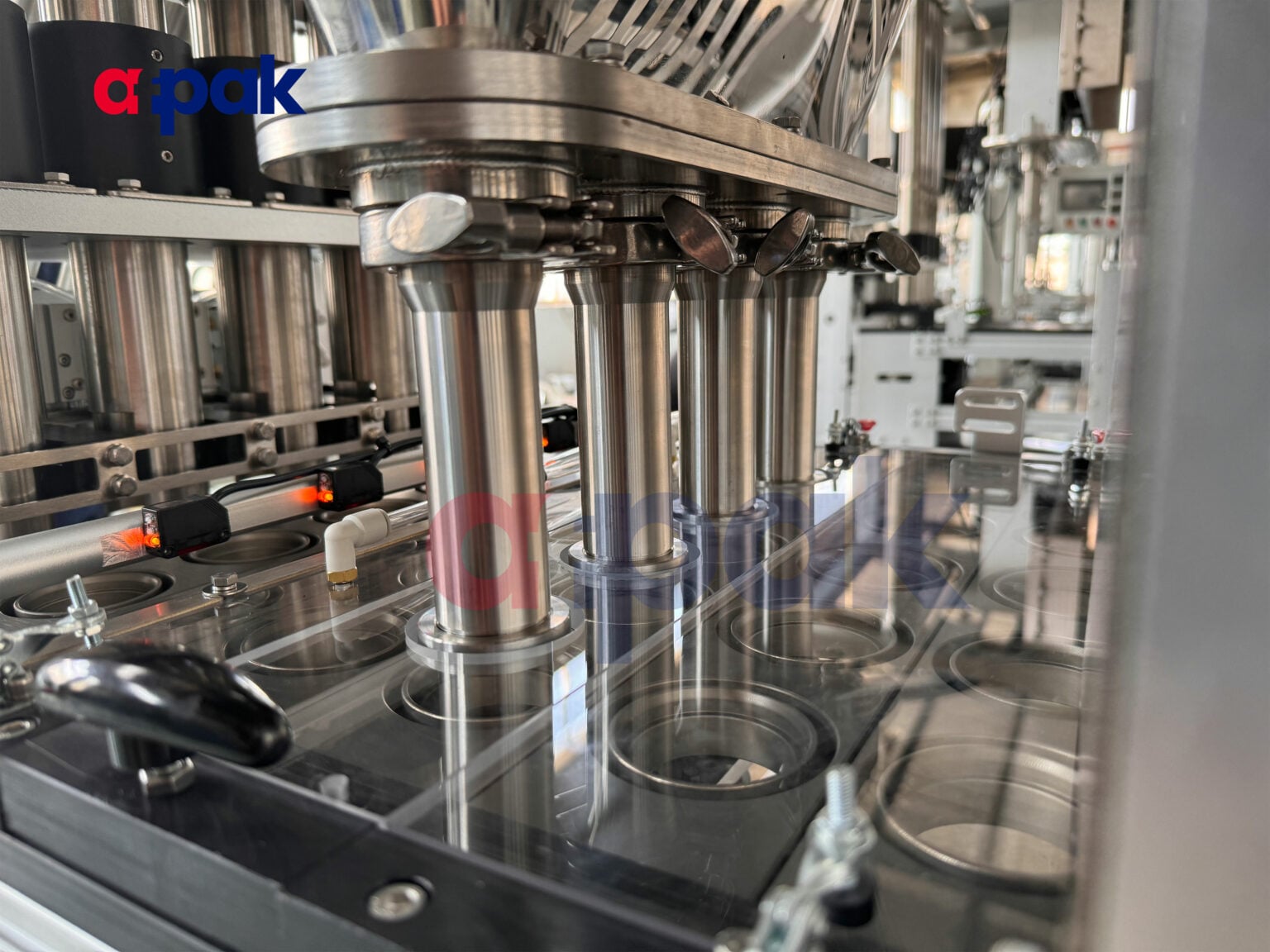
The servo-auger system meters coffee into four parallel cup positions. Set the dose for the product and confirm performance using your actual materials.
Adjustable powder filling range, subject to coffee density and usable cup capacity.
Reference accuracy: ±0.2 g under agreed conditions. Consistent material supply and stable operating settings are part of the dosing setup.
Daily production
Keep the cups
moving.
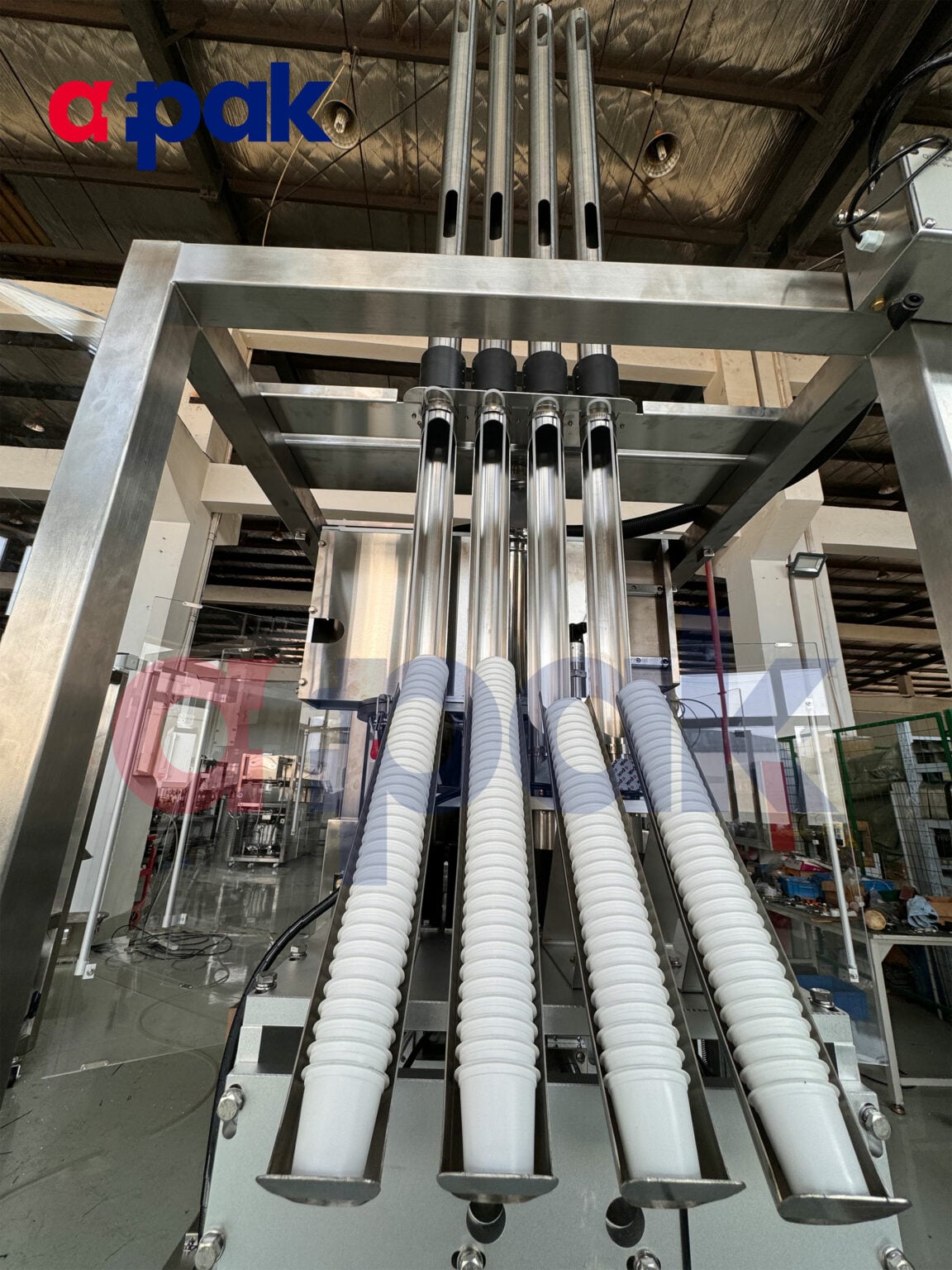
The enlarged cup-storage arrangement supplies empty cups to the line. Plan replenishment access alongside coffee supply, finished-cup handling and routine checks.
A production trial should include the materials and work pattern your operators will use every day.
Sealing and nitrogen protection
From filled cup
to finished seal.
For the pre-cut-lid configuration, cups move through lid placement and two heat-sealing operations. Sealing settings are matched to the cup and lid combination.
Nitrogen is introduced along the configured production path. Agree any residual-oxygen test target and method before acceptance testing.
Shelf life requires evaluation of the finished product and packaging. No shelf-life or residual-oxygen result is assumed from nitrogen flushing alone.
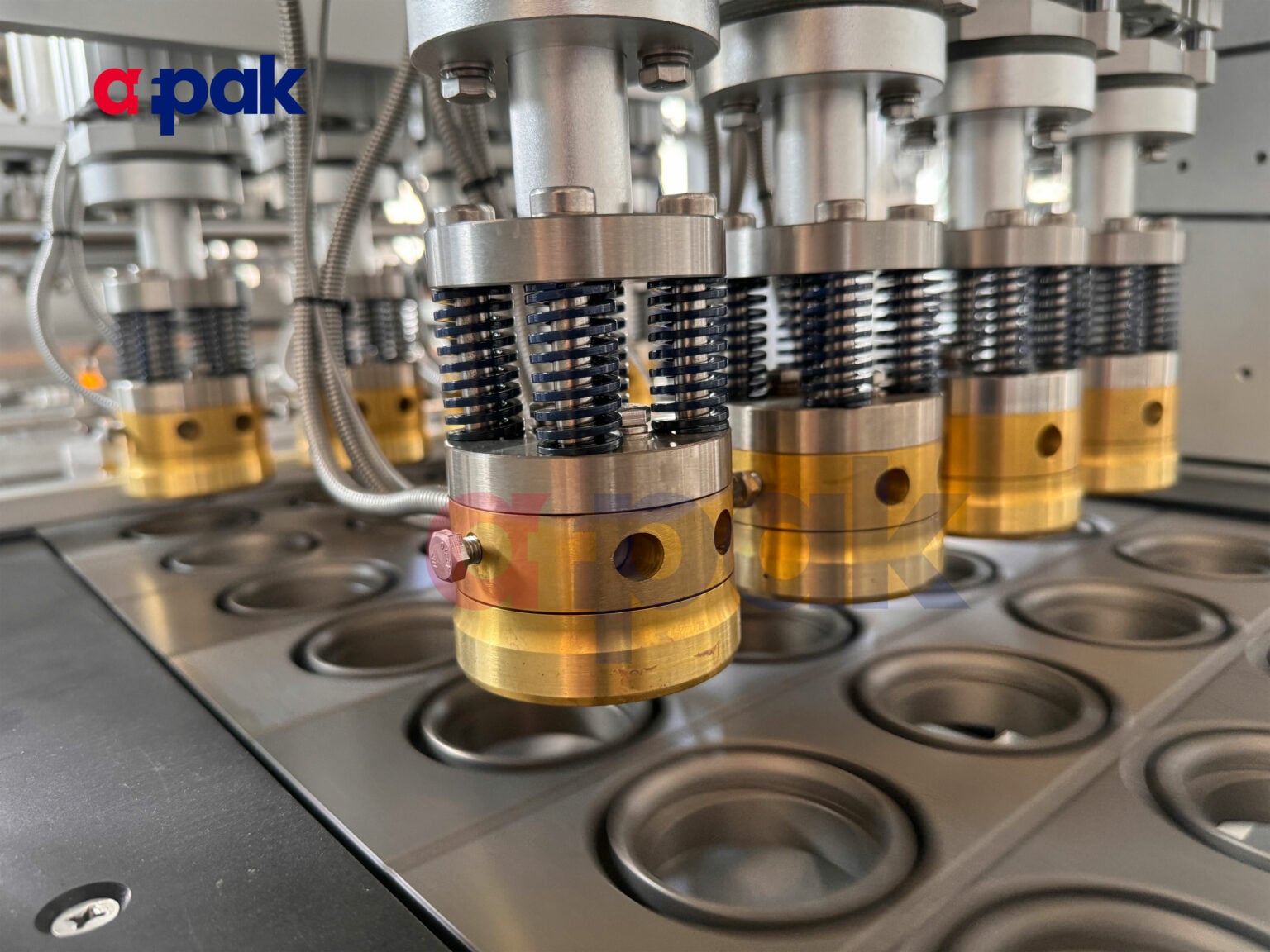
Machine gallery
A closer look at H4.
Swipe or use the arrows to explore H4 features.
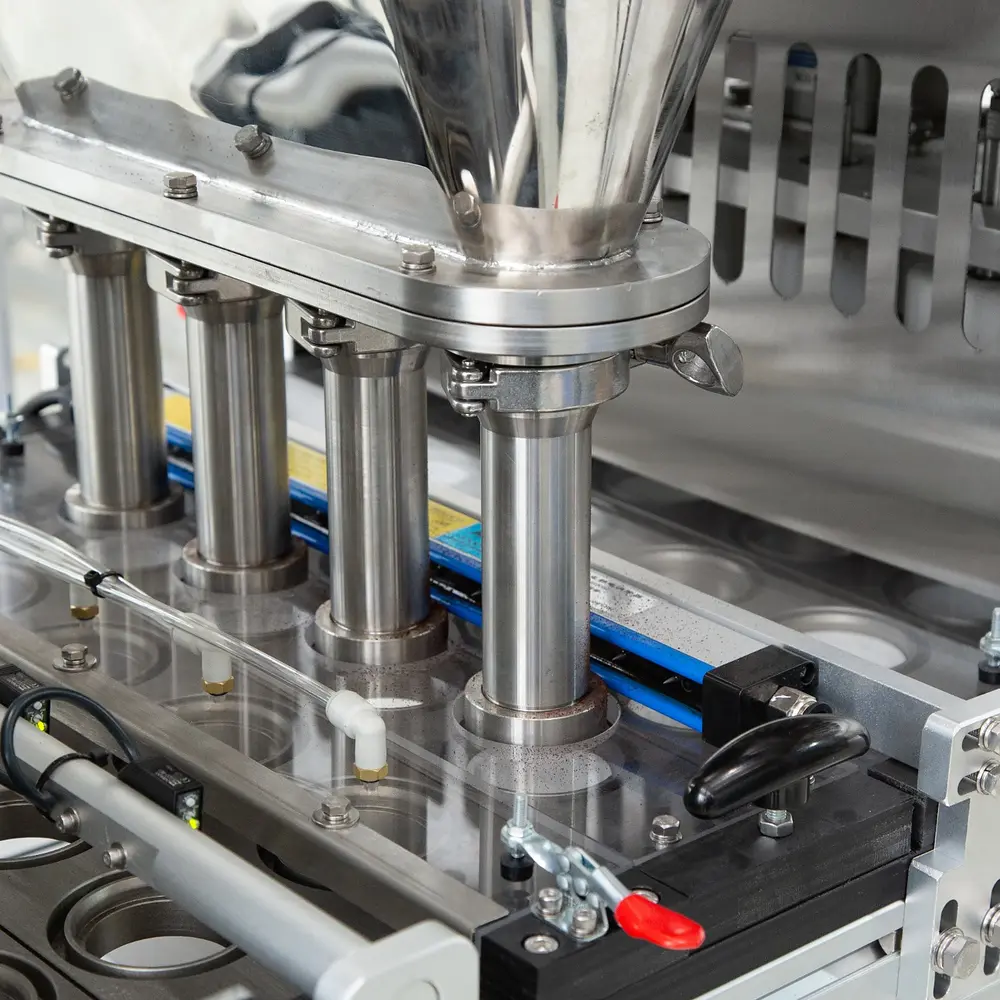
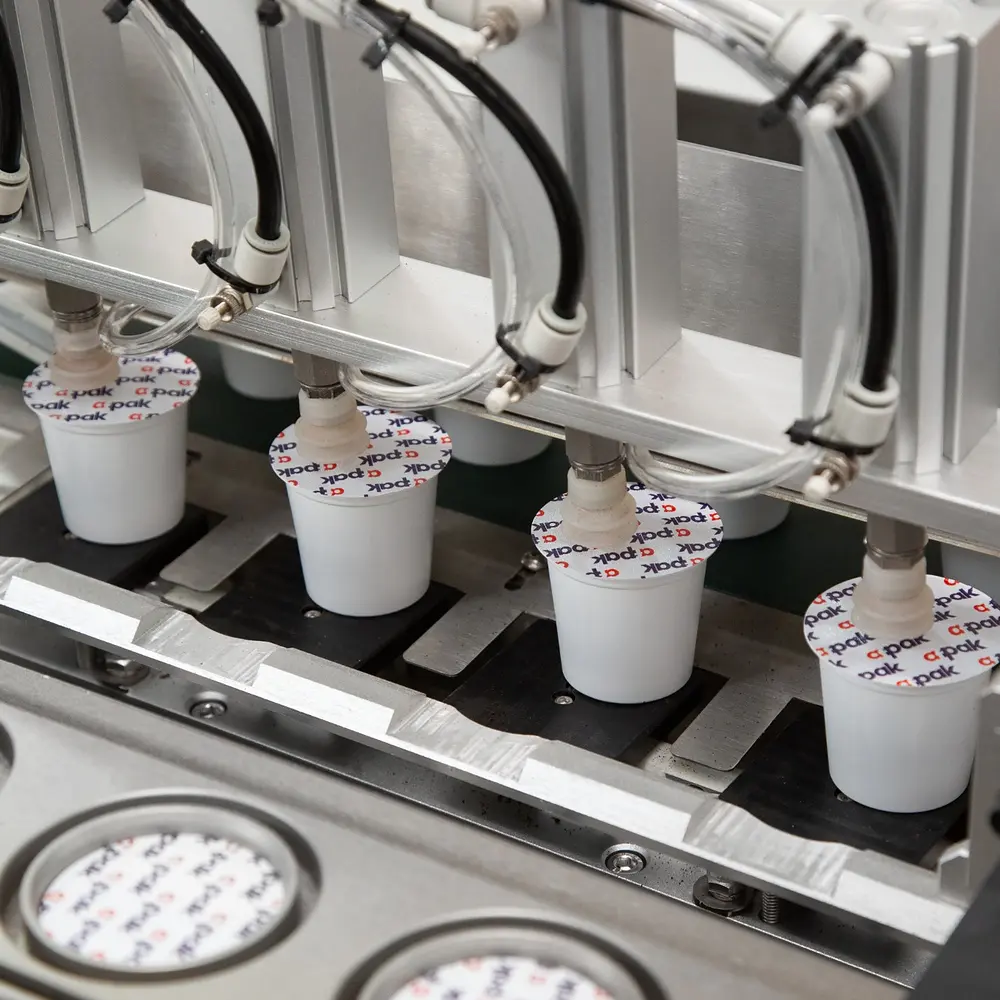
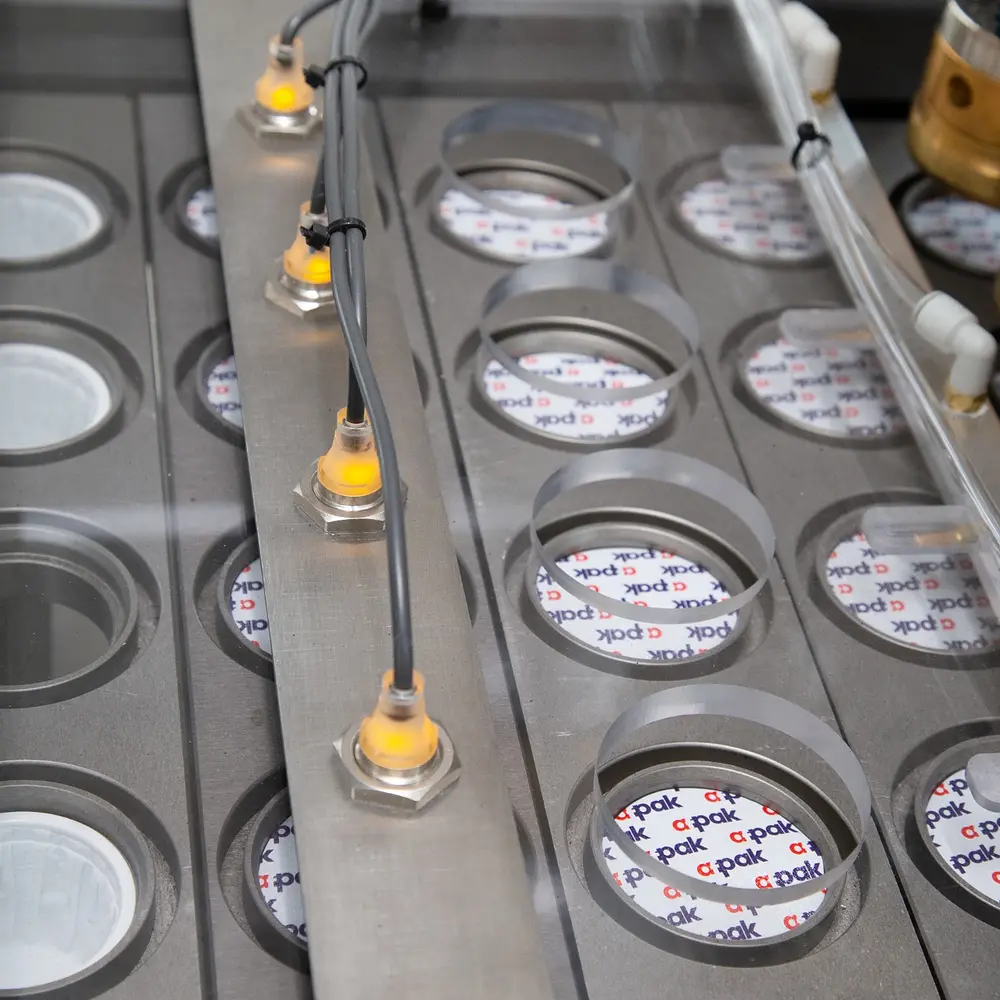
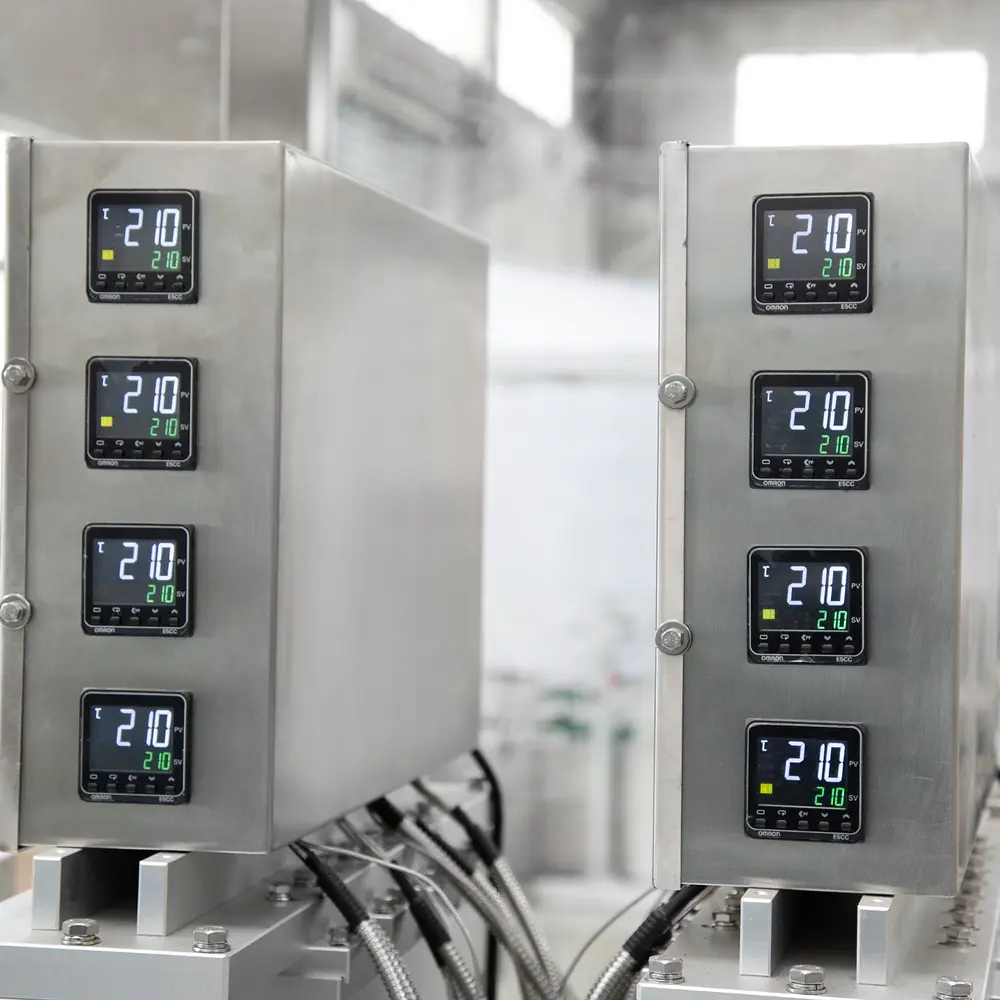
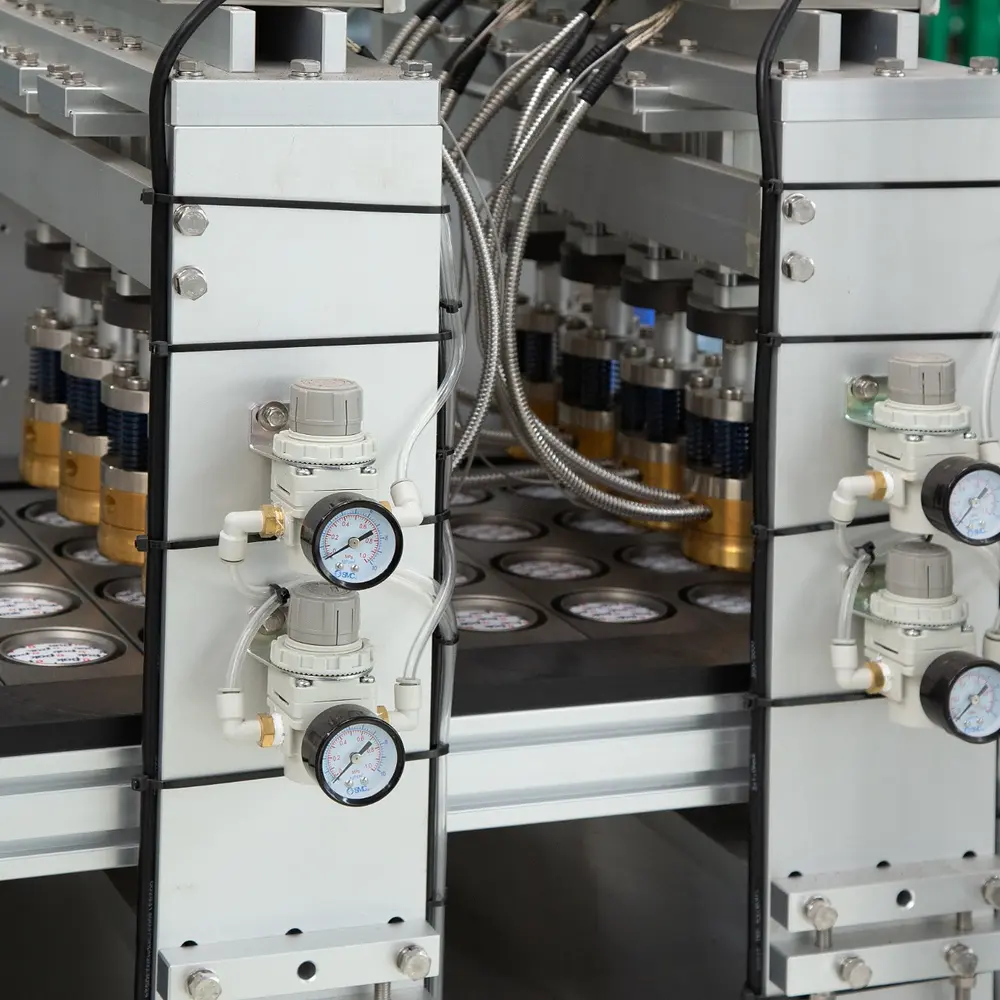
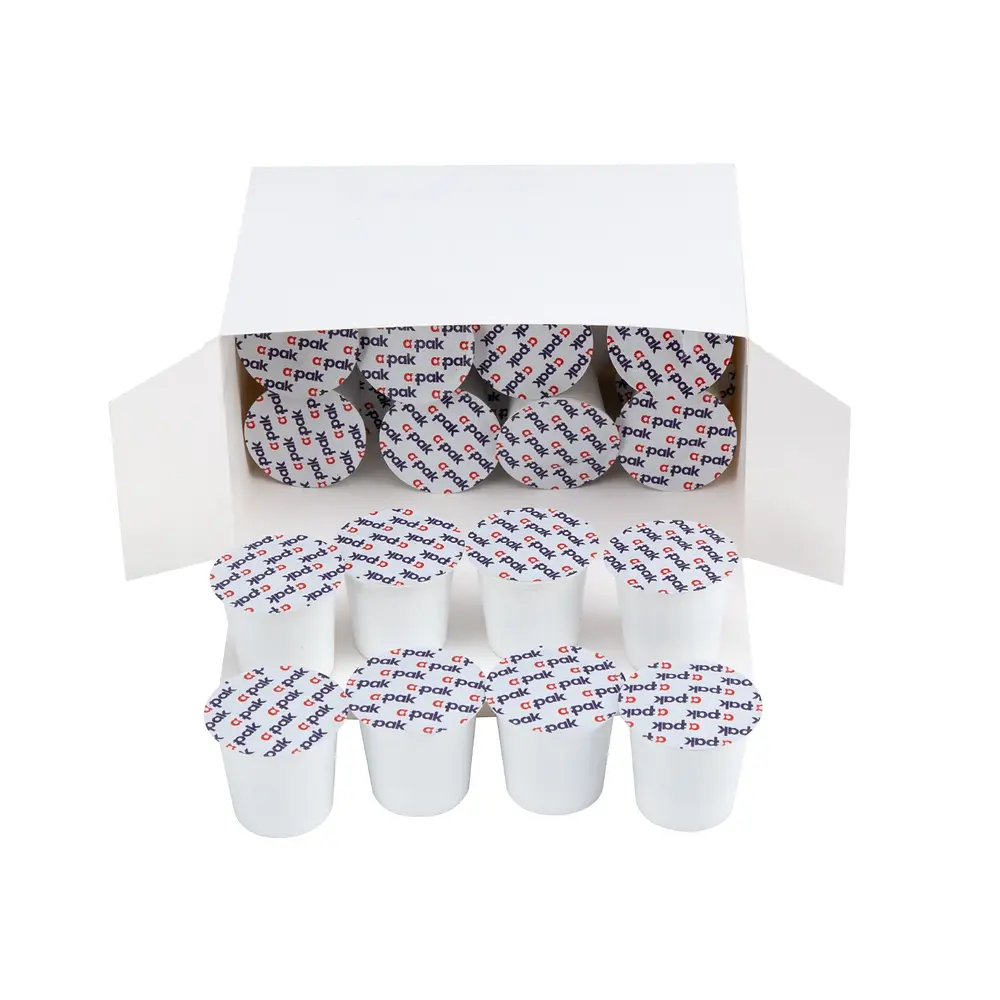
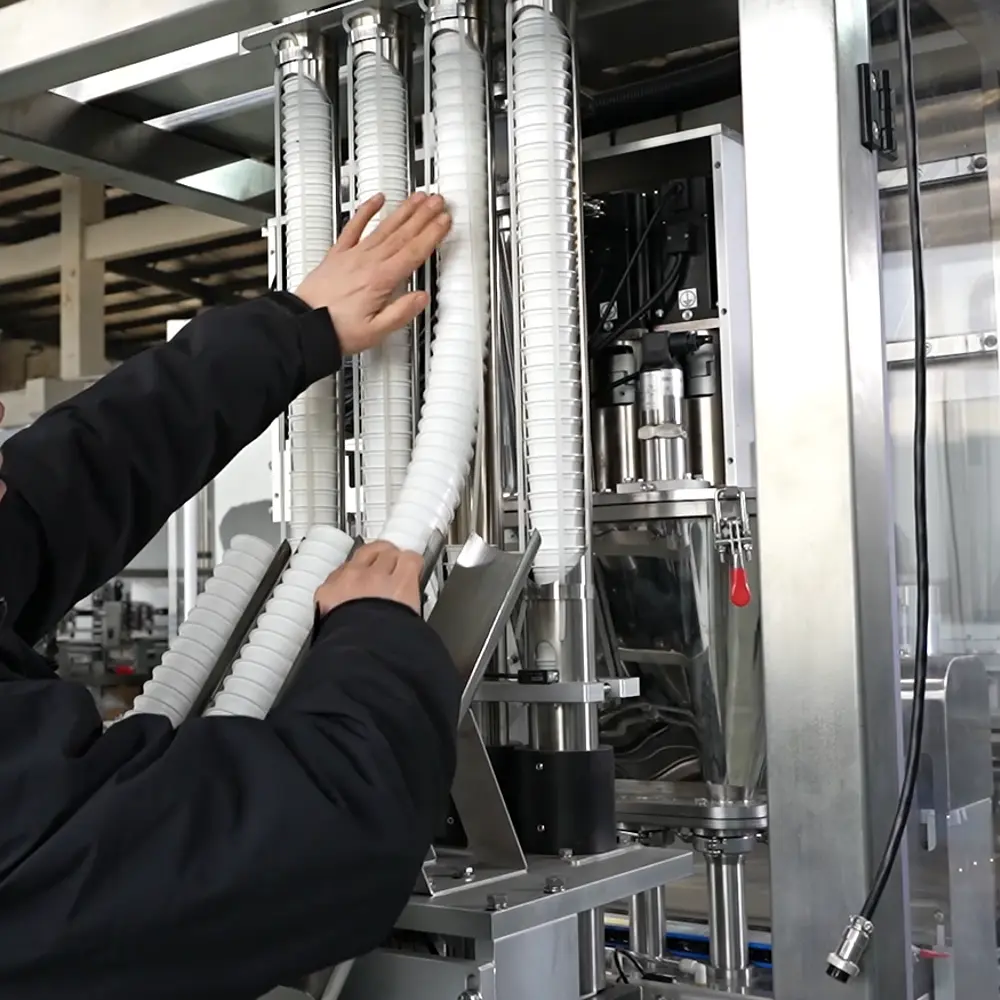
Production sequence
One connected process.
- Load and detect
Feed empty cups and check their presence before filling.
- Fill
Meter coffee with the selected auger settings and nitrogen arrangement.
- Prepare the rim
Tamp coffee and remove loose powder from the sealing surface.
- Place and seal
Place pre-cut lids and complete the configured sealing sequence.
- Inspect
Add optional checkweighing and rejection to the agreed inspection scope.
- Discharge
Transfer sealed cups to collection or an engineered downstream line.
Process overview; final physical station layout and inspection scope are confirmed in the proposal.
Machine demonstration
See H4 work.
Watch the machine video published on the H4 product page. Request a separate trial with your coffee, cups and lids when evaluating production performance.
Choose your production stage
RN1S. H4. HB410.
Compare the scope you need today and the packaging workflow you are planning next.
| Priority | RN1S | H4 | HB410 |
|---|---|---|---|
| Production role | Single-lane rotary capsule production | Four-lane K-Cup filling and sealing | Connected filling, sealing and carton packing |
| Reference filling capacity | Approximately 50 capsules/min | Up to 200 cups/min | 200 cups/min reference configuration; higher-output line proposals available |
| Capsule focus | Approved formats with dedicated tooling | K-Cup-compatible production | K-Cup-compatible production and retail cartons |
| Retail cartoning | Separate downstream project | Separate downstream project | Included in the agreed integrated line scope |
| Choose it when | Format flexibility and smaller production batches matter most | You need greater K-Cup filling capacity | You need automated cup production through retail packing |
| Explore | RN1S details ↗ | Discuss H4 ↗ | HB410 details ↗ |
Rates describe filling capacity. Inspection functions, material characteristics and downstream equipment affect finished-line output. Selecting a larger configuration does not imply that an installed H4 can be converted simply by adding lanes.
Customer growth story
Start with demand.
Grow with it.
One AFPAK customer began K-Cup production with RN1S. After approximately one year, continued sales growth led them to invest in a four-lane K-Cup production line.
They later added an RN1S configured for Nespresso-compatible capsules, expanding into a second capsule format.
This customer case shows a complete four-lane line, including downstream packaging. It illustrates a production expansion path; cartoning is a separate scope from the H4 filling and sealing machine.
Technical specifications
The details behind the machine.
| Parameter | H4 H-series reference |
|---|---|
| Machine scope | H-series K-Cup filling and sealing |
| Available channels | 4 / 6 / 8 / 10 / 12 |
| Reference output | Approximately 50 cups/min per channel; up to approximately 600 cups/min at 12 channels |
| 12-channel dimensions | Approx. 5000 L × 2200 W × 2200 H mm |
| 12-channel lead time | Approximately 4 months |
| Operator requirement | One trained operator for standard operation |
| Powder filling range | 5–20 g, subject to product and cup capacity |
| Reference filling accuracy | ±0.2 g under agreed conditions |
| Product-contact material | SUS304 |
| Standard described lid system | Pre-cut lids with heat sealing |
| Controls | PLC and touchscreen; interface language confirmed for the project |
| Main component brands | Schneider Electric / Omron / Airtac, according to the agreed component list |
| Electrical supply and installed power | Confirmed for the H4 configuration and destination |
| Compressed air and nitrogen | Consumption, pressure and nitrogen supply requirements confirmed in the technical proposal |
| Inline checkweighing | Optional; inspection speed and rejection settings agreed for the project |
H4 machine utilities and footprint are specified separately from an HB410 line with conveyors and cartoning. Final acceptance values are recorded in the technical agreement.
Before shipment
Test the machine.
With your materials.
01. Define
Send the coffee, target dose, cup drawing, lid specification and required output.
02. Evaluate
Review filling results, seal quality, sample appearance and the selected inspection functions.
03. Prepare
Agree the installation layout, utilities, training, spare parts and acceptance conditions.
Questions, answered
Plan with confidence.
Does H4 include automatic cartoning?
H4 is the filling and sealing machine. Cartoning, connecting conveyors and other downstream equipment must be specified in the line proposal. HB410 describes the integrated filling-to-carton solution.
Can I produce more than 200 cups per minute?
AFPAK can evaluate a higher-output multi-lane project. The broader line range discussed for HB410 includes 300–600 cups/min configurations, up to 12 lanes. Machine selection and downstream capacity are engineered together; these are not the standard four-lane H4 specifications.
How is filling accuracy evaluated?
Use the agreed coffee, cup, dose and operating rate. Reference accuracy is ±0.2 g. Product flow, hopper level and machine settings affect the result and should be controlled during testing.
Can inline checkweighing be added?
Yes, as an option. The four-lane configuration previously discussed with inline weighing runs at approximately 35–40 cycles/min, equivalent to 140–160 cups/min. Confirm the final inspection scope and rate in the proposal.
Can it fill products other than ground coffee?
Share the product and target dose for evaluation. Powder and granular materials can require different dosing components and settings; coffee performance figures should not automatically be applied to other products.
What support should we include in the project?
Specify installation guidance, operating documentation, operator training and spare-parts requirements. Any on-site service, travel charges, local support arrangements and warranty conditions should be included in the written proposal.
Your next production step
Let’s configure your H4.
Send your cup, lid, coffee dose and output target.
Get a proposal built around your production requirements.