AF-C100 Automatic Case Packer for Coffee Bags
Automatic bag flipping, counting & arrangement, side-push loading, and hot-melt adhesive sealing
Actual speed and configuration depend on bag dimensions, bag condition, quantity per case, carton structure, and upstream product flow.
Product Overview
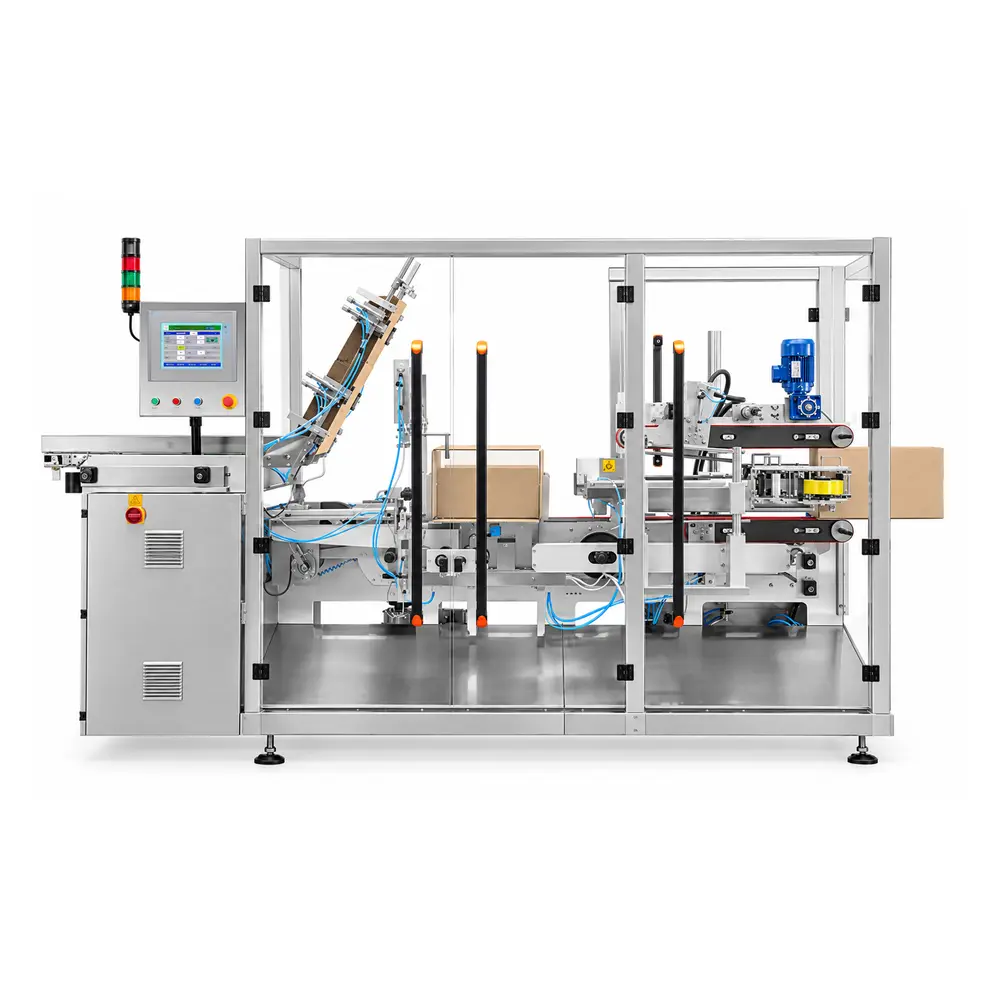
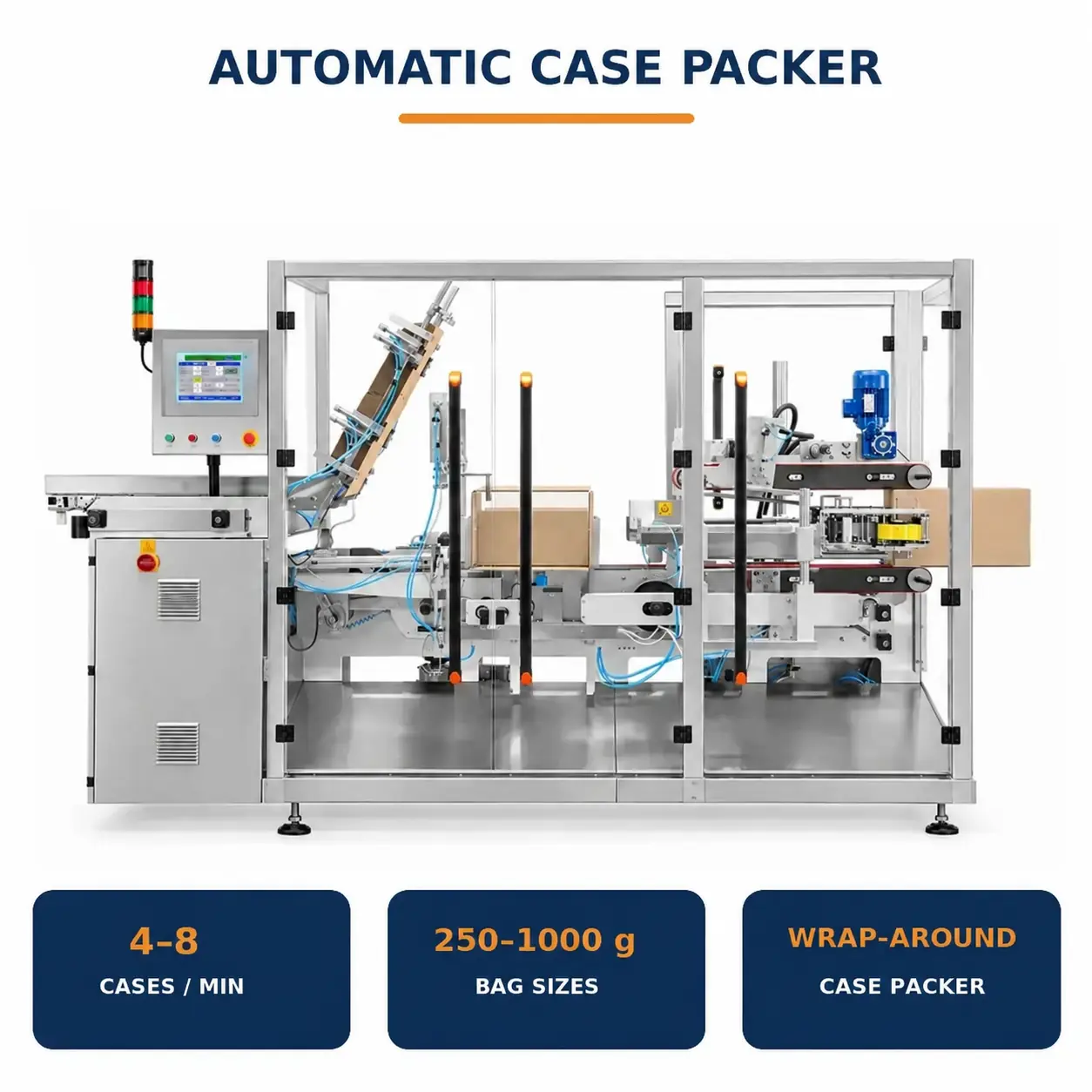
Designed specifically for the end-of-line casing of packaged coffee bean bags, this system integrates bag flipping (to a side-standing position), counting and arrangement, 90° rotation, side-push loading, and Wrap-around Case forming and flap sealing.
The equipment connects to upstream coffee packaging lines and can be configured with optional in-line weighing, buffer conveyors, and robotic palletizing to complete the entire end-of-line process—from finished coffee bags to palletized cases.
From Finished Bag Infeed to Case Outfeed
The automatic coffee bag case packer connects to upstream packaging processes, receiving filled and sealed coffee bags and organizing them according to preset quantities and arrangement patterns.
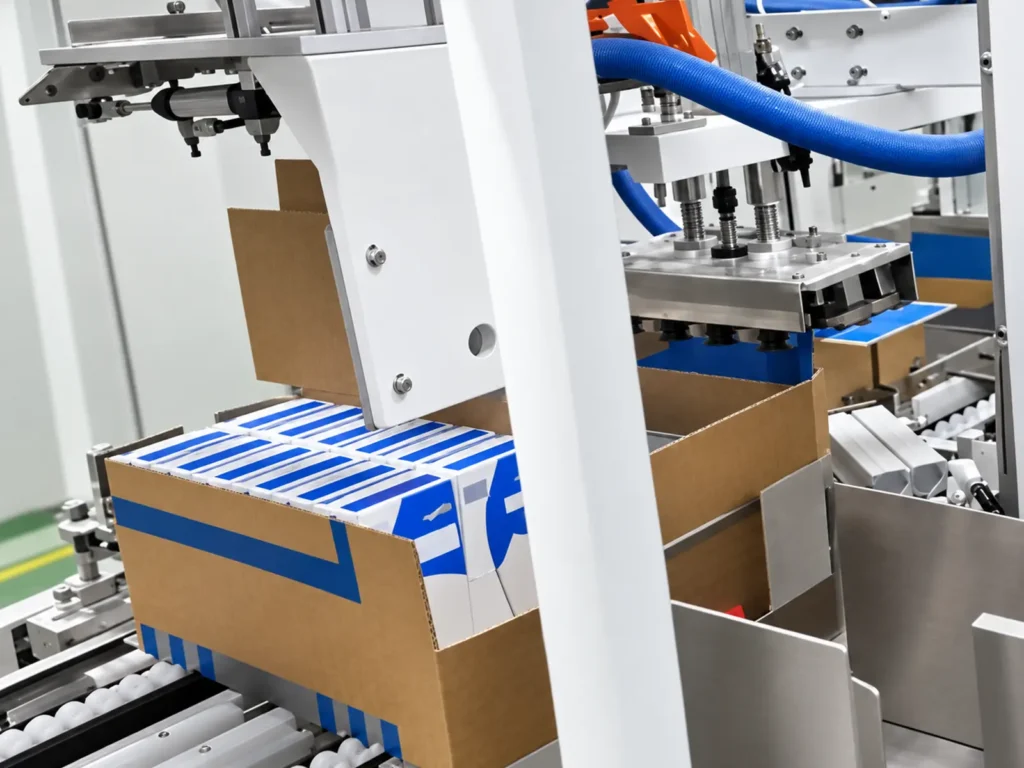
After the bags are flipped to a side-standing position, counted, and grouped, the product group rotates 90° before a pusher mechanism loads the entire group into a pre-formed, positioned carton. The machine then automatically folds the flaps and seals the case using hot-melt adhesive.
Product organization and carton forming occur at dedicated stations, converging at the loading point. Customers can configure additional end-of-line equipment—such as weighing systems, conveyors, and robotic palletizers—based on production volume, product specifications, and factory layout.
Coffee Bag Specifications and Case Packing Arrangement
Configuration Based on Actual Bag Type and Quantity Per Case
Factors such as the coffee bag's shape, thickness, seal type, residual air volume, and orientation during packing all influence the grouping and case-loading processes. The equipment solution must be finalized based on actual product samples and carton structure.
The following table lists packaging combinations from a reference project:
| Coffee Bag Specification | Quantity Per Case | Packing Arrangement | Reference Carton Dimensions (L × W × H) |
|---|---|---|---|
| 1000 g/bag | 6 bags | 2×3 | 250 × 285 × 310 mm |
| 500 g/bag | 6 bags | 2×3 | 250 × 285 × 195 mm |
| 250 g/bag | 8 bags | 2×4 | 325 × 220 × 280 mm |
| 250 g/bag | 10 bags | 2×5 | 420 × 220 × 170 mm |
The above are reference combinations for a specific project; suitability cannot be determined solely by bag weight. Other bag types, quantities per case, and carton specifications can be evaluated upon provision of samples.
*2×2 is listed as an arrangement option; the specific bag and carton combination remains subject to confirmation.

Machine Gallery
Move through the case packer from the complete machine to the loading and forming areas.
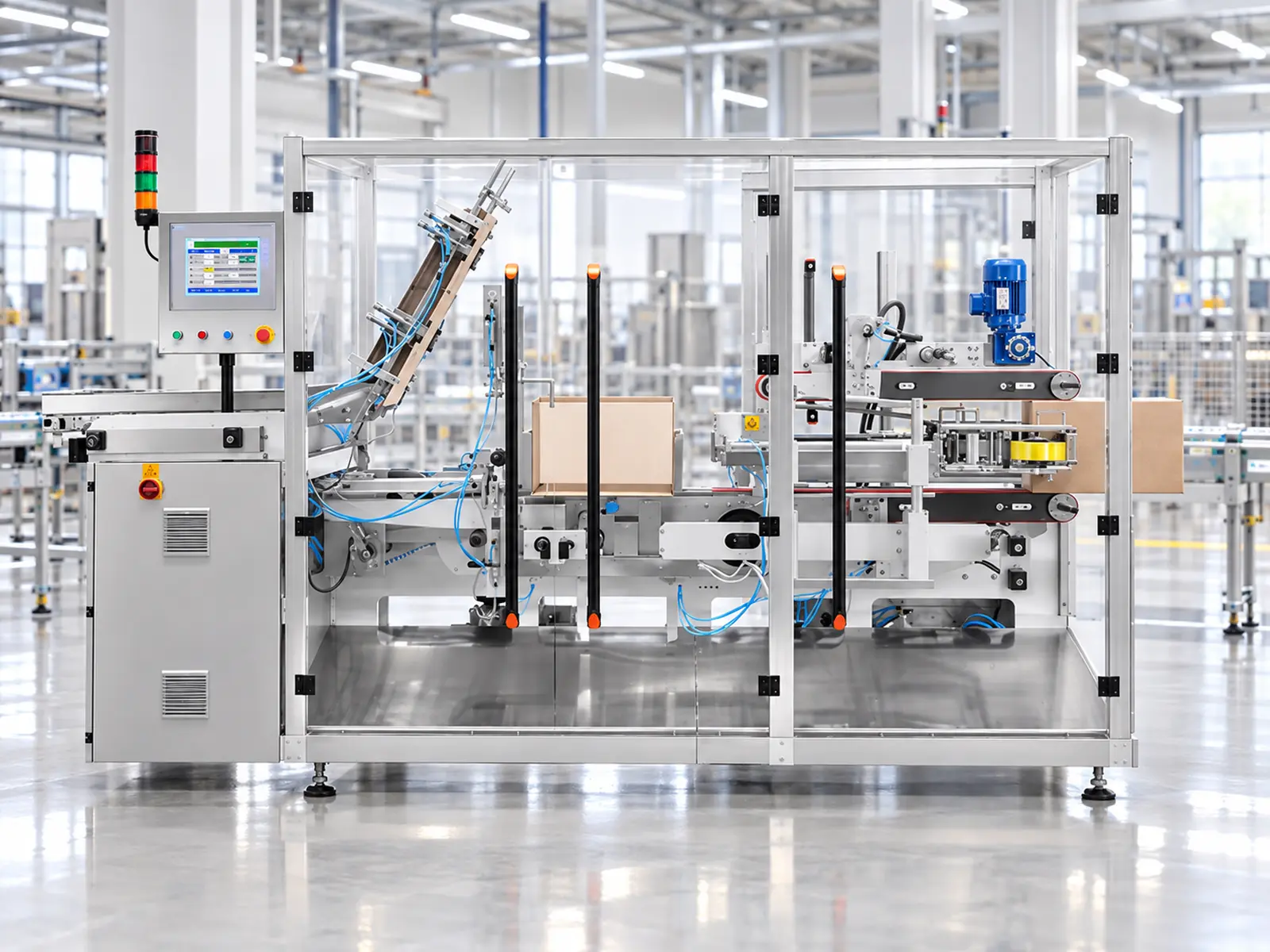
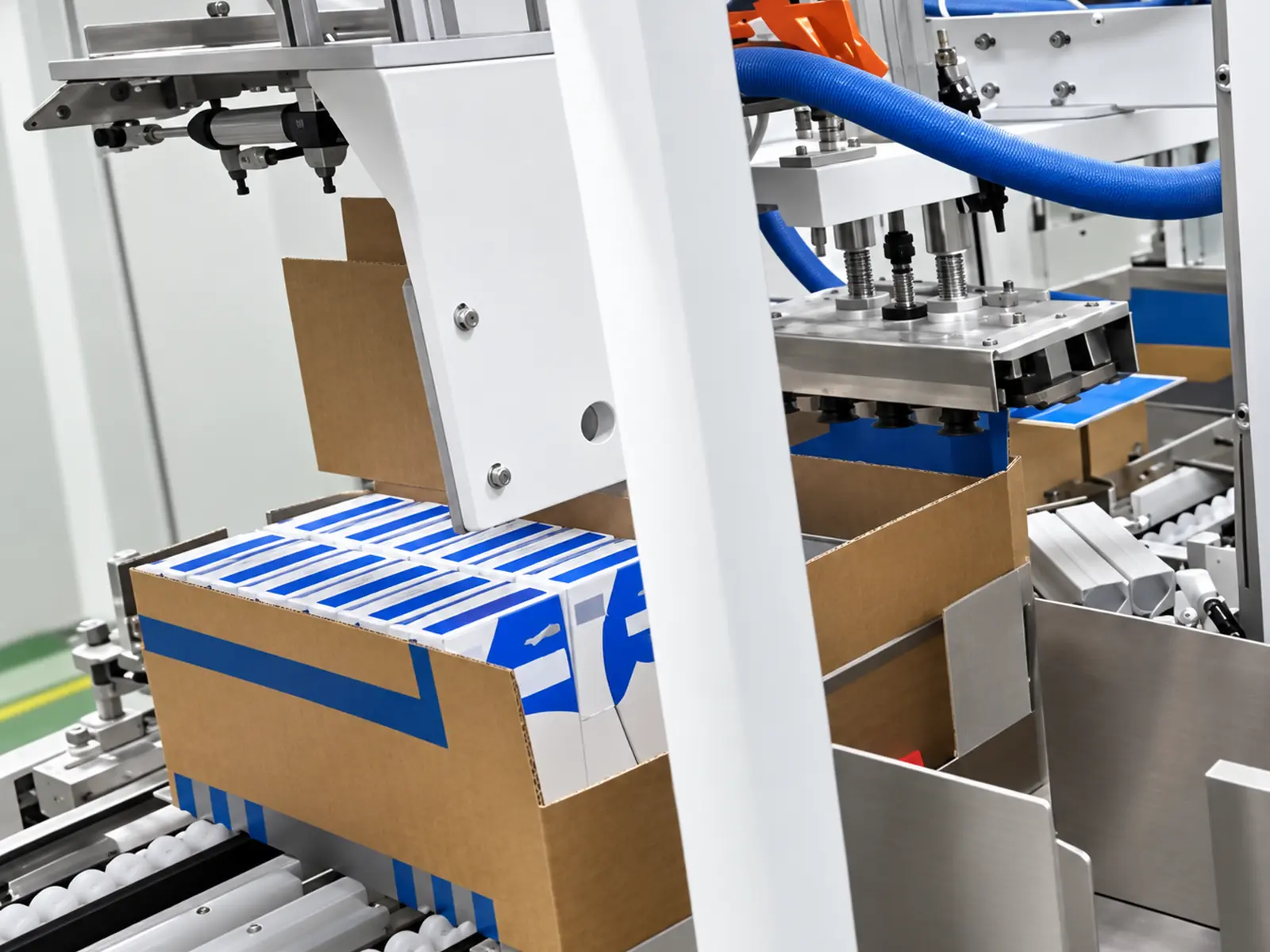
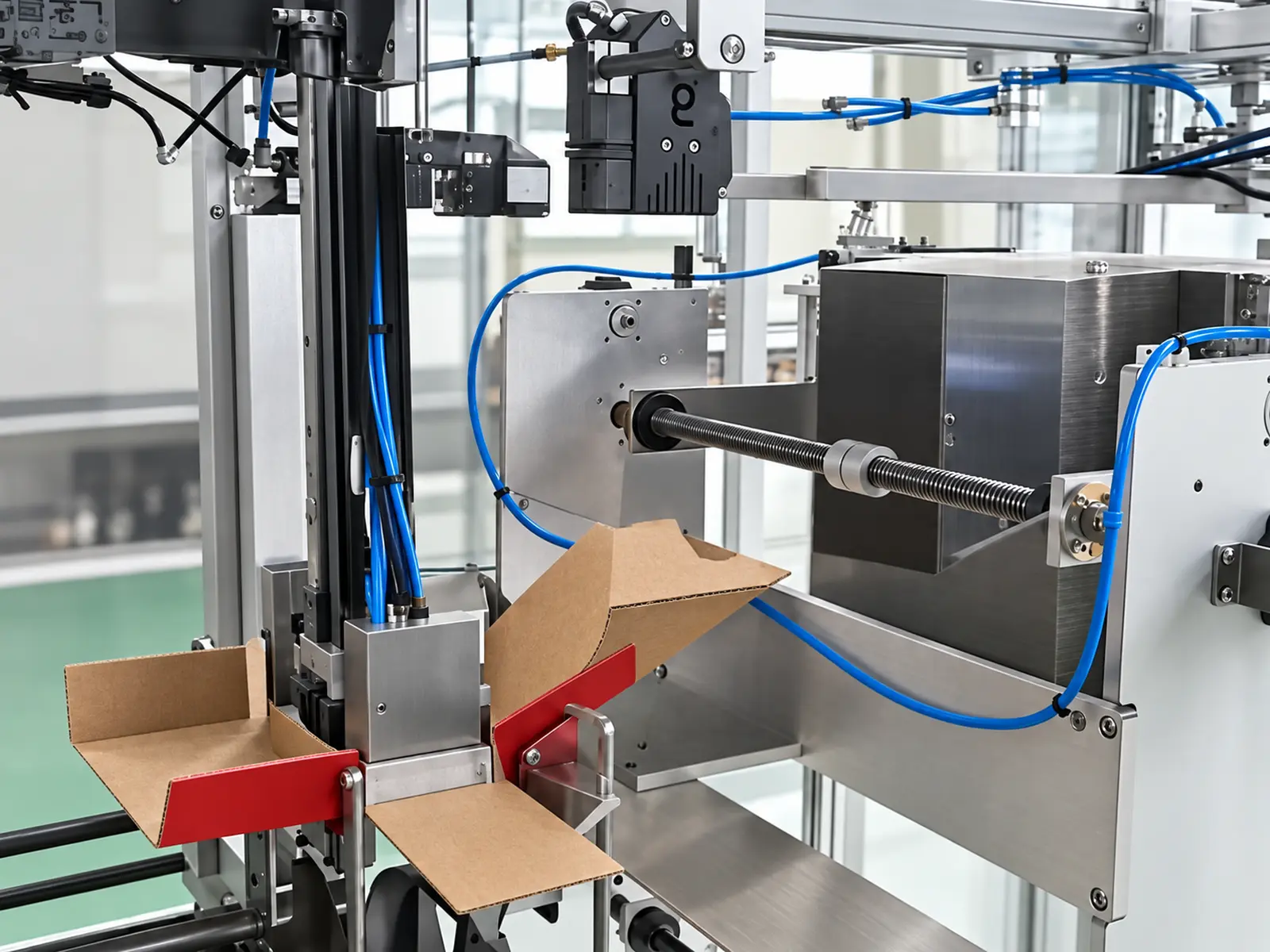
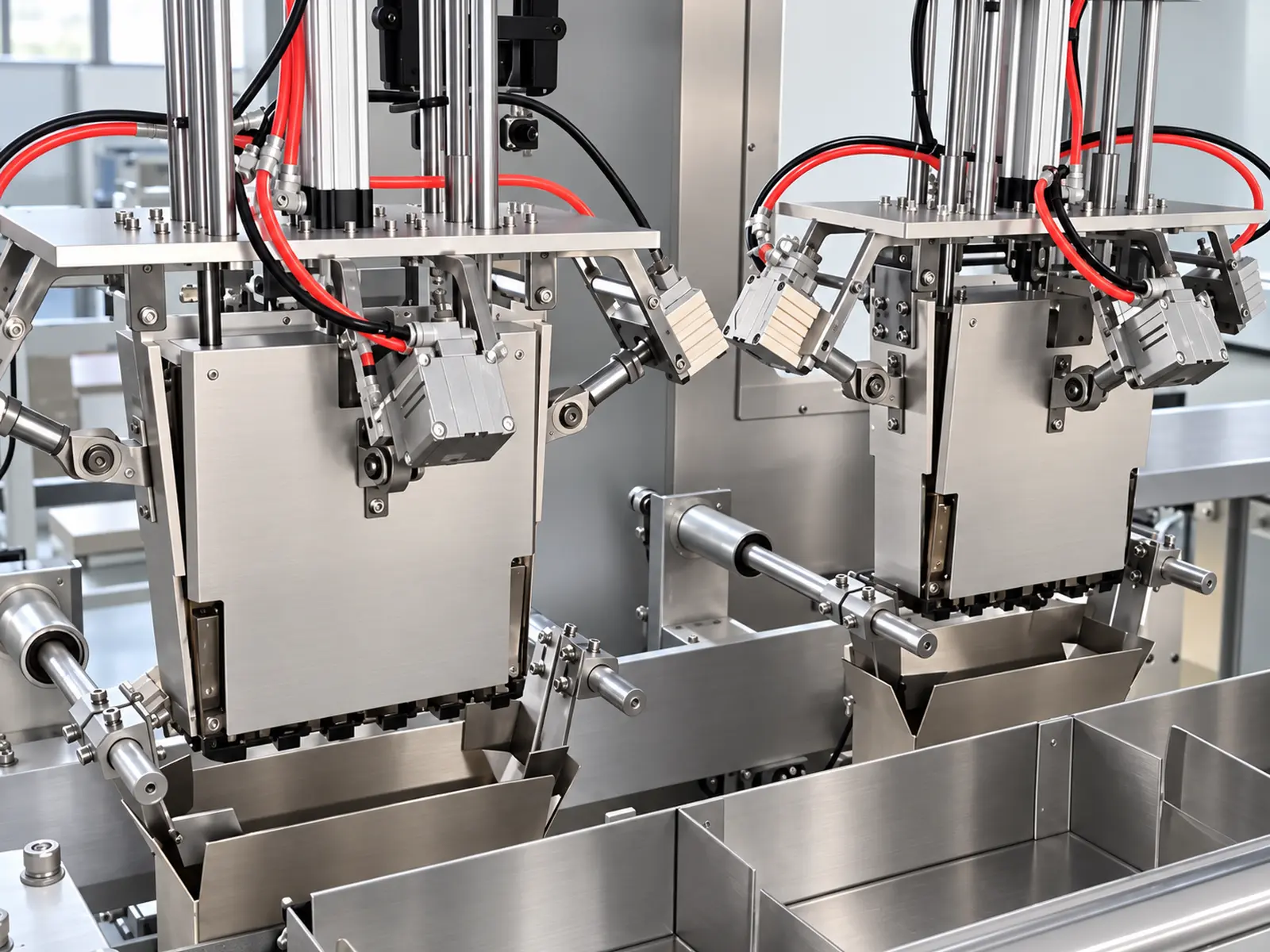
Image 1 of 5
Workflow
Integration of Coffee Bag Handling and Carton Forming at the Packing Station
Coffee Bag Handling Process
- Finished bag infeed
- Rotation to upright side position
- Counting and arrangement
- 90° rotation of product group
- Lateral push into carton
Carton Preparation Process
- Wrap-around Case blank supply
- Picking and forming
- Conveying to packing station
- Positioning for loading
Case Sealing and Downstream Process
- Automatic flap and tab folding
- Hot-melt adhesive sealing
- Case discharge
- In-line weighing and buffer conveying
- Robotic palletizing
The positioning and integration of the weighing, conveying, and palletizing modules are determined by the final production line layout.
Automatic Bag Flipping, Counting, and Arranging
Organizing products before case loading
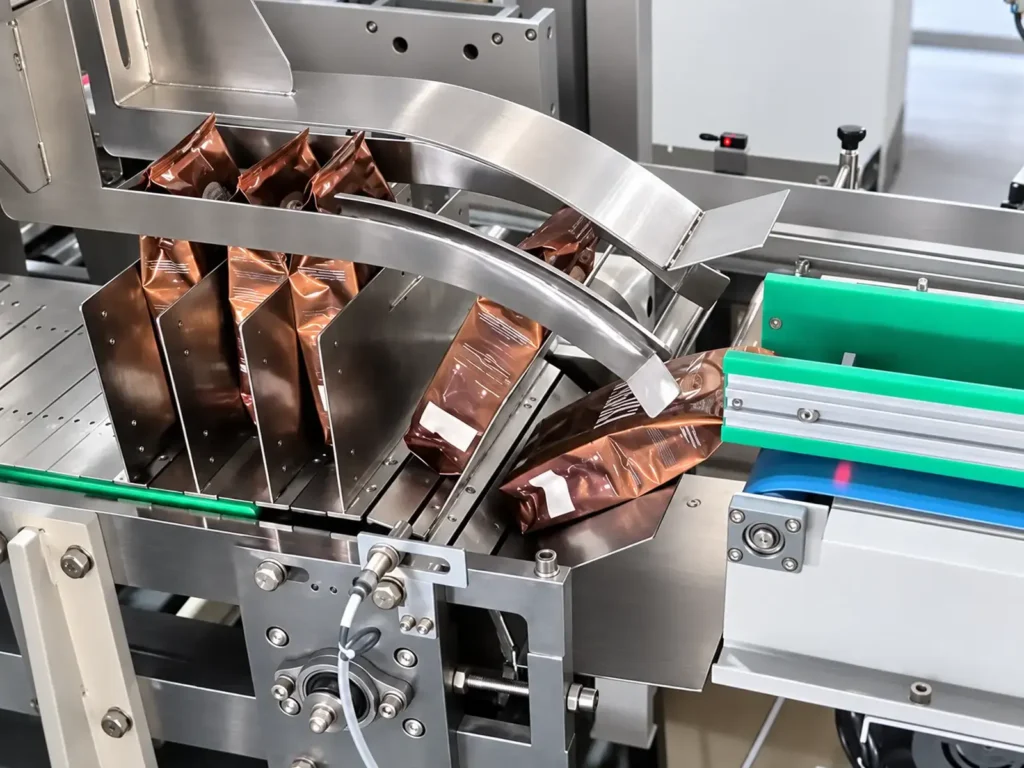
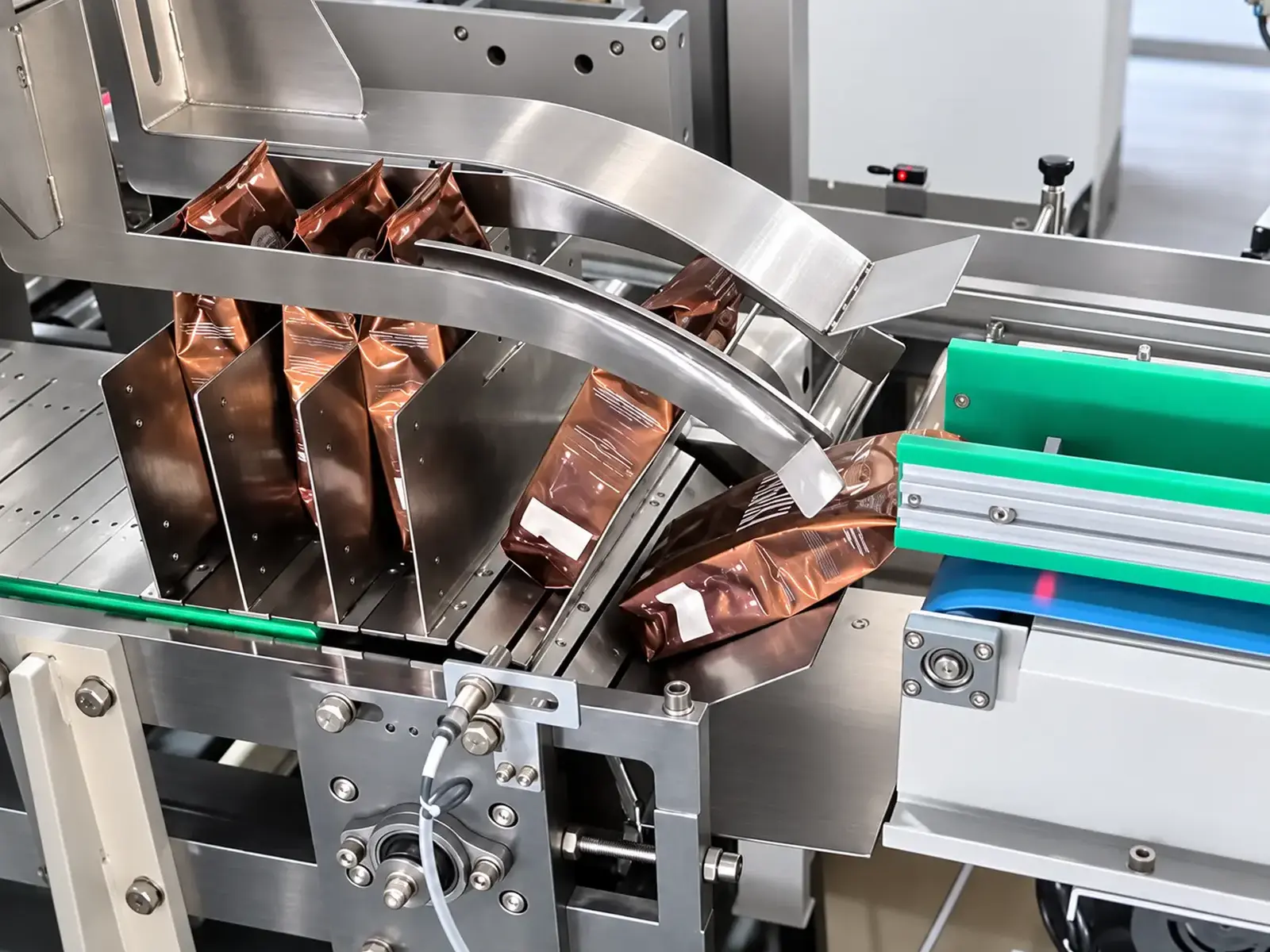
Once the coffee bags enter the case packer, the equipment flips them into the required side-standing orientation, then counts and arranges them according to the target quantity per case.
This process ensures the product group entering the loading station has a defined quantity, orientation, and arrangement, preparing it for subsequent 90-degree turning and side-push loading.
Reference configurations include 2×3, 2×4, and 2×5 arrangements. Specific product handling mechanisms and adjustment methods must be confirmed based on the actual dimensions and condition of the coffee bags.
Infeed requirements
To ensure a smooth transition between product handling and case loading, the upstream conveyor system must meet the following conditions:
- Coffee bags are already sealed.
- Infeed orientation matches the preset orientation.
- Bag shape and condition are relatively consistent.
- Avoidance of skewed bags, toppled bags, or abnormal stacking.
- Conveying cadence matches the downstream processing capacity.
The discharge height, conveying direction, and product spacing of the upstream packaging machine should be mutually confirmed during the production line design phase.
90° Turning and Side-Push Case Loading
Loading the arranged coffee bag group into the carton
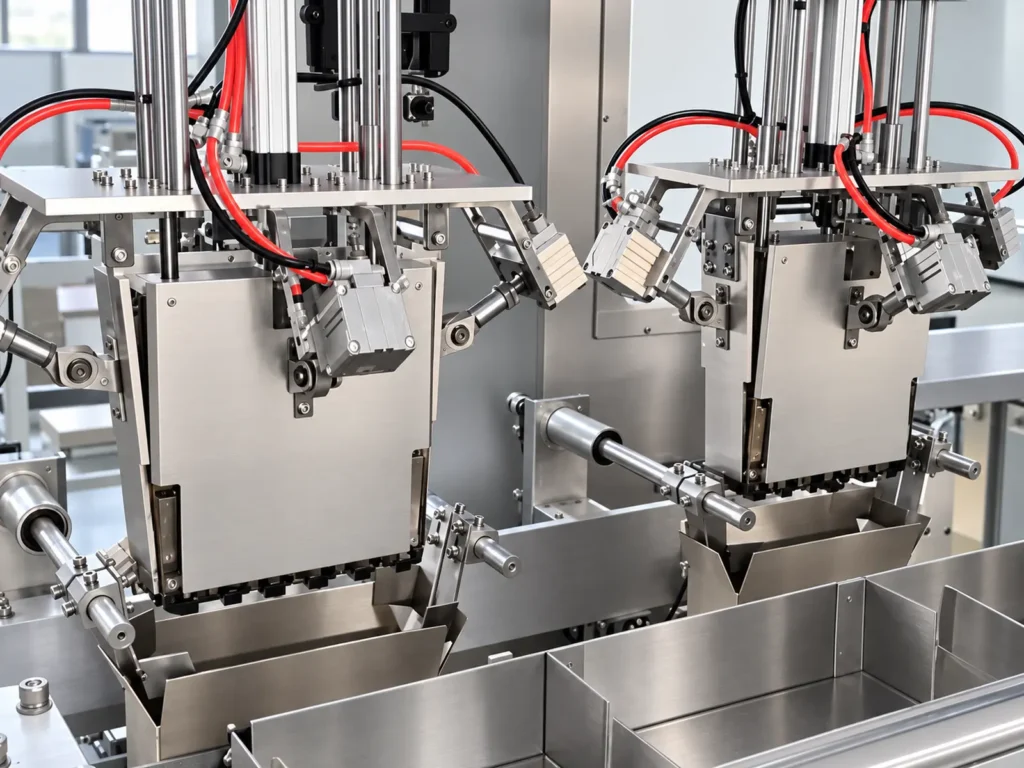
After counting and arranging, the equipment rotates the product group 90° to the required loading orientation and then uses a side-push mechanism to load it into the carton.
Side-push loading requires the product group dimensions to match the carton opening and internal space. During solution validation, the loading process and post-loading state should be verified based on actual bag thickness, packing density, and carton dimensions.
Key aspects of sample testing include:
- Whether the product group maintains the preset arrangement.
- Whether the pushing process is smooth.
- Whether the bag body or seal edges suffer from crushing or abrasion.
- Whether the product position meets requirements after loading.
- Whether the carton exhibits significant deformation.
Wrap-around Case Forming and Hot-Melt Glue Sealing
From blank retrieval to post-loading sealing
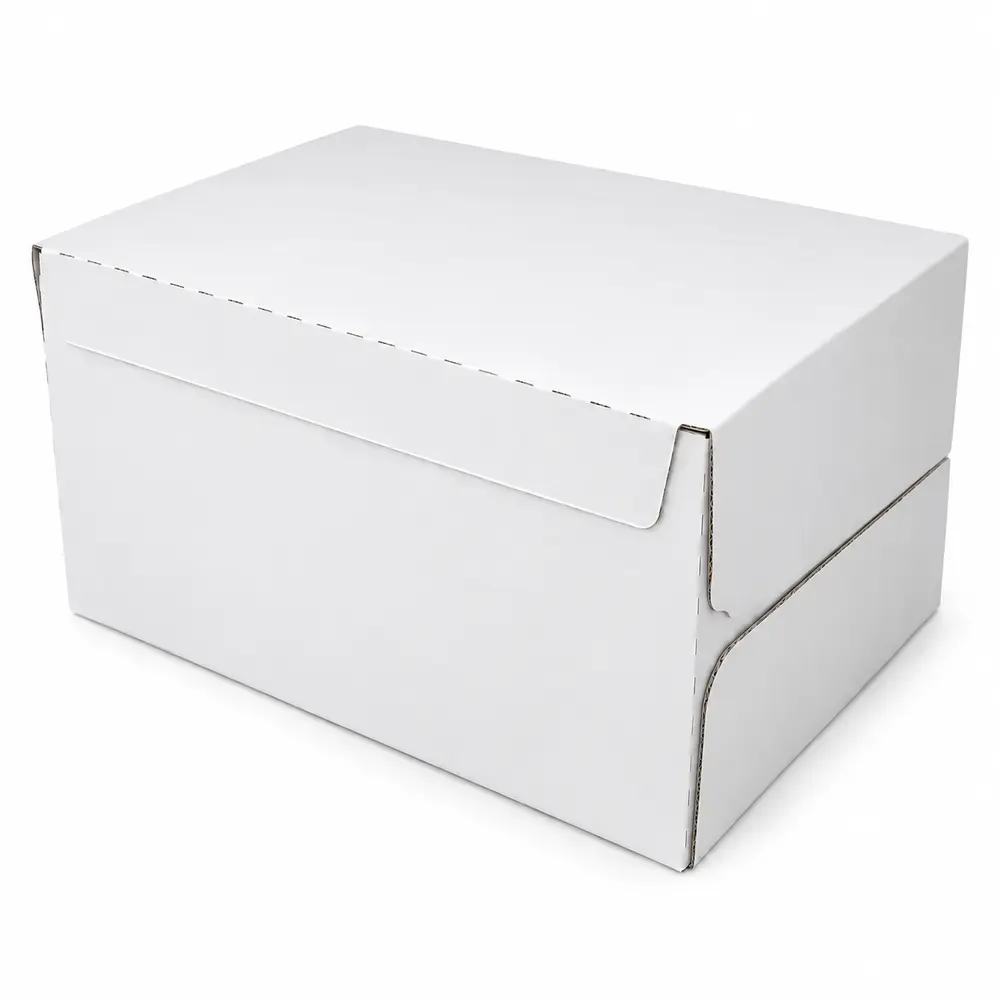
The equipment uses Wrap-around Case blanks compatible with the mechanism to perform blank retrieval, forming, and transport to the loading station. After the coffee bags are loaded into the carton, the equipment folds the flaps and panels in a predetermined sequence and completes the sealing process using hot-melt adhesive.
The carton's die-cut structure, dimensions, rigidity, and material must meet the equipment's operational requirements. Carton specifications should be finalized concurrently with the product arrangement design to ensure compatibility across the forming, loading, and sealing stages.
Carton Specification Details
- Flat die-cut layout (unfolded).
- Formed carton dimensions (external and internal/opening).
- Board material, thickness, and rigidity.
- Crease lines and folding structure.
- Hot-melt adhesive application points.
- Sealing performance after actual loading.
Key Engineering Features
Automatic Side-Turning/Upending
Adjusts coffee bags to the required orientation for packing, ensuring consistent feed alignment for subsequent counting, grouping, and arrangement.
Counting and Arrangement by Target Quantity
Configures the arrangement pattern based on the number of bags per carton and product dimensions, creating product groups ready for the loading station.
90° Product Group Rotation
Reorients the product group after formation to align with the lateral push-loading path.
Lateral Push-Loading
Uses a lateral pusher mechanism to transfer the organized coffee bags into the carton as a single unit.
Wrap-around Case Forming and Hot-Melt Sealing
Integrates blank forming, loading, automatic flap folding, and adhesive sealing into a seamless workflow.
Integration with Weighing and Robotic Palletizing
Downstream equipment can be configured based on project requirements to handle weight inspection, conveying, and robotic palletizing of the filled cartons.
Production Line Integration and Site Layout
Layout Based on Upstream Output and Workshop Conditions
The case packer can interface with upstream coffee packaging conveyor lines. The line design must account for coffee bag infeed, carton blank replenishment, sealed carton discharge, and the robotic palletizing zone.
Layout verification includes:
- Number of upstream packaging machines and discharge speeds.
- Conveyor height and infeed direction.
- Orientation of coffee bags upon entering the infeed/arrangement mechanism.
- Conveying distance between the case packer and downstream equipment.
- Space for operation, material replenishment, and maintenance.
- Aisles for pallet placement and handling.
- Robot safety enclosure zone.
Conveying paths and equipment configurations may vary by workshop; the final footprint dimensions are subject to the confirmed layout drawing.

In-line Weighing
Configuration for full-case weight inspection
Sealed cartons can be routed to in-line weighing equipment for full-case weight checks as required by the project.
The reference weighing accuracy for the project is ±10–20 g. Actual weighing performance must be verified based on carton weight, conveying speed, product condition, and site conditions.
If functions such as out-of-tolerance alarms, automatic rejection, data logging, or data transmission to other systems are required, the corresponding functional and interface specifications should be defined during the proposal stage.
Robotic Palletizing
Palletizing sealed cartons
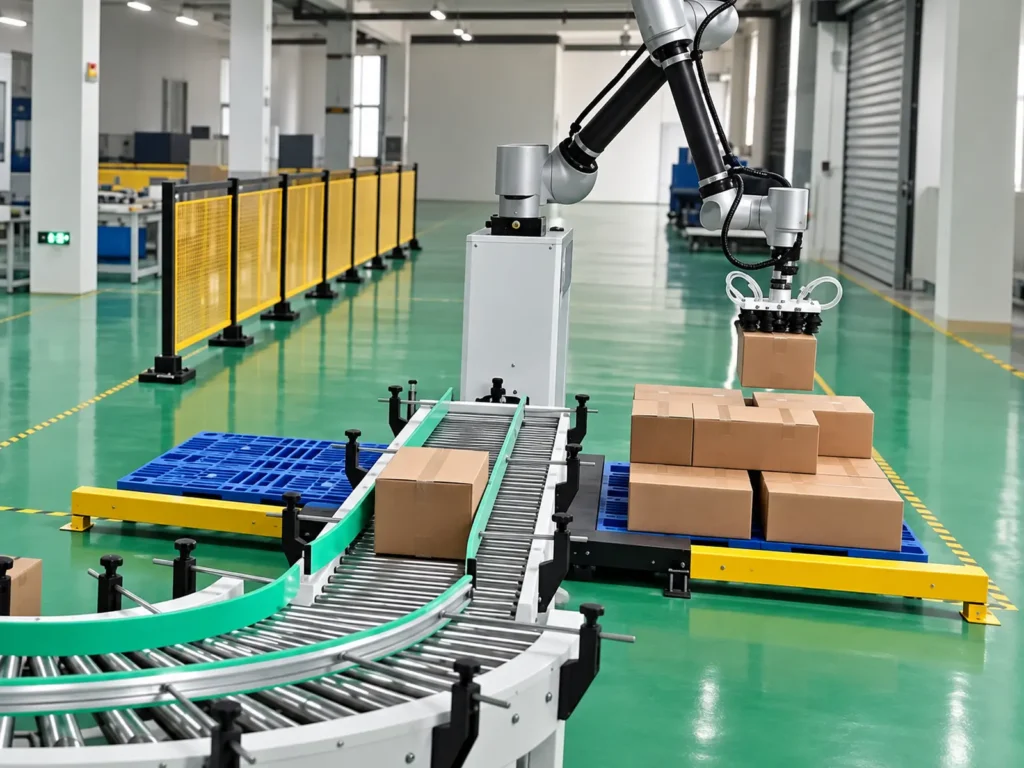
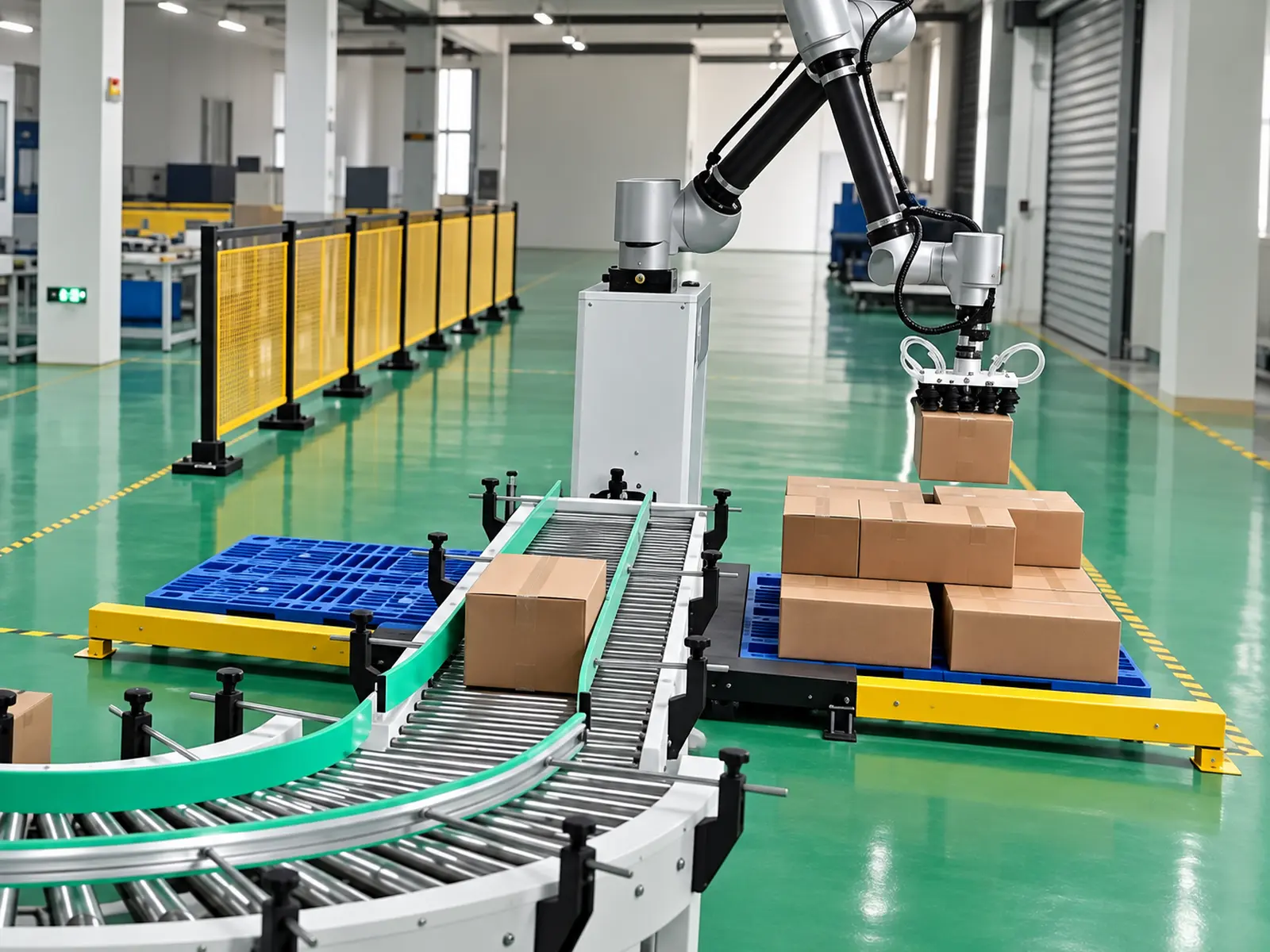
After downstream conveying, cartons arrive at the robot pickup position; the robot, equipped with a vacuum gripper, places them onto the pallet according to the confirmed palletizing pattern.
Reference palletizing configuration includes:
- 6-axis robot.
- Vacuum gripper.
- Approx. 1.6 m buffer conveyor.
- Palletizing control system.
- Safety fencing.
Robot reference specifications
| Parameter | Reference Configuration |
|---|---|
| Number of axes | 6 axes |
| Nominal max. payload | 30 kg |
| Reach | 1900 mm |
| Power | 3.5 kW |
| Protection rating | IP54 |
| Power supply | Single-phase 220V / 50Hz |
The robot's nominal payload does not equate to the allowable weight of a single carton. Actual handling capacity must account for gripper weight, carton center of gravity, and operating conditions.
Pallet dimensions, stacking height, layer arrangement, and actual palletizing speed should be confirmed separately based on the carton specifications and site layout.
Control and Key Configuration
Coordinating station operations via the control system
The reference system utilizes Siemens PLCs and touchscreens, incorporating Inovance servo motors and variable frequency drives (VFDs), as well as AirTAC pneumatic components, to manage equipment operations and station-to-station transfers.
| Configuration Item | Reference Configuration |
|---|---|
| Main Body Materials | Stainless steel, steel, and aluminum |
| PLC | Siemens |
| Touchscreen | Siemens |
| Servo Motor | Inovance |
| VFD | Inovance |
| Pneumatic Components | AirTAC |
| Hot-Melt Glue System | Robatech |
Specific brands, models, and configurations are subject to the final technical proposal.
Key Technical Parameters
Reference configuration for coffee bag case packing equipment
| Parameter | Details |
|---|---|
| Machine Model | AF-C100 |
| Product Handled | Pre-packaged coffee bean bags |
| Reference Bag Weights | 250 g, 500 g, 1000 g |
| Stable Packing Speed | 4–8 cases/minute |
| Reference Arrangement | 2×3, 2×4, 2×5 |
| Product Orientation/Arrangement | Flip to stand on side, counted arrangement, 90° rotation |
| Packing Method | Side-push loading |
| Carton Type | Wrap-around Case; die-cut structure must match equipment |
| Sealing Method | Hot-melt glue sealing |
| Operating Voltage | 220V / 50Hz |
| Compressed Air Pressure | ≥0.6 MPa |
| Downstream Configuration | Options include in-line weighing, buffer conveying, and robotic palletizing |
Production capacity depends on the actual product, number of bags per case, carton structure, and the cycle times of upstream and downstream processes. Equipment dimensions, total power, and weight will be confirmed based on the final configuration and layout.
Sample Testing and Project Confirmation
Validating the packing scheme using actual coffee bags and cartons
Even for coffee products of the same weight, bag dimensions, inflation levels, and seal configurations may vary. To confirm equipment configuration, it is recommended to provide actual finished bags and trial carton blanks for evaluation.
It is recommended to jointly confirm the following items:
- Coffee bag conveying and infeed direction.
- Bag flipping and upending (standing on edge) effect.
- Counting and grouping arrangement.
- Product group 90° rotation.
- Lateral case-loading process.
- Condition of bags and seal edges after casing.
- Carton forming, flap folding, and hot-melt adhesive sealing.
- Adjustment requirements for different specifications.
- Inline weighing function and accuracy requirements.
- Robotic picking and palletizing arrangement.
- Overall line cycle time during continuous operation.
Test conditions and acceptance criteria should be agreed upon during the project confirmation stage.
Pre-shipment Inspection
Checking coordination across the complete packaging process
For the pre-shipment inspection, it is recommended to use the agreed-upon products, carton blanks, and casing configurations to observe the equipment's continuous operation from infeed to finished case output.
Key inspection items include:
- Smoothness of coffee bag conveying.
- Compliance of bag flipping and upending posture with requirements.
- Accuracy of counting and arrangement.
- Stability of rotation and lateral pushing processes.
- Normal operation of carton blank picking, forming, and positioning.
- Coordination of flap folding and adhesive application actions.
- Appearance and bonding quality of sealed cases.
- Compliance of weighing and downstream conveying with agreed requirements.
- Compliance of robotic case handling and palletizing with settings.
- Relevant alarm, emergency stop, and safety protection functions.
Actual acceptance items, operation duration, and pass criteria shall be based on the technical requirements confirmed by both parties.
Actual Operation Video
Viewing the complete process from coffee bag infeed to palletizing
Use the actual product operation video to understand how coffee bags are flipped and upended, arranged into the specified pattern, rotated 90°, and laterally pushed into the case. Key process steps to observe:
Coffee bag infeed → Flipping to stand on side → Counting & arranging → 90° turn → Side-push into case → Flap folding & gluing → Case discharge → In-line weighing → Robotic palletizing
Details regarding the bag type, quantity per case, and equipment configuration shown in the video should be noted alongside the display information to help determine if the solution suits your specific product.
FAQ
Does this equipment include coffee bean filling and bag sealing?
This equipment handles pre-packaged coffee bags, focusing on downstream product handling, case packing, and case sealing. Upstream coffee bean filling and bag sealing are performed by separate packaging machinery.
What bag weights can be handled?
Reference projects include 250g, 500g, and 1000g coffee bags. Suitability depends on factors such as bag dimensions, thickness, shape, seal type, and the condition of incoming bags; weight alone is not the sole determining factor.
How many bags can fit in each case?
Reference projects include configurations of 6, 8, and 10 bags per case, arranged in 2×3, 2×4, and 2×5 patterns, respectively. Other packing quantities and arrangements can be evaluated upon receipt of samples and specific requirements.
What is the packing speed?
The reference packing speed is 4–8 cases per minute, depending on coffee bag specifications, quantity per case, carton structure, and incoming product conditions. When integrating weighing and palletizing systems, the overall line cycle time must also be considered.
Can it connect to existing coffee packaging machines?
We can evaluate integration plans based on the existing packaging machine's discharge specifications. Required information includes discharge speed, conveyor height, infeed direction, bag orientation, and the facility layout.
Does it use standard adhesive tape for carton sealing?
This solution utilizes Wrap-around Case blanks and hot-melt adhesive sealing. If tape sealing is required, the carton structure and equipment configuration must be confirmed separately.
What adjustments are needed when changing coffee bag specifications?
Adjustments may involve conveyor guides, product staging positions, arrangement quantities, case-loading alignment, and carton forming/sealing positions. The specific scope and method of adjustment depend on the differences between the specifications.
Can cartons with incorrect weights be automatically rejected?
In-line weighing can be included in the system configuration. If automatic rejection is required, the rejection mechanism, decision criteria, and corresponding functions must be clearly defined in the proposal; the mere presence of weighing equipment does not guarantee this capability.
Can the robot handle 30 kg cartons?
30 kg refers to the robot's nominal maximum payload. The allowable carton weight must account for the weight of the gripper (end-effector) and be verified based on the center of gravity and operating conditions.
Can printing and labeling functions be added?
In-line printing and labeling requirements can be accommodated; we will evaluate the installation location, label size, application orientation, data interfaces, and overall line speed. This module requires a separate configuration review.
Are samples required before placing an order?
We recommend providing actual samples of coffee bags, cardboard or cartons, and die-cut drawings. Physical testing helps verify product staging, side-push loading, and sealing performance.
Get a Coffee Bag Case-Packing Solution
Provide details on your coffee bags, cartons, and target output.
AFPAK can assist in defining the automatic case-packing and end-of-line packaging solution based on your actual products, packing requirements, and facility conditions.
Please provide:
- Photos and actual samples of the coffee bags.
- Weight and dimensions of individual bags.
- Number of bags per carton and target arrangement.
- Carton samples, dimensions, and cardboard die-cut drawings.
- Discharge speed and conveyor height of the upstream packaging machine.
- Target case-packing output.
- Facility layout and available space.
- Local power supply and compressed air specifications.
- Requirements for in-line weighing or printing/labeling.
- Total weight per case, pallet dimensions, and target palletizing pattern.
Based on this information, we will determine:
- Coffee bag orientation and handling method.
- Quantity per case and product arrangement.
- Side-loading mechanism and carton forming structure.
- Hot-melt adhesive sealing configuration.
- Upstream/downstream conveying and equipment interfaces.
- Weighing and palletizing setup.
- Estimated throughput, equipment layout, and final technical proposal.
Prepare the project details and sample information above for your inquiry.