
Os seres humanos mudaram a forma dos alimentos, e a indústria alimentar está a mudar os hábitos alimentares humanos. Pensei que o “desaparecimento” dos produtos enlatados, de uma nova forma reapareceu diante dos consumidores.
Recentemente, uma garrafa de poder misterioso do nordeste – pêssegos amarelos enlatados, por consumidores loucos se agarrando.
“Não há nada que uma lata de pêssegos amarelos enlatados não possa resolver, se não, então duas latas.” No coração dos nordestinos, pêssegos amarelos enlatados é Deus Quando tive febre quando criança, minha mãe jogou uma colher de água enlatada de pêssegos amarelos, simplesmente a altura do amor materno sintetizada.

Porém enlatados em milhares de domicílios, gradualmente esquecidos, por muito tempo, podem ser colocados no canto, ou até mesmo desaparecidos das prateleiras.
O Relatório de Análise de Previsão de Demanda e Investimento da Indústria de Alimentos Enlatados da “China” mostra que a produção de alimentos enlatados da China ficou constantemente em primeiro lugar no mundo, mas o consumo anual per capita de apenas 1 kg, enquanto o consumo anual per capita de alimentos enlatados dos Estados Unidos em cerca de 90 kg, a Europa Ocidental é de cerca de 50 kg.
01 Pêssegos amarelos enlatados “selo de Deus”
Durante a epidemia, os alimentos enlatados ficaram inesperadamente vermelhos, também é hora de se familiarizar novamente com eles.
Talvez até os próprios pêssegos amarelos não pudessem imaginar que um dia venceriam todas as frutas e se tornariam a comida enlatada mais popular.
Recentemente, vendidos além de ibuprofeno, até flores, e outras drogas, mas também pêssegos amarelos enlatados As vendas diárias das lojas online subiram de mais de mil para dezenas de milhares de pedidos, a loja de Lin, sinceramente as vendas diárias de enlatados no milhão, desencadearam um boom de compras nacional.
Por que pêssegos amarelos enlatados? é apenas por causa do “peach” sobre um assalto? isso é para começar com o Nordeste “metafísica”.
No passado, o nordeste tem “doente para comer pêssegos amarelos enlatados” um ditado Para muitas pessoas no Nordeste, pêssegos amarelos enlatados é sua memória exclusiva, e é um dos tratamentos necessários para resfriados e febres.
Nos primeiros anos, a fruta do Nordeste é rara e difícil de transportar e difícil de conservar, principalmente no inverno, a maioria das áreas pode comer frutas limitadas, e muitas pessoas desenvolveram o hábito de comer frutas enlatadas, e até se tornaram uma tradição.
Claro, a fruta enlatada, que pode repor água, açúcar e vitamina C, também se tornou o produto nutricional preferido dos pacientes. Especialmente para as crianças, quando doentes, cada mordida de doce fresco é um conforto espiritual maravilhoso, pêssegos amarelos enlatados tornaram-se um “protector”.
Além disso, os pêssegos amarelos são cultivados principalmente no norte, centro e sudoeste da China, Shandong Pingyi, Zhejiang Jiashan, Hunan Yanling, Liaoning Dalian, etc. são famosas áreas de produção de pêssego amarelo.
Entre eles, Dalian, província de Liaoning é tanto uma cidade importante para o cultivo de pêssegos amarelos na China, mas também a principal área de produção de conservas No início da República da China, Dalian conservas tomou forma Por volta da década de 1990, Dalian Canned Food Factory sozinho, variedades enlatadas de até 300, frutas enlatadas também é neste momento em casas de pessoas comuns.

“Quando tive febre quando criança, minha mãe me comprou pêssegos amarelos enlatados Não me lembro muito de tomar remédio, mas uma garrafa de comida enlatada caiu e a febre caiu.” Lin Lin do nordeste para a vista maré de novo consumo (ID: TideSight), disse, “Também deve ser uma lata de vidro, forte.”
Com o desenvolvimento da logística e da tecnologia de plantio, o povo do Nordeste para alcançar a liberdade dos frutos, os pêssegos amarelos enlatados gradualmente se retiraram do mercado de lanches mainstream, mas isso não afeta seu status no coração dos consumidores.
Especialmente nos dias de hoje, os pêssegos amarelos enlatados “magic” puxam cheio, atraindo os consumidores para comprar Logo, algumas das plataformas de pêssegos amarelos enlatados foram compradas fora de estoque.
Os dados mostram que no último mês, as vendas de pêssegos amarelos enlatados no supermercado Jingdong dispararam, um aumento de 245% em relação ao mesmo período do ano passado, as vendas são três vezes maiores que as laranjas enlatadas Em 12 de dezembro, os pêssegos amarelos enlatados comprados nas três principais regiões são Pequim, Liaoning, Hebei.
China Canning Industry Association Vice-presidente Câmara de Comércio Ming disse que muitos fabricantes têm sido uma escassez de materiais de embalagem, e tensões logísticas, as vendas de frutas enlatadas do país devem crescer em 15% este ano.
Em 9 de dezembro, a marca de conservas Lin Jia Puzi emitiu um artigo em uma plataforma de mídia social para dissipar os rumores de que os próprios pêssegos amarelos enlatados não têm nenhum efeito medicinal, e aconselhou os internautas a estocar racionalmente e não seguir cegamente Também disse que o fornecimento atual é suficiente, não há necessidade de entrar em pânico e não há necessidade de pressa louca.
10 de dezembro, a marca can sinceramente também respondeu repetidamente que a maioria do consumo racional dos internautas não segue cegamente, com o texto pêssegos amarelos ’canned abençoará cada criança nordestina.“
Pêssegos amarelos enlatados não são remédios, nem são metafísicos, os consumidores entendem naturalmente, compram memórias de infância, é o sentimento.
02 Produtos enlatados mal compreendidos
Existem muitas categorias de produtos enlatados, além de frutas enlatadas, há frutos do mar enlatados, vegetais enlatados, carne enlatada e assim por diante, tanto alimentos enlatados quanto bebidas enlatadas.
Historicamente, as primeiras latas eram feitas de potes de vidro com cortiça e arame bem tapados.
Em 1795, o imperador francês Napoleão liderou o exército para conquistar os quatro lados, vivendo por um longo tempo a bordo dos marítimos, porque eles não podiam comer legumes frescos, frutas e outros alimentos e doenças, alguns também sofriam de grave escorbuto com risco de vida, a fim de resolver o problema do armazenamento de alimentos ao marchar na guerra, o governo francês usou um enorme prêmio de 12.000 francos para solicitar métodos de armazenamento de alimentos a longo prazo.
Após contínua pesquisa e prática, o francês Nicolas Appel e sua esposa, que operava alimentos cristalizados, finalmente conseguiu em 1804 Ele vai tratar a comida, e depois em um frasco de boca larga, tudo colocado em uma panela de água fervente, aquecido por 30-60 minutos, enquanto quente com uma rolha firmemente, e depois reforçado com fio ou selado com cera, esta tecnologia foi patenteada em 1810 após o público. Esta abordagem pode conservar alimentos por um longo período de tempo sem deterioração e é o protótipo do enlatamento moderno.
As latas de vidro da Appel logo após a introdução do britânico Peter Duren desenvolveram latas finas feitas de estanho, que também é o criador das latas de estanho de hoje.
Em 1862, o biólogo francês Pasteur publicou um artigo esclarecendo que a deterioração dos alimentos é causada por bactérias Como resultado, as fábricas de conservas usam a tecnologia de esterilização a vapor para fazer alimentos enlatados para alcançar padrões absolutos de esterilidade As latas de embalagem de papel alumínio de hoje nasceram no século XX nos Estados Unidos.
A indústria conserveira da China começou tarde No final da Dinastia Qing, com a abertura do país, os alimentos enlatados e seu processo de produção começaram a entrar na China.
Em 1893, os patriotas da época, em Guangzhou, investiram no estabelecimento da primeira fábrica de produtos enlatados da China Guangmao Xiang fábrica de produtos enlatados A indústria enlatada da China também começou com o primeiro produto produzido pela Guangmaoxiang (pangas de feijão preto).
Posteriormente, a costa de Tianjin, Xiamen, Ningbo, Shantou, Yantai, Dalian e o continente de Chongqing, Chengdu, Wanxian e outros lugares também estabeleceram uma série de fábricas de alimentos enlatados.
No início da República, a indústria de fabricação de alimentos enlatados da China tinha sete centros em Guangzhou, Shantou, Xiamen, Fuzhou, Xangai, Suzhou e Yangzhou, com produtos que abrangem várias categorias de frutas e vegetais, aves, peixe, doces, biscoitos e molhos.
De acordo com a “Guangzhou City Magazine”, antes da eclosão da guerra em 1937, Guangzhou já tinha 14 fábricas de conservas com uma produção anual sem precedentes de mais de 3.000 toneladas, e 90% delas foram vendidas para os Mares do Sul e a América.
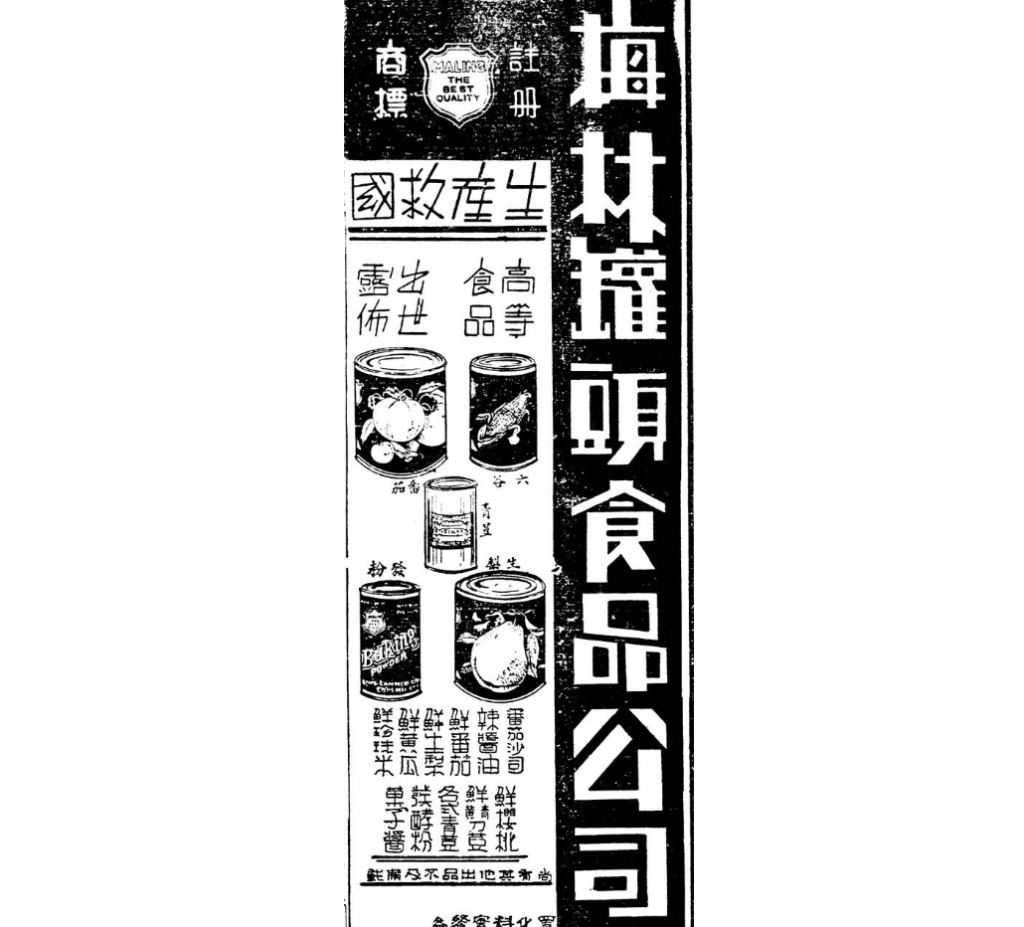
Cartaz da Meilin Canned Food Company
Fonte da imagem: Meilin
A marca chinesa “old”, Meilin, também foi estabelecida naquela época Em comparação com as exportações de Guangzhou e Chaoshan, a fábrica de conservas em Xangai “produzida para salvar o país”, mais significado nacional de auto-ajuda.
A fim de resistir às importações e desenvolver a indústria de conservas da China, em julho de 1930, Shi Yongxi, Dai Xingshui e outras economias e empréstimos aos bancos, o estabelecimento oficial da Meilin Canned Food Factory.
Meilin uso de matérias-primas locais, produção local, em comparação com bens estrangeiros a preços baixos, amado pelos consumidores Enquanto expandindo o mercado local, Meilin também se tornou ativamente global.
Na Feira Mundial de Chicago de 1934 nos Estados Unidos, os alimentos enlatados Merlin receberam a avaliação “General Assembly Appreciation” e o certificado “Successful Cooperation” Em seguida, foi exportado para o Sudeste Asiático e entrou nos mercados europeu e americano após a década de 1940.
Após a fundação do país, a indústria conserveira nacional inaugurou um período de rápido desenvolvimento.
Em 1956, o estado preparou-se para a construção da Fábrica de Conservas de Guangdong, que foi concluída e colocada em operação em 1958, e a fábrica foi construída de acordo com o modelo arquitetônico soviético de edifícios de escritórios e plantas de conservas de Guangdong é um dos 165 projetos-chave da União Soviética e da cooperação econômica da China, mas também a maior fábrica de conservas durante o primeiro plano quinquenal da nova China, mas também a maior fábrica de conservas da Ásia na época.
Os dados mostram que em 1959 a produção total de produtos enlatados da China era de 160.000 toneladas, mais de metade das quais destinadas à exportação, envolvendo mais de uma dúzia de variedades de suínos, bovinos e ovinos, aves, frutas, vegetais, etc. No início dos anos 70, o número de produtos enlatados exportados ultrapassava $100 milhões.
Na era da escassez de material, os produtos enlatados eram um luxo No início dos anos 1990, as vendas de produtos enlatados no mercado interno atingiram um pequeno pico As pessoas usavam carne enlatada como presente de Ano Novo e frutas enlatadas como presente de simpatia para visitar os doentes.
03 A indústria conserveira foi “awakened”
Pode-se dizer que os produtos enlatados desempenharam um papel colorido na história dos negócios chineses.
No início dos anos 1990, Mou Zhin, anteriormente o homem mais rico da China, usou produtos industriais leves, incluindo 500 carros carregados de produtos enlatados, para comprar de volta quatro aviões Tu-154 da União Soviética, tornando-se uma lenda na comunidade empresarial chinesa e testemunhando o ponto alto da conserva chinesa no comércio internacional.
A produção de alimentos enlatados tem duas características principais: selagem e esterilização.
Do ponto de vista da tecnologia de produção, diante de muitos alimentos contemporâneos, enlatados sem tecnologia e trabalho implacável Pode-se até dizer que os alimentos enlatados quase não são aditivos e são mais capazes de manter o sabor original dos produtos alimentícios.
De acordo com as estatísticas, a produção de bens enlatados da China continuou a aumentar de 2012 a 2016, atingindo um pico da indústria de 13.948.600 toneladas de produção em 2016, com receita de 175.179 milhões de yuans e lucros totais próximos de 10 bilhões de yuans.
No entanto, desde então, o desenvolvimento da indústria conserveira entrou num estrangulamento, tanto em termos de produção como de taxa de crescimento, e a tendência geral das receitas continuou a diminuir. Em 2019, a receita total das empresas conserveiras chinesas foi superior em cerca de 128,21 mil milhões de yuans, com um lucro total de 7,87 mil milhões de yuans.
A China é um grande produtor de produtos enlatados, fornecendo um quarto dos produtos enlatados do mundo, mas não é um grande consumidor de produtos enlatados No entanto, o mercado doméstico de produtos enlatados tem muito espaço para desenvolvimento, e alguns dados mostram que, até 2023, a capacidade de mercado da indústria de produtos enlatados da China deverá exceder 320 bilhões de yuans.
O problema com os alimentos enlatados é o alto teor de sal, alto teor de açúcar e alto teor de óleo Com a popularidade da conscientização sobre a saúde, os consumidores preferem alimentos frescos e conservados a curto prazo e, juntamente com o impacto da retirada, o desenvolvimento de alimentos enlatados é limitado.
Nestes anos sob a influência da epidemia, os consumidores começaram a estocar Longa vida útil, uma grande variedade de alimentos enlatados tornou-se a escolha da maioria das pessoas Os dados da Wisdom Research Consulting mostram que, no primeiro semestre de 2021, a produção de alimentos enlatados da China aumentou 11,8% ano a ano, o que também é a primeira vez em 2017 que o crescimento.
Desta vez, os pêssegos amarelos enlatados fora do círculo são um renascimento dos sentimentos de infância dos consumidores, mas um olhar mais atento sobre a indústria de produtos enlatados por trás disso está passando por mudanças.
Em particular, este ano, a Administração Estatal de Supervisão e Administração de Mercado (National Standardization Administration) aprovou o lançamento de “beef, regras gerais de qualidade de cordeiro enlatado” “regras gerais de qualidade de pasta de tomate” “canned pangasius regras gerais de qualidade de peixe” três normas nacionais no campo da revisão de conservas; A China Canning Industry Association lançou o plano de ação especial de três anos de marca da indústria de conservas da “China (2021-2023)”, que são para a indústria de conservas da China apontou a direção.
Ao final da cadeia de suprimentos, as empresas líderes continuam a mecanizar, automatizar, inteligência, a formação de um sistema industrial completo; pequenas e médias fábricas de alimentos enlatados também para o desenvolvimento de empresas especializadas em conservas de grande escala.
Além disso, sob a iteração do consumidor, as novas necessidades de novas pessoas foram descobertas Quatro pílulas felizes, carne de fivela de legumes de ameixa, oito arroz de tesouro, etc., mais saudável, mais diversificada, mais de acordo com o gosto atual da comida dos jovens é embalado nas latas.
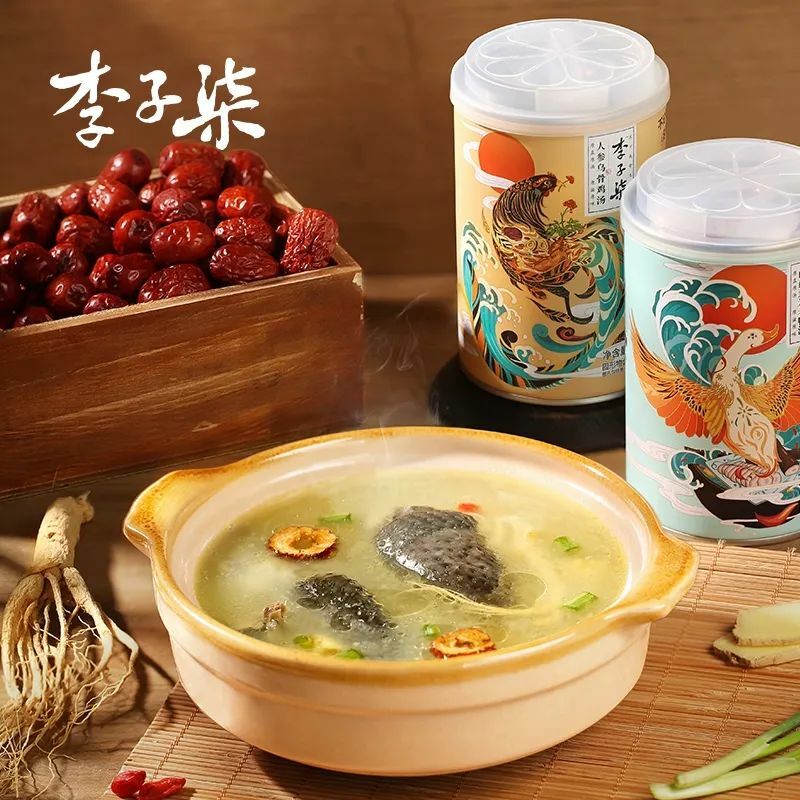
Li ZiQi enlatado ginseng e osso preto sopa de galinha
Fonte da imagem: loja principal Taobao @LiZiQi
Por exemplo, Lin Jia Pu Zi lançou o controle de açúcar “livre de açúcar” zero gordura“ pêssegos amarelos enlatados; Meilin lançou uma série enlatada de comida para uma pessoa ”one“; Li Zi Qi lançou uma canja de galinha ginseng adequada para horas extras noturnas, viajantes e assim por diante. A nova marca que compreende melhor os jovens pisou no vento dos pratos pré-fabricados e também respondeu à economia única.
Juntamente com o contexto geral de simplicidade de cozinha, moda e esportes ao ar livre, a indústria conserveira inaugurou simultaneamente oportunidades históricas em diferentes cenários de consumo.
O pangasius de feijão preto de Guangdong, a carne de porco refogada de Beidaihe, os caracóis de lama bêbados de Zhoushan, as pernas de nuvem de Yunnan, o Qingtanliang de Hainan, os tomates e uvas de Xinjiang .. A comida enlatada abrange as montanhas, os mares e as estações.
Os seres humanos mudaram a forma dos alimentos, e a indústria alimentar está a mudar os hábitos alimentares dos seres humanos Pensamento para “desaparecer” da lata, de uma nova forma reapareceu na frente do consumidor.
do TideSight
Escritor: Dundun Wong
Editor: Zisu


